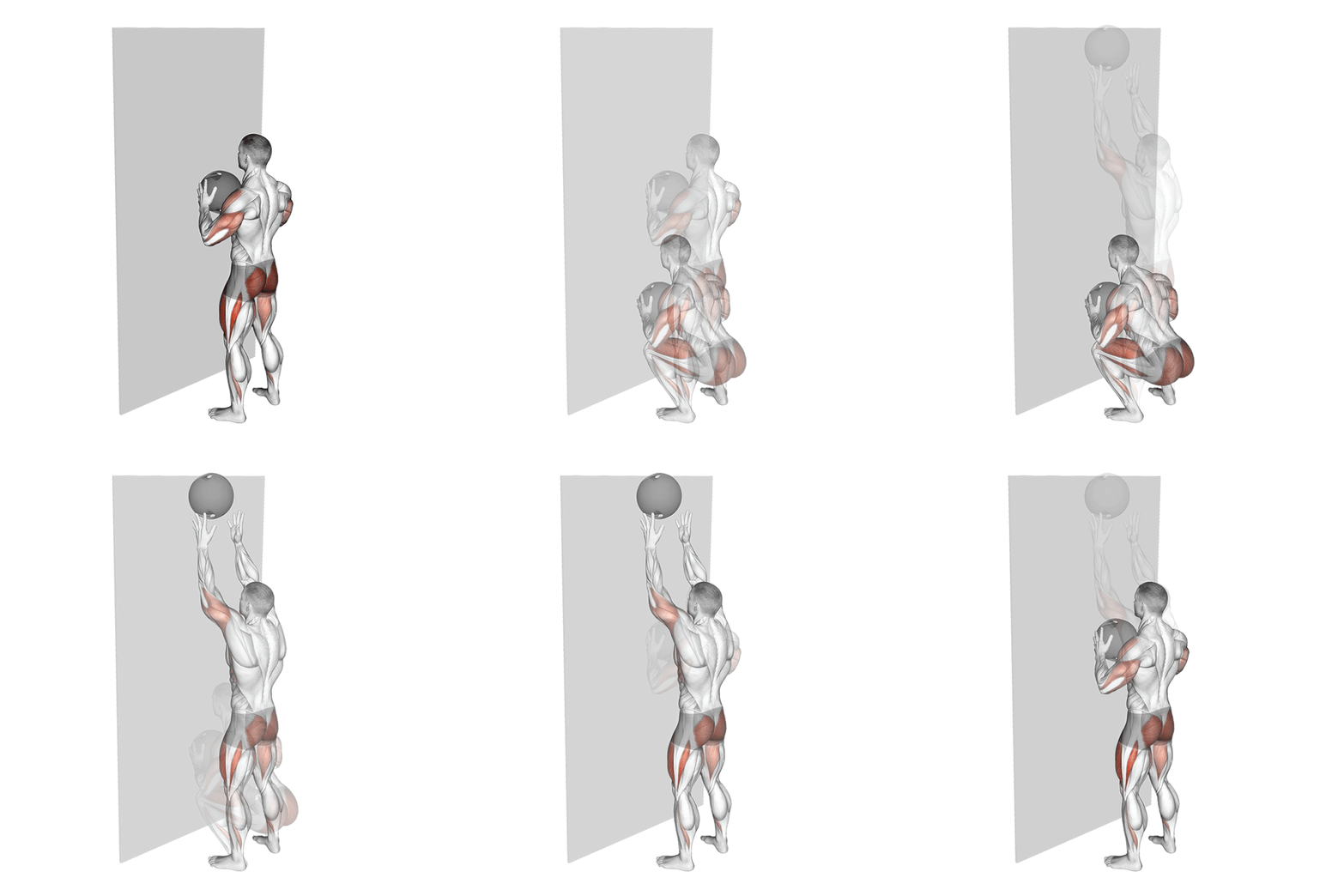
What is the wall balls?
Wall balls are a squat-to-overhead-throw with a medicine ball. You squat below parallel holding the ball, then drive up and throw it to a target on the wall, catching it on the way down to repeat. In Hyrox it's the last station: 75 reps (Open Men) or 100 reps (Open Women, weighted differently), after seven prior stations and 8 km of running. It's a pure test of leg endurance, breathing under fatigue, and discipline.
How to do the wall balls
- 1
Set your stance
Stand a forearm's distance from the wall, feet shoulder-width or slightly wider, toes turned out 10-15°. Hold the ball at chest height, elbows tucked.
- 2
Squat to depth
Hips drop below the knee crease (real depth, no half-reps). Chest up, ball stays at your chest, knees track over your toes.
- 3
Drive and throw
Explode up with your legs and use the upward momentum to throw the ball at the target (3 m for women, 3.05 m for men in Hyrox). The arms guide, the legs power.
- 4
Catch and absorb
Catch the ball with soft arms and ride it straight into the next squat. Don't bounce it off your chest, that's a rep-killer.
Pro tip
Pre-plan your break strategy. Even pros split into sub-sets (20-15-15-15-10 for 75, or 25-25-25-25 for 100). Breaking BEFORE you have to is faster than failing and starting cold.
Common mistakes
No-rep depth.
Failing to drop below parallel gets your rep waved off. Train every rep at competition depth, no exceptions.
Missing the target.
A short throw doesn't count. Practise the arc, the ball must clearly hit the target line. Train both your speed of execution and accuracy.
Bouncing off the chest.
It feels faster but it's not, your timing collapses and you fail reps. Catch soft, descend smooth.
Going unbroken when you can't.
Death from ego. Pre-planned breaks beat blowing up at rep 40. Know your number.
Hyrox standards
Official Hyrox standards by division. Always confirm the current weights on the official Hyrox site before a race.
| Division | Distance | Men | Women |
|---|---|---|---|
| Open Men | 75 reps | 6 kg @ 3.05 m | - |
| Open Women | 100 reps | - | 4 kg @ 3 m |
| Pro Men | 100 reps | 9 kg @ 3.05 m | - |
| Pro Women | 100 reps | - | 6 kg @ 3 m |
Prepping for a race? Follow our complete Hyrox training plan to structure your weeks all the way to race day.
Variations and progressions
Easier
Light ball / lower target
Use a 4-6 kg ball and a target 30-50 cm lower than Hyrox. Build the squat-throw rhythm without throwing-arm failure.
Harder
Heavy ball / Pro height
9 kg ball, full Pro target (3.05 m). Use this only when 6 kg at 3.05 m is unbroken for 50 reps.
No wall?
Thrusters & goblet squat
Dumbbell or barbell thrusters give similar squat-to-overhead leg endurance. Goblet squats with explosive intent build the drive.
How to program it
Three protocols by goal. Pick one per cycle and aim for progression on load or distance.
| Goal | Sets × distance | Load | Rest |
|---|---|---|---|
| Technique | 5 × 15 reps | Race ball | Full |
| Capacity | 5 × 25 reps | Race ball | 60-90 s |
| Race simulation | 1 × 75/100 after a run | Race ball | Continuous |
Wall Balls FAQ
Why do I always fail wall balls late in the race?
Two reasons: legs are wrecked from prior stations, and breathing is broken from the run before. Train them deliberately fatigued, not fresh. Add a 400 m run before your sets in training.
Should I break or go unbroken?
Plan your breaks in advance. Going unbroken on 75 reps is for top-10% athletes. For most people, 20-15-15-15-10 beats an attempt at 75 unbroken that fails at rep 40 and forces a long cold restart.
Is a 6 kg ball really that different from a 4 kg one?
Yes. The 6 kg ball requires roughly 50% more leg drive per rep, and the throwing arc is harder to control. At rep 60+ the difference is exponential.