What is the skierg?
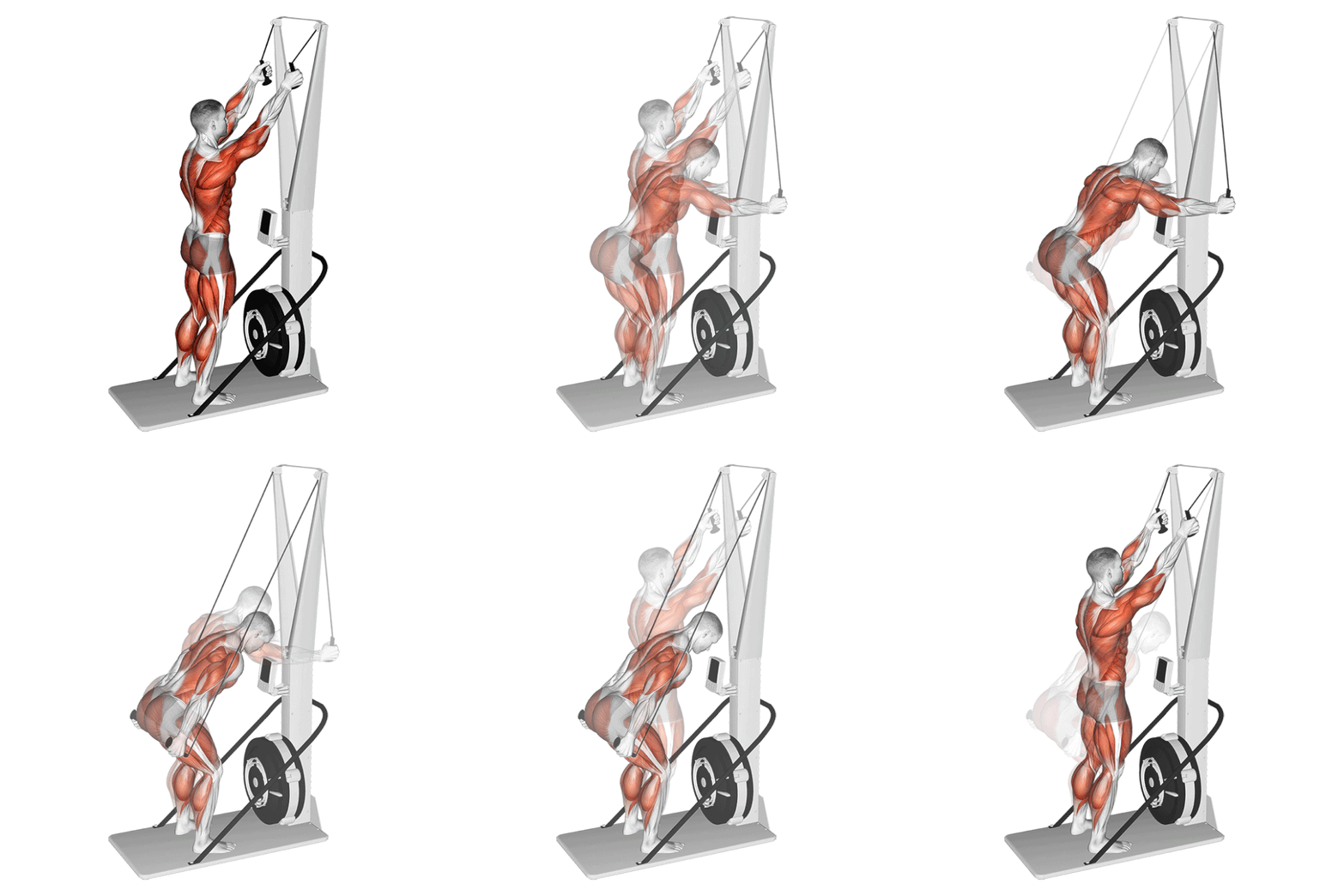
The SkiErg simulates double-pole nordic skiing. You grip two straps overhead and drive them down past your hips using lats, abs and hips, while the legs hinge and bend to amplify the pull. It's Hyrox station 1 (1,000 m), so it's the first time your heart rate redlines. Mastering the SkiErg means a stroke long enough to be efficient, fast enough to clear the distance under your target split, and structured so you walk off it without dead arms before the sled push.
How to do the skierg
- 1
Set up tall
Stand a forearm's length behind the flywheel, feet hip-width. Grab the straps just below the cleats, arms straight overhead, ribs stacked over hips, slight knee bend.
- 2
Drive with the body
Initiate by hinging at the hips and contracting the abs (like a hard exhale). Arms stay long. Bend the knees slightly to add leg drive. End with hands at hip-height.
- 3
Snap the finish
At hip level, give a short pull with the arms (triceps and lats) to flick the cables. This is where the wattage spikes. Don't yank early.
- 4
Recover with rhythm
Let the straps pull you back up. Stand tall, arms reach overhead, then immediately load the next stroke. Aim for a 1:1 or 1:1.5 work-to-return ratio.
Pro tip
Don't start at threshold. The 1,000 m sits at the very top of your race when you're freshest. Hold back five seconds per 500 m off your max pace, you'll thank yourself at the sled push.
Common mistakes
Arms-only pulling.
Burns your shoulders and produces low watts. Drive with the hinge and abs first, finish with the arms.
Squatting deep.
Bending the knees too much turns it into a thruster. Stay tall, just enough knee bend to assist.
Short choppy strokes.
High stroke rate, low power per stroke, terrible economy. Slow down and lengthen.
Sprinting the first 200 m.
You'll pay for it on the sled push. Lock in target pace by 100 m and hold it.
Hyrox standards
Official Hyrox standards by division. Always confirm the current weights on the official Hyrox site before a race.
| Division | Distance | Men | Women |
|---|---|---|---|
| Open | 1,000 m | Damper free | Damper free |
| Pro | 1,000 m | Damper free | Damper free |
| Doubles / Relay | 1,000 m | Damper free | Damper free |
Prepping for a race? Follow our complete Hyrox training plan to structure your weeks all the way to race day.
Variations and progressions
Easier
Damper 4-5, lower stroke rate
Drop the damper to 4-5 and aim for 30-32 strokes per minute. Easier on the shoulders while learning the timing.
Harder
Damper 10, sub-4:00 target
Crank damper to 10 and chase a sub-4-minute 1,000 m. Brutal anaerobic capacity work, only after the technique is locked.
No SkiErg?
Banded lat pulldowns + battle ropes
Combine standing banded pulldowns, battle rope double-waves and rowing intervals to replicate the upper-body pull and hinge.
How to program it
Three protocols by goal. Pick one per cycle and aim for progression on load or distance.
| Goal | Sets × distance | Load | Rest |
|---|---|---|---|
| Technique | 6 × 250 m at race pace | Damper 6-7 | 60 s |
| Aerobic capacity | 4 × 1,000 m | Damper 7-8 | 2:00 |
| Race simulation | 1,000 m ski → 1 km run → 50 m sled push | Race damper | As in race |
SkiErg FAQ
What damper should I use in a race?
Most age-group athletes do best at 6-7. Lighter than that and you spin without producing watts; heavier than 8 and the shoulders burn out by 500 m. Test both in training under fatigue, not fresh on a Tuesday morning.
Why are my abs more sore than my arms after?
Because you're doing it right. The SkiErg is a hip-hinge plus abdominal crunch. The arms only finish the stroke. If your abs are torched and your shoulders are fine, your mechanics are sound.
What's a good 1,000 m time for Hyrox?
Front-of-pack men hit sub-3:50, front-of-pack women sub-4:20. A solid age-group target is 4:00-4:30 for men, 4:30-5:00 for women. Remember it's the first station, you want it controlled, not max effort.