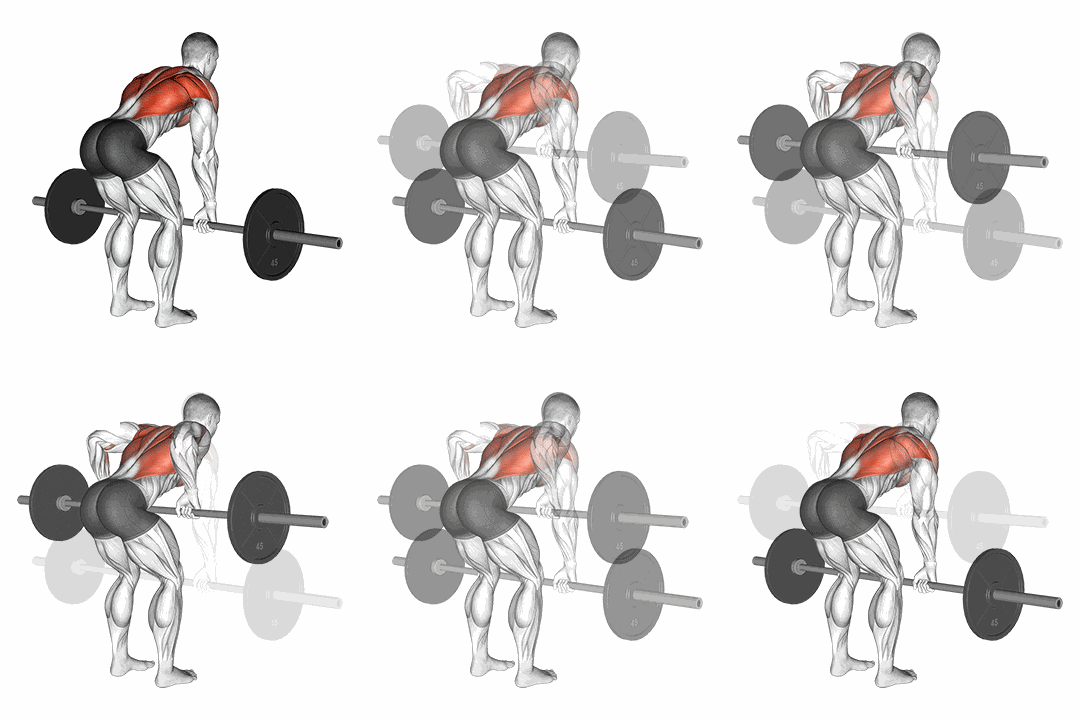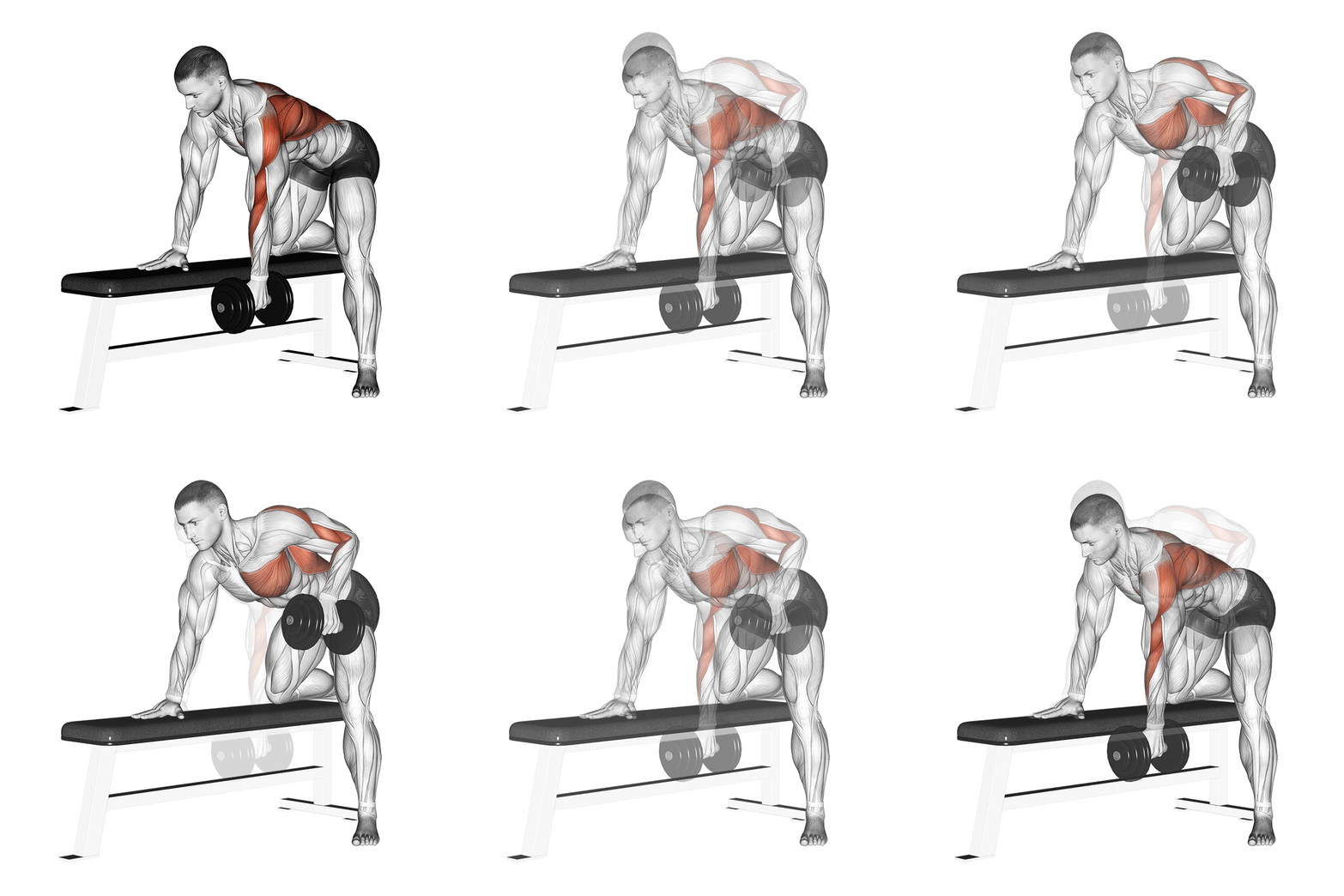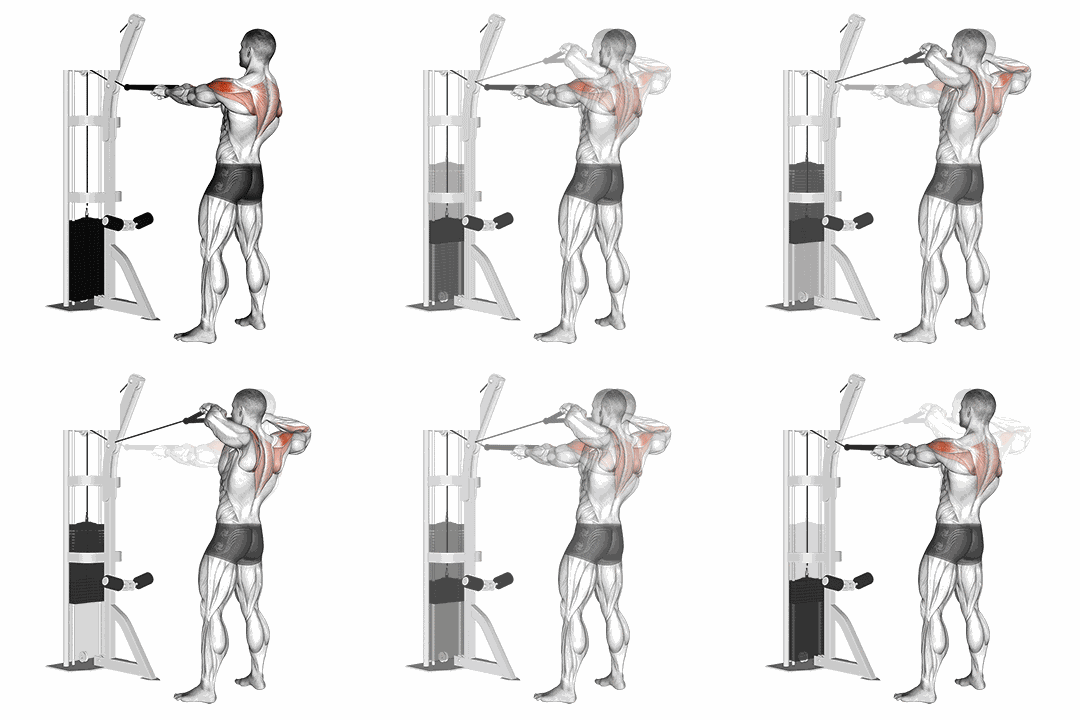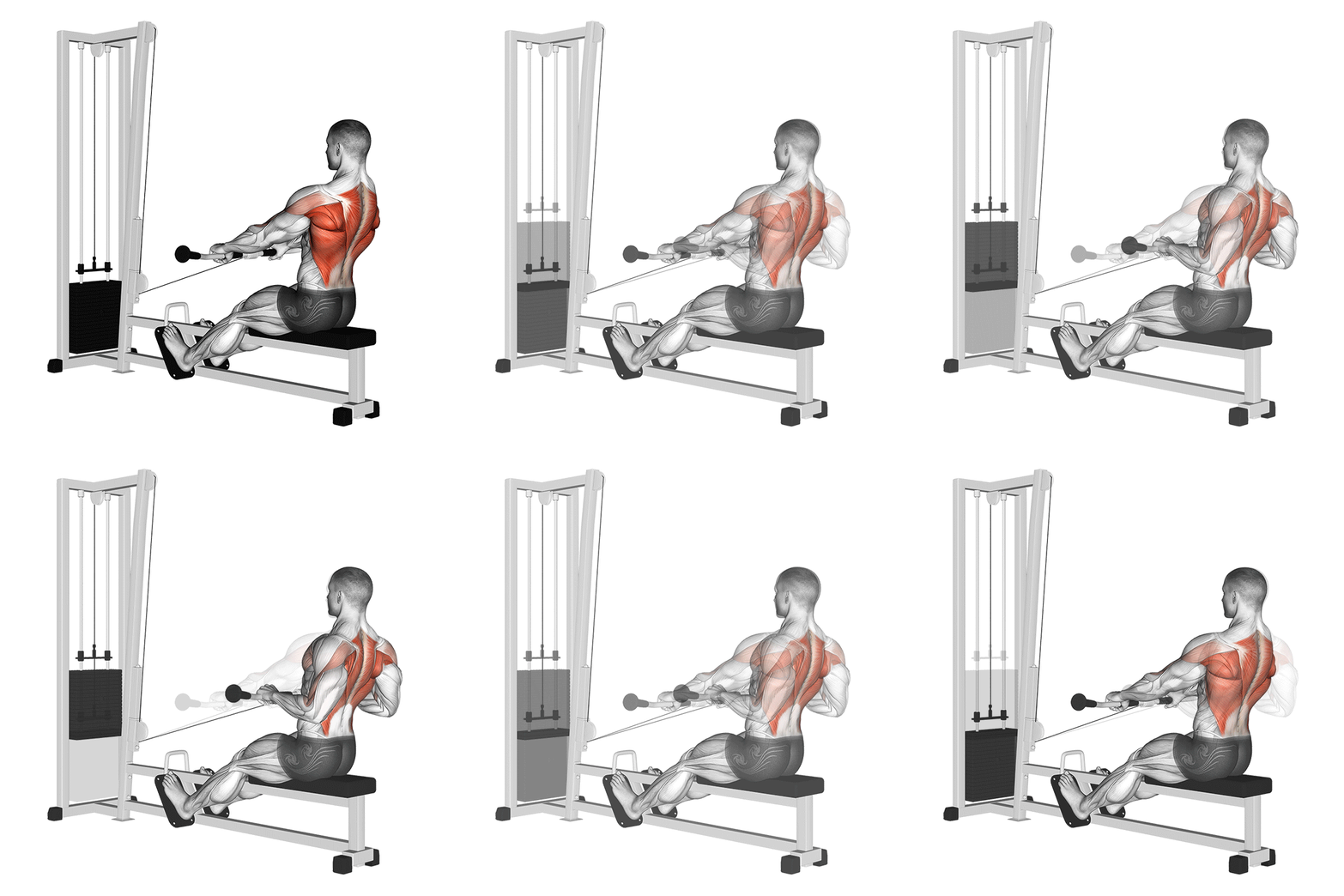
What is the seated cable row?
The seated cable row is a horizontal pull where you sit with feet braced and pull a handle to your lower ribs. It targets the mid-back, rhomboids, rear delts and biceps. Compared to a barbell row, the cable keeps tension across the whole range and removes spinal loading, which makes it a safer day-to-day driver of back volume. It pairs well with deadlifts and pull-ups inside a complete pulling program.
How to do the seated cable row
- 1
Anchor your feet
Sit with knees softly bent, feet flat on the platform. Hips locked, not sliding back and forth on the seat.
- 2
Set a tall torso
Chest up, shoulders down. Slight forward lean only at the stretch, then back to vertical as you pull.
- 3
Pull to lower ribs
Drive your elbows back along your sides until the handle touches just below your sternum. Squeeze for a beat.
- 4
Return long, not loose
Let the handle travel forward under control, reaching for length without losing torso position. Keep shoulders packed.
Pro tip
Picture pinching a credit card between your shoulder blades at the back of every rep. If you can't, the load is too heavy.
Common mistakes
Rowing with the lower back.
Big sway from hips trades back muscle for spinal stress. Lock the torso angle.
Elbows flaring.
Elbows out hits more rear delts and less lat. For mid-back focus, keep elbows tracking close.
Short range of motion.
Half-reps from chest to chest. Reach forward fully and pull to the lower ribs every time.
Rounded back at the stretch.
Reaching forward by rounding the spine loads the lower back. Hinge from the hips instead.
Variations and progressions
Easier
Chest-supported row
Use a chest-supported row machine to remove the lower back from the equation and focus purely on the pull.
Harder
Single-arm seated cable row
Use a D-handle, one arm at a time. Longer range, more rotation, no help from the dominant side.
No cable?
Dumbbell or barbell row
Switch to a chest-supported dumbbell row or a Pendlay row. Same pattern, free-weight loading.
How to program it
Three protocols by goal. Pick one per cycle and aim for progression on load or distance.
| Goal | Sets × distance | Load | Rest |
|---|---|---|---|
| Hypertrophy | 4 × 10-12 | 65-75% 1RM | 90 s |
| Strength | 5 × 5 | 80-85% 1RM | 2-3 min |
| Back finisher | 3 × 15-20 | 50-60% 1RM | 60 s |
Seated Cable Row FAQ
V-handle, wide bar, or rope?
V-handle hits inner mid-back and biceps hard. Wide overhand bar shifts work toward upper back and rear delts. Rope lets you flare elbows out and add a small external rotation at the end. All three are useful, rotate them across blocks.
Can I replace a barbell row with cable rows?
For hypertrophy yes, easily. For maximal back strength tied to deadlift carryover, no. Keep one heavy free-weight row in the week and use the cable row to add volume without trashing the lower back.
How heavy should I go?
Heavy enough that the last 2 reps slow down clearly, light enough that you don't generate force with your lower back. If you have to throw the torso back to start the pull, drop a plate and earn it back through technique.