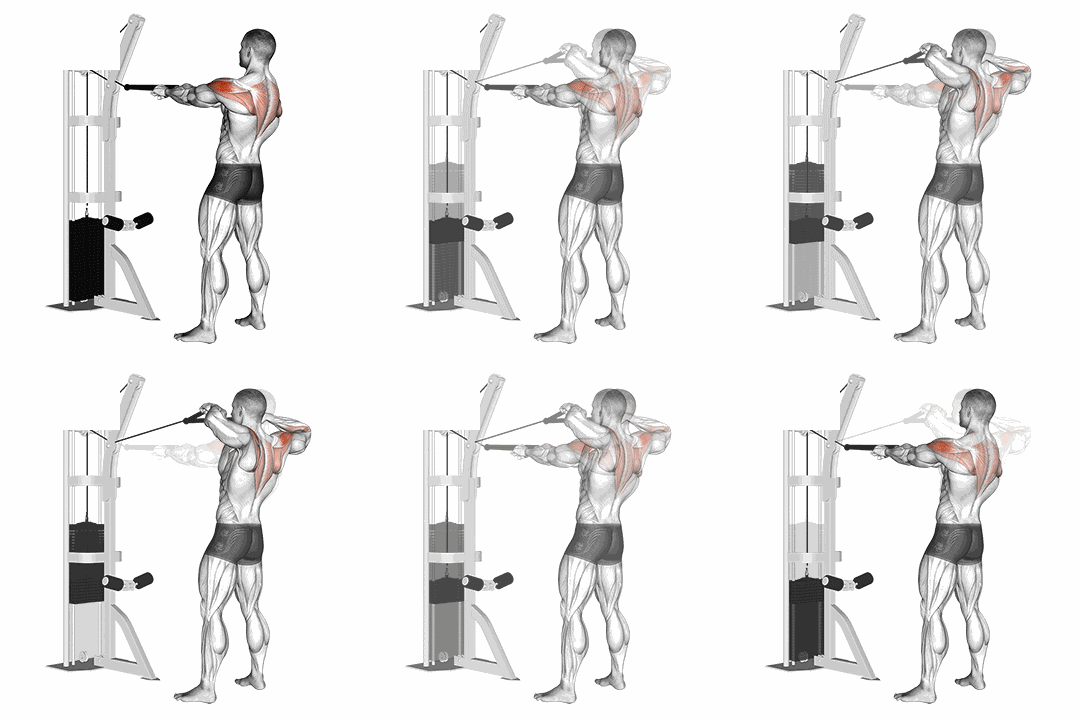
What is the face pull?
The face pull is a horizontal pull performed with a rope attachment on a high cable, pulling straight toward the face with the elbows held above shoulder height. It targets the rear deltoid, mid-trapezius, rhomboids and external rotators of the shoulder, all the muscles that pull the shoulder blades back and down. For lifters who bench heavily, sit at desks or run a press-heavy program, face pulls are the single best insurance policy against shoulder injuries and the postural collapse they cause.
How to do the face pull
- 1
Set the rope above eye level
Attach a rope to a cable pulley set just above eye height. Grip both ends, palms facing each other (neutral grip).
- 2
Step back and brace
Take two steps back, split stance, slight bend in the knees. Arms straight, weight pulling you forward at the shoulders.
- 3
Pull to the face, elbows high
Pull the rope ends past your ears, splitting your hands apart. Elbows finish at shoulder height or slightly above, never dropped.
- 4
Pause and squeeze
Hold the end position 1 s. Squeeze the shoulder blades back and down, externally rotate the hands so the thumbs point behind you.
Pro tip
Go light. Face pulls aren't a strength move, they're a positioning move. If you can't keep your elbows high, the weight is too heavy. Form first, load second.
Common mistakes
Elbows dropped low.
Letting elbows drop turns it into a low row and loses the rear-delt and rotator-cuff work. Keep elbows at or above shoulder height.
Too much weight.
Heavy face pulls become trap pulls. Use a weight you can control for 12-15 clean reps with a real pause.
Yanking with the lower back.
Leaning back and using the hips defeats the point. Stay tall, stationary, let the upper back do all the work.
No external rotation.
Skipping the rotation at the end skips the rotator-cuff work, the whole reason this exercise exists. Finish with thumbs back.
Variations and progressions
Easier
Band face pulls
Loop a light band at head height around a post. Same movement, easier to dial in form before you load a cable.
Harder
Face pull + external rotation hold
Add a 2 s hold at the end position with thumbs pointing back, every rep. Brutal for the rear delts and rotator cuff.
No cable?
Prone Y-T-W raises
Lie face down on an incline bench with light dumbbells. Y-T-W shapes hit the same muscles with zero equipment beyond a bench.
How to program it
Three protocols by goal. Pick one per cycle and aim for progression on load or distance.
| Goal | Sets × distance | Load | Rest |
|---|---|---|---|
| Daily pre-hab | 3 × 15-20 | Light | 45-60 s |
| Hypertrophy (rear delt) | 4 × 12-15 | Moderate | 60-75 s |
| Warm-up before bench | 2 × 20 | Very light | 30 s |
Face Pull FAQ
How often should I do face pulls?
Three to five times per week is fine. They're a low-fatigue corrective move, not a strength lift, so they don't eat into recovery. Slot them after every press session or as a warm-up. If you bench heavy, doing them every push day is non-negotiable.
Why do my traps take over?
Two causes: weight too heavy, or cable too low. Lighten the load and raise the pulley above eye level. The cable angle is what keeps the elbows high and the load on the rear delts instead of the upper traps.
Will face pulls fix my rounded shoulders?
They help, but they're not magic. Rounded shoulders come from spending hours hunched over a desk or phone. Face pulls train the muscles that pull you back into position. Pair them with daily thoracic mobility and time off the screen, and you'll see real change in 6-8 weeks.