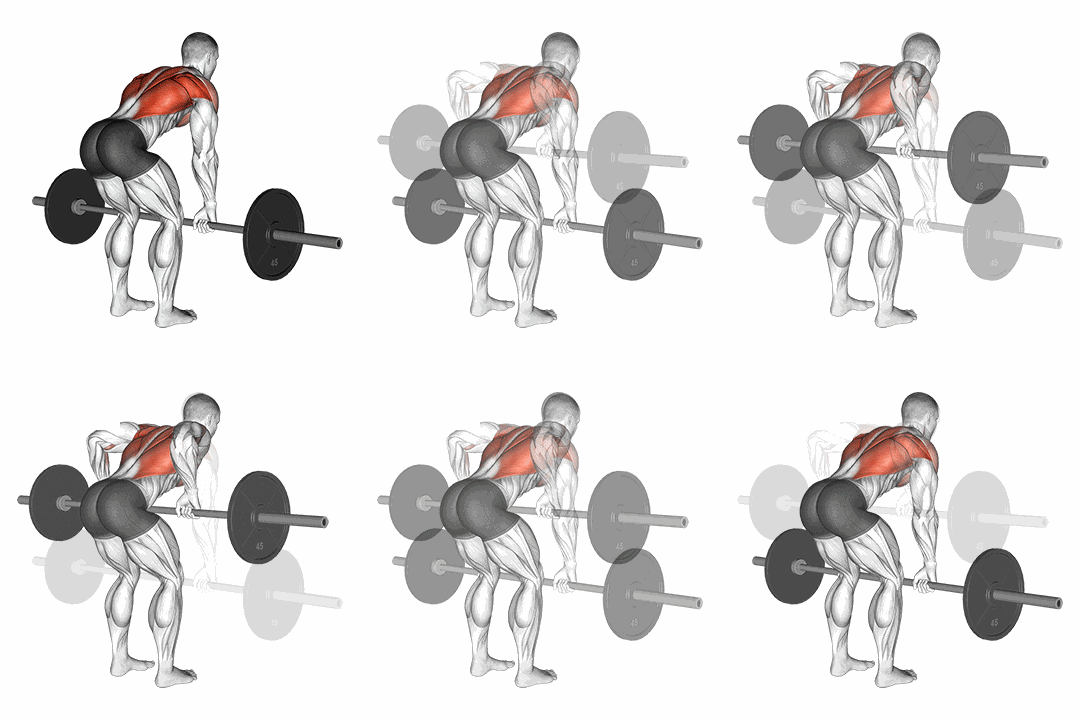
What is the barbell row?
The barbell row is a horizontal pull performed in a hinged-over position. You set up like the top of a deadlift, hinge your torso to roughly 45° or lower, and row the bar from a hang to your lower ribcage or upper abs. It hammers the lats, rhomboids, mid-traps, rear delts and biceps, while the lower back, hamstrings and glutes hold the position isometrically. It builds the back thickness that pull-ups alone can't, and it directly carries over to a bigger deadlift and bench.
How to do the barbell row
- 1
Set up like a deadlift top
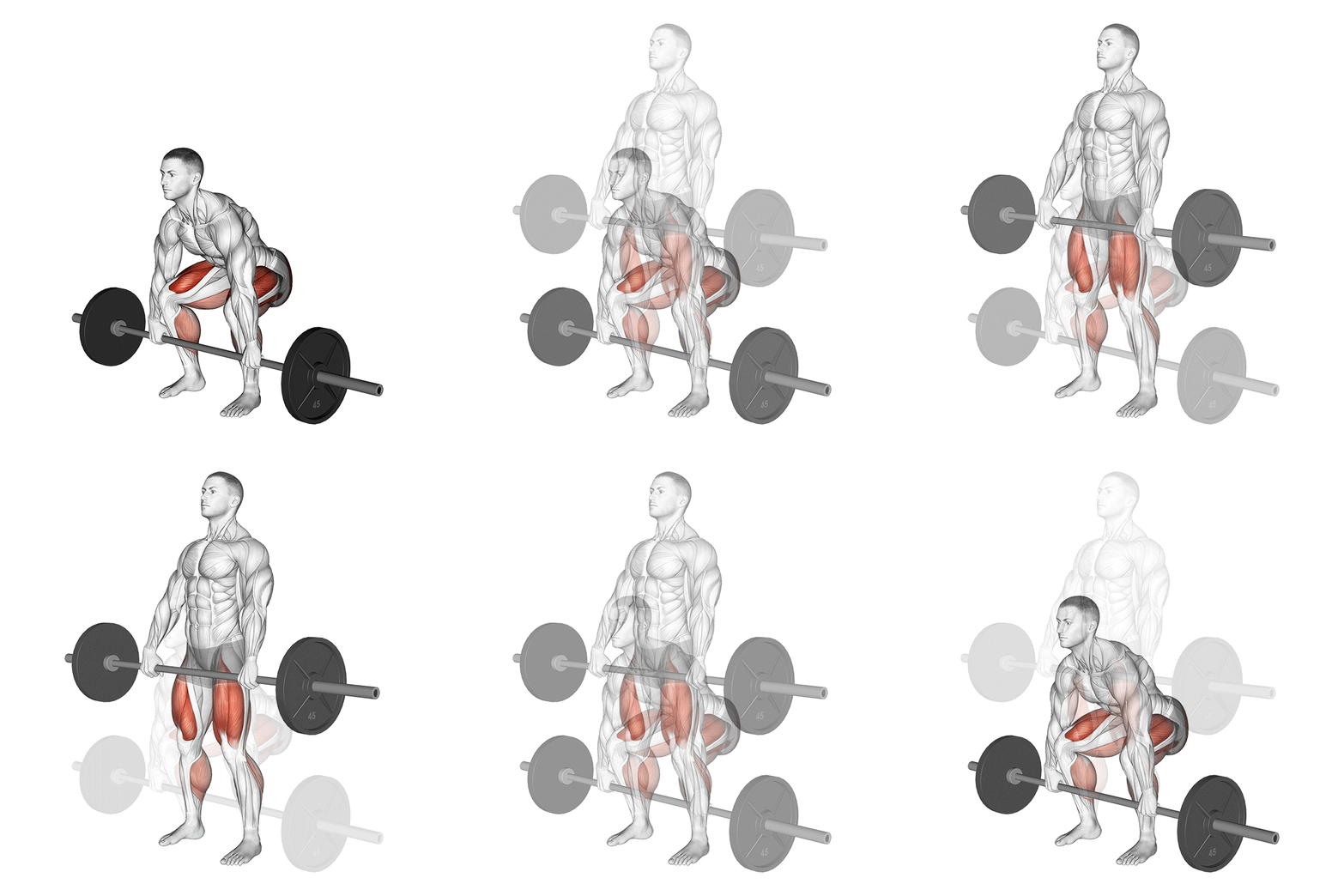
Stance hip-width, bar over mid-foot. Grip just outside your knees, overhand. Hinge forward until your torso is around 45° or slightly lower.
- 2
Brace and engage the lats
Big breath, brace your core, and pull the slack out of the bar. Think of bending the bar around your body before you row.
- 3
Row to the lower ribcage
Drive elbows up and back, pulling the bar to your lower sternum or upper abs. Squeeze the shoulder blades together at the top.
- 4
Lower under control
Return the bar to a dead hang or just off the floor. Keep your torso angle fixed, no kipping with the hips. Reset and repeat.
Pro tip
Pick a torso angle and own it. Pendlay style (parallel to floor, full reset on the ground) builds explosive power. Yates style (45° angle, no reset) lets you load heavier for mass. Both are valid, just don't drift between them mid-set.
Common mistakes
Standing up to lift it.
If your torso pops up with every rep, you're cheating with the lower back. Lock the angle.
Pulling to the neck.
High pulls to the chest shred the shoulders. Row to the lower ribcage where the lats win.
Curled lower back.
Lumbar rounding under a heavy row is a hernia waiting to happen. Brace, drop the weight, reset form.
Tiny range of motion.
Ego-loading the bar so it barely moves does nothing for your back. Full hang to ribs, every rep.
Variations and progressions
Easier
Chest-supported row
Lie face-down on an incline bench with dumbbells. Removes lower-back fatigue and isolates the upper back.
Harder
Pendlay row
Torso parallel to the floor, bar fully reset on the ground every rep. Explosive, brutal, no momentum.
No barbell?
Dumbbell row or T-bar row
Single-arm dumbbell row fixes left/right imbalances. T-bar row loads heavy with a fixed groove.
How to program it
Three protocols by goal. Pick one per cycle and aim for progression on load or distance.
| Goal | Sets × distance | Load | Rest |
|---|---|---|---|
| Strength | 5 × 5 | 70-80% bench 1RM as reference | 2-3 min |
| Hypertrophy | 4 × 8-12 | RPE 7-8 | 90 s |
| Power (Pendlay) | 5 × 3 explosive | 60-70% 1RM | 2 min |
Barbell Row FAQ
Should my row be as strong as my bench?
Roughly, yes. A barbell row for 5 reps at 80-90% of your 5-rep bench is a healthy ratio. If your row is dramatically weaker, your back is the limiting factor for your bench and your posture. Train the row at the same intensity and frequency as the bench, never as an afterthought.
Overhand or underhand grip?
Overhand is the default: more upper-back recruitment, safer on the biceps tendon. Underhand (supinated) lets you pull heavier and hits the lats lower, but it puts the biceps tendon at risk under maximal loads. Rotate them through a training block, lead with overhand for safety.
How heavy is too heavy for a barbell row?
When your form breaks: torso climbing, hips heaving, bar not reaching the ribs. A rule of thumb: if you need momentum to start the bar, drop 10% and try again. The row is an accessory to the deadlift and bench, not a 1RM lift. Quality reps at moderate weight beat ugly reps at heavy weight every time.