What is the lat pulldown?
The lat pulldown is a seated cable exercise where you pull a bar down to your upper chest. It trains the lats, mid-back, biceps and rear delts through a vertical pulling pattern. It's the best regression for athletes who can't yet do clean pull-ups, and the best accessory for those who can. Load is fully scalable and the bar path stays consistent, which makes it perfect for high-quality back volume without grip fatigue blowing up first.
How to do the lat pulldown
- 1
Set the pads and grip
Adjust the thigh pads tight enough that you don't lift out of the seat. Take a grip slightly wider than shoulder-width, palms forward.
- 2
Set your torso angle
Sit tall, then lean back 10 to 15 degrees and lock it there. Chest up, ribs down, shoulders pulled back and away from your ears.
- 3
Pull elbows down
Drive your elbows down toward your hips, not your hands toward your chest. The bar should land on your upper chest or collarbone.
- 4
Control the return
Let the bar rise on a 2 to 3 second count, with shoulders staying packed. Don't let the weight yank your shoulders up.
Pro tip
Think "elbows to back pockets." If you feel it in your biceps first, your grip is too narrow and your elbows are flaring forward.
Common mistakes
Pulling behind the neck.
Trashes the rotator cuff and the cervical spine for zero extra lat work. Always pull to the front.
Leaning back like a row.
Heavy momentum, light back. Lock your torso angle and let the lats do the work.
Shrugging at the top.
Letting shoulders rise to the ears each rep robs the lats of stretch under tension. Keep them packed.
Grip too wide.
An ultra-wide grip cuts the range of motion. Slightly wider than shoulders is plenty.
Variations and progressions
Easier
Neutral-grip pulldown
Use a parallel-grip handle. Easier on the shoulders and lets beginners feel the lats faster.
Harder
Single-arm pulldown
Swap the bar for a D-handle and work one side at a time. Bigger range, no compensation from the dominant side.
No machine?
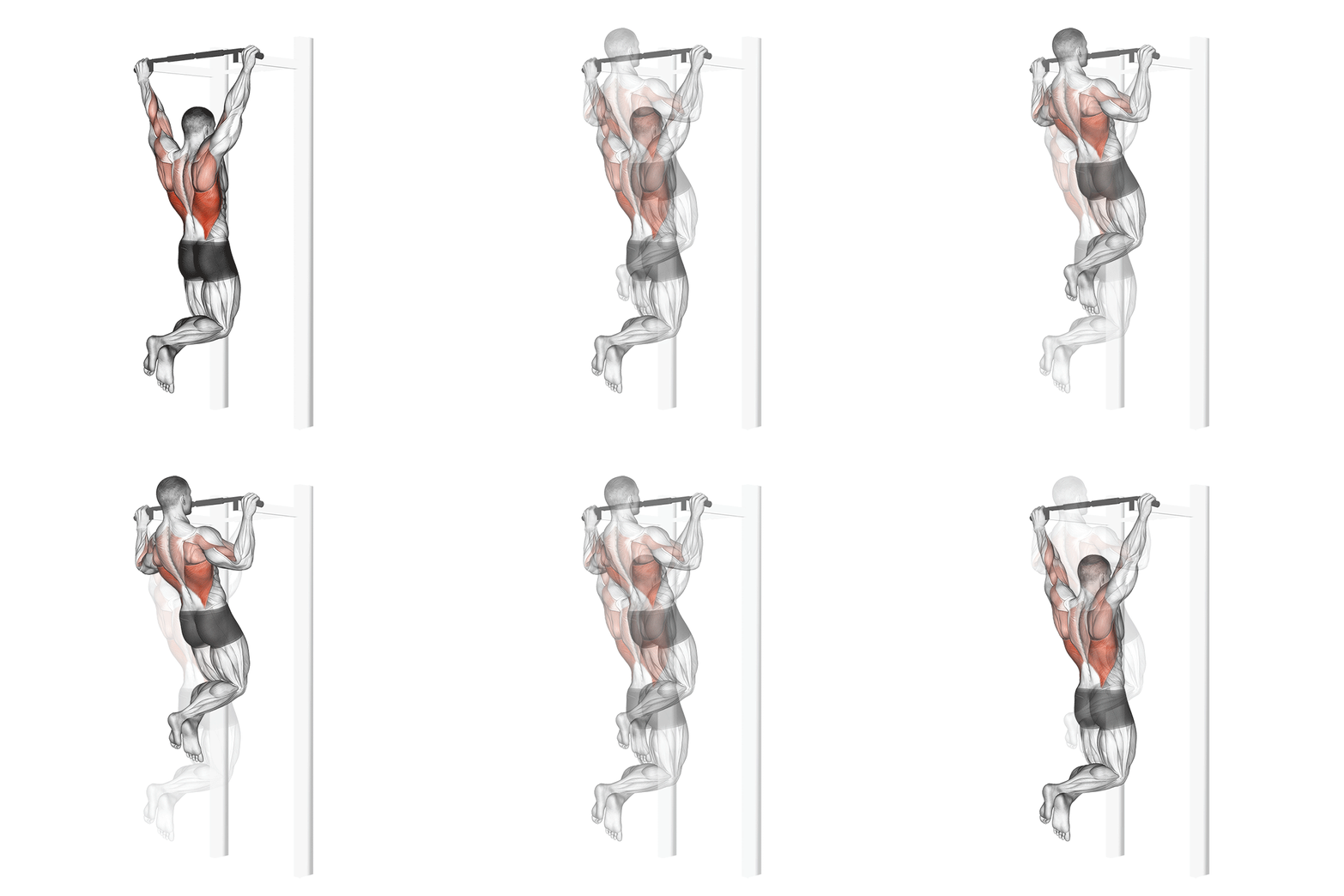
Banded pulldown or pull-up
Anchor a strong band overhead and pull down kneeling, or switch to assisted pull-ups for the same pattern.
How to program it
Three protocols by goal. Pick one per cycle and aim for progression on load or distance.
| Goal | Sets × distance | Load | Rest |
|---|---|---|---|
| Hypertrophy | 4 × 10-12 | 65-75% 1RM | 90 s |
| Strength accessory | 5 × 6-8 | 75-85% 1RM | 2 min |
| Pull-up builder | 3 × 8 + 3 × max negatives | Bodyweight load | 2-3 min |
Lat Pulldown FAQ
Is the lat pulldown as good as a pull-up?
For pure muscle growth, very close. For total upper-body strength, no, because the pull-up forces full bodyweight stabilization. Use the pulldown to add volume and bridge toward pull-ups, then make the pull-up your main lift once you can do clean sets.
Should I do it wide-grip or close-grip?
Both work. Slightly wider than shoulders with palms forward hits the upper lats and teres major. Close neutral grip hits more of the lower lats and biceps. Rotate them across the week instead of arguing which is best.
Why don't I feel my lats?
Usually the bar travels because the elbows pull, not because the lats fire. Drop the load 20%, slow down to a 3-second eccentric, and cue elbows down to hips. Pre-fatigue with a straight-arm pulldown set if you still can't connect.