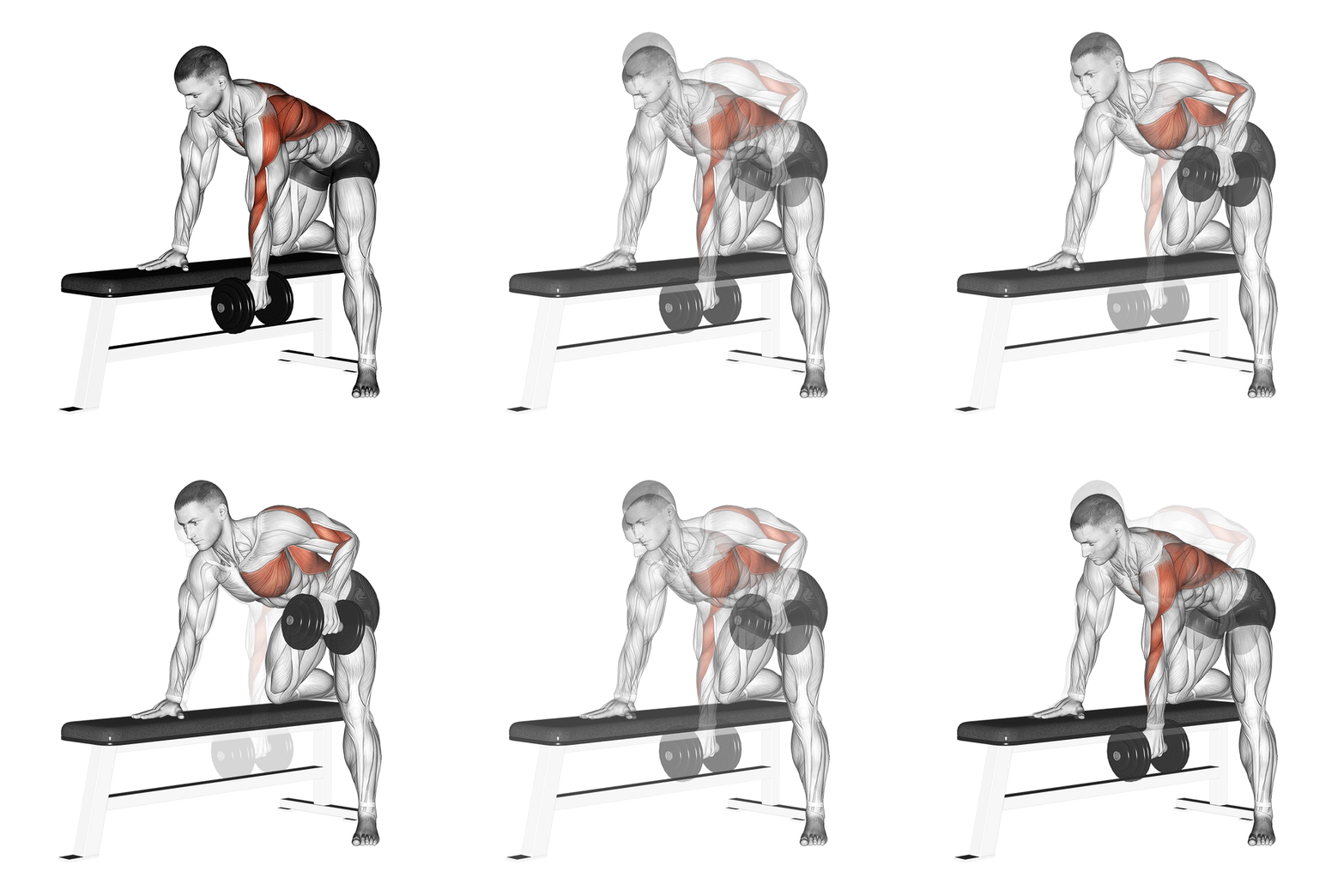
What is the dumbbell bent over row?
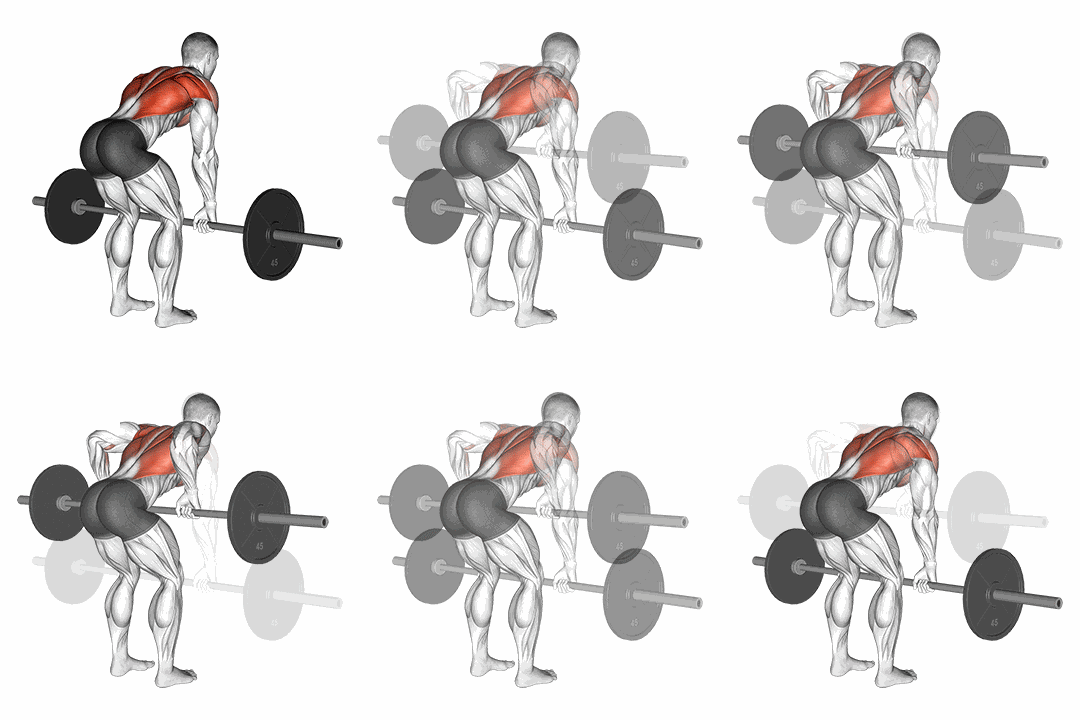
The dumbbell bent over row is a horizontal pull performed with one dumbbell in each hand, hinged forward at the hips to about a 45° torso angle. You row both dumbbells to the lower ribs, squeeze the shoulder blades, and lower under control. Each side works independently, exposing strength asymmetries that a barbell hides. Because the dumbbells let you pull along a slightly different path, the lower back gets less compressive load than a barbell row at equivalent weight. It's the smartest mid-back builder for hybrid athletes.
How to do the dumbbell bent over row
- 1
Hinge to 45°
Stand with feet hip-width, dumbbells in hand. Push the hips back and lean forward until the torso is roughly 45°, back flat, knees soft.
- 2
Set the lats
Let arms hang straight, palms facing each other or slightly turned in. Pull the shoulder blades down and back before you move the dumbbells.
- 3
Row to the lower ribs
Drive the elbows up and back along the ribs until the dumbbells touch the lower-rib area. Keep the torso angle frozen.
- 4
Lower under control
Take 2 s on the way down to a full stretch at the bottom. Don't let the shoulders round forward, keep the chest proud.
Pro tip
Pretend there's a wall right behind you and you're trying to elbow it. The cue forces the elbows back along the ribs instead of flaring out into a delt row.
Common mistakes
Standing up too soon.
Bobbing up with the hips on each rep turns it into a power clean. Lock the torso at 45° for every rep.
Rounded lower back.
A rounded spine under load is the recipe for injury. Brace the abs and keep the back flat as a table.
Elbows flared 90°.
Wide elbows turn this into a rear-delt row. Keep elbows tighter to the ribs to hit the lats and mid-back.
Dropping the dumbbells fast.
Free-falling the eccentric wastes half the work. Take 2 s down for real hypertrophy stimulus.
Variations and progressions
Easier
Chest-supported row
Lie chest-down on an incline bench. Removes the lower-back demand and lets you focus purely on the pull.
Harder
Pendlay-style dumbbell row
Reset the dumbbells on the floor every rep, torso at 90°. Brutal for strength and removes any momentum.
No bench, no barbell?
Single-arm dumbbell row
One hand braced on a bench or rack, row one dumbbell at a time. Same muscles, even kinder on the back.
How to program it
Three protocols by goal. Pick one per cycle and aim for progression on load or distance.
| Goal | Sets × distance | Load | Rest |
|---|---|---|---|
| Strength | 5 × 5 | Heavy DBs | 2-3 min |
| Hypertrophy | 4 × 8-12 | Moderate | 90 s |
| Volume pump | 3 × 15 | Lighter | 60 s |
Dumbbell Bent Over Row FAQ
Why dumbbell row over barbell row?
Three wins: each side works independently so imbalances surface, the path is more shoulder-friendly, and the lower back takes less compression. Pay the cost in slightly less max load. For most hybrid and Hyrox athletes who don't compete in powerlifting, the dumbbell version is the better daily choice.
Should I use straps?
On heavy work sets (5-8 reps), yes. Your grip will fail before your back, and the goal of the row is to train the back. Save raw grip work for farmers carries and deadlift hold-time blocks. On lighter hypertrophy sets, go strapless to bank some forearm work.
How do I row without rounding my back?
Start lighter than ego wants. Hinge from the hips with a flat back before you pick up the dumbbells. Brace the abs hard, look 1-2 m in front of your feet (not at the floor under your nose), and stop the set the moment form breaks. A rounded rep teaches a rounded pattern.