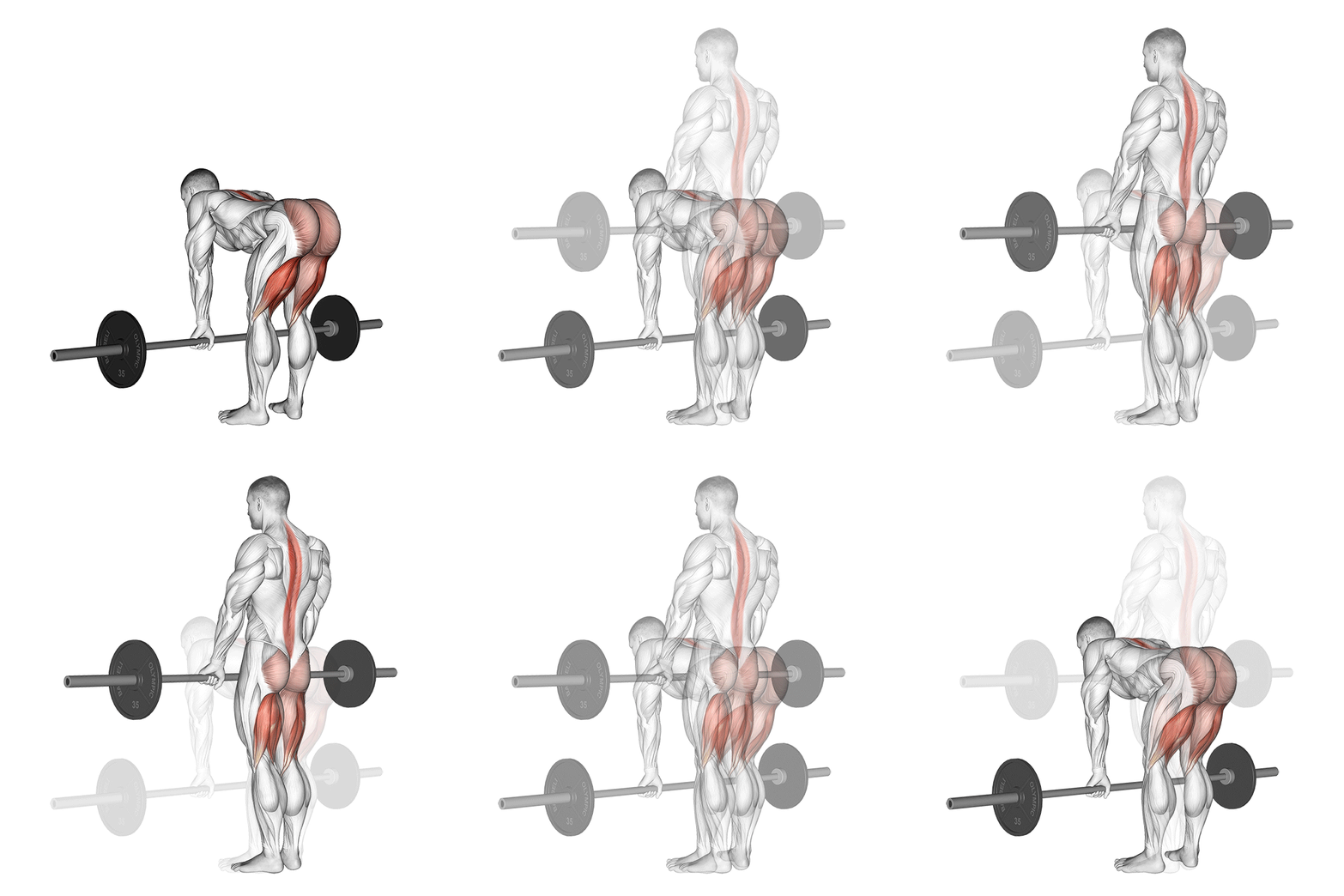
What is the barbell straight leg deadlift?
The barbell straight leg deadlift, often called the stiff leg deadlift, is a hip hinge performed with the knees nearly locked. You hold a barbell at arm's length, push your hips back and slide the bar down your thighs until your hamstrings run out of range, then drive your hips forward to stand tall. Keeping the knees straight shifts almost all the work onto the hamstrings and glutes and loads them in a deep stretch, exactly where growth is best stimulated. It is a staple accessory for lifters chasing bigger hamstrings, a stronger deadlift lockout and a hinge pattern that holds up under fatigue.
How to do the barbell straight leg deadlift
- 1
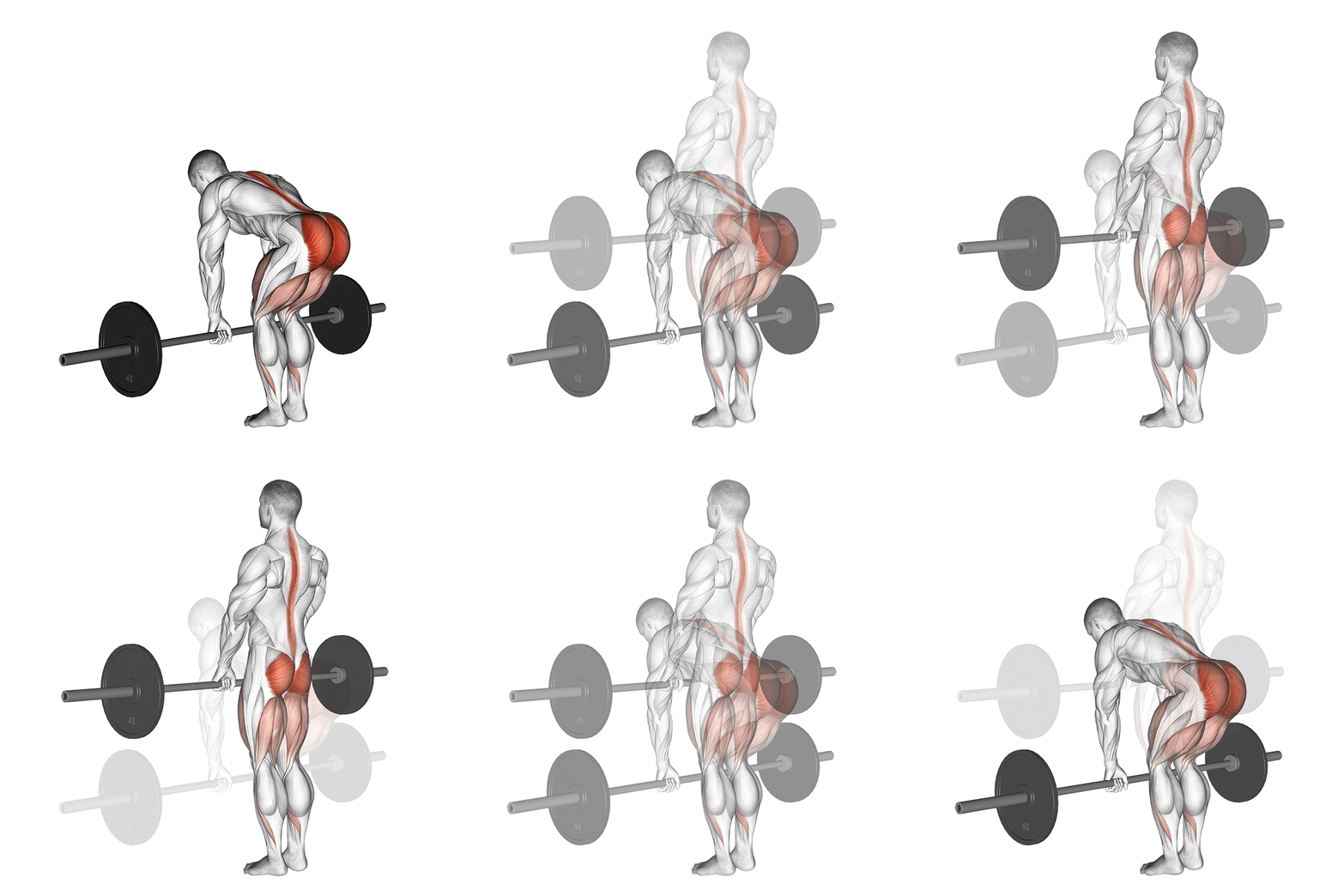
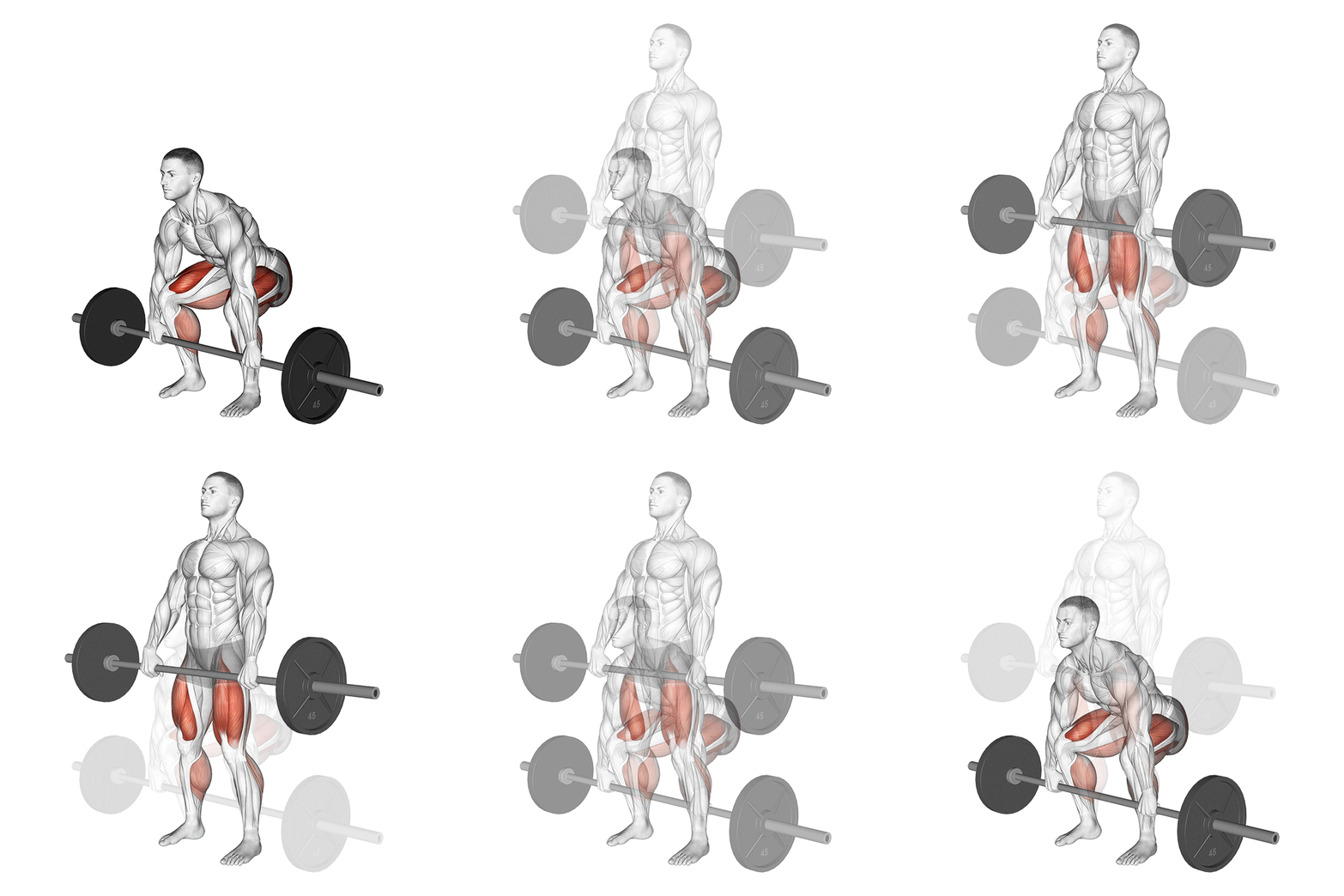
Set up like a deadlift, hips higher
Stand with feet hip width, bar over mid-foot, grip just outside your legs. Knees soft but nearly straight, hips higher than a conventional pull, chest proud.
- 2
Push your hips back
Initiate by sending your hips straight back, not by bending forward. The bar stays glued to your thighs, lats tight, back flat.
- 3
Lower until your hamstrings stop you
Slide the bar down your legs until you feel a strong hamstring stretch, usually around mid-shin. The rep ends where your back starts to round, not at the floor.
- 4
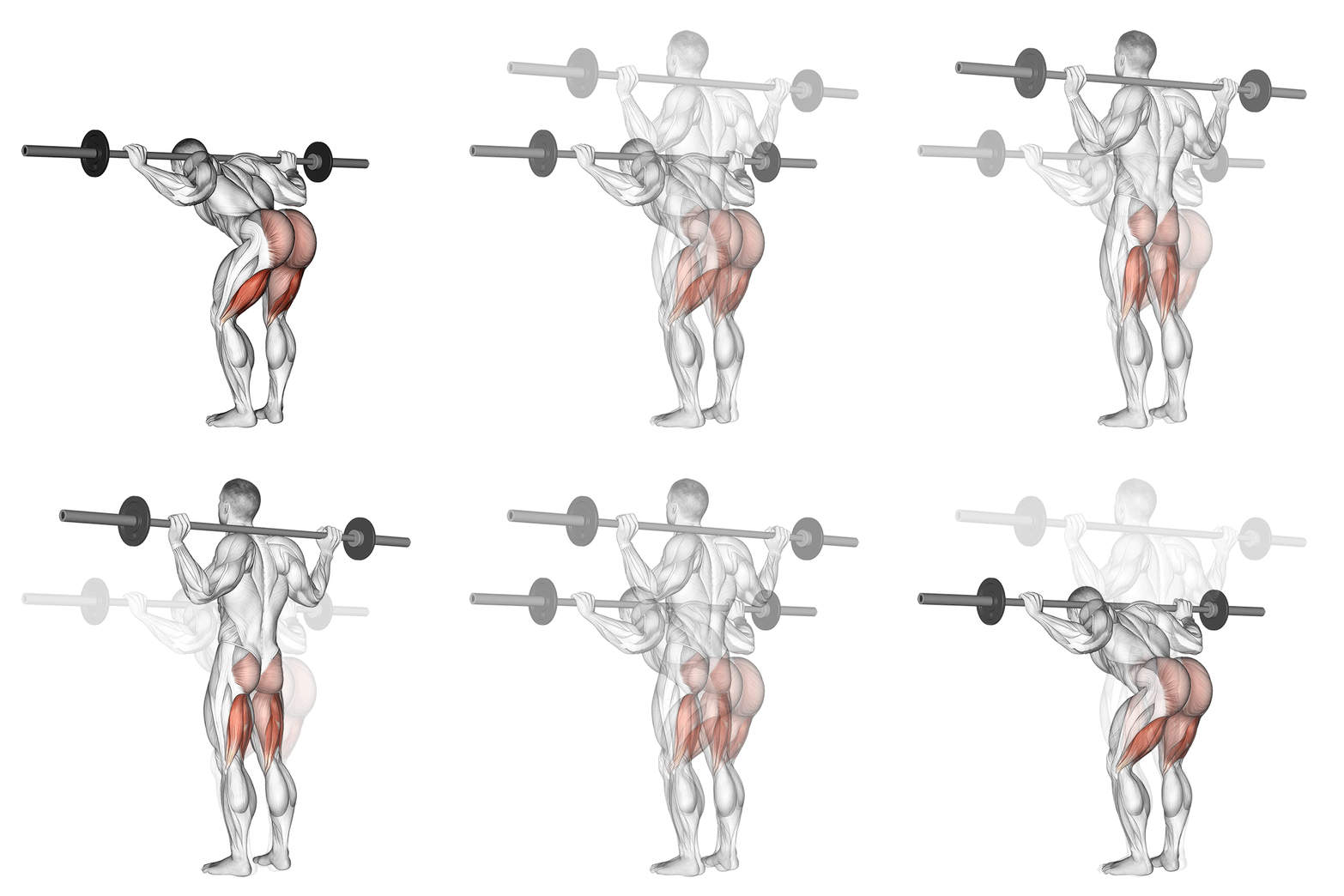
Drive the hips through
Squeeze your glutes and push your hips forward to stand tall. Finish upright, no exaggerated lean back, and keep the bar close the whole way up.
Pro tip
Range of motion is earned, not forced. Lower only as far as a flat back allows today; after a few months of consistent work, the bar will reach your feet on its own.
Common mistakes
Rounding the lower back.
Once the lumbar spine rounds, the load leaves the hamstrings and lands on the discs. Cut the range and film your sets from the side.
Hyperextending the knees.
Straight means nearly straight, not slammed into lockout. Keep a micro-bend; jamming the knees back strains the joint and robs hamstring tension.
Turning it into an RDL.
If your knees bend as you descend, you drift into a Romanian deadlift and lose the signature stretch. Set the knee angle at the top and freeze it.
Loading it like a deadlift.
This is an accessory, not a max-effort lift. Ego loading shortens range and rounds backs; most lifters grow best between 40 and 60 percent of their deadlift.
Variations and progressions
Easier
Romanian deadlift
Allowing 15-20° of knee bend reduces the flexibility demand and lets you load heavier while you build hamstring length.
Harder
Deficit straight leg deadlift
Stand on a 25 kg plate or low block. The extra range deepens the stretch; keep the loads honest and the back flat.
No barbell?
Dumbbell straight leg deadlift
Two dumbbells held along your thighs give the same hinge with a friendlier grip, ideal at home or when the bar path bothers your shins.
How to program it
Three protocols by goal. Pick one per cycle and aim for progression on load or distance.
| Goal | Sets × distance | Load | Rest |
|---|---|---|---|
| Hypertrophy | 4 × 8-10 | Moderate, RPE 7-8 | 2 min |
| Strength accessory | 3 × 6 | 50-60% of deadlift 1RM | 2-3 min |
| Stretch focus | 3 × 10, 3 s descents | Light to moderate | 90 s |
Barbell Straight Leg Deadlift FAQ
What's the difference between a straight leg and a Romanian deadlift?
Knee angle and range. The RDL uses 15-20° of knee bend and stops around mid-shin; the straight leg version keeps the knees nearly locked, demands more hamstring flexibility and creates a deeper stretch. Treat the RDL as your heavy hinge and the straight leg deadlift as the stretch-focused accessory. You don't need both in the same session.
Should the plates touch the floor every rep?
No. Your range ends where your hamstrings run out and your spine starts to flex, which for most lifters is somewhere between the knee and mid-shin. Touching the floor with a rounded back is not extra range, it's a lumbar stress test. If you want floor contact, earn it with months of mobility work or use smaller plates.
Why do I feel it in my lower back and not my hamstrings?
Three usual suspects: you're bending forward instead of pushing the hips back, you're going deeper than your flexibility allows, or the load is too heavy to control. Lighten the bar, shorten the range, and think about pushing your hips to the wall behind you. A correct set leaves your hamstrings burning, not your spine.