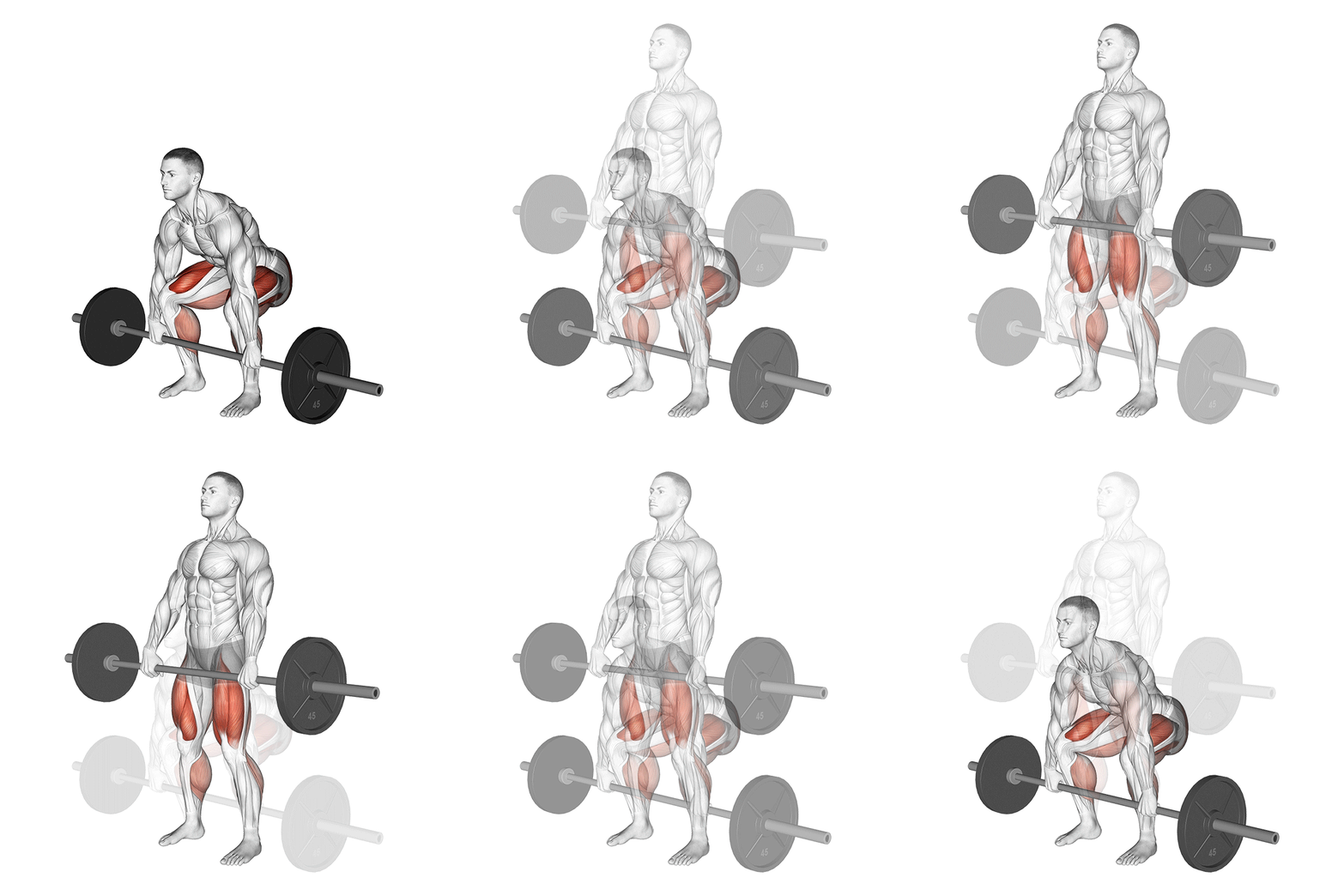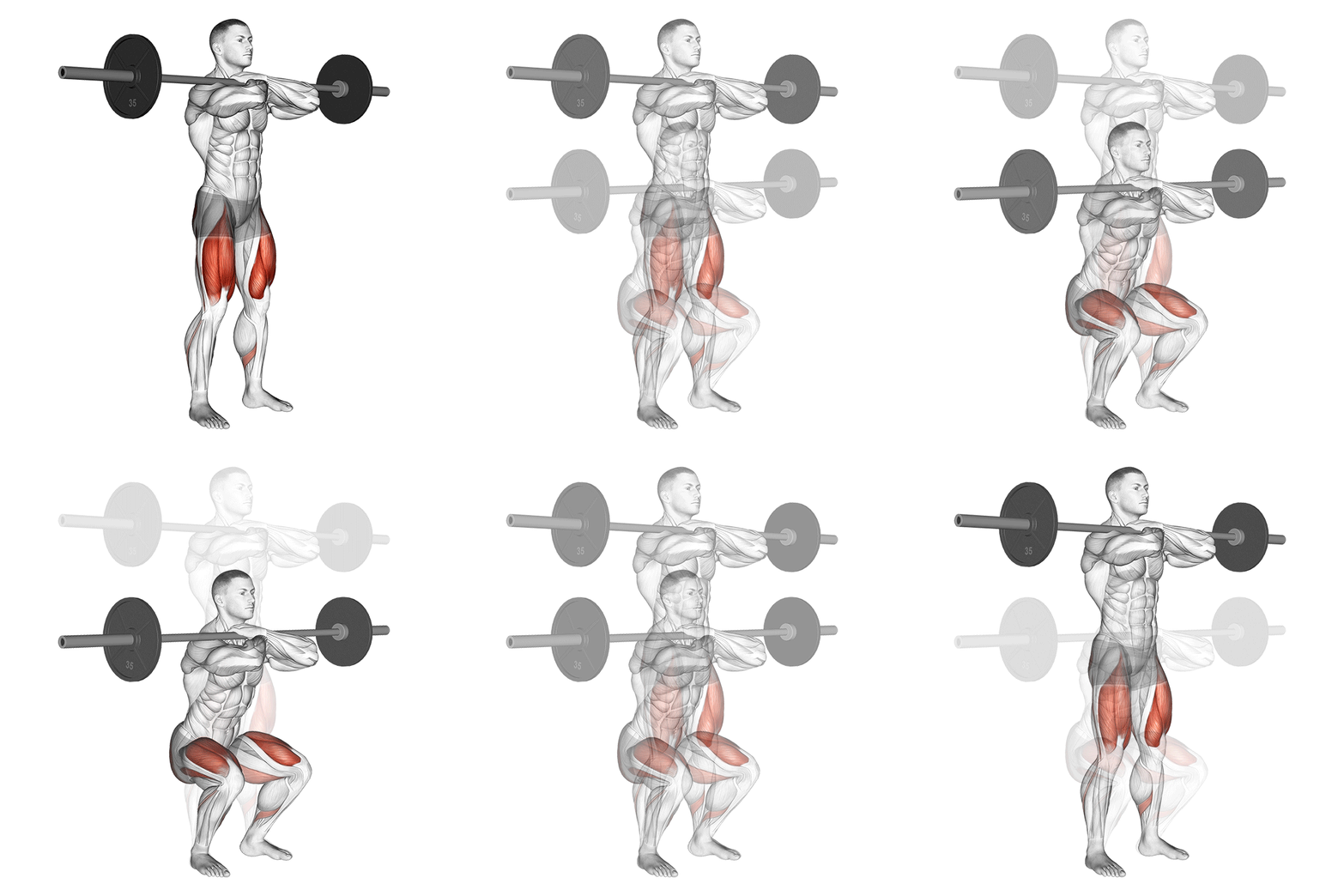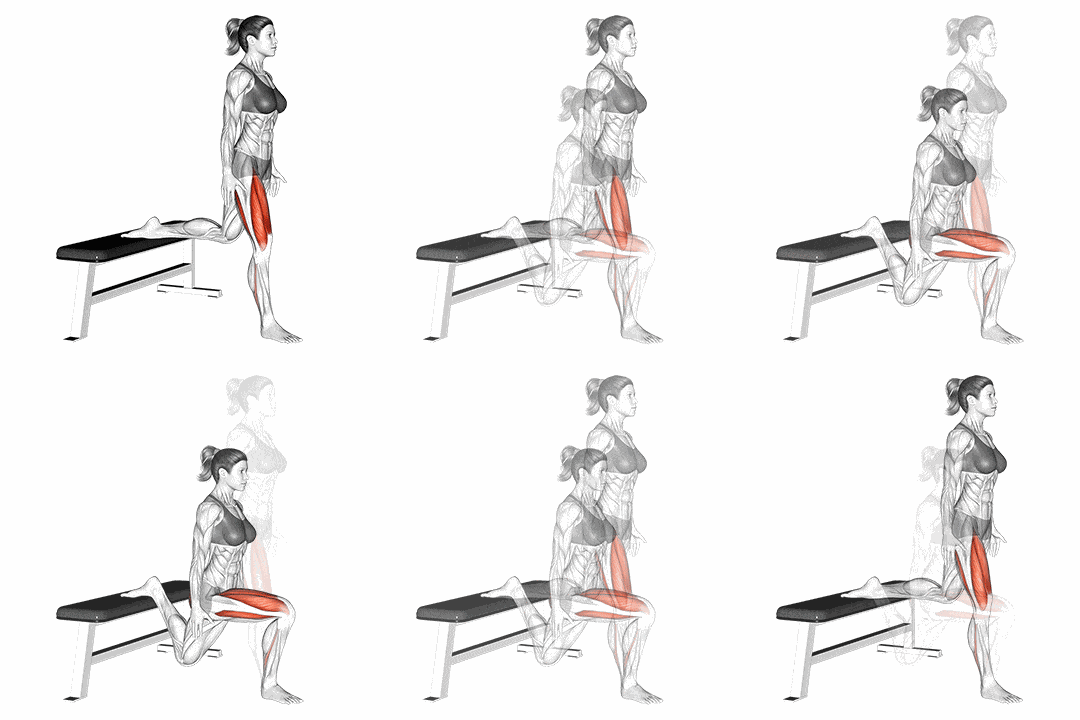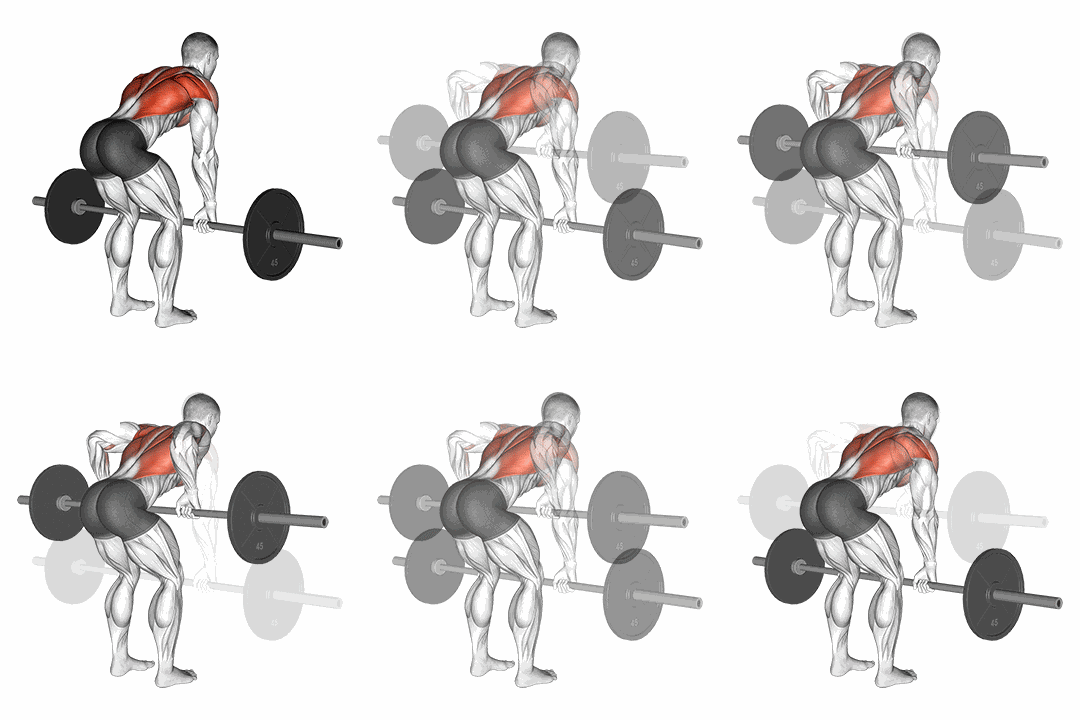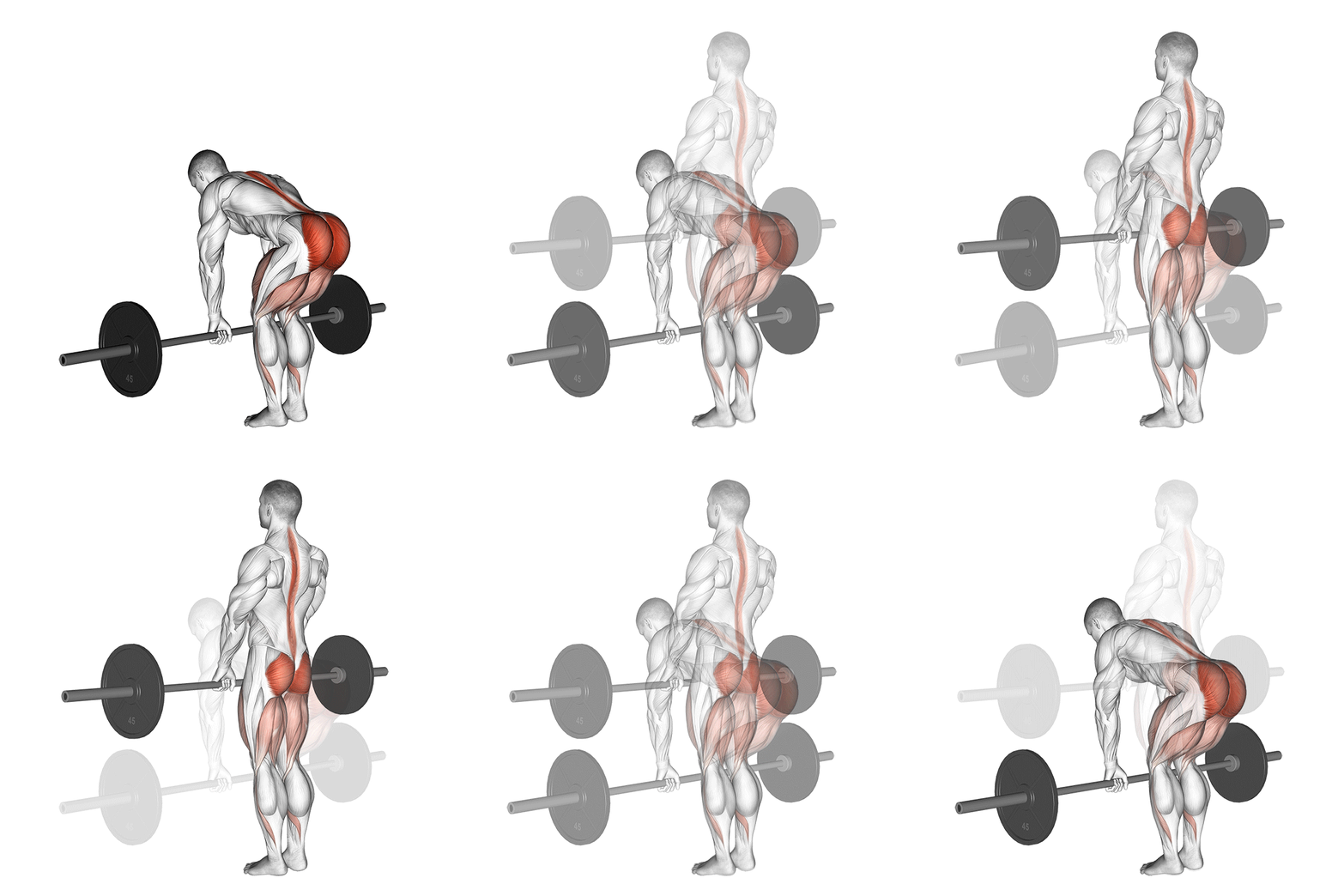
What is the romanian deadlift?
The Romanian deadlift, or RDL, is a top-down hinge accessory. You start standing with the bar in your hands, then push your hips back and lower the bar along your thighs until you feel a deep hamstring stretch, typically just below the knees. Knees stay slightly bent throughout, the back stays flat, and the bar never touches the floor. It's the most direct way to build hamstring and glute strength, fix a weak deadlift lockout, and bulletproof the lower back without the spinal load of a full deadlift.
How to do the romanian deadlift
- 1
Start standing tall
Hold the bar at hip height with hands just outside your legs. Stance hip-width, knees soft, lats engaged. This is the top position of every rep.
- 2
Push the hips back
Initiate by sending your hips backward, not by bending forward. Imagine closing a drawer behind you with your butt. The bar follows your thighs down.
- 3
Lower until you feel the stretch
Keep the knees at the same soft bend. Stop when your hamstrings tell you to, usually just below the kneecap. If your back rounds, you've gone too low.
- 4
Drive the hips through
Reverse by pushing the hips forward, not by pulling with the back. Finish standing tall with glutes squeezed. The bar stays close to your body the whole way.
Pro tip
Treat the RDL as a hamstring stretch with a barbell, not a half-deadlift. Stop at the depth where your hamstrings load, not at an arbitrary floor target. Range of motion is individual.
Common mistakes
Squatting it down.
Bending the knees more as you lower turns it into a stiff-legged squat. Hips back, knees fixed.
Rounding at the bottom.
Chasing depth at the cost of a flat back loads the lumbar. Stop where your hamstrings stop you.
Bar drifting forward.
A bar that swings away from your thighs is a mini back-extension. Keep lats engaged, bar on the legs.
Going too heavy.
RDLs reward control, not max load. If form breaks before the rep target, drop 20% and rebuild.
Variations and progressions
Easier
Dumbbell RDL
Two dumbbells let you sit deeper into the hinge and learn the pattern with less spinal load.
Harder
Single-leg RDL
Half the load, double the demand on balance, glute medius and proprioception. Brutal for athletes.
No barbell?
Kettlebell RDL or hip thrust
A single heavy kettlebell or a hip thrust hits the same posterior chain with home-gym equipment.
How to program it
Three protocols by goal. Pick one per cycle and aim for progression on load or distance.
| Goal | Sets × distance | Load | Rest |
|---|---|---|---|
| Hypertrophy | 4 × 8-12 | 60-70% deadlift 1RM | 90 s |
| Strength | 5 × 5 | 70-75% deadlift 1RM | 2 min |
| Tempo / control | 3 × 8 with 3 s eccentric | 50-60% deadlift 1RM | 90 s |
Romanian Deadlift FAQ
How is this different from a stiff-legged deadlift?
Stiff-legged deadlift starts from the floor and locks the knees. RDL starts from standing and keeps a soft, fixed knee bend. RDL is safer for the lower back and more targeted to hamstrings and glutes. Stiff-leg has a longer range and is harder on the lumbar. For most lifters, RDL wins.
Should the bar touch the floor?
No. The defining feature of the RDL is constant tension on the hamstrings, which you lose the moment the bar rests on the floor. Lower until you reach the end of your hinge, then reverse. Most lifters stop just below the knees, very mobile athletes might reach mid-shin.
How heavy should my RDL be relative to my deadlift?
A well-built RDL usually sits at 60-75% of your conventional deadlift 1RM for sets of 5-8. If you can RDL more than 80% of your deadlift, your conventional pull is probably leaving strength on the table. If you can't RDL 50%, your posterior chain is the weak link.