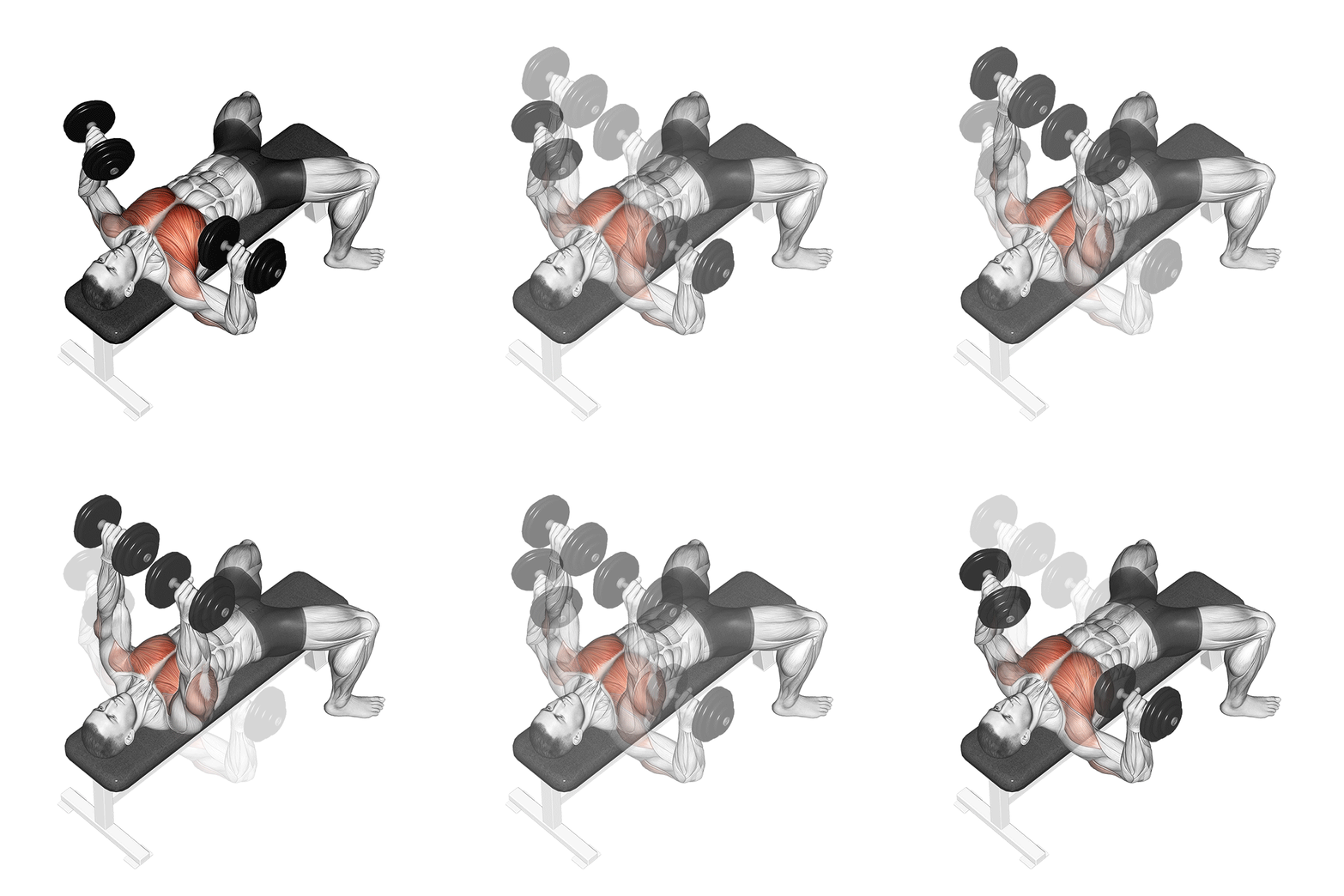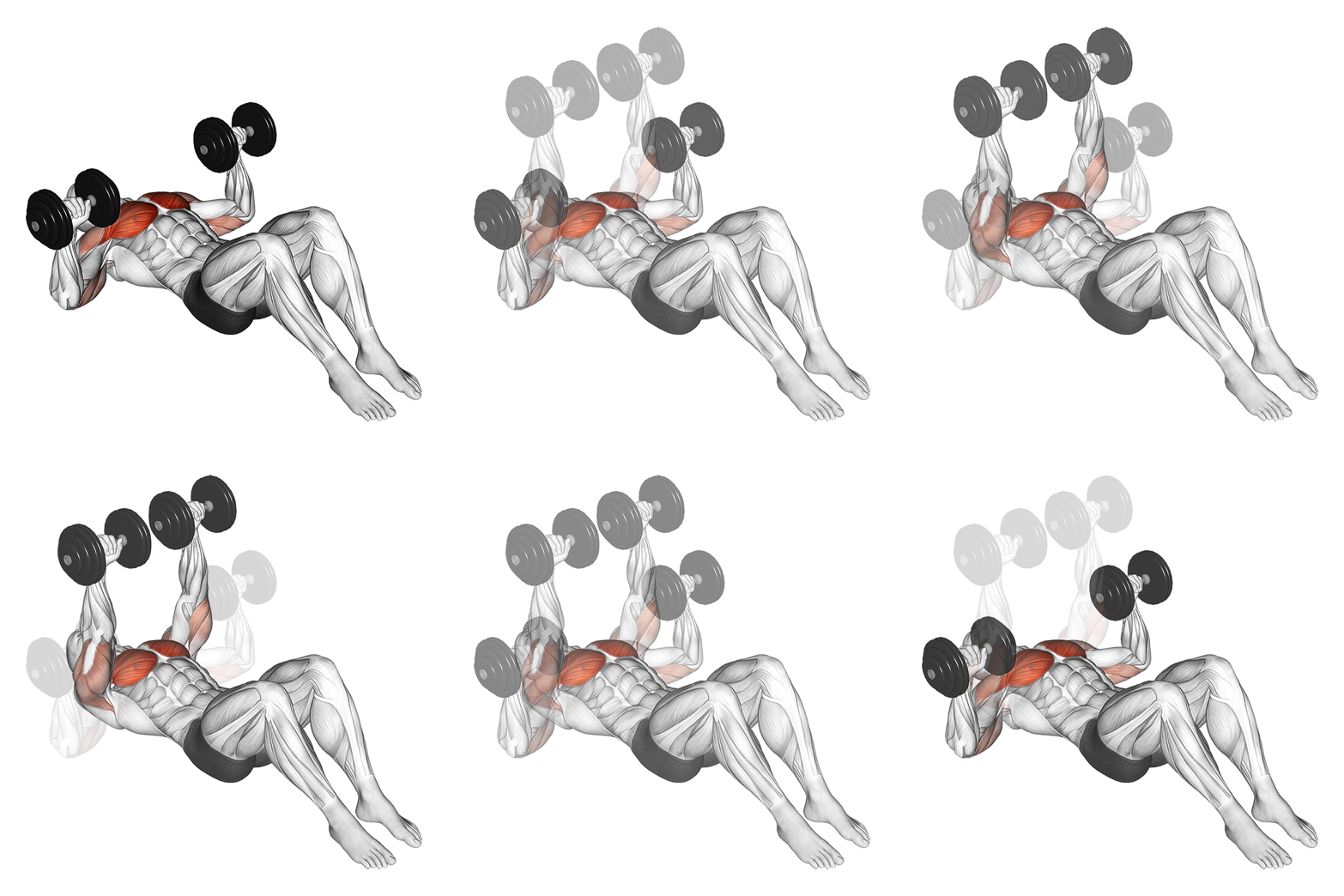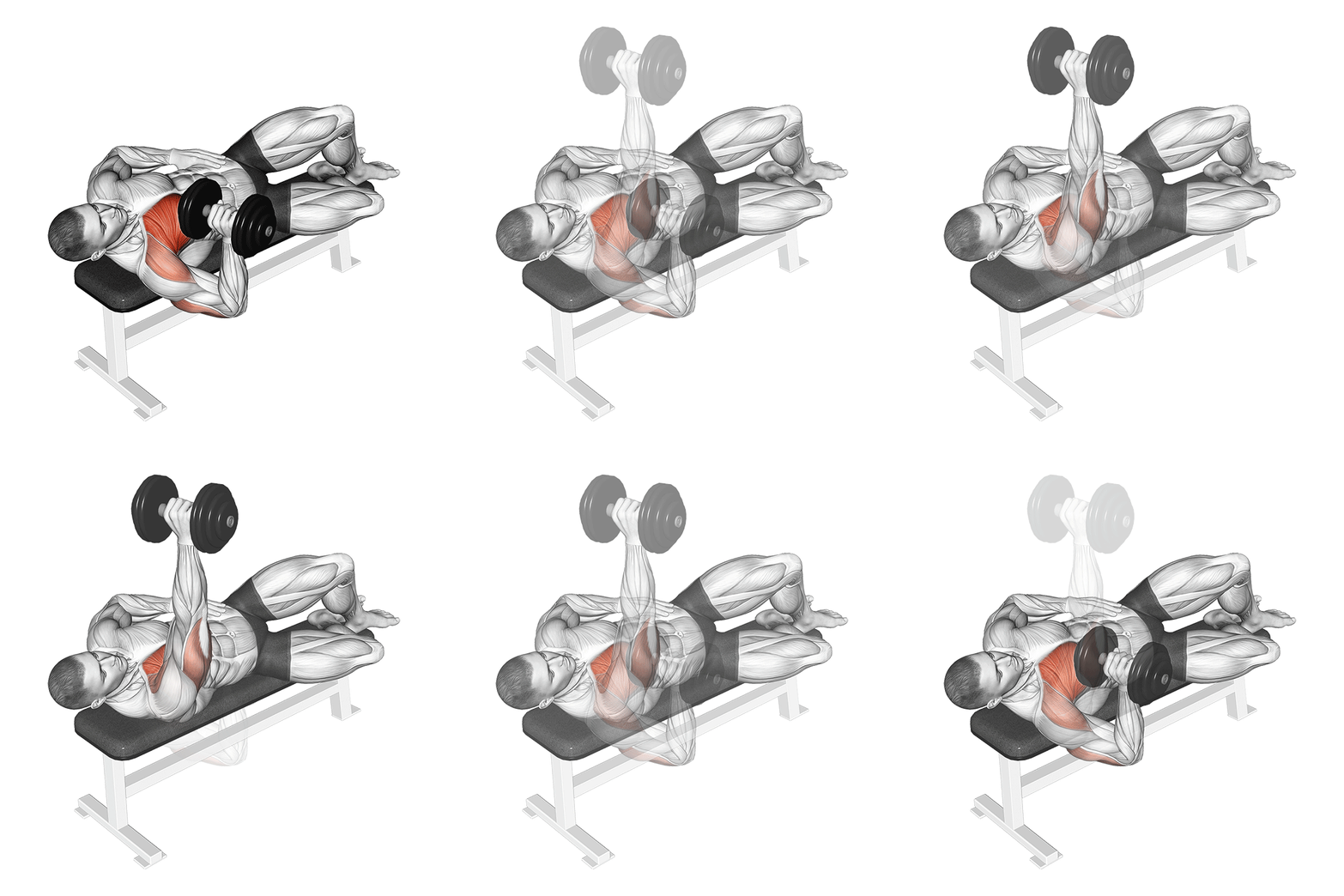
What is the single-arm dumbbell bench press?
The single-arm dumbbell bench press is a flat dumbbell press performed one side at a time, the free hand holding nothing. The off-centre load tries to roll your torso off the bench on every rep, so the obliques and the opposite glute must brace isometrically while the pec presses. That turns a simple chest lift into anti-rotation core training and exposes any left-right strength gap the barbell has been hiding. Load drops well below your two-dumbbell numbers, because stability usually gives out before the pec does. It suits lifters who press fine but twist or shift under heavy weights, and athletes who punch, throw or push one arm at a time.
How to do the single-arm dumbbell bench press
- 1
Bring the dumbbell up
Sit with the dumbbell standing on your thigh, lie back and use the knee to kick it toward your shoulder, exactly as with a pair. Settle it above the chest.
- 2
Build your base
Feet wide and flat, free hand resting as a fist on your sternum, shoulder blades pinned to the bench. The opposite foot and glute are your anchors for the whole set.
- 3
Press without twisting
Lower the dumbbell to the side of your chest, forearm vertical, elbow about 45 degrees from the torso. Press back up while both shoulders and both hips stay glued to the bench.
- 4
Switch and match
Start every set with your weaker arm, then give the stronger side exactly the same reps, no more. Sit up with the dumbbell on your thigh between sides.
Pro tip
Your real counterweight is the opposite leg, not your abs alone. Screw the free-side foot into the floor and squeeze that glute as if finishing a hip thrust; the moment that leg goes quiet, the hips start to swivel and the rep turns sideways.
Common mistakes
Grabbing the bench with the free hand.
Holding on outsources the stabilising to your arm and deletes the whole point of the exercise. If you cannot stay flat without gripping something, the dumbbell is too heavy.
Starting with your usual pressing weight.
The limiter here is the trunk, not the pec. Begin around 70 percent of the dumbbell you press in pairs and add load only when nothing shifts or twists.
Hips rising or rotating off the bench.
If a hip lifts as you press, the obliques have given up and the lower back is improvising. End the set there, rest, and restart lighter rather than grinding crooked reps.
Chasing the dumbbell with the shoulder.
Letting the working shoulder lift off at lockout feels stronger but un-anchors the whole side. Press to a point above the shoulder and keep the blade pinned from first rep to last.
Variations and progressions
Easier
Single-arm floor press
Same idea lying on the floor: shorter range, friendlier on the shoulder, and the ground tells you instantly when the back arches or a hip turns.
Harder
Feet-up single-arm press
Put the feet on the bench or hold them in the air and the leg counterbalance disappears. Expect a big load drop and obliques that burn like a plank.
Alternative
Standing single-arm cable press
The standing version of the same anti-rotation problem. Less pec overload, more carryover to pushing from your feet in sport.
How to program it
Three protocols by goal. Pick one per cycle and aim for progression on load or distance.
| Goal | Sets × distance | Load | Rest |
|---|---|---|---|
| Strength | 4 × 6 per arm | RPE 7-8 | 2 min |
| Hypertrophy | 3 × 8-12 per arm | RPE 8 | 90 s |
| Core + control | 2 × 10 per arm, 2 s pause at the chest | Light, RPE 6 | 60 s |
Single-Arm Dumbbell Bench Press FAQ
What does it give me that the two-dumbbell press doesn't?
The pressing is similar; everything around it changes. You get anti-rotation core work, honest feedback on left-right gaps, and far more stabiliser demand per kilo. It complements heavy bilateral pressing rather than replacing it: keep your barbell or two-dumbbell work as the base and slot this in as a second movement.
How heavy should I go?
Start around 70 to 80 percent of the dumbbell you normally press per hand. The trunk, not the chest, decides when a set ends, so judge progress by how still your hips and shoulders stay, not just by the reps. Add weight once every rep looks identical on video.
What do I do with my free arm?
A fist resting on your sternum is the strictest option and keeps you honest. Reaching it out to the side works as an outrigger and makes the set slightly easier. Holding the bench removes most of the core work, so keep that only for your very first sessions.
Will it fix my strength imbalance?
It reveals the gap and trains it directly, which is most of the fix. Lead every set with the weaker arm, cap the stronger side at the same reps, and the difference usually narrows over a few weeks. A large gap that refuses to move, or one that comes with pain, deserves a professional look.