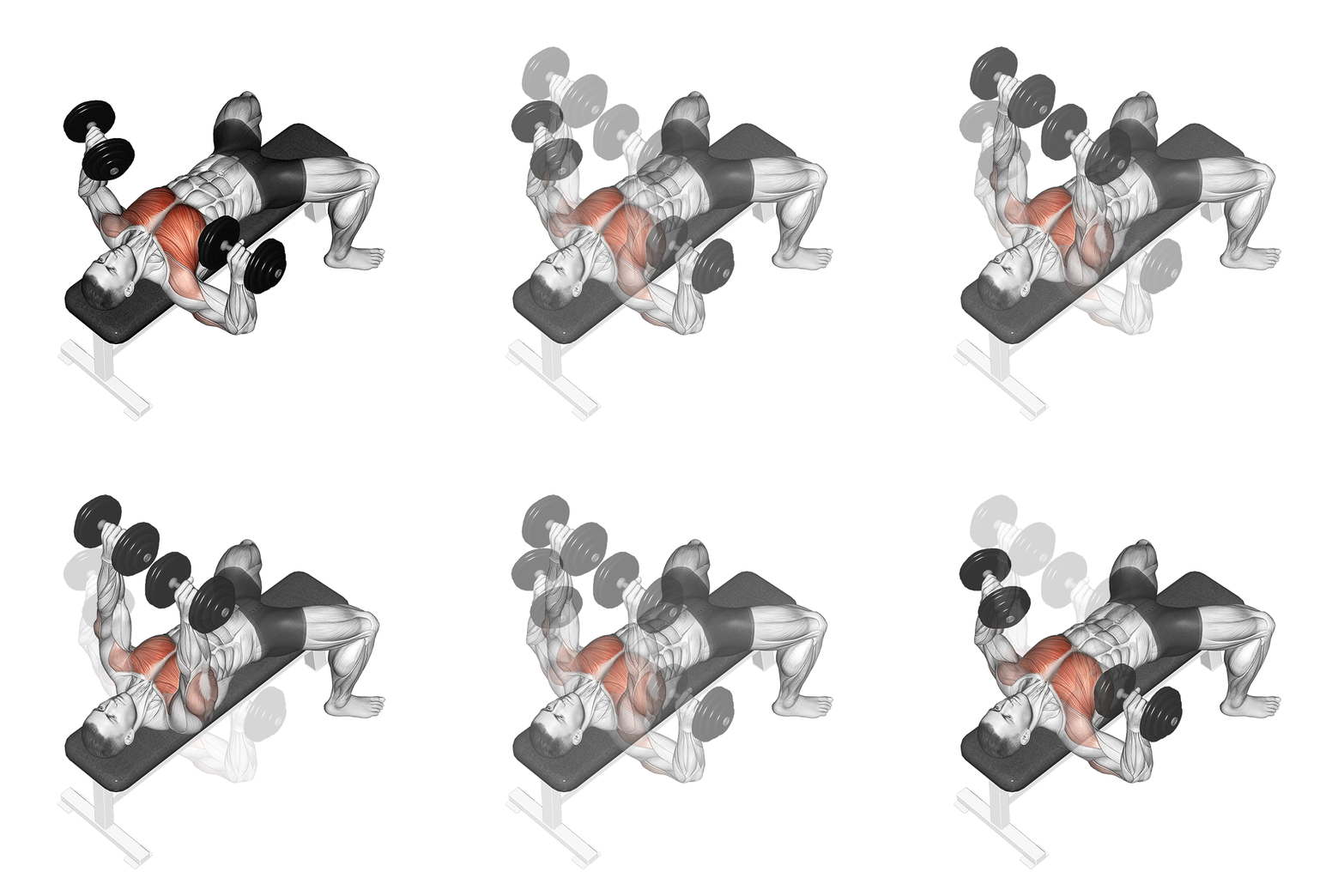
What is the dumbbell bench press?
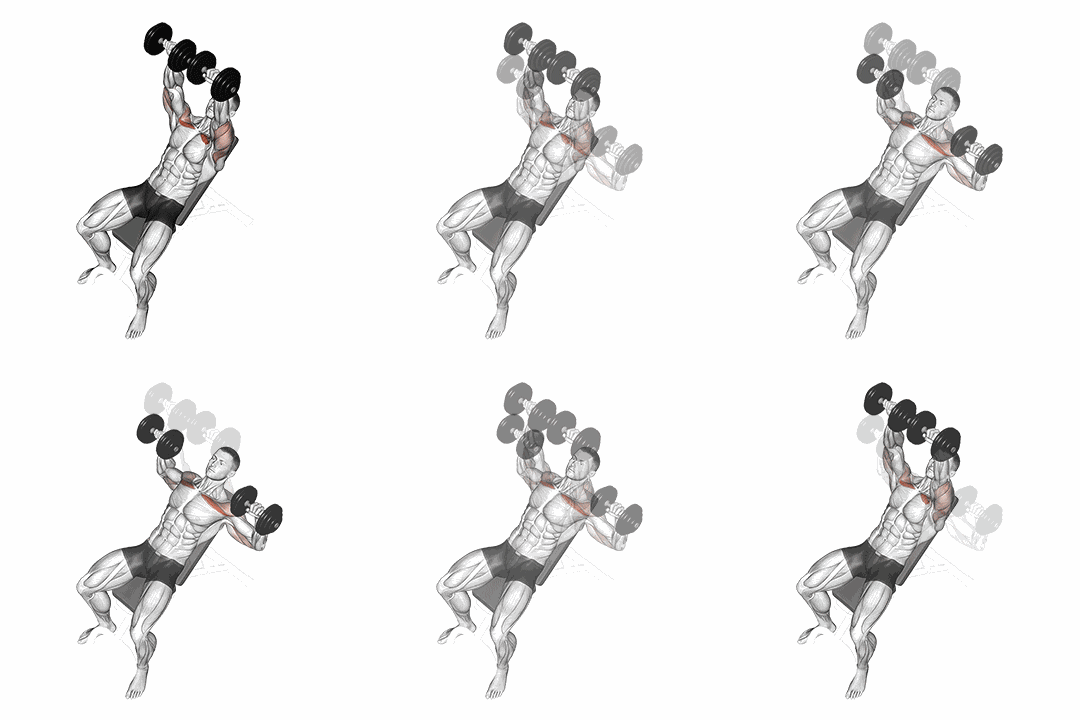
The dumbbell bench press is a horizontal press performed lying on a flat bench with a dumbbell in each hand. You lower the bells out to chest level, then drive them up until the arms are nearly straight. Compared to a barbell, dumbbells move on independent paths, demand more stabiliser work, and allow a deeper stretch on the pec. They're the go-to for fixing left-right imbalances, sparing cranky shoulders, and adding hypertrophy volume without the fatigue of a barbell.
How to do the dumbbell bench press
- 1
Set up on the bench
Dumbbells on your thighs, sit on the bench, then lie back kicking the bells into start position over your chest. Feet planted, shoulder blades pinned.
- 2
Press start position
Arms straight, dumbbells over the shoulders, palms facing your feet (slight angle in is fine). Big breath, brace hard.
- 3
Lower under control
Take 2-3 s to lower the bells to chest level with elbows at 45-60°. Get a deep stretch on the pec without forcing past comfortable range.
- 4
Press up and slightly in
Drive the dumbbells up on a slight arc, finishing nearly together over the shoulders. Don't clink them, stop just before they touch.
Pro tip
Use a slight pause at the chest on every rep. Dumbbells let you stretch deep, that pause turns the stretch into a strength signal instead of a bounce.
Common mistakes
Flared elbows.
Wide elbows wreck the shoulder. Tuck to 45-60° from the torso, exactly like a barbell bench.
Clanking dumbbells at the top.
Bouncing them together kills tension and risks dropping one. Stop just shy of contact and reset.
Lazy setup.
Curling the bells up from the floor wastes energy and risks the shoulder. Kick them up from the thighs.
Asymmetric press.
One arm lagging is a clear imbalance signal. Use lighter dumbbells and match tempo and depth across both sides.
Variations and progressions
Easier
Neutral-grip dumbbell press
Palms facing each other. Easier on the shoulders, great for impingement-prone lifters.
Harder
Single-arm dumbbell bench
Press one bell at a time with the other parked at the chest or at full lockout. Massive anti-rotation core demand.
No dumbbells?
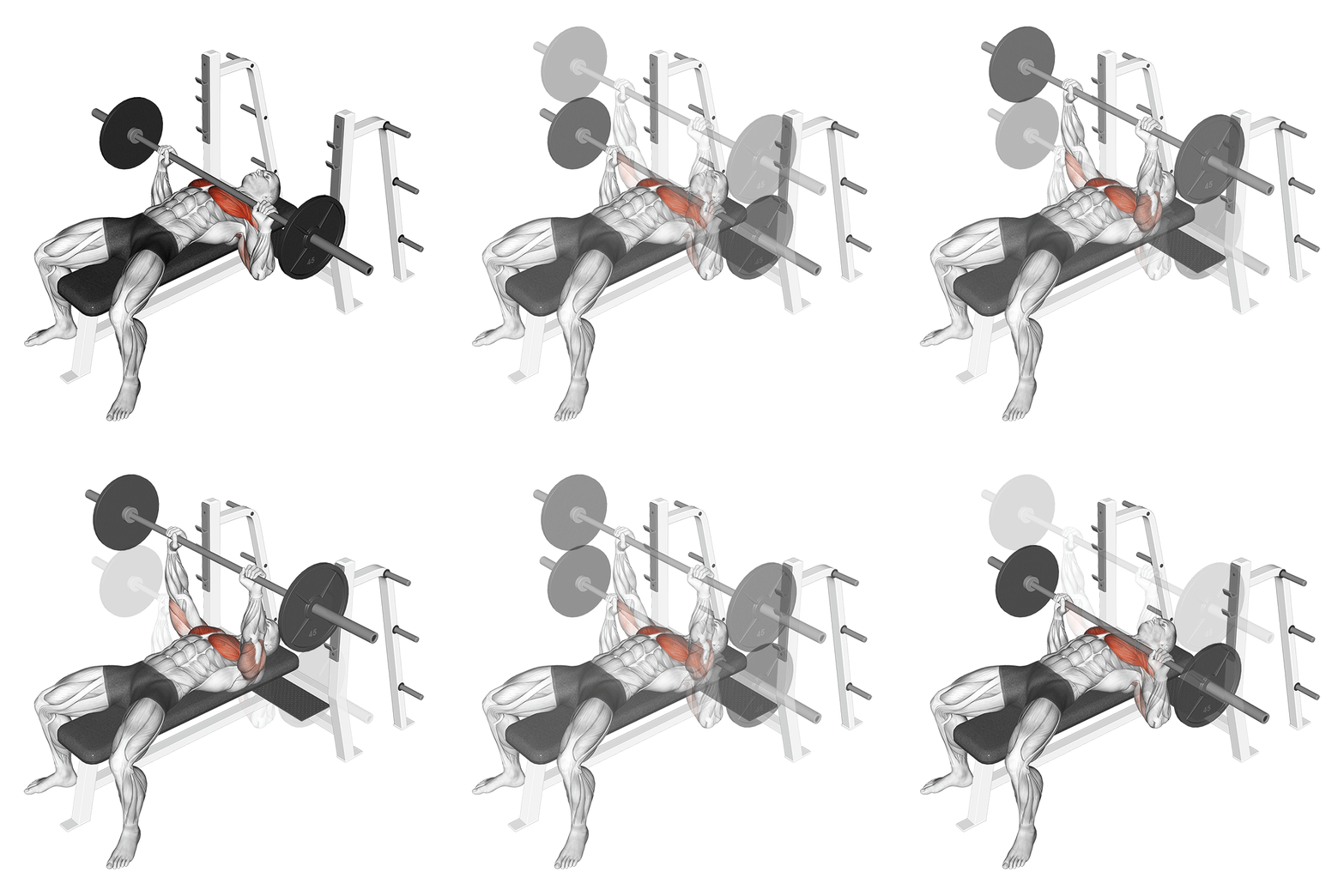
Barbell bench press
The classic version, heavier loading but less stretch and more shoulder demand.
How to program it
Three protocols by goal. Pick one per cycle and aim for progression on load or distance.
| Goal | Sets × distance | Load | Rest |
|---|---|---|---|
| Hypertrophy | 4 × 8-10 | Moderate, RIR 1-2 | 90 s |
| Strength | 5 × 5 | Heavy, controlled | 2-3 min |
| Stretch bias | 3 × 12 with 2 s pause | Light to moderate | 75 s |
Dumbbell Bench Press FAQ
Should I bench heavier with a barbell or dumbbells?
Barbell wins on absolute load because both arms work together and the path is stable. Dumbbells win on stretch and stabiliser work. For raw strength keep the barbell as your A-lift; for pec growth and shoulder health rotate dumbbells in twice a week.
How deep should I go?
Deep enough to feel a strong stretch on the pec, usually with the dumbbell handles just below shoulder level. Stop before the shoulder rolls forward off the bench. If your shoulder hurts, raise the bottom by 2-3 cm.
Why does one side keep failing first?
Almost every lifter has one stronger arm. Always start sets with the weak side and match reps. Add 1 extra set on the weak side once a week, and limit barbell bench when imbalance is over 15% until it closes.