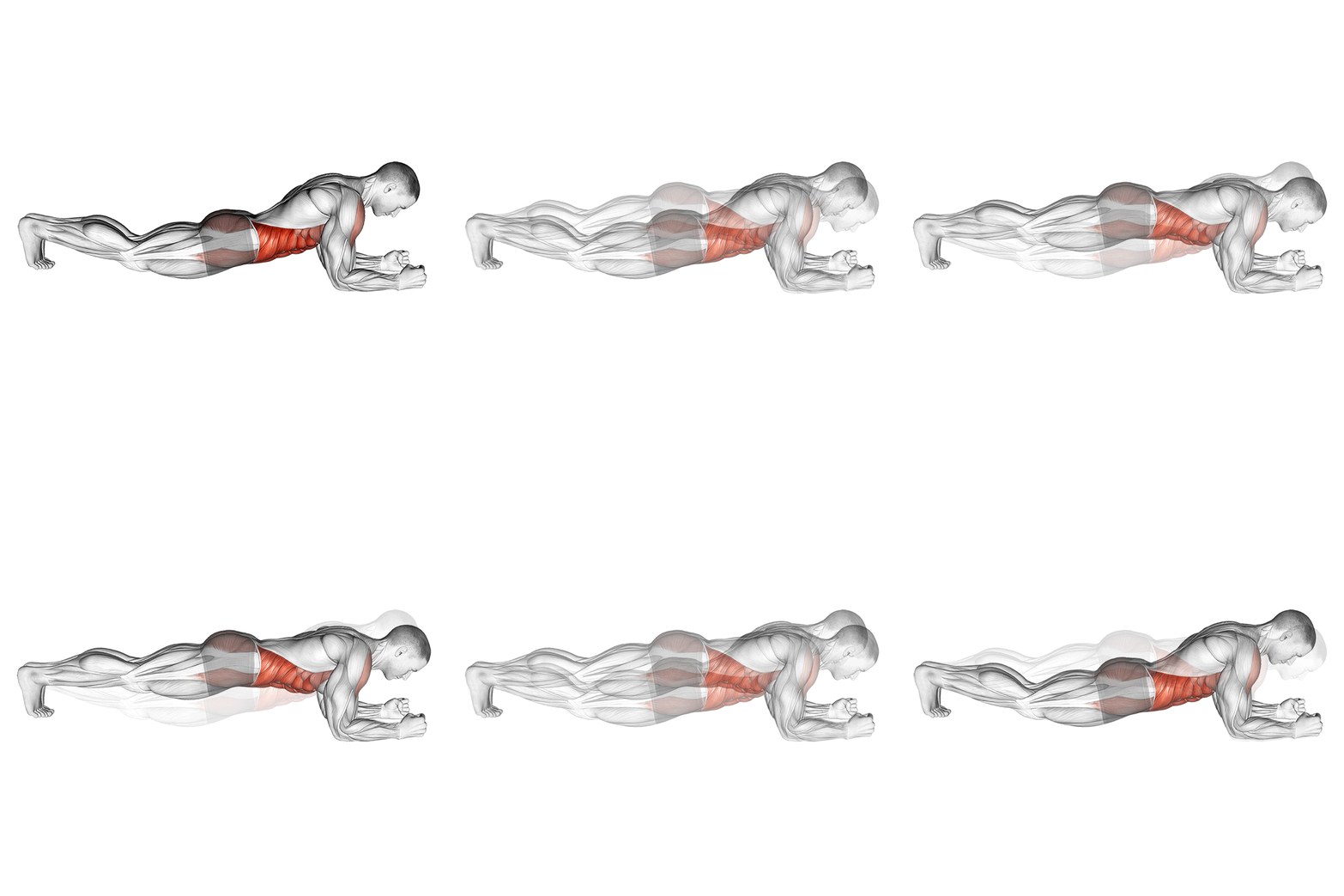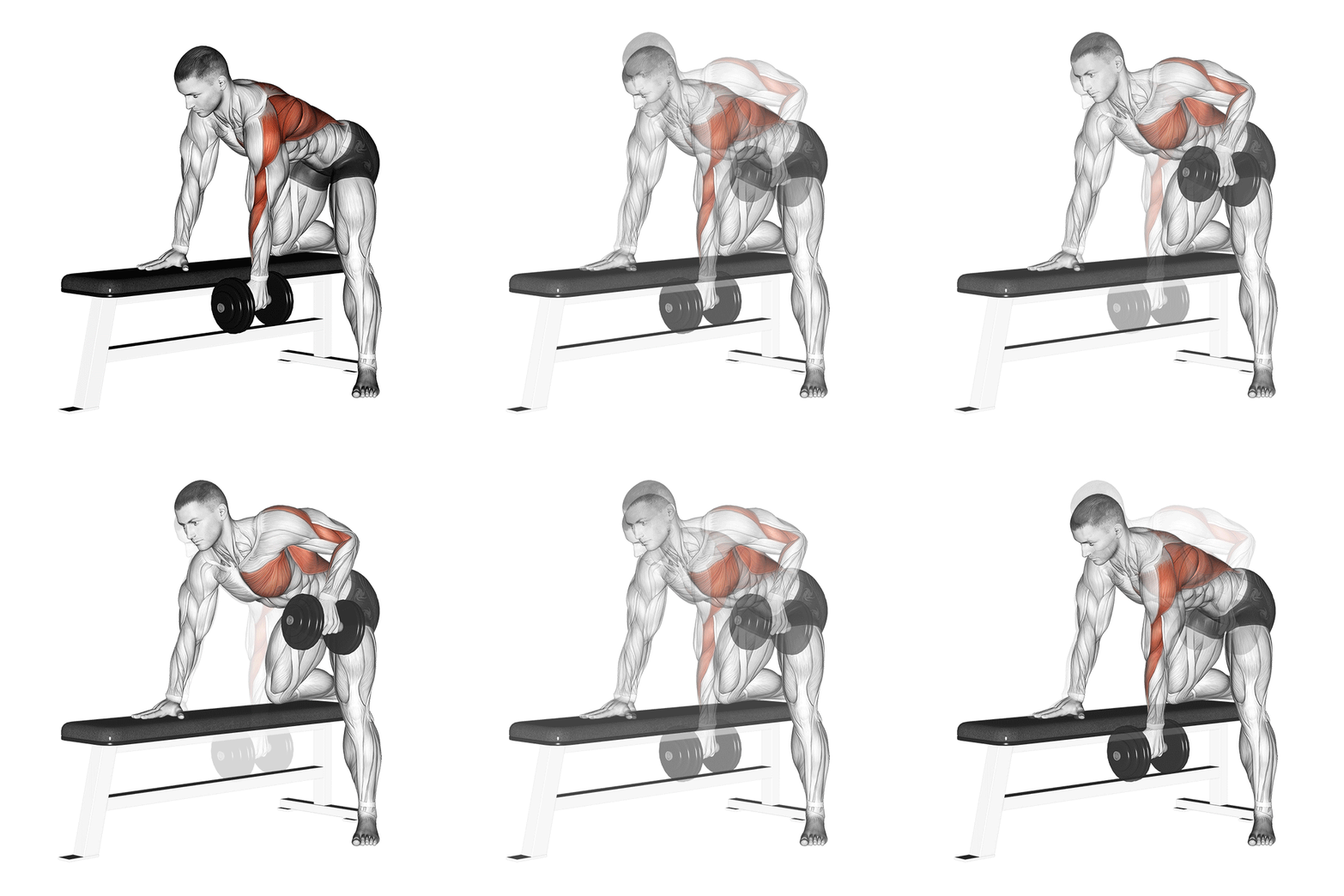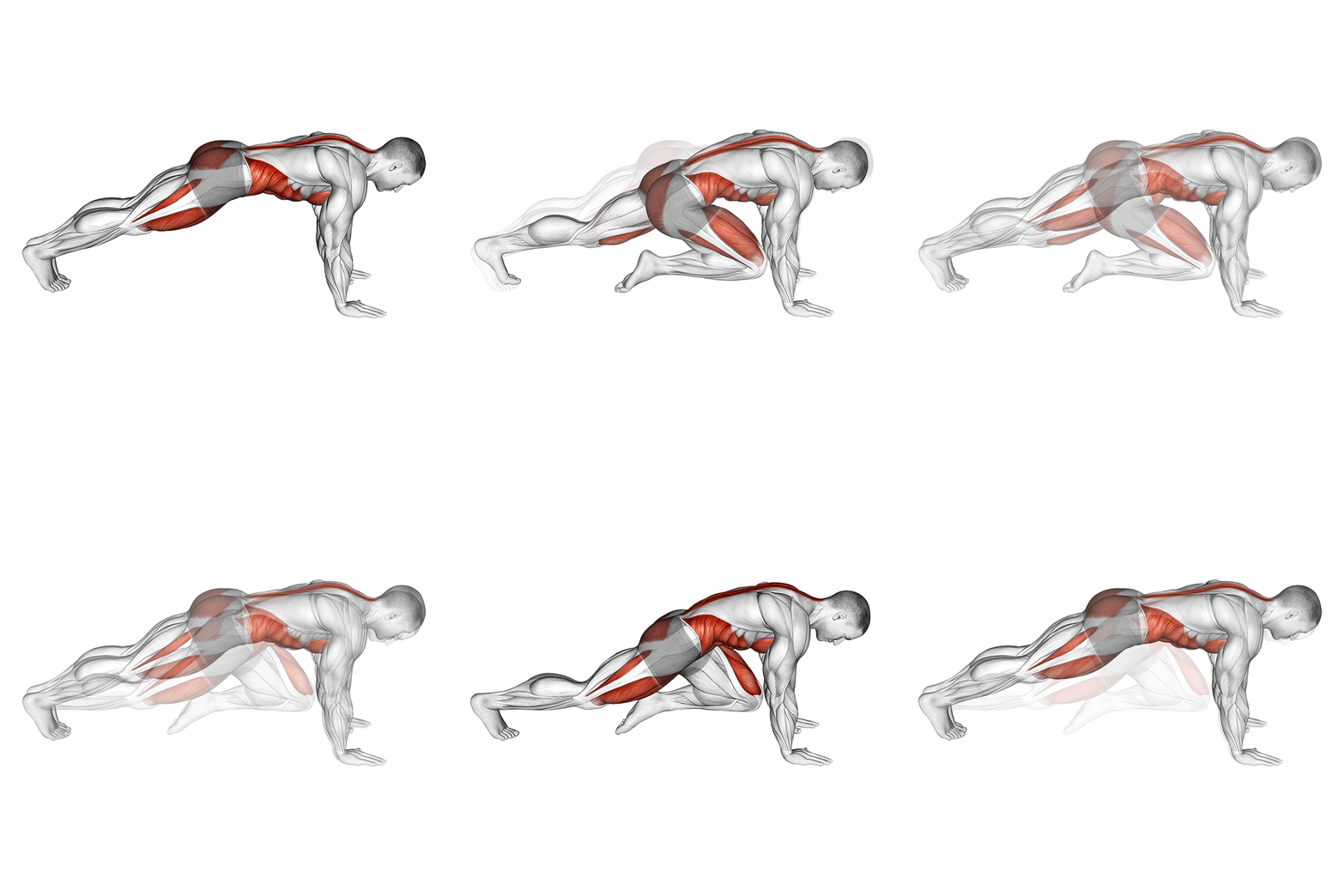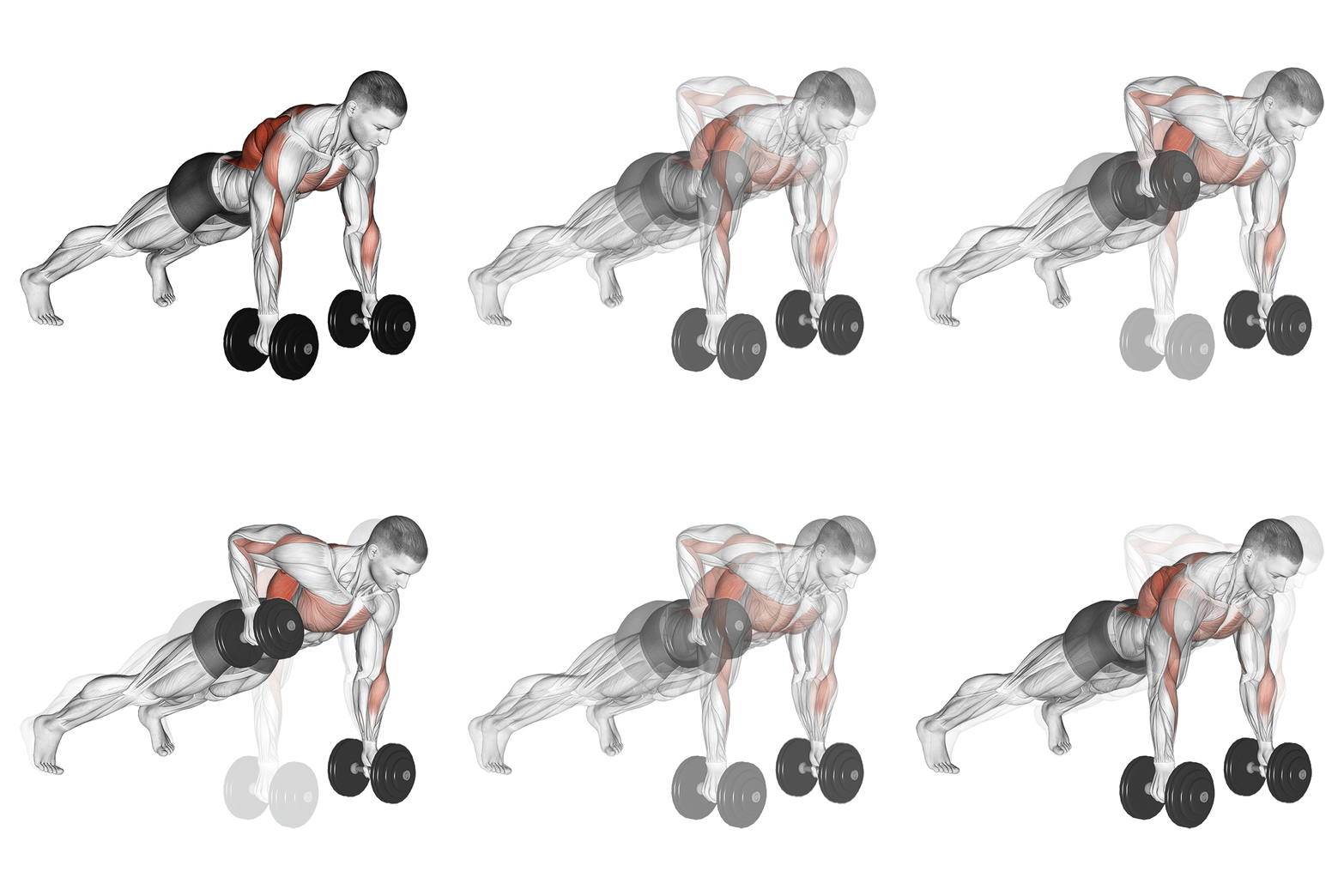
What is the renegade row?
The renegade row is a high plank performed on two dumbbells, where you row one bell to your hip while the other arm and your trunk fight to keep the body dead still. It looks like a back exercise; it is really an anti-rotation core drill with a row attached. Every pull removes one of your four support points, and the obliques, glutes and supporting shoulder have to cancel the twist that creates. For hybrid athletes it buys trunk stiffness that transfers to sled work, carries and running posture. Hex dumbbells, a wide foot stance and a lighter bell than your ego wants are the entry requirements.
How to do the renegade row
- 1
Build the plank on the bells
Set two hex dumbbells under your shoulders and take a high plank: feet wider than hips, one straight line from head to heels, glutes and quads switched on.
- 2
Shift before you pull
Lean a touch of weight into the supporting arm and screw that hand into the handle. The shift should be invisible from the outside; the bell leaves the floor only once you feel locked in.
- 3
Row to the hip pocket
Pull the bell to your hip with the elbow brushing your ribs. Shoulders and hips stay square to the floor: imagine headlights on your pelvis that must keep pointing straight down.
- 4
Place it down, swap sides
Lower for a slow two count and set the bell down silently, then row the other side. A dropped dumbbell is a confession that the weight is too heavy.
Pro tip
Picture a full glass of water standing on your lower back: the set only counts if it stays dry. Filmed from behind, your hips should look bolted in place; the day they start rocking is the day the dumbbell got too heavy.
Common mistakes
Hips twisting toward the ceiling.
Rotating to help the pull deletes the anti-rotation work the exercise exists for. Widen your feet, lighten the bell, and keep the pelvis pointing at the floor.
Feet set like a push-up.
A narrow stance turns every row into a balance scramble and invites the twist. Wide feet are the standard; narrowing them is a progression you earn later.
Round dumbbells.
A bell that can roll will hunt your wrist mid-rep. Use hex dumbbells, or kettlebells with flat stable bases, and stack your wrist directly under the shoulder.
Yanking the bell with a shrug.
Jerked reps run on momentum, strain the neck and shorten the range. Pull with the elbow, pause a beat at the ribs, and lower slower than you lifted.
Variations and progressions
Easier
Renegade row from the knees
Knees on the floor, body straight from head to knees. The shorter lever keeps the anti-rotation challenge honest while you build the supporting-arm stability.
Harder
Push-up renegade row
One push-up on the bells, row left, row right, repeat. The chest joins the party and your plank time per set roughly doubles.
No dumbbells?
Plank shoulder taps
Same rule, zero kit: from a high plank, tap the opposite shoulder without letting the hips sway. Slow taps, wide feet, frozen pelvis.
How to program it
Three protocols by goal. Pick one per cycle and aim for progression on load or distance.
| Goal | Sets × distance | Load | Rest |
|---|---|---|---|
| Anti-rotation quality | 3 × 6-8 per side | Light, 1 s pause at the ribs | 90 s |
| Back accessory | 4 × 8-10 per side | Moderate, hips stay square, RPE 8 | 90 s |
| Circuits | 8-10 per side per round | Light, crisp reps while out of breath | Next station |
Renegade Row FAQ
Is the renegade row a back or a core exercise?
Core first, back second. The bell you can row from a plank is far lighter than what your lats handle in a one-arm row, so the pulling stimulus is modest. The expensive part is everything else: obliques and glutes cancelling the twist, the supporting shoulder holding the fort. If you want a bigger back, row heavy on a bench; come here for a trunk that refuses to rotate.
How heavy should renegade rows be?
Start around half your one-arm row weight. The gauge is not the pull but the plank: if your hips sway or the bell clangs down, drop a notch. Earn 10 strict reps per side with a frozen pelvis before each small jump. Going heavy buys little here anyway, since the exercise pays out through stability, not through the size of the dumbbell.
Why do my wrists hurt during renegade rows?
Usually one of two things. Round dumbbells roll a few millimeters on every rep and your wrist fights the drift the whole set: switch to hex bells or flat-based kettlebells. Or the handle sits too far forward of your shoulder and the wrist bends under load: stack hands directly under shoulders. Once the bell stops moving, gripping a handle is actually kinder to wrists than a palms-flat plank.