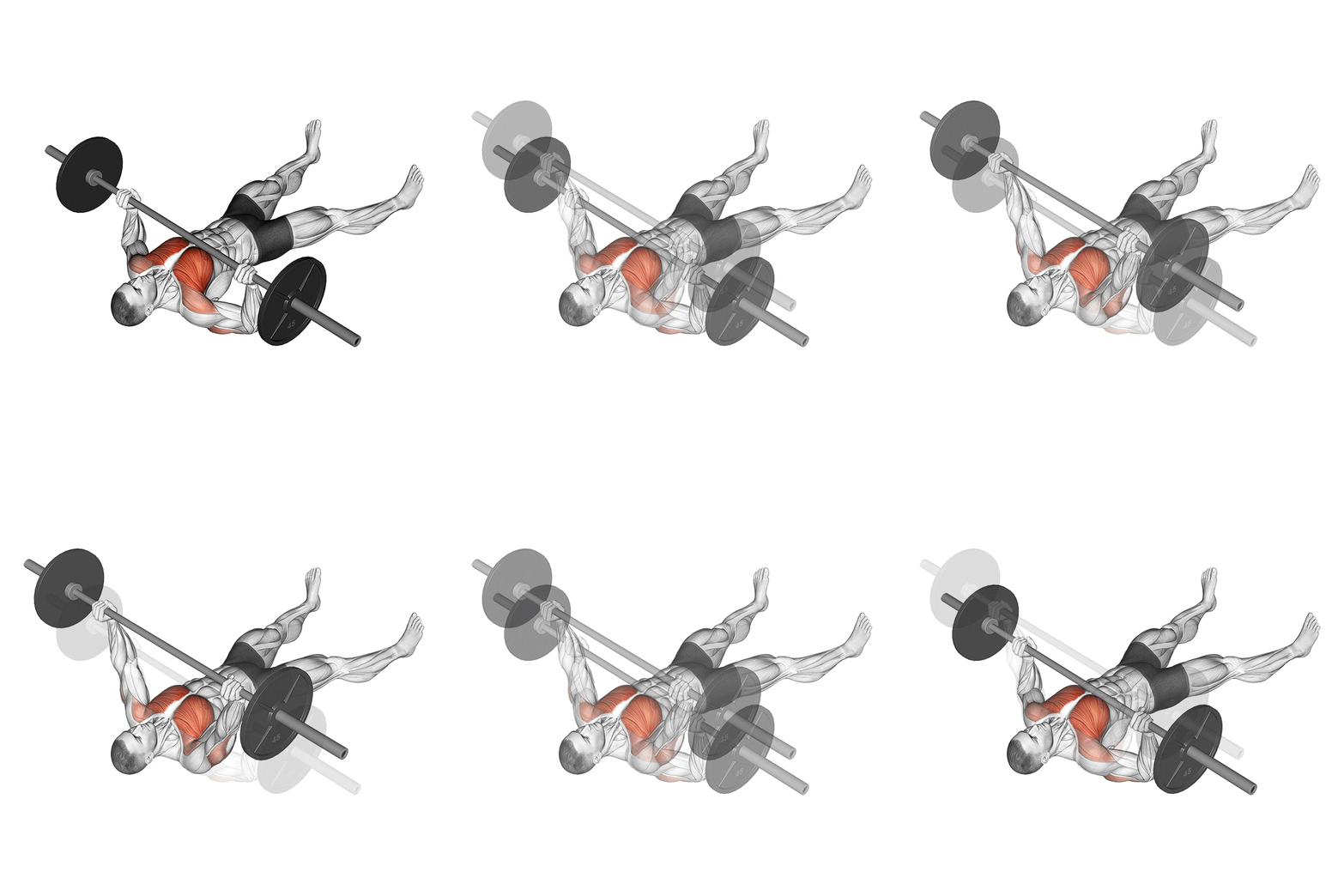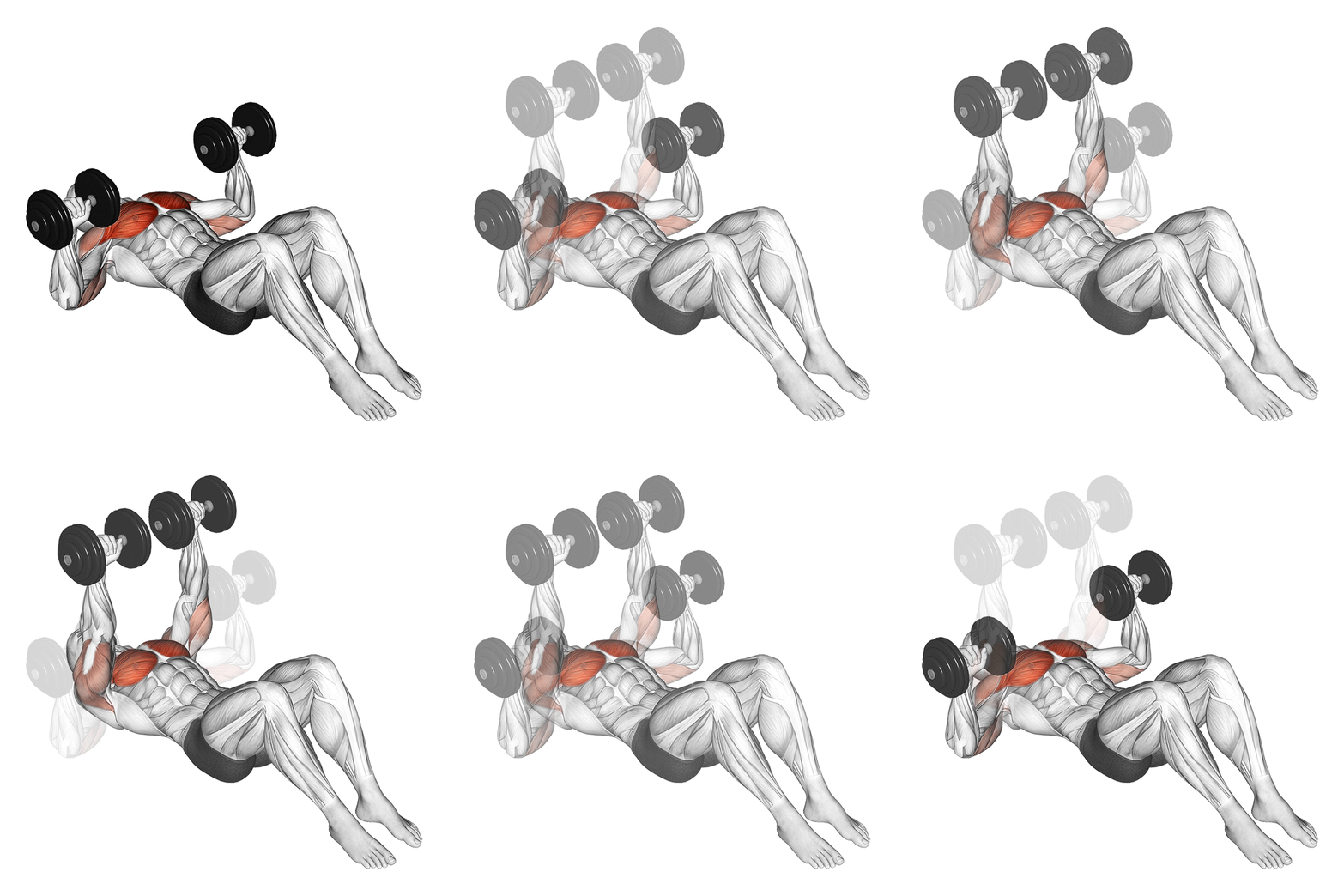
What is the dumbbell floor press?
The dumbbell floor press is a horizontal press performed lying on your back on the floor instead of a bench. Because the ground stops your upper arms a few centimetres short of a full stretch, the range of motion is shorter than a bench press: less pec stretch at the bottom, more work for the triceps and the top half of the press. That built-in stop also keeps the shoulder out of its most provocative end range, which is why lifters with cranky shoulders often tolerate it well. It suits home trainees without a bench, benchers with a weak lockout, and anyone pressing around a shoulder issue.
How to do the dumbbell floor press
- 1
Get into position safely
Sit on the floor with the dumbbells standing upright on your thighs. Lie back while pulling them to your chest in one motion, then plant your feet flat with knees bent.
- 2
Build your base
Pull your shoulder blades back and down into the floor, brace your core, then press both dumbbells to lockout over your shoulders. Elbows will work at roughly 45 degrees from your torso.
- 3
Lower until your arms touch down
Lower under control until the back of your upper arms rests lightly on the floor. Forearms stay vertical, wrists stacked over elbows. No crash landing.
- 4
Pause, then press
Stay tight through a one-second pause, then drive both dumbbells back to lockout and squeeze your chest at the top. To end the set, bring the weights to your chest and sit up with them.
Pro tip
During the floor pause, let your upper arms rest but never relax: keep your knuckles driving toward the ceiling and your pecs loaded. A dead arm has to restart the press from zero; a loaded arm fires straight back up.
Common mistakes
Crashing the elbows into the floor.
Dropping the weights bruises your elbows and dumps all your pressing tension. Lower in two to three seconds and touch down like you're setting the arm on glass.
Going limp during the pause.
If you fully relax at the bottom, the first centimetres of the press become a risky jerk. Keep core, lats and pecs switched on for the whole rep.
Bridging the hips.
With bent knees it's tempting to pop the hips up and turn the rep into a decline press. Squeeze your glutes lightly and keep your lower back heavy on the floor, or press with legs extended.
Flaring the elbows wide.
At 90 degrees from your torso, the shoulder takes the hit each time your arm meets the floor. Keep roughly a 45-degree angle so triceps and pecs share the load.
Variations and progressions
Easier
Neutral-grip floor press
Palms facing each other keeps the elbows close and the shoulders in their friendliest position. The go-to version if regular pressing still nags.
Harder
Single-arm floor press
One dumbbell at a time turns every rep into an anti-rotation drill: your obliques fight to keep the torso flat while the arm presses.
Alternative
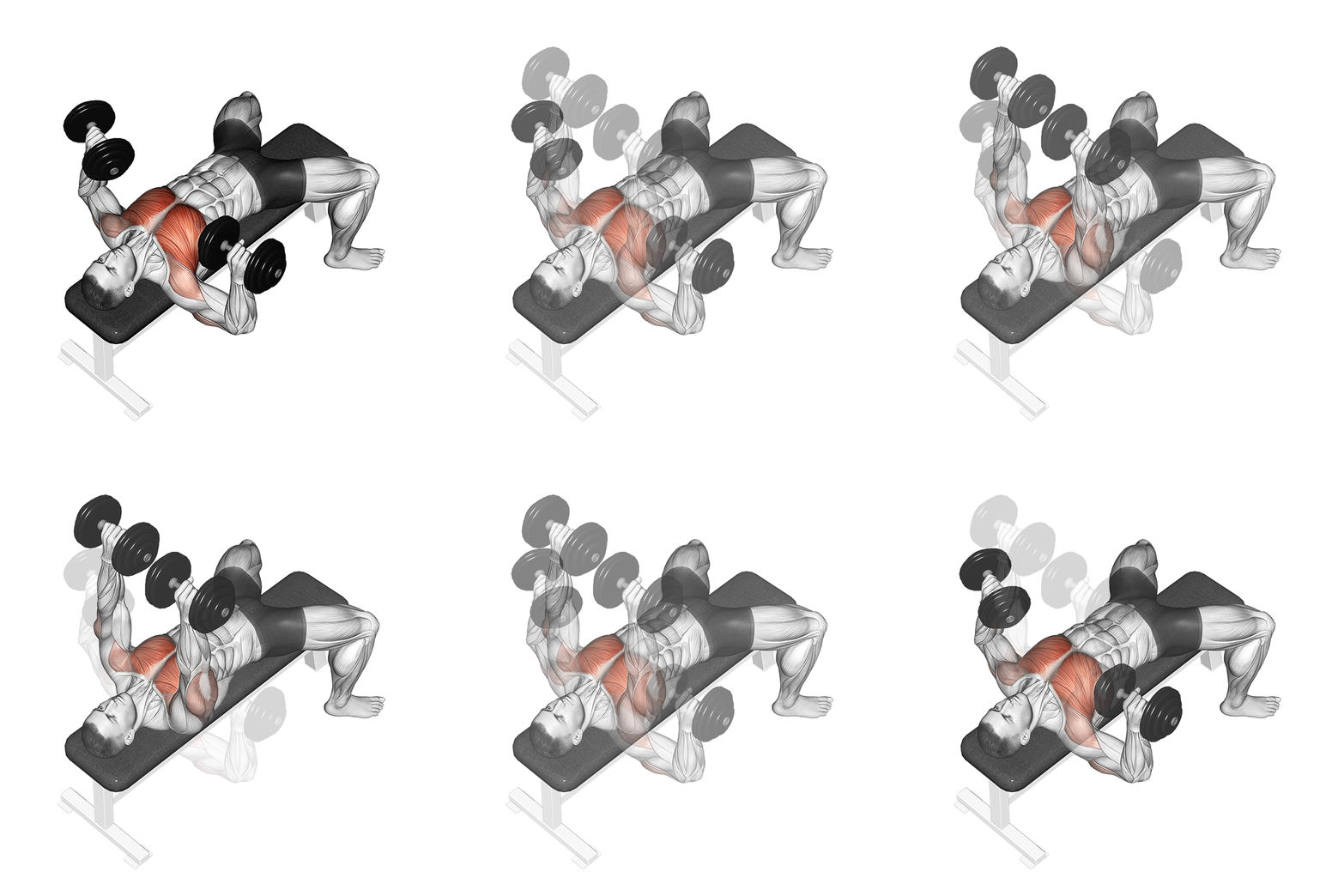
Dumbbell bench press
With a bench you regain the full stretch at the bottom, the better option for pure chest growth whenever your shoulders allow it.
How to program it
Three protocols by goal. Pick one per cycle and aim for progression on load or distance.
| Goal | Sets × distance | Load | Rest |
|---|---|---|---|
| Lockout strength | 4 × 6 | Heavy, 2 reps in reserve | 2-3 min |
| Hypertrophy | 3-4 × 8-12 | Moderate, RPE 7-8 | 90 s |
| Dead-stop power | 5 × 3, 2 s pause | Moderate-heavy | 2 min |
Dumbbell Floor Press FAQ
Is the floor press as good as the bench press for chest?
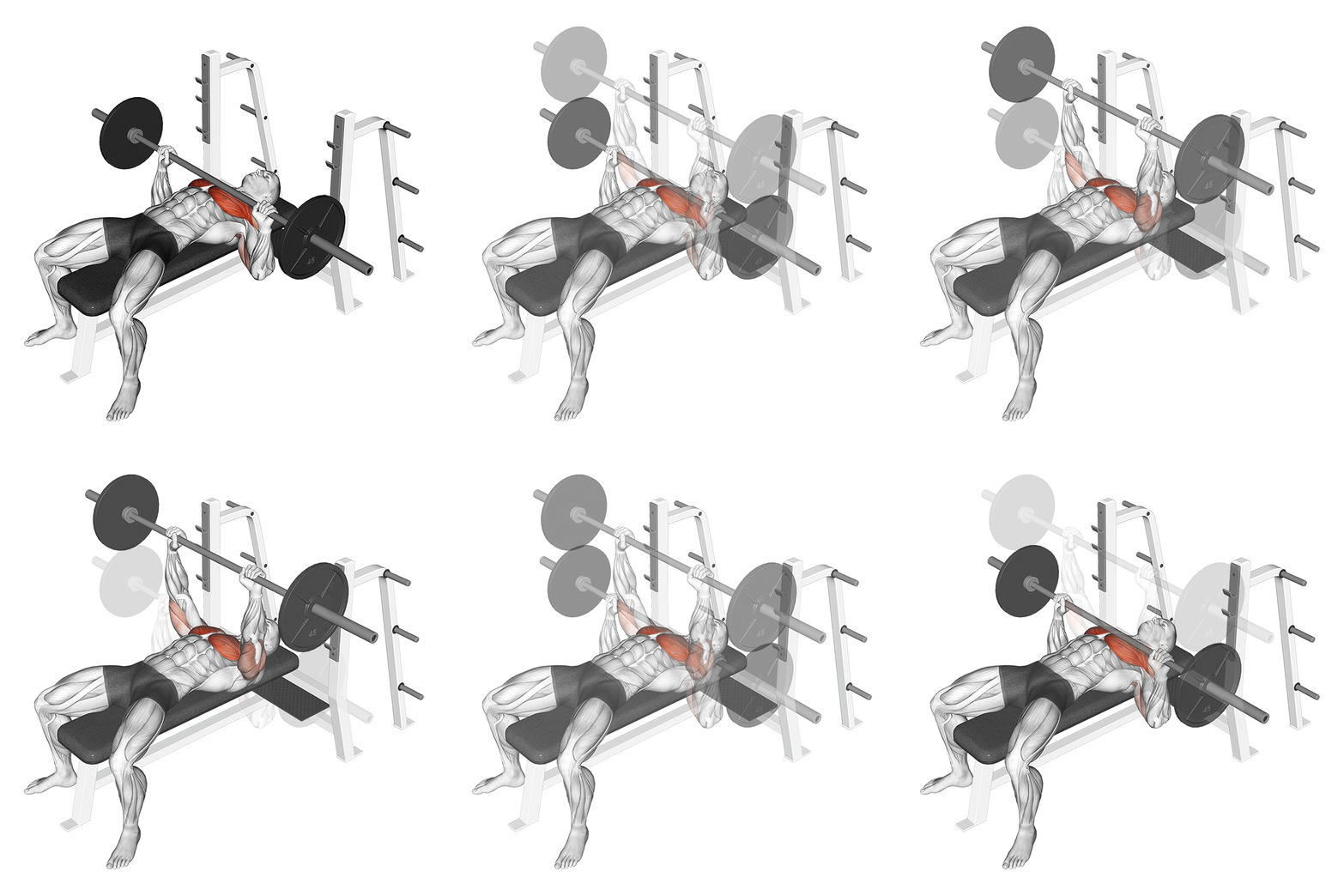
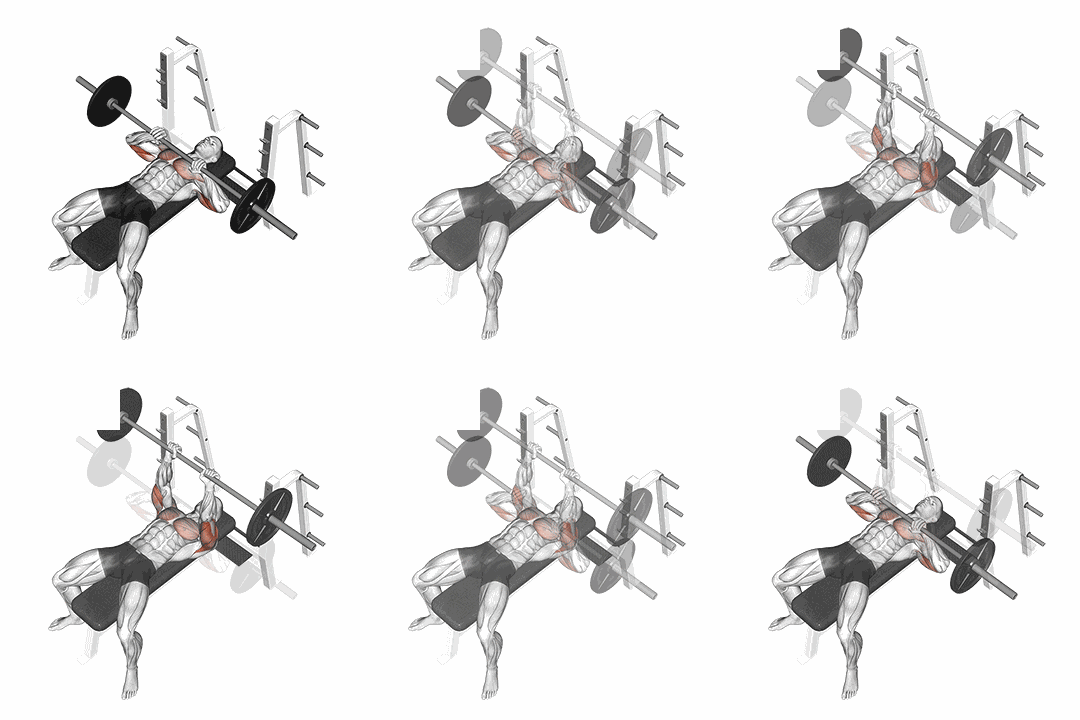
Not quite. The shorter range cuts out the stretched position where pecs grow best, so for pure chest size a bench or dumbbell press wins. The floor press trades that stretch for shoulder comfort, triceps work and lockout strength, which is exactly why it earns a spot as a second press.
Legs bent or straight?
Both work. Bent knees with flat feet are more comfortable for most people; just keep your hips down. Straight legs remove any temptation to bridge, making the press strictly upper body.
Why does it feel better on my shoulders than benching?
The floor stops your upper arm before the deepest part of the press, the zone where many irritated shoulders complain. Less extension at the bottom usually means less provocation. If pain shows up anyway, or lingers, get it assessed rather than pressing through.
How do I get heavy dumbbells into position alone?
Sit with the dumbbells upright on your thighs, then lie back and let that momentum carry them to your chest in one motion. To stand up, reverse it: bring the weights to your chest, then rock forward and sit up with them.