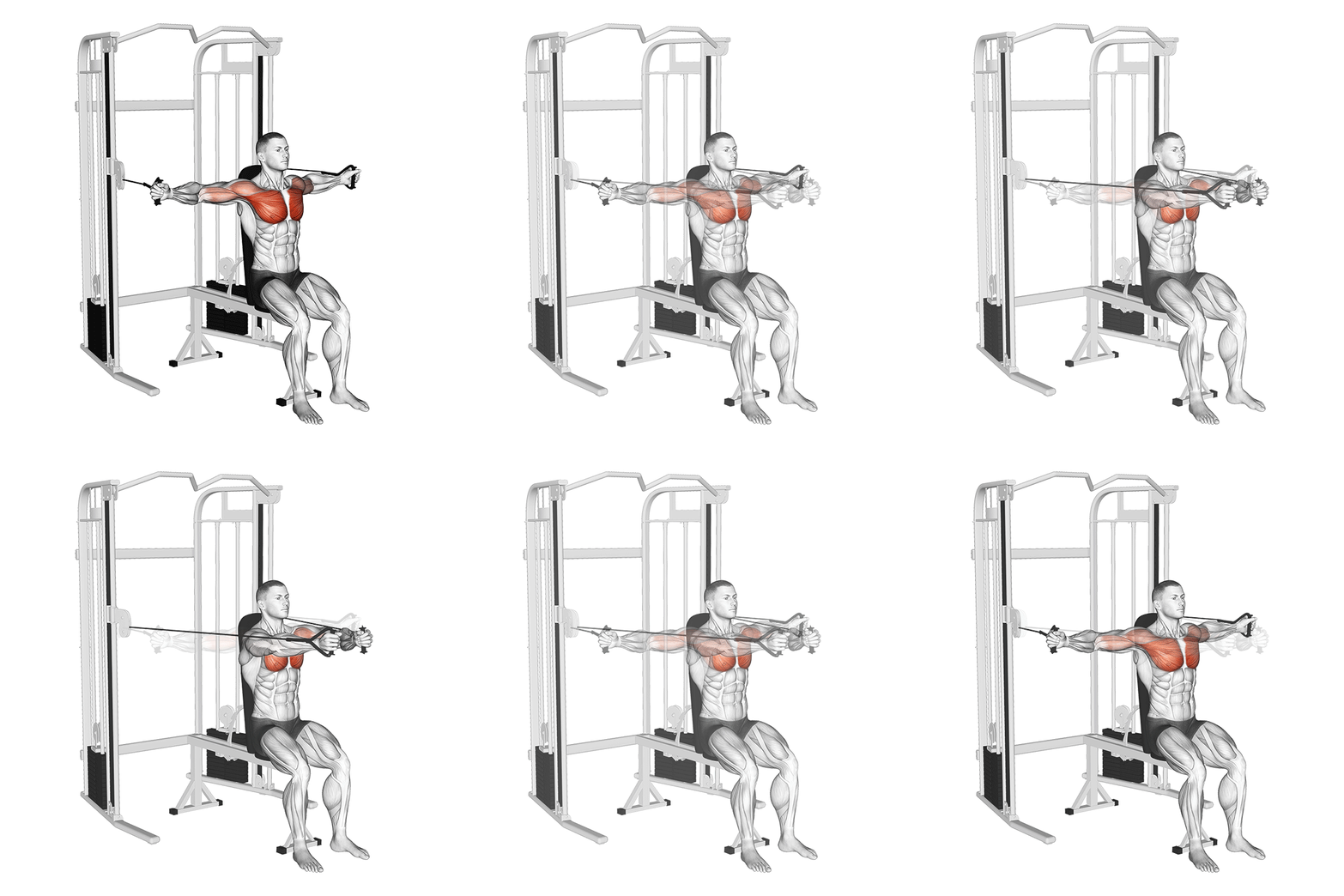
What is the seated cable fly?
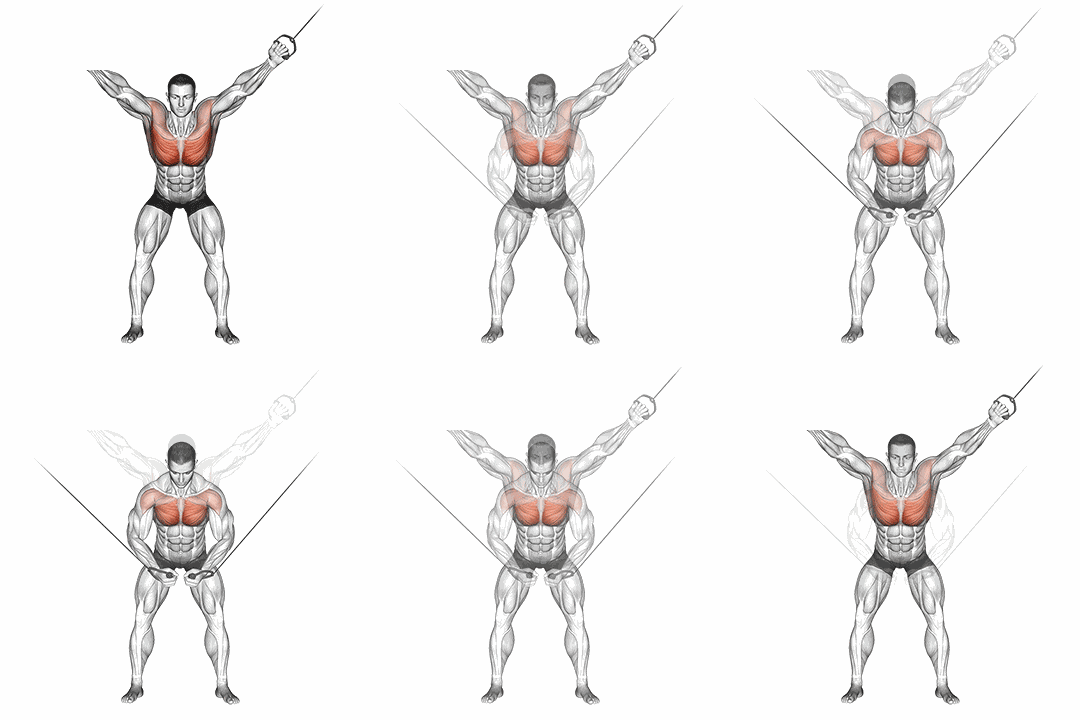
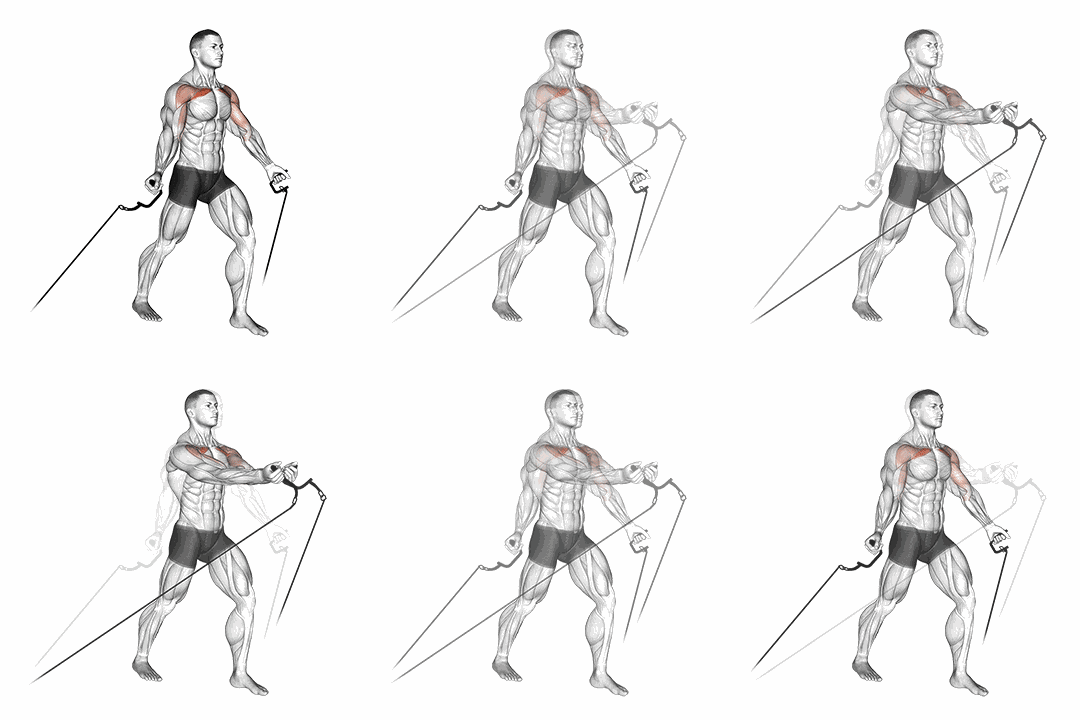
The seated cable fly is a chest isolation performed on a bench or upright seat placed between two cable stacks, with the pulleys set at shoulder height. You pin your back against the pad and sweep the handles together in front of your chest. Two things separate it from its relatives: unlike a dumbbell fly, cable resistance stays constant through the arc, so the squeeze at the end works as hard as the stretch; and unlike a standing crossover, the backrest removes the staggered stance, the forward lean and the body English. That makes it the strictest fly in the gym, ideal if you swing your crossovers or want pure pec work after pressing.
How to do the seated cable fly
- 1
Build the station
Set both pulleys so they sit level with your shoulders once you are seated, and centre a bench (upright, or flat used lengthwise) exactly between the two stacks. An off-centre seat loads one pec more than the other.
- 2
Sit tall, chest proud
Grab one handle, sit down, then reach for the second. Press your upper back into the pad, lift the chest and set a gentle elbow bend. Start with the arms open wide, hands roughly in line with your shoulders.
- 3
Draw the handles together
Exhale and sweep both handles forward in a wide curve until they meet in front of your sternum. Squeeze the pecs hard for a full second; the elbow angle you set at the start must survive the whole path.
- 4
Resist the way back
Let the cables pull your arms open over two to three seconds and stop at a clear pec stretch, shoulder blades still glued to the pad. The stacks will try to snatch your arms back; your job is to say no.
Pro tip
Before the first rep, pull your shoulders down and back into the pad and keep them nailed there: if the front of a shoulder peels off the backrest as the handles meet, your delts are stealing the squeeze that belongs to your pecs.
Common mistakes
Pressing instead of flying.
If the elbows bend on the way in and straighten on the way out, the fly has become a weak chest press. Fix the elbow angle before rep one and treat it as untouchable for the whole set.
Shoulders rolling forward at the squeeze.
Chasing the hands together by rounding the shoulders shifts tension onto the front delts and off the chest. Finish the rep with your pecs, not by reaching; the shoulder blades never leave the pad.
Stacking too much weight.
The seated fly is built for tension, not tonnage. If your torso twists or lifts off the pad, drop two or three plates on each stack: this movement rewards whoever leaves the ego at the door.
Letting the stack win the eccentric.
Snapping back to the stretch wastes the half of the rep where cables shine. Take two to three seconds on the way out, and stop before the plates settle back down between reps.
Variations and progressions
Easier
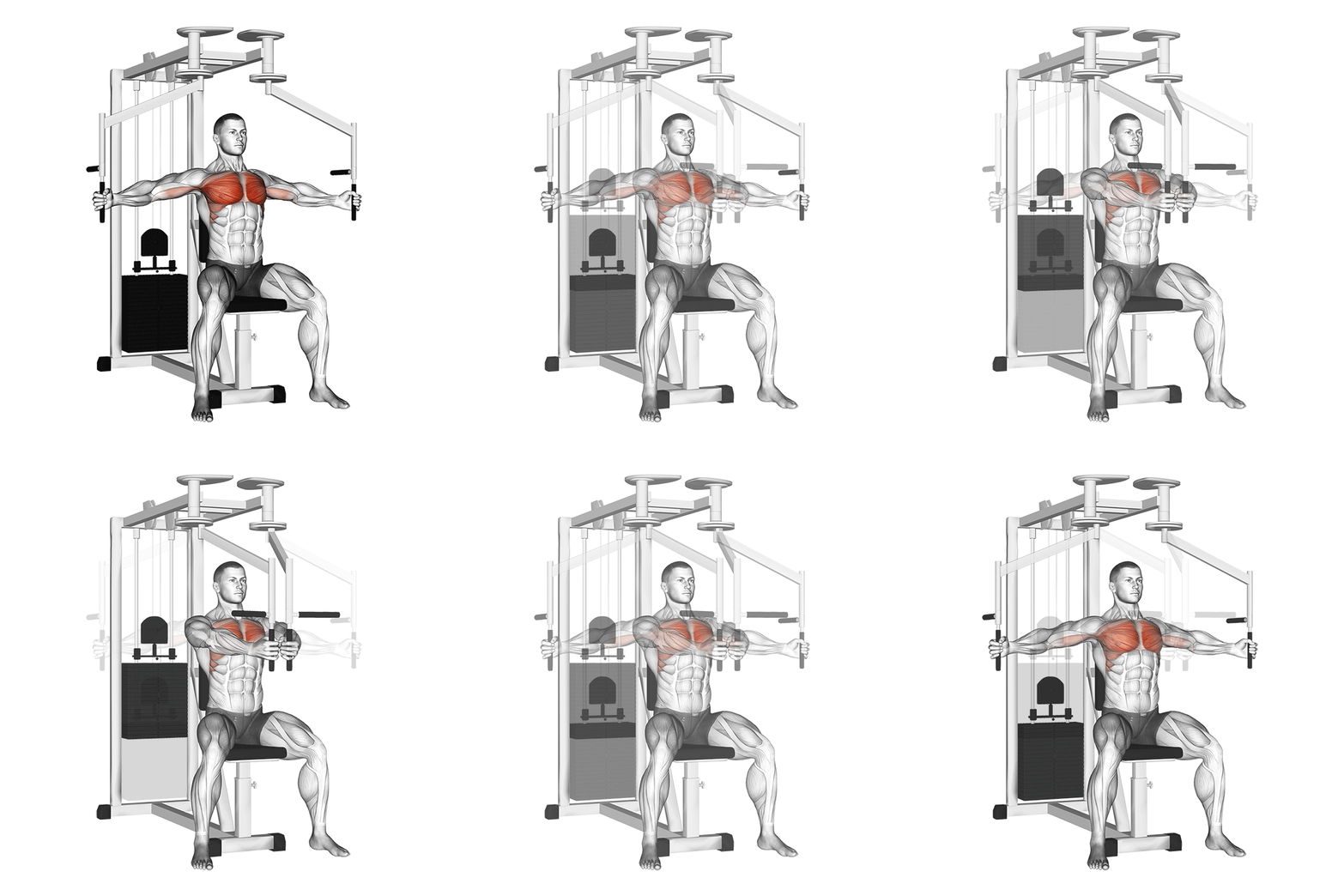
Machine chest fly
The pec deck locks the arc and the seat height for you, so there is nothing to set up or stabilise: a simple way to learn what a real chest squeeze should feel like.
Harder
Single-arm seated cable fly
Work one arm at a time with the free hand on your hip: the load tries to twist you off the pad, each pec works through a longer line, and no strong side can cover for a weak one.
Alternative
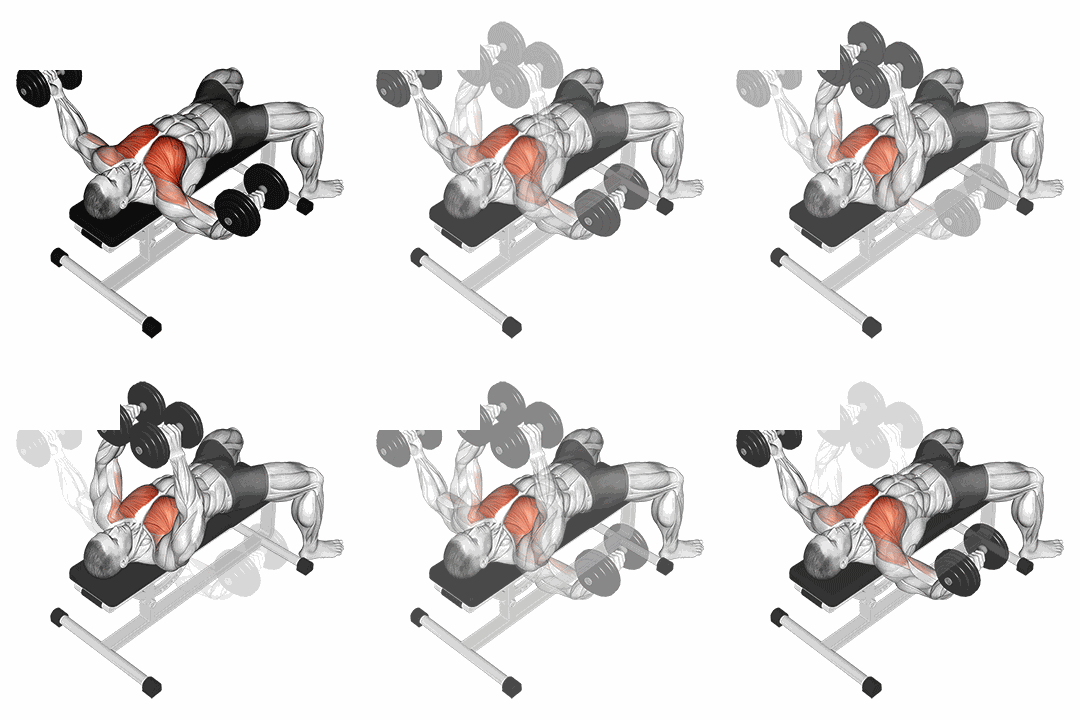
Dumbbell fly
No twin stacks free? The flat dumbbell fly trains the same arc with the emphasis flipped: hardest at the stretch, lightest at the top. Pairing the two across the week covers the whole strength curve.
How to program it
Three protocols by goal. Pick one per cycle and aim for progression on load or distance.
| Goal | Sets × distance | Load | Rest |
|---|---|---|---|
| Hypertrophy | 3-4 × 10-12 | Moderate, RPE 8 | 90 s |
| Peak-contraction focus | 3 × 12-15, 1 s hold at the squeeze | Light | 75 s |
| Pre-exhaust | 2 × 15-20 right before pressing | Very light, RPE 7-8 | 60 s |
Seated Cable Fly FAQ
Seated cable fly or standing cable crossover?
Pick seated when you want strictness: the backrest removes the leg drive and torso lean that quietly help every standing rep, so the pecs do all the work and progress is easier to measure. The standing crossover remains a fine exercise, but it lets you drift heavier through body English. Many lifters keep both: seated for strict volume, standing for variety.
What height should the pulleys be?
Shoulder height once seated is the default: the handles travel straight across, which loads the whole pec with a bias to the mid, sternal fibres. Setting the pulleys lower and sweeping slightly upward shifts work toward the upper chest; higher pulleys sweeping down favour the lower chest. Change one variable per block so you can tell what is working.
Why can't I use much weight on this exercise?
Because nothing is helping you. The seat removes momentum, the long arm lever multiplies every kilo, and the cable never gives you a resting point. Light stacks are normal and irrelevant: judge the exercise by the tension in your pecs and the quality of the squeeze, and progress through reps and tempo before touching the pin.
Can the seated cable fly replace the pec deck?
Yes, they fill the same slot. The cable version lets you adjust the arc, the pulley height and the depth of the stretch to your shoulders, and makes single-arm work easy; the pec deck is faster to set up and even harder to cheat on. Run whichever your gym makes convenient, and keep only one of the two per session.