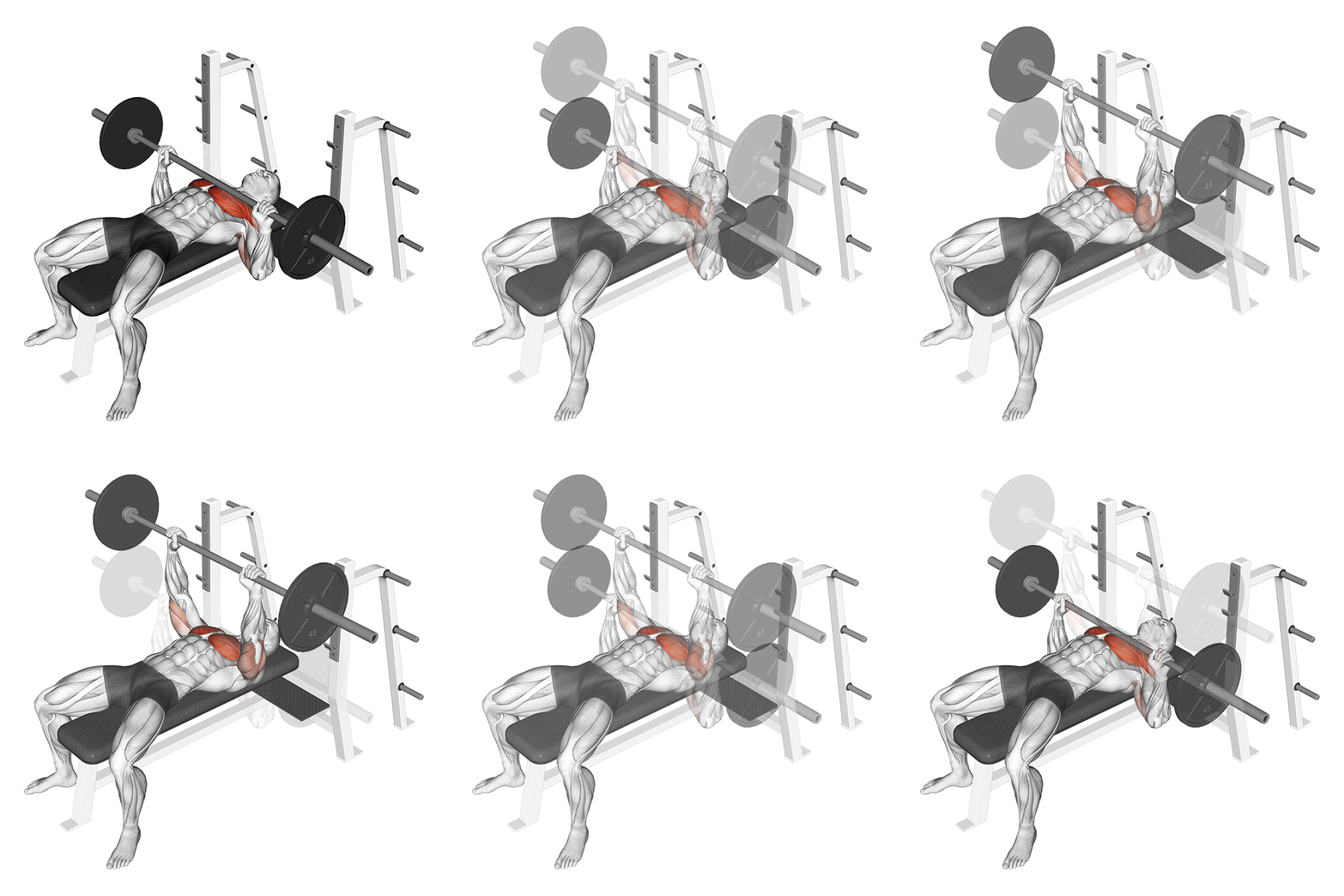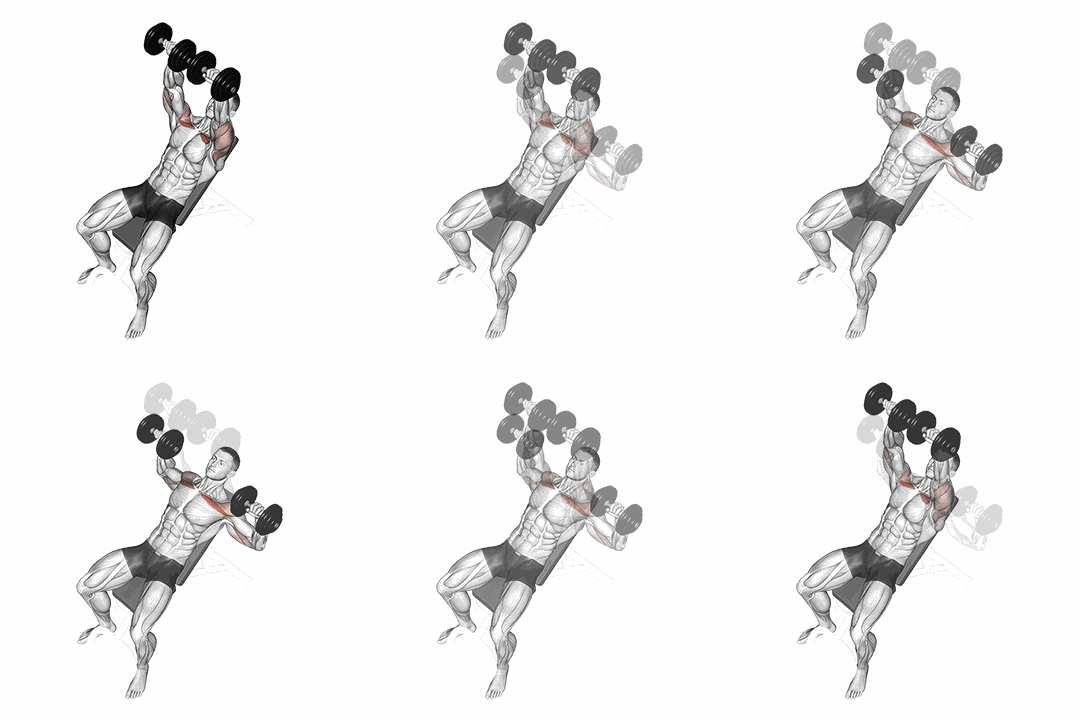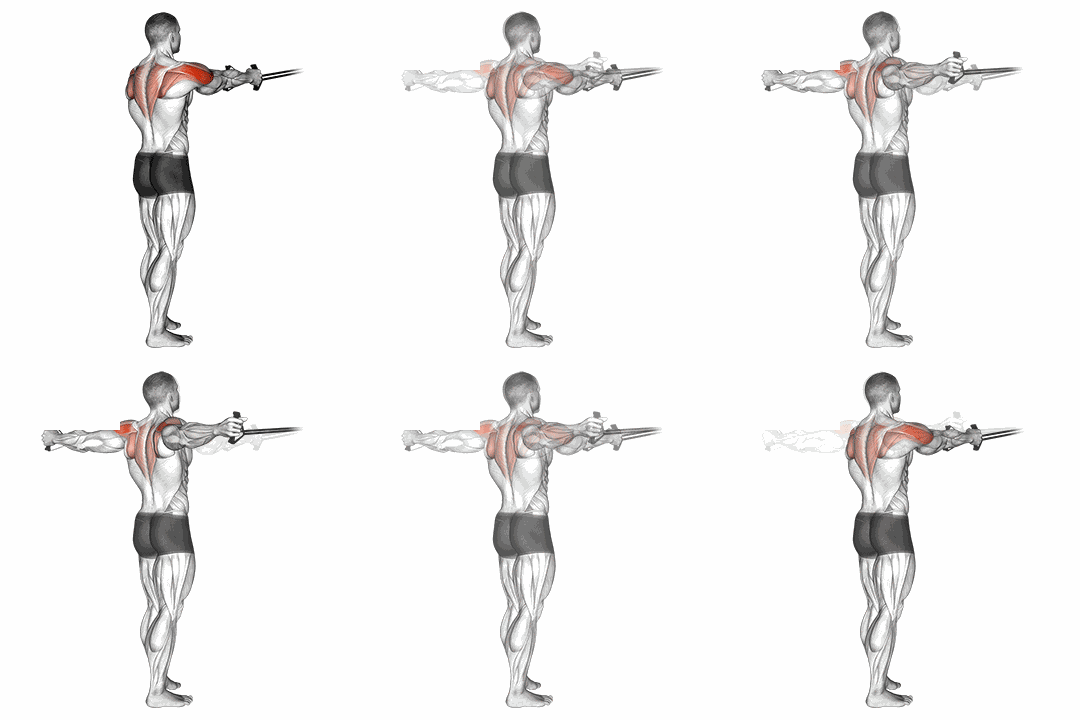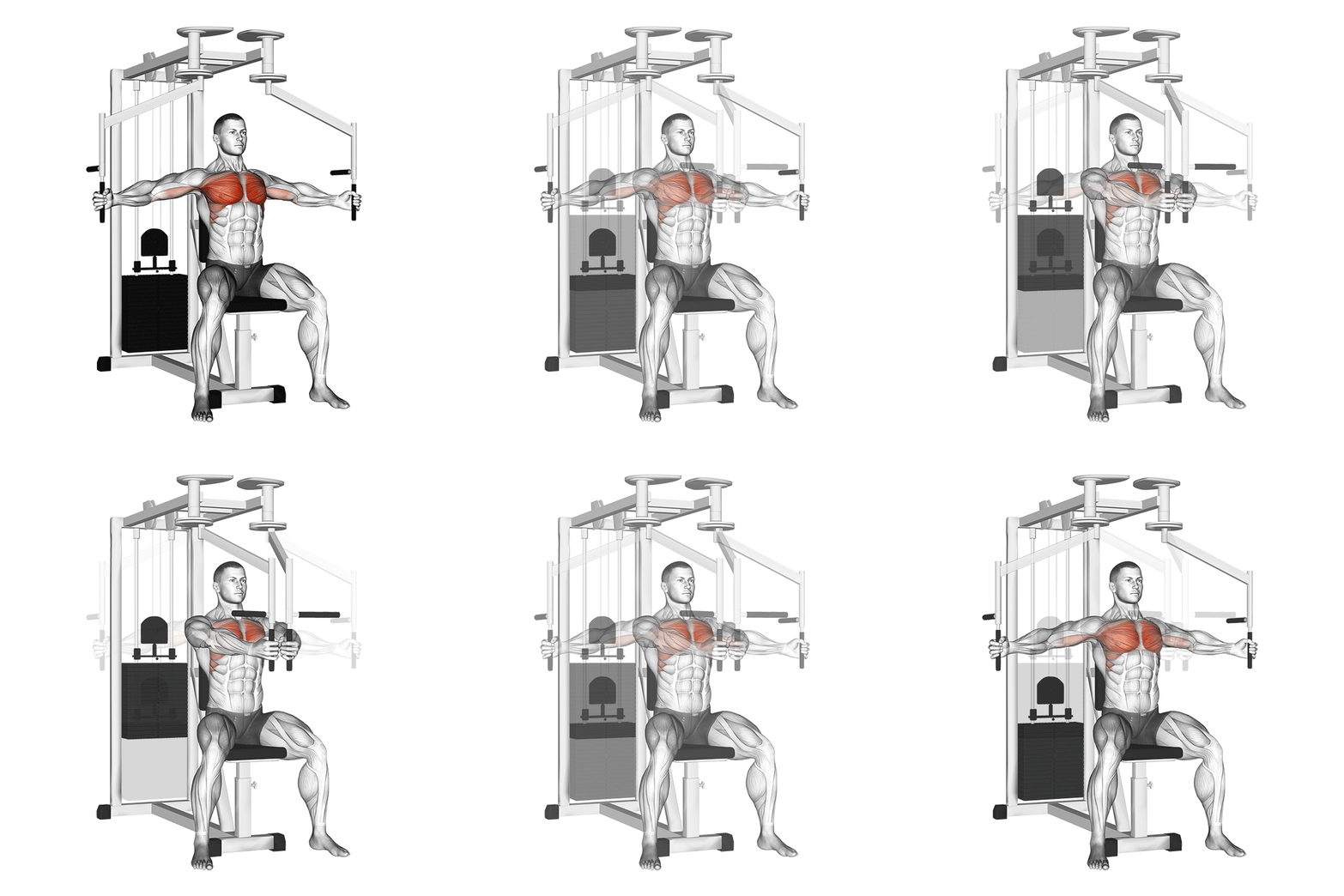
What is the machine chest fly?
The machine chest fly (often called pec deck) is a seated isolation where you bring two padded levers, or two handles, together in front of your chest in a horizontal arc. Unlike presses, the elbows don't bend during the rep, which removes the triceps from the equation and leaves the pectoralis major as the sole prime mover. The machine path is fixed and safe, the long stretch at the start drives hypertrophy, and the fatigue cost is low. Perfect as a second or third chest exercise after compound presses.
How to do the machine chest fly
- 1
Set the seat height
Adjust so the handles or pads sit at chest level when your arms are out to the sides. Back flat against the pad.
- 2
Slight elbow bend, lock it
Bend the elbows about 15-20° and keep that angle frozen the entire set. The arc happens at the shoulder, not the elbow.
- 3
Squeeze to the centre
Bring the handles together in front of your sternum in 1-2 s. Imagine hugging a tree, peak squeeze at the touch.
- 4
Stretch on the way back
Take 2-3 s to open the arms back out until you feel a strong pec stretch. Don't go so far back that the shoulder rolls forward.
Pro tip
Pause 1 s in the deep stretch on every rep. That's where most of the hypertrophy stimulus lives, and where lazy reps cheat.
Common mistakes
Elbows bending mid-rep.
If the elbows fold, you're doing a press. Lock the angle and the chest has to do the work.
Shoulders rolling forward.
Forward shoulders shift load to the front capsule and risk injury. Keep shoulder blades pulled down and back.
Going too heavy.
If you have to lurch the torso forward to close the arms, drop the load. This is an isolation, not a power move.
Letting the stack crash on the negative.
Crashing back skips the stretched portion, which is the most productive part of the rep. Lower in 2-3 s.
Variations and progressions
Easier
Reduced range fly
Stop 70% of the way back if shoulder mobility is limited. Builds tolerance to the stretch over time.
Harder
Single-arm pec deck
One arm at a time, free hand on the opposite pec to feel the contraction. Doubles the focus, exposes imbalances.
No machine?
Cable crossover or dumbbell fly
Cable crossovers give the same horizontal arc with free path. Dumbbell flys on a bench are the classic free-weight option.
How to program it
Three protocols by goal. Pick one per cycle and aim for progression on load or distance.
| Goal | Sets × distance | Load | Rest |
|---|---|---|---|
| Hypertrophy | 4 × 10-12 | Moderate | 60-75 s |
| Pre-exhaust before bench | 2 × 15 | Light | 45 s |
| Finisher / stretch focus | 3 × 12, 1 s pause in stretch | Moderate | 60 s |
Machine Chest Fly FAQ
Machine fly or dumbbell fly?
The machine wins for safety and consistency: the path is locked, the load curve is even, and you can push close to failure with no spotter. Dumbbells challenge stability and offer a deeper stretch, but the load drops off at the top of the arc. Pick the machine for hypertrophy volume, use dumbbell flys for variety once a week.
Do flys build a bigger chest than presses?
No, presses are the main builders because they let you load heavy across a long range. Flys complement presses by training the pec at long muscle lengths and removing the triceps as a limiting factor. Order matters: press first when fresh, fly second for isolation and stretch. Skipping flys leaves growth on the table.
How wide should I set the start position?
Open the arms until you feel a strong, comfortable pec stretch but no sharp pain in the front of the shoulder. For most lifters that's roughly 90° behind the body line, sometimes less. If the shoulder pinches, reduce range. Stretch tolerance improves over weeks of consistent training, so don't force a deeper position too early.