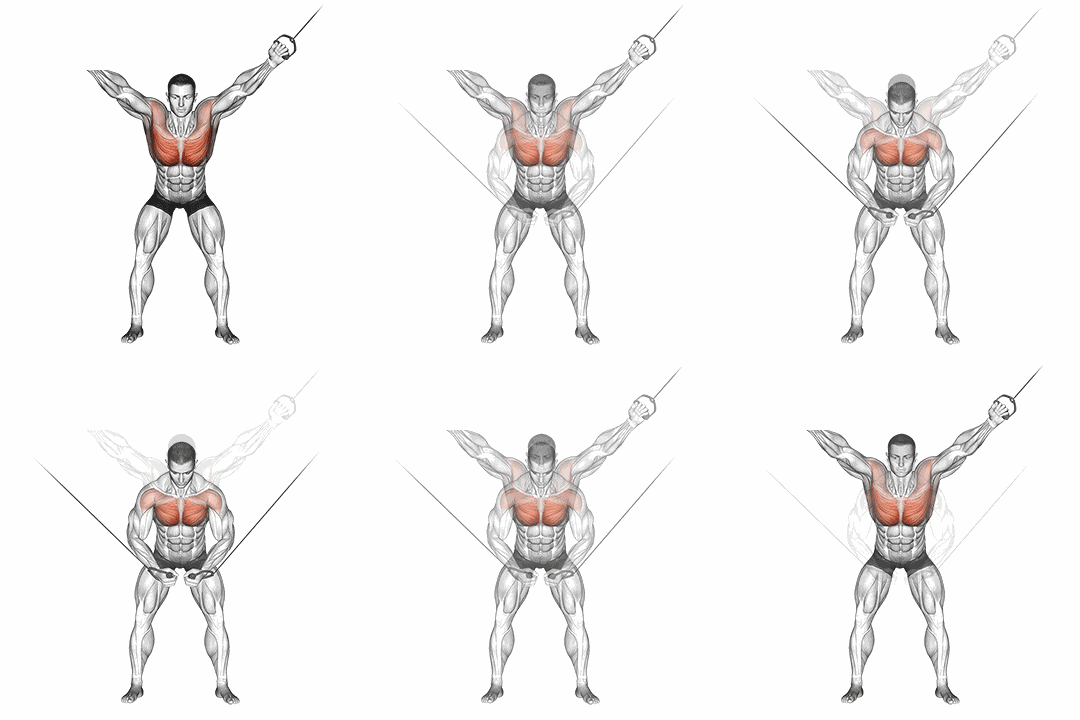
What is the cable crossover?
The cable crossover is a single-joint pec exercise done at a dual cable station with the pulleys set high. You stand between the columns, grab one handle in each hand, take a slight forward step and pull the arms together in front of the chest in a wide arc. Because the cables pull diagonally backward, the pec is loaded through the whole range, not just the bottom. It is the cleanest tool for finishing the chest after a heavy press.
How to do the cable crossover
- 1
Set the pulleys high
Both pulleys at the top of the stack with D-handles. Step into the middle, one foot slightly forward, chest tall.
- 2
Get the start position
Arms out wide at shoulder height, elbows softly bent (15 to 20 degrees) and locked in that angle. Feel a strong stretch in the pecs.
- 3
Hug forward and down
Bring both handles forward and slightly downward in an arc, meeting in front of the mid-chest. Squeeze the pecs for one second.
- 4
Return long and slow
Open the arms back to the start under control over 3 seconds. The eccentric is where the muscle grows.
Pro tip
Lock the elbow angle and don't change it. Most lifters turn the crossover into a press by bending the arms at the bottom. Keep the angle fixed and the load stays on the pec, not the triceps.
Common mistakes
Bending the elbows.
Turning the fly into a press shifts work to the triceps and reduces pec stretch. Lock the elbow, hinge from the shoulder.
Going too heavy.
If you can't hold the elbow angle and the chest squeeze, the load is too much. Pec flies live in the 10-15 rep range with clean form.
Hands meeting at the throat.
If your handles meet too high, you bias the upper chest instead of the mid. Aim for the lower sternum and squeeze across.
Rounding the upper back.
Collapsing the chest shortens the pec before you start. Keep shoulder blades pinned back and down throughout.
Variations and progressions
Easier
Low-to-high crossover
Pulleys at the bottom, hands meet at the chin. Targets the upper chest and is gentler on the shoulder for beginners.
Harder
Single-arm crossover
One arm at a time with rotation. Forces the core to anti-rotate and lets each pec be trained at its true range.
No cable station?
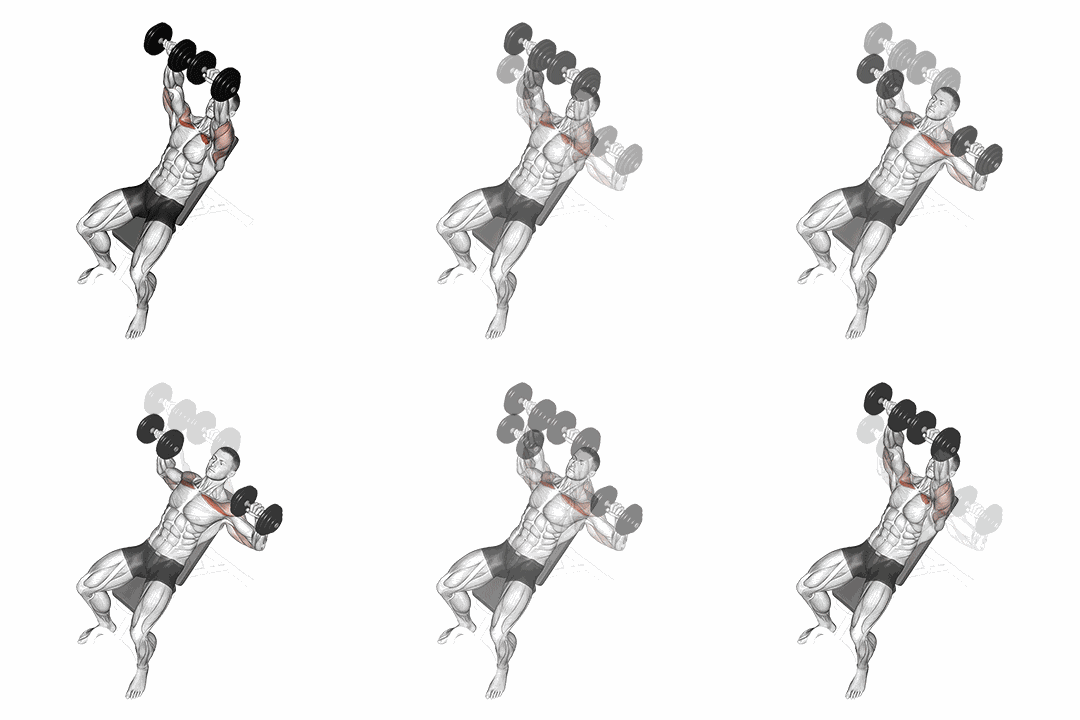
Dumbbell fly on bench
Flat or low-incline DB fly hits the same pec line. The tension drops at the top, so finish each rep with a hard squeeze.
How to program it
Three protocols by goal. Pick one per cycle and aim for progression on load or distance.
| Goal | Sets × distance | Load | Rest |
|---|---|---|---|
| Technique | 3 × 12 | Light, RPE 6 | 60 s |
| Hypertrophy | 4 × 10-12 | RPE 8 | 75 s |
| Pec finisher (drop set) | 2 × 12 + drop × 8 + drop × 8 | RPE 9 | 90 s |
Cable Crossover FAQ
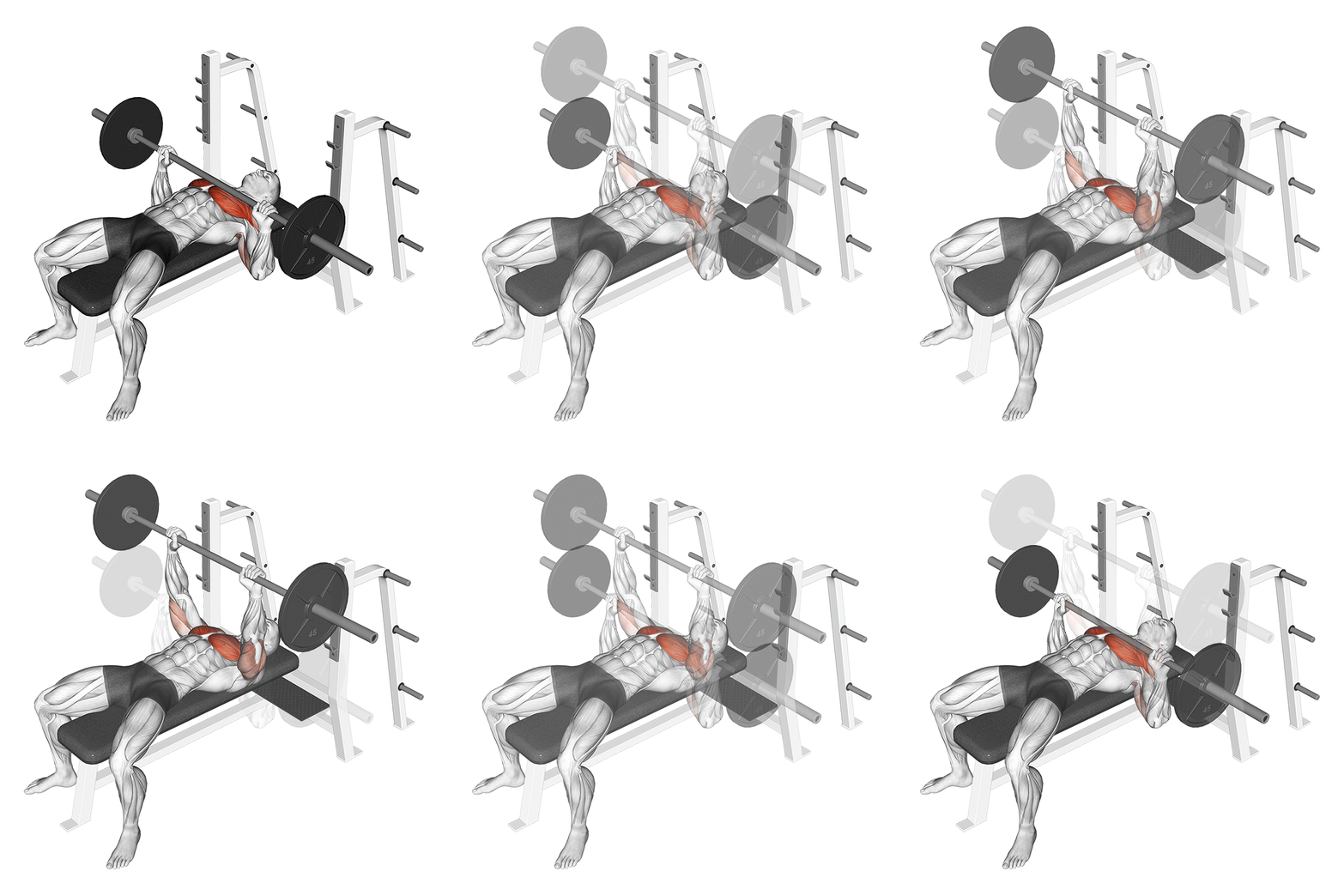
Cable crossover or bench press, which builds chest faster?
Bench press first, crossover second. The bench press is the heavy compound that drives most of the chest growth and gets stronger week to week. The crossover is the isolation that finishes the muscle and trains the inner pec the bench can't reach. Use both, not one or the other.
Should I lean forward?
A slight forward lean (about 10 to 15 degrees) lets the arms travel in line with the pec fibres. A heavy forward lean turns the move into a press-down and loads the triceps. Stay tall, lean just enough to feel the pecs, not enough to fold over.
Why don't I feel my chest, only my shoulders?
Three common causes: pulleys too low (shifts to delts), elbows too straight (long lever pulls the shoulder), or weight too heavy. Drop the load, raise the pulleys, soften the elbow to 15 degrees, and finish each rep with a one-second squeeze. The pecs will switch on within a set.