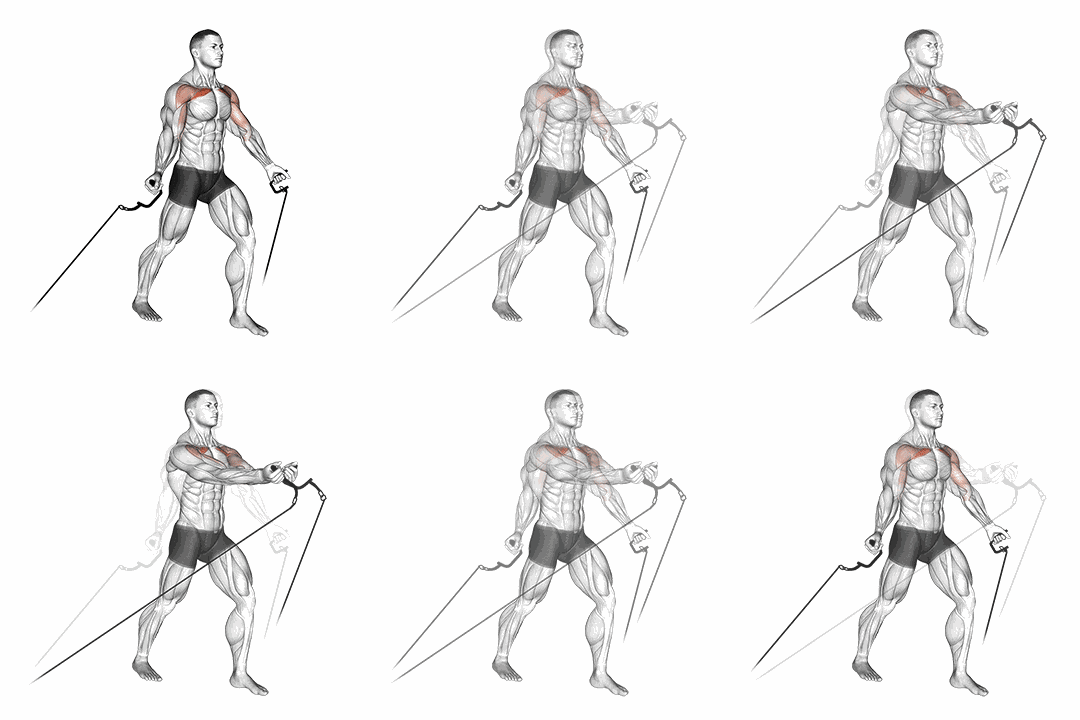
What is the low cable crossover?
The low cable crossover is an upper-chest isolation movement using two cables anchored at the lowest pulley setting. You stand between them, grab a handle in each hand and pull both upward and inward in an arcing motion, meeting at face height with arms slightly bent. Cables keep constant tension across the full range, which is the main advantage over dumbbell flies. It's ideal as a finishing exercise after compound pressing, when you want maximum upper-chest contraction without overloading the shoulder joint.
How to do the low cable crossover
- 1
Set the pulleys low
Both cables at the lowest pin. Grab one handle in each hand and step forward into a split stance, slight forward lean.
- 2
Set the arms
Arms slightly bent at the elbow (15-20°) and locked there. Hands start by your hips, palms forward and up.
- 3
Sweep up and across
Squeeze the upper chest to bring both hands up and toward the centreline, meeting at face height. Think 'hug a tree, lift it'.
- 4
Stretch and reset
Lower under control, feeling the upper-chest stretch. Don't let the handles drag back to the stack, stop where tension stays on the muscle.
Pro tip
Lock the elbow angle the second you start the rep and don't change it. If your arms straighten and re-bend, you're pressing instead of flying.
Common mistakes
Arms bending and straightening.
If the elbow angle changes during the rep, you're pressing. Fixed elbow throughout.
Hands too high.
Meeting above eye level shifts load to front delts. Stop at face height max.
Going too heavy.
Heavy cables turn flies into cheating presses. Use a weight that lets you hold the elbow angle for 12+ reps.
Standing fully upright.
Vertical torso reduces upper-chest engagement. Slight forward lean is the key.
Variations and progressions
Easier
Single-arm low cable fly
Work one side at a time to lock in form. Better mind-muscle connection, especially for beginners.
Harder
Pause crossover
Squeeze and hold the top contraction for 2 seconds on every rep. Brutal upper-chest pump.
No cables?
Band low fly
Anchor two bands at ankle height and replicate the arc. Same constant-tension benefit, anywhere.
How to program it
Three protocols by goal. Pick one per cycle and aim for progression on load or distance.
| Goal | Sets × distance | Load | Rest |
|---|---|---|---|
| Hypertrophy | 4 × 12-15 | Moderate, controlled tempo | 60-75 s |
| Upper-chest finisher | 3 × 15-20 | Light, peak contraction | 45-60 s |
| Mind-muscle work | 3 × 10 single-arm/side | Light, 3-s eccentric | 60 s |
Low Cable Crossover FAQ
Should I do cable crossovers or dumbbell flies?
Cables win on constant tension across the whole range, dumbbells win on stretch at the bottom. The smart move is to use both in a program: dumbbell flies on press day for stretch, cable crossovers on a separate session for contraction. Together they cover what each one lacks.
Why low cable and not high cable?
Direction of pull matters. Low-to-high targets the upper (clavicular) fibres of the pec, mid-cable targets the sternal mid-chest, high-to-low targets the lower (abdominal) fibres. Most people are already strong on flat pressing, so loading the upper fibres specifically is the highest-return fly variation.
Can flies replace pressing?
No. Flies are accessory work, not the main course. The chest gets its mechanical tension and overload from heavy pressing, the flies just finish the job. Order it correctly: bench or incline first heavy, then flies for volume and contraction work.