What is the rotary torso machine?
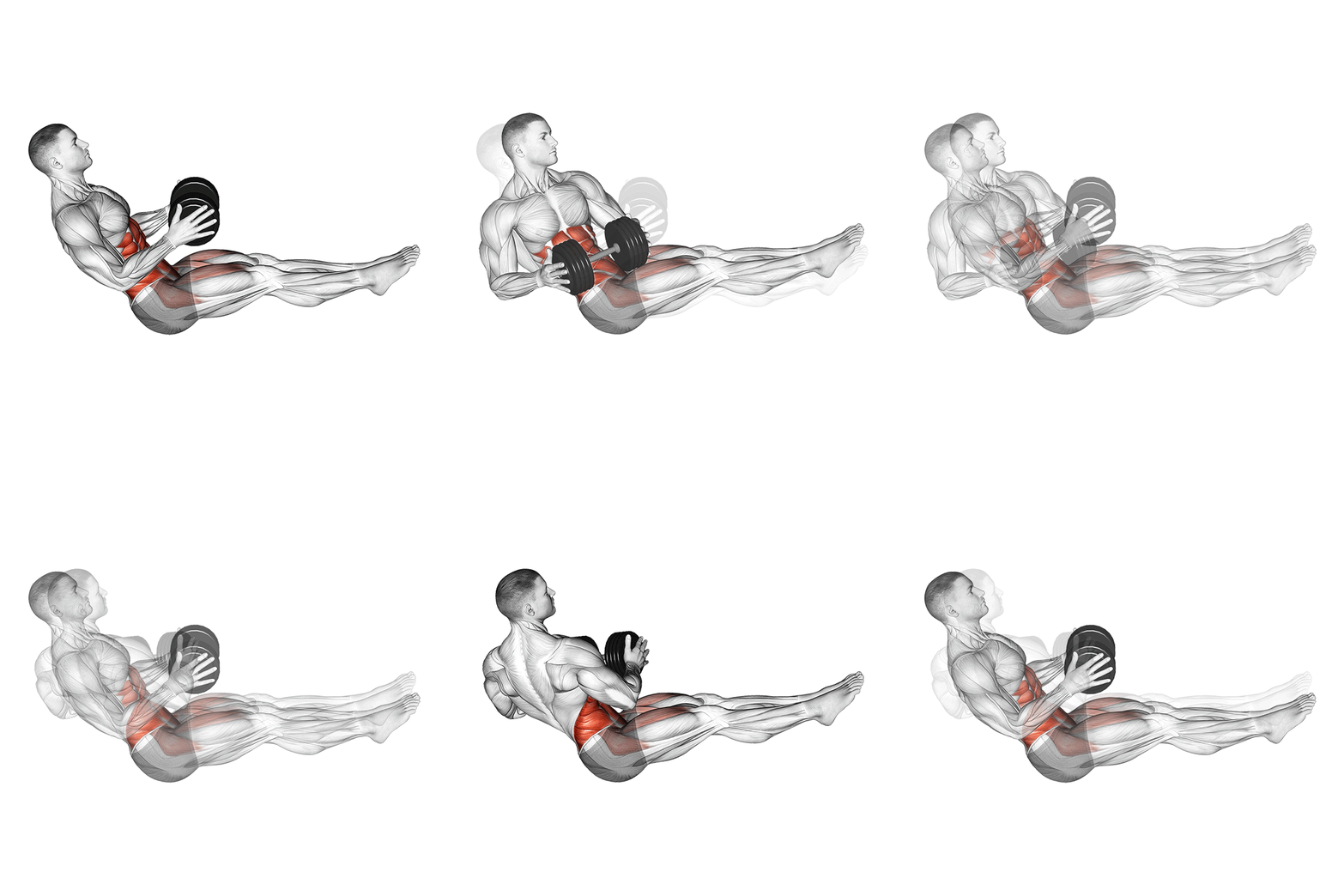
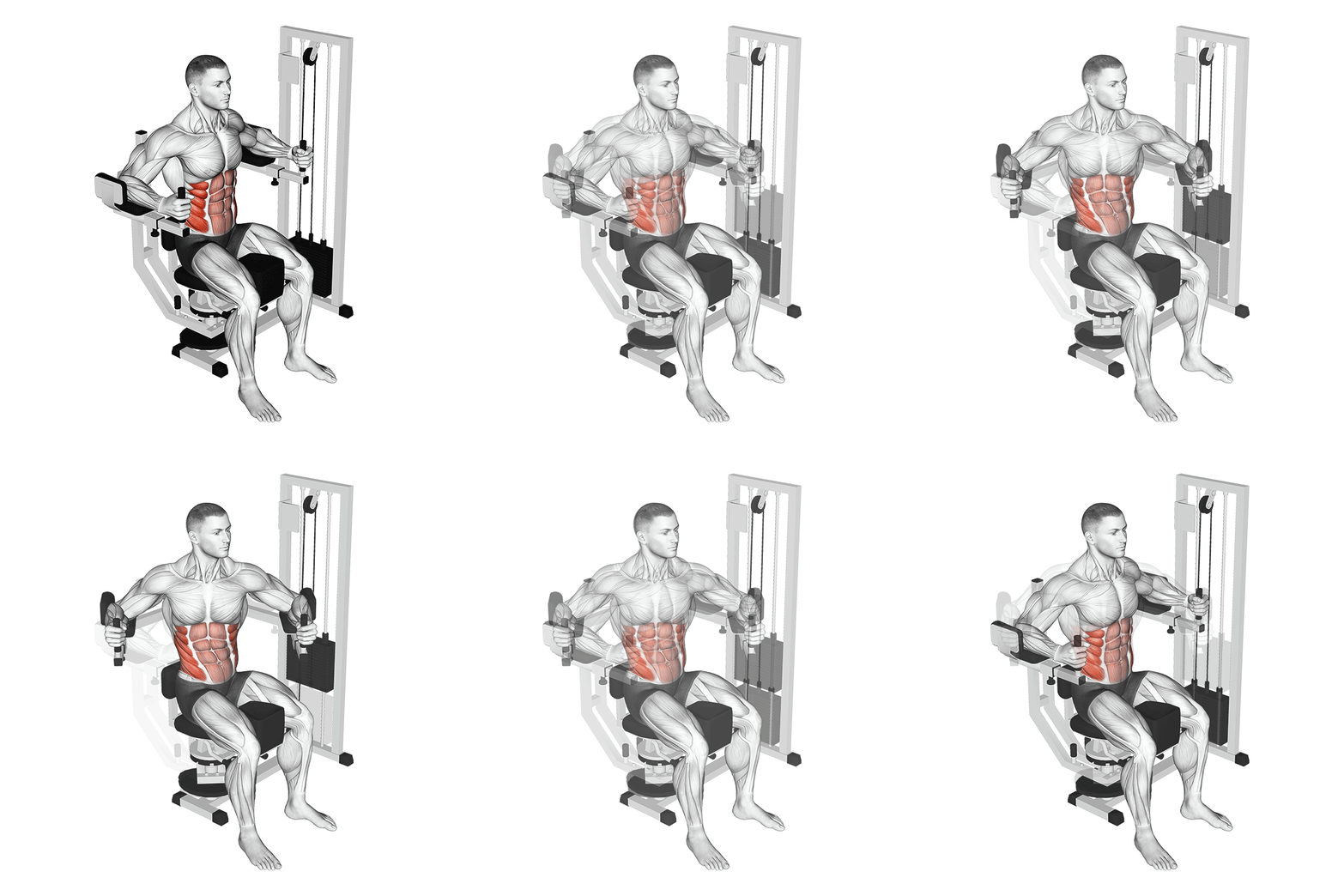
The rotary torso machine is a seated trunk-rotation exercise. Pads clamp your pelvis and thighs in place while you turn your upper body against a weight stack, one direction at a time. That pelvic lockout is the entire point: in a Russian twist or landmine twist the hips swivel and steal most of the range, but here the internal and external obliques must produce every degree themselves. A cam keeps the resistance even through the arc, and the pin stack makes progress measurable. Use it to build rotational strength for golf, tennis, boxing or throwing, or simply to load the obliques without holding a plank.
How to do the rotary torso machine
- 1
Set the arc before the weight
Adjust the starting angle so you'll rotate about 30-45° to one side, and pick a light pin for the first set. Sit tall with your spine against the pad.
- 2
Clamp the lower body
Press your thighs and knees firmly into the pads and plant the feet. Your belt buckle points forward for the whole set; only everything above it turns.
- 3
Rotate in 2 s, no jerk
Exhale and turn your chest through the arc in a slow 2 s, hands resting on the handles without pulling. Shoulders and chest pad move as one piece.
- 4
Brake the return, then switch
Resist back to the start in 2-3 s without letting the plates touch down. Finish all reps in one direction, reset the machine, and match them exactly on the other side.
Pro tip
Drive the turn from your lower ribs, not your shoulders. Imagine rotating your sternum like a dial while your belt buckle stays welded forward: the slower the dial turns, the more the obliques pay.
Common mistakes
Whipping the rotation.
A fast twist lets momentum carry the arc and snaps the spine toward end range under load. Two seconds out, two to three back, every rep.
Maxing out the range setting.
Rotating past your comfortable thoracic range shoves the leftover degrees into the lumbar spine. Stay around 30-45° per side and earn more range before you earn more weight.
Steering with the arms.
If your shoulders turn before your ribs, the arms are dragging the machine around. Rest the hands lightly on the handles and let the trunk drive.
Variations and progressions
Easier
Short-arc rotations
Set the arc to about 20° per side with a light pin. Perfect for learning to move the ribs on frozen hips before chasing range.
Harder
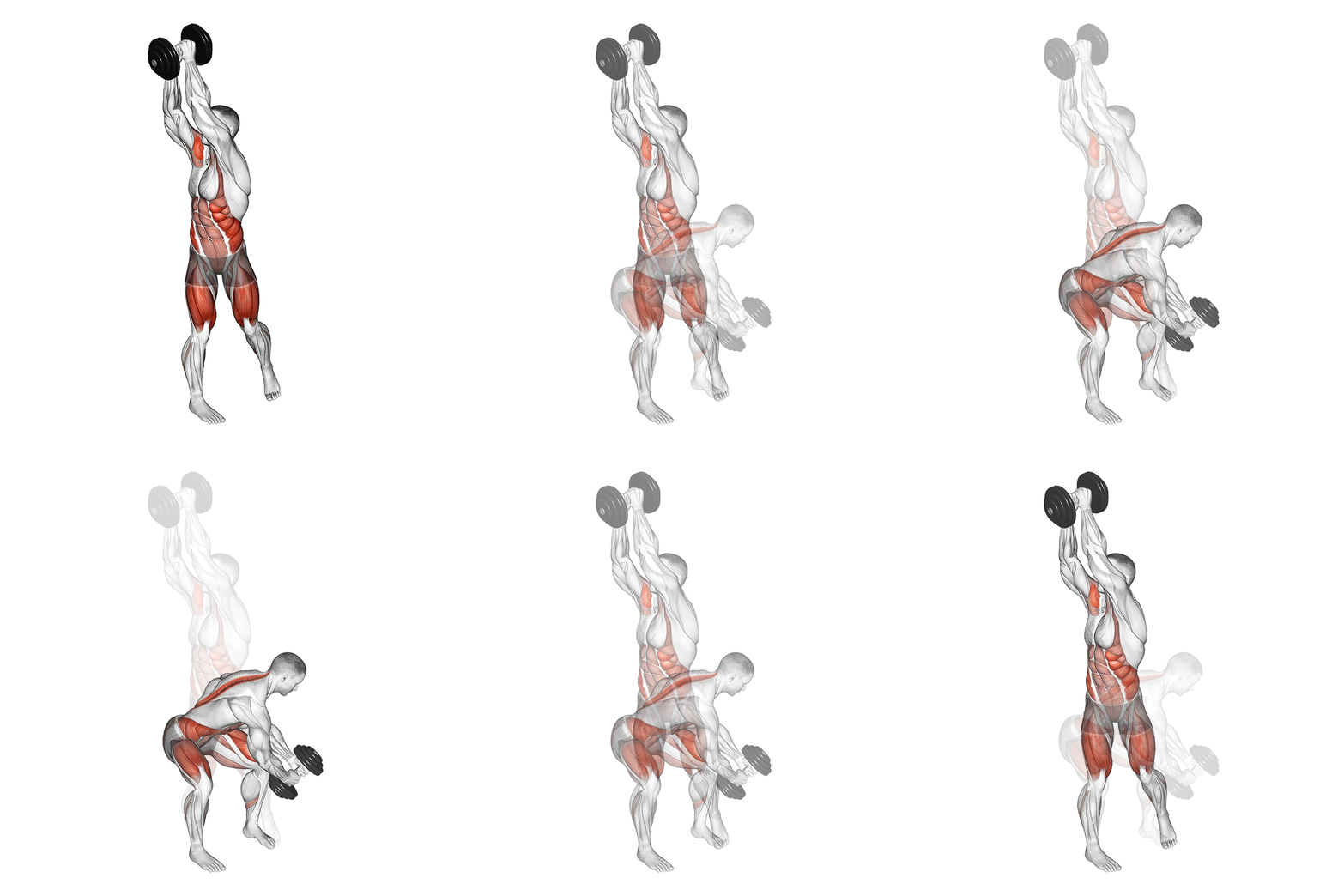
Cable woodchopper
The same rotation with no pads: your own hips, glutes and feet must brake the movement, which adds a whole-body stability bill on top of the oblique work.
No machine?
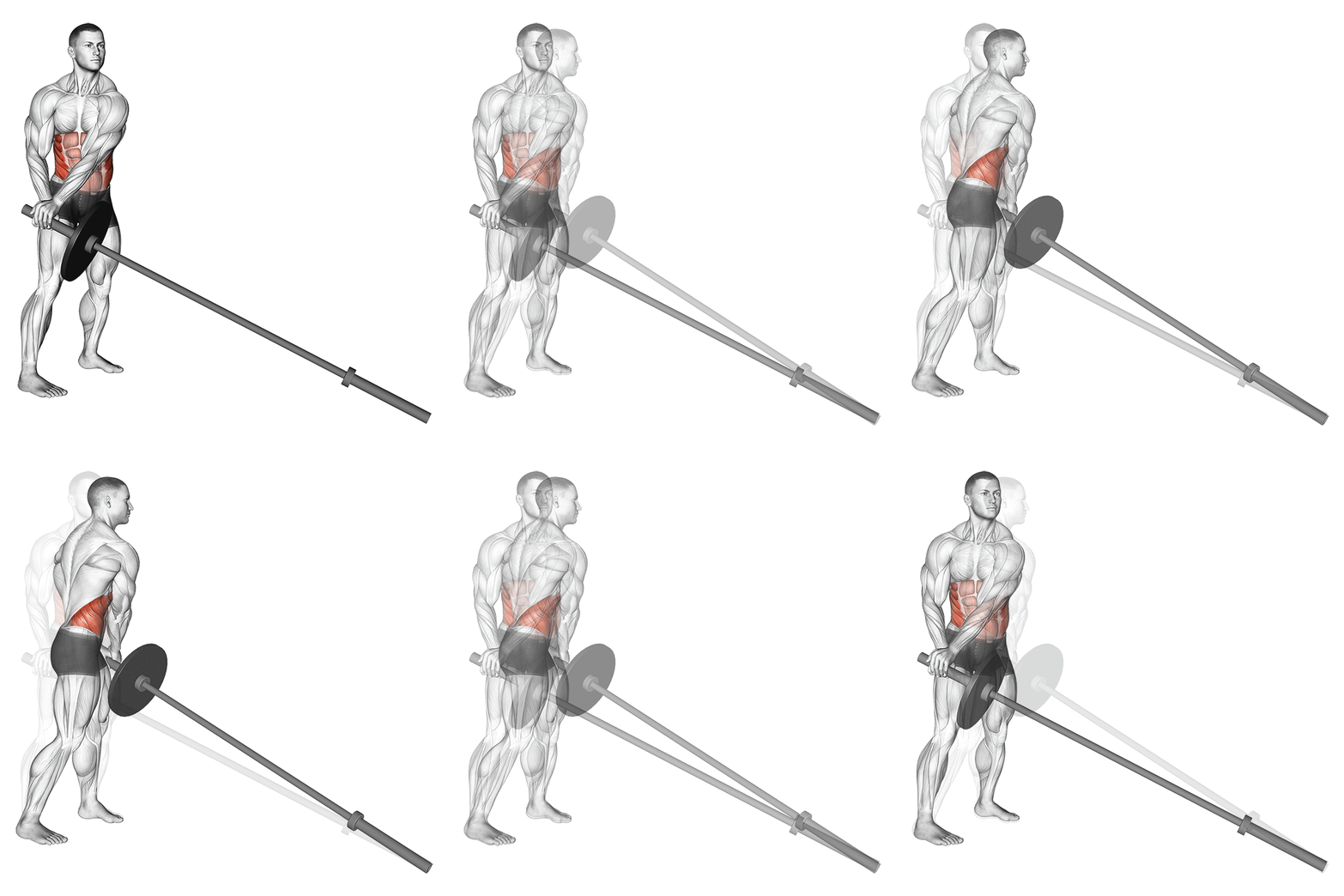
Landmine twist
A barbell anchored in a corner sweeps through a similar arc. The load peaks at the sides and your hips must refuse to rotate along, closer to a sporting movement than the machine.
How to program it
Three protocols by goal. Pick one per cycle and aim for progression on load or distance.
| Goal | Sets × distance | Load | Rest |
|---|---|---|---|
| Rotational strength | 4 × 6-8 per side | Heavy but smooth, RPE 8 | 90 s |
| Hypertrophy | 3 × 10-12 per side | Moderate, RPE 8 | 60-90 s |
| Endurance | 2 × 15 per side | Light, RPE 6-7 | 45-60 s |
Rotary Torso Machine FAQ
Is the rotary torso machine bad for your spine?
Rotation is a normal spinal function, and training it with moderate range and a slow tempo makes the trunk more robust, not less. The pattern that causes trouble is maximal range plus jerky speed plus a heavy pin. If you have a current disc or facet issue, get the movement cleared by your physio before loading it.
Will it burn off love handles?
No machine spot-reduces fat. This one strengthens and can thicken the obliques underneath, which improves rotation strength and trunk shape, but the fat layer over them only responds to a calorie deficit and overall training volume.
Rotary torso machine or Pallof press?
They train opposite jobs. The machine teaches your obliques to produce rotation; the Pallof press teaches the whole trunk to resist it. Rotational athletes need both: the machine for oblique strength and size, the Pallof for the stiffness that transfers force from hips to shoulders.