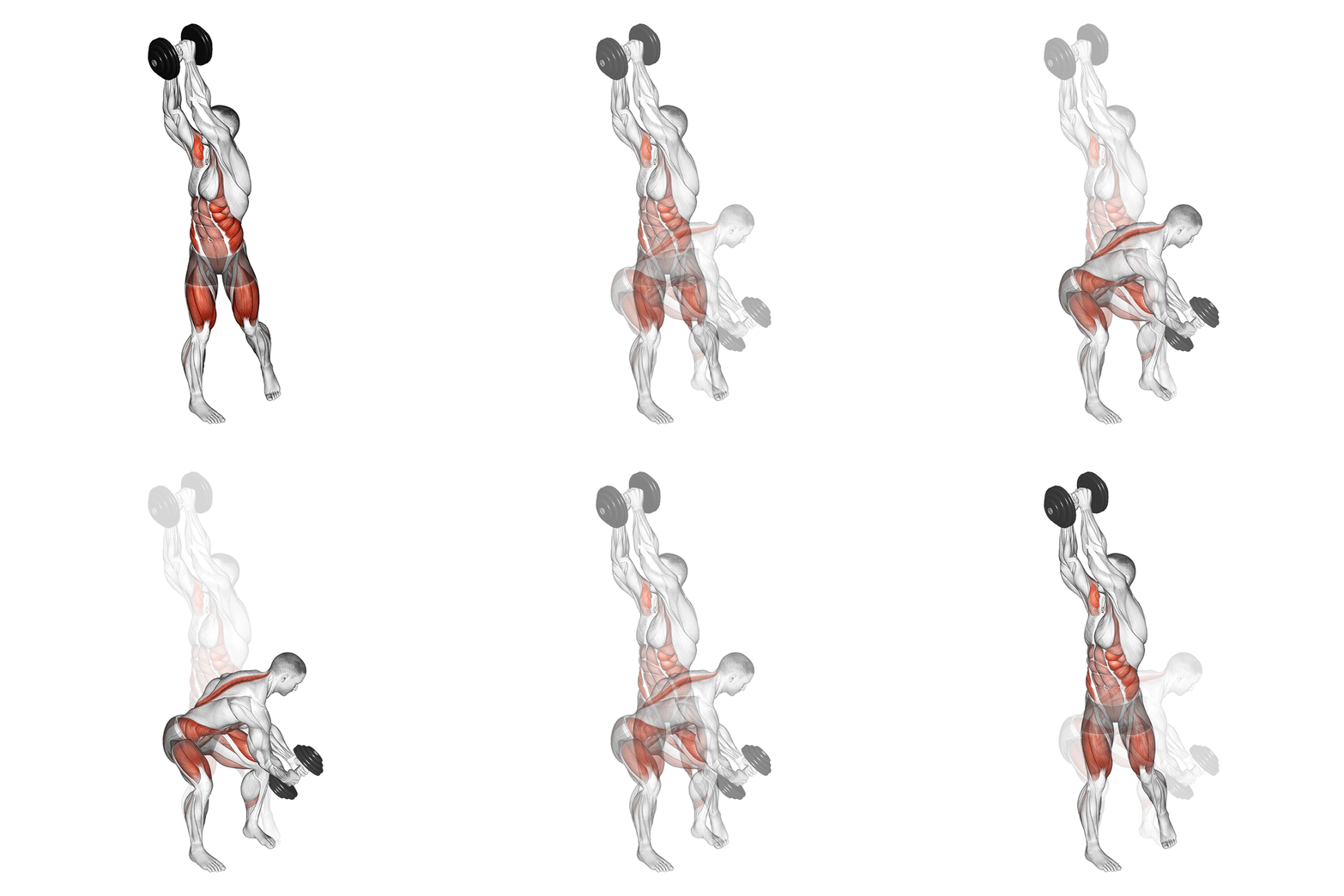
What is the weighted woodchopper?
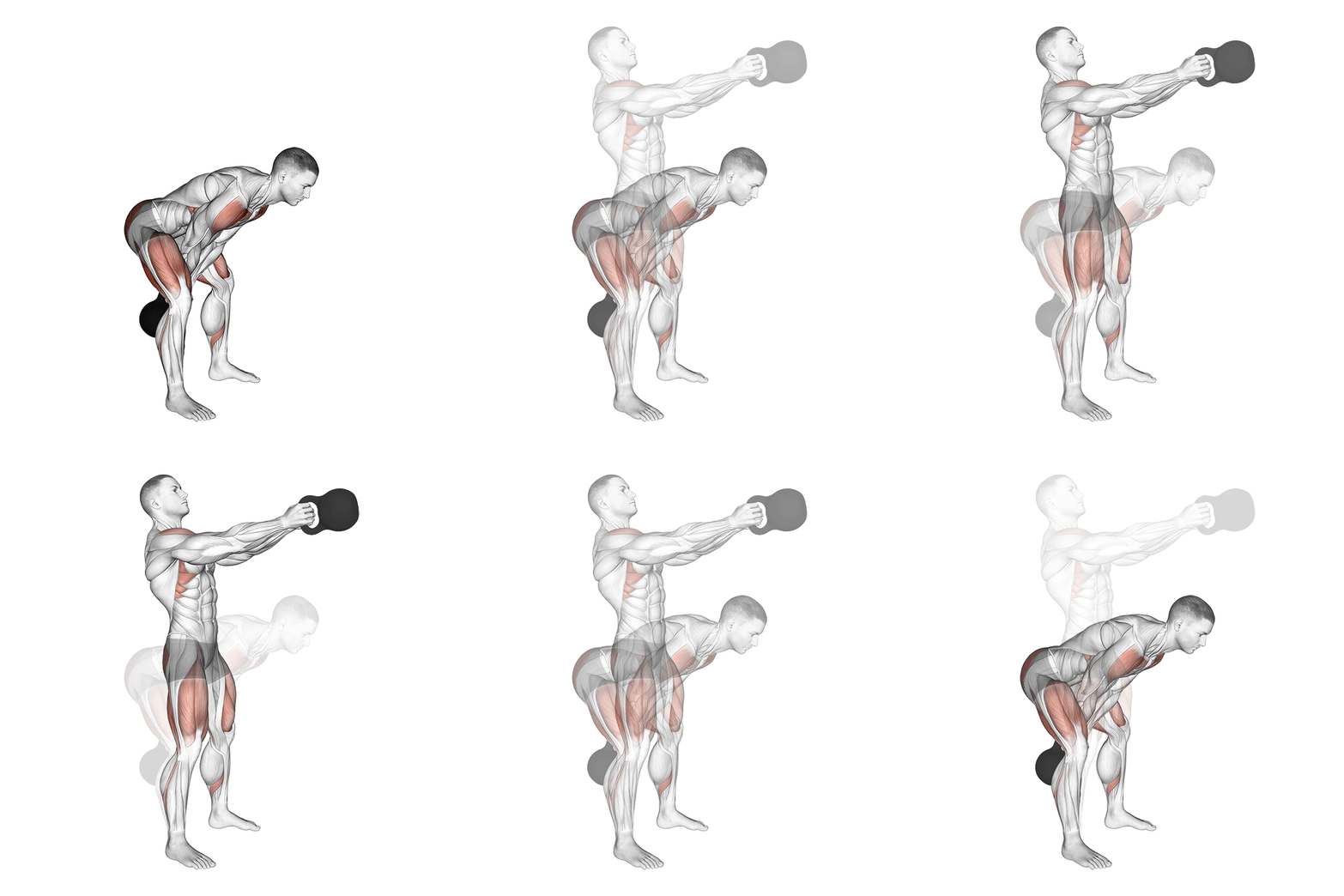
The weighted woodchopper is a rotational core exercise performed on a cable stack or with a dumbbell. You stand side-on to a high anchor, grab the handle with both hands, and pull it diagonally across the body from high on one side down to low on the other, finishing at the opposite hip. The movement loads the obliques, transverse abdominis and serratus, while the hips and shoulders rotate through the chain. It's one of the few core lifts that builds rotational strength rather than just resisting movement, with direct carry-over to throwing, swinging and combat sports.
How to do the weighted woodchopper
- 1
Set the cable high
Pulley at the top of the stack, single-handle attachment. Stand side-on to the column, feet shoulder-width.
- 2
Grip and brace
Both hands on the handle, arms long. Brace the abs hard, glutes tight, ribs stacked over hips.
- 3
Chop down and across
Pull the handle diagonally down and across to the opposite hip. Lead with the hips and torso rotating together, arms just follow.
- 4
Return slowly
Take 2-3 seconds to reverse the path back to the start. Resist the rotation, don't let the cable yank you back.
Pro tip
The chop starts at the hips, not the hands. If your arms are pulling the weight across, your obliques are barely working. Drive the back foot into the floor and let the rotation flow up.
Common mistakes
All arms.
Yanking with the arms skips the obliques entirely. Hips initiate, arms follow.
Going too heavy.
Heavy load turns the chop into a jerky swing. Pick a load that lets you control the eccentric for 10+ reps.
Bending the back.
Side-bending instead of rotating loads the lumbar. Rotate through the t-spine, keep the lumbar locked.
Feet stuck.
Locking the feet flat blocks the rotation. Let the back heel pivot slightly to follow the chop.
Variations and progressions
Easier
Half-kneeling chop
Drop into a half-kneeling position. Removes leg drive, isolates the obliques and teaches strict rotation.
Harder
Med-ball rotational throw
Same pattern, but ballistic: chop a heavy med ball into a wall. Builds rotational power, not just strength.
Reverse chop
Low-to-high lift
Anchor the cable low and lift diagonally up. Same rotation, different stimulus, hits a different pec-shoulder line.
How to program it
Three protocols by goal. Pick one per cycle and aim for progression on load or distance.
| Goal | Sets × distance | Load | Rest |
|---|---|---|---|
| Technique | 3 × 10/side | Light, slow tempo | 45-60 s |
| Hypertrophy | 4 × 12/side | Moderate, 2-s eccentric | 60-75 s |
| Rotational power | 5 × 5/side fast | Moderate, explosive | 90 s |
Weighted Woodchopper FAQ
Will woodchoppers give me a smaller waist?
Loaded oblique work builds the muscle, it doesn't shrink it. Trained heavy, your waist gets thicker, not narrower. If a small waist is the goal, use lighter loads and higher reps to maintain function without bulking the obliques, and keep body-fat low through diet, not chops.
What's the difference between a chop and a Pallof press?
Both train the core against rotation. Pallof press is anti-rotation: you resist a force pulling you sideways. Woodchopper is rotation under load: you actively rotate through the chain. Use Pallof to lock in bracing and woodchoppers to add power, they're complementary, not interchangeable.
Is it safe for the lower back?
Yes, if you rotate through the thoracic spine and not the lumbar. The lumbar isn't built to twist heavily, the thoracic is. Cue chest and shoulders to lead, hips to follow, lumbar to stay locked. If you feel it in your lower back instead of your obliques, the rotation point is wrong.