What is the dumbbell russian twist?
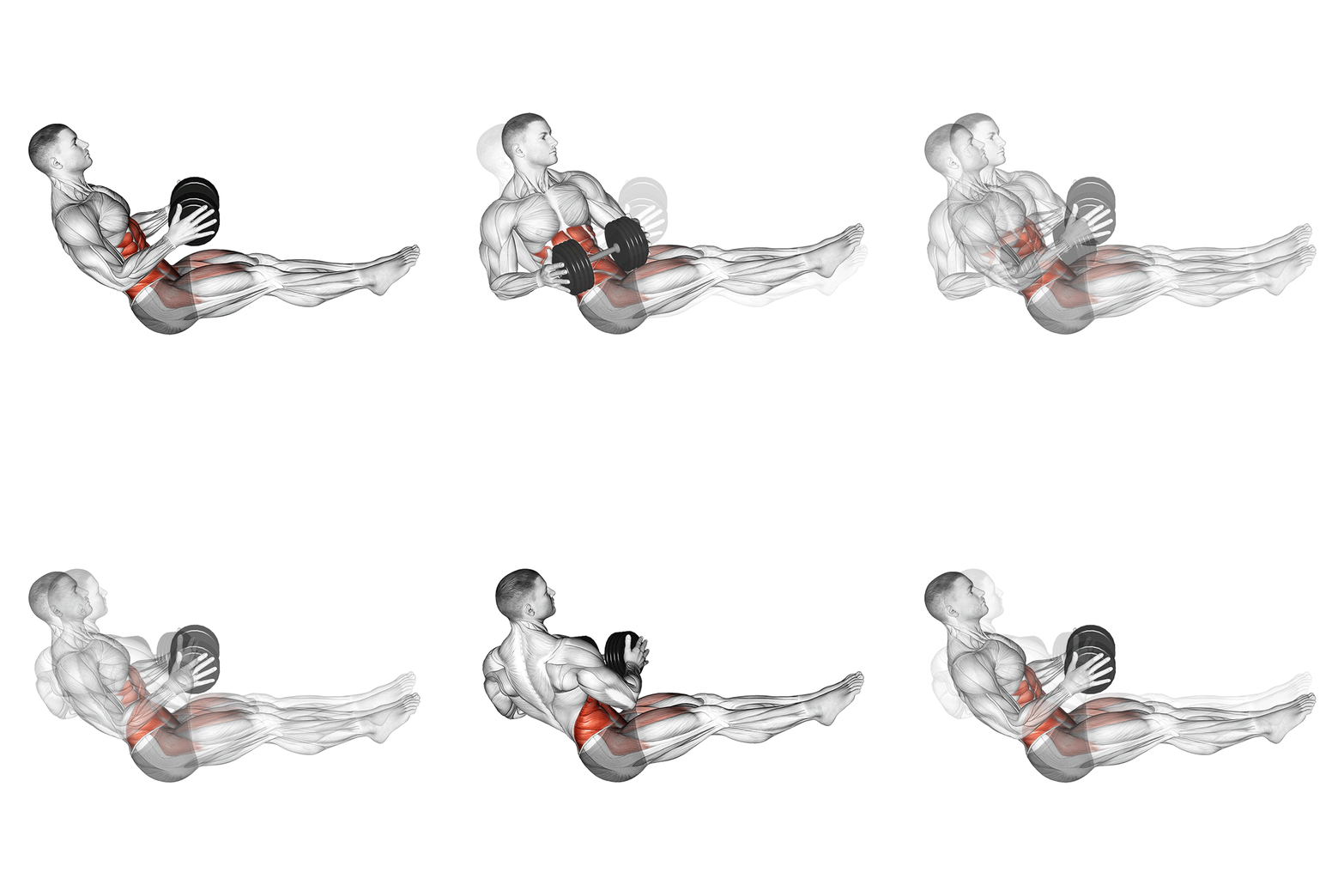
The dumbbell Russian twist is a seated rotation exercise for the obliques. You sit in a V position with your torso leaned back about 45 degrees, hold a dumbbell at chest height, and rotate your shoulders from side to side while your hips stay as still as possible. The obliques both drive each rotation and decelerate it, which is exactly how they work in sprinting, throwing and wall balls. The leaned-back hold also hammers the rectus abdominis isometrically. Done slowly with real rotation through the ribcage, it is a legitimate rotational strength drill; done fast with flapping arms, it is theatre.
How to do the dumbbell russian twist
- 1
Build the V
Sit on the floor, knees bent, heels lightly touching down or lifted. Lean your torso back to about 45 degrees with a long spine and a proud chest.
- 2
Hold the bell at your sternum
Grip the dumbbell by its heads at chest height, elbows slightly bent, arms forming a stable triangle. The bell stays close, not stretched out in front.
- 3
Rotate the ribcage, not just the arms
Turn your chest and shoulders until the dumbbell sits beside one hip, head following the chest. Your hips and knees stay quiet the entire time.
- 4
Brake, then reverse
Stop the bell under control beside the hip, exhale, then rotate to the other side at the same tempo. No bouncing off the bottom of each twist.
Pro tip
The dumbbell should travel because your ribcage turns, not because your arms swing. Film yourself from the front: if the logo on your T-shirt never rotates, you're doing an arm exercise.
Common mistakes
Swinging the arms only.
The bell moves but the torso doesn't, so the obliques do nothing. Lock the dumbbell to your sternum and make the shoulders carry it side to side.
Collapsing into a C-shaped spine.
Rounding hard and twisting fast under load is the combination lumbar discs complain about. Sit tall out of your hips and keep the spine long.
Racing through the reps.
Ballistic side-to-side tapping trains momentum, not muscle. Controlled rotation with a clean stop at each side is what builds the obliques.
Going too heavy, too soon.
A heavy bell forces the arm swing you're trying to avoid. A controlled 6 kg beats a flung 20 kg every single time.
Variations and progressions
Easier
Heels-down bodyweight twist
Keep your heels on the floor and your hands empty. The anchored base lets you learn honest ribcage rotation before adding load or the balance challenge.
Harder
Feet-up twist with a pause
Lift the feet, extend the legs further out, and add a one-second pause beside each hip with a heavier bell. The pause deletes all momentum.
Spine says no?
Pallof press
The Pallof press loads the obliques by resisting rotation instead of creating it: nearly identical muscles, zero twisting through the lumbar spine.
How to program it
Three protocols by goal. Pick one per cycle and aim for progression on load or distance.
| Goal | Sets × distance | Load | Rest |
|---|---|---|---|
| Technique | 3 × 10 per side | 4-6 kg | 60 s |
| Rotational strength | 4 × 8 per side | 8-12 kg, 1 s pause each side | 90 s |
| Circuit | 3 × 20 total | Light, controlled | 45 s |
Dumbbell Russian Twist FAQ
Are Russian twists bad for your back?
The risky combination is a rounded spine, added load and ballistic speed all at once. Remove any one of them and the exercise is fine for healthy backs: sit tall, rotate under control, use a sensible dumbbell. If you have a history of disc problems, skip the argument entirely and build your obliques with Pallof presses and landmine twists instead.
Feet up or feet down?
Feet down is the more honest version: the stable base means the movement you see is actual torso rotation. Feet up adds a big isometric demand on the rectus abdominis and a balance challenge, but it invites arm-swinging and shaky half-reps. My rule: earn feet-up by first doing strict, paused feet-down sets with a full ribcage turn.
What dumbbell weight should I use for Russian twists?
Lighter than your ego wants: 4-6 kg for most beginners, 8-12 kg for strong intermediates. The test is simple: if you can't pause the bell for a second beside each hip without wobbling or letting your spine round, it's too heavy. Progress by slowing the tempo and extending the range before you ever reach for the next dumbbell.