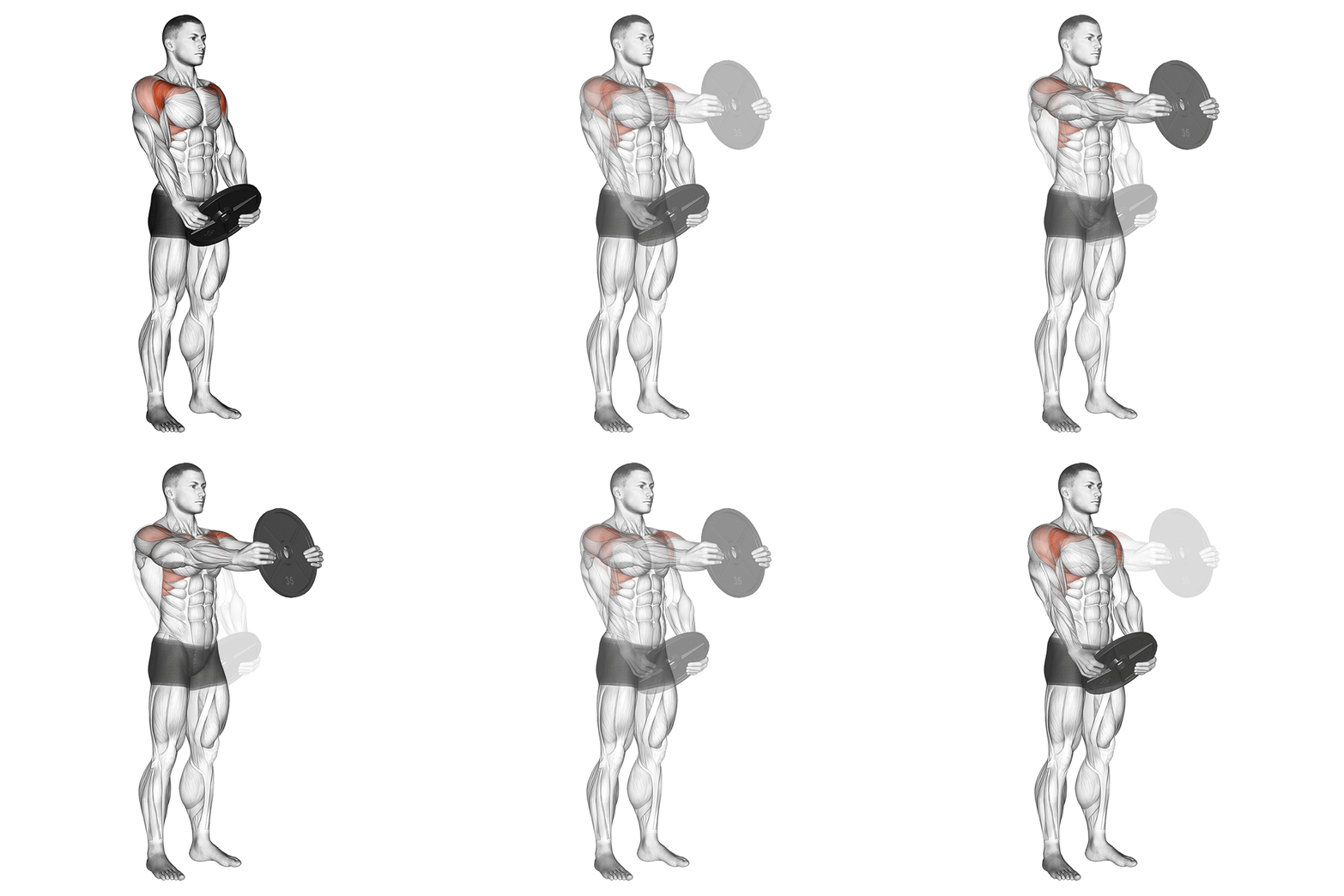
What is the plate front raise?
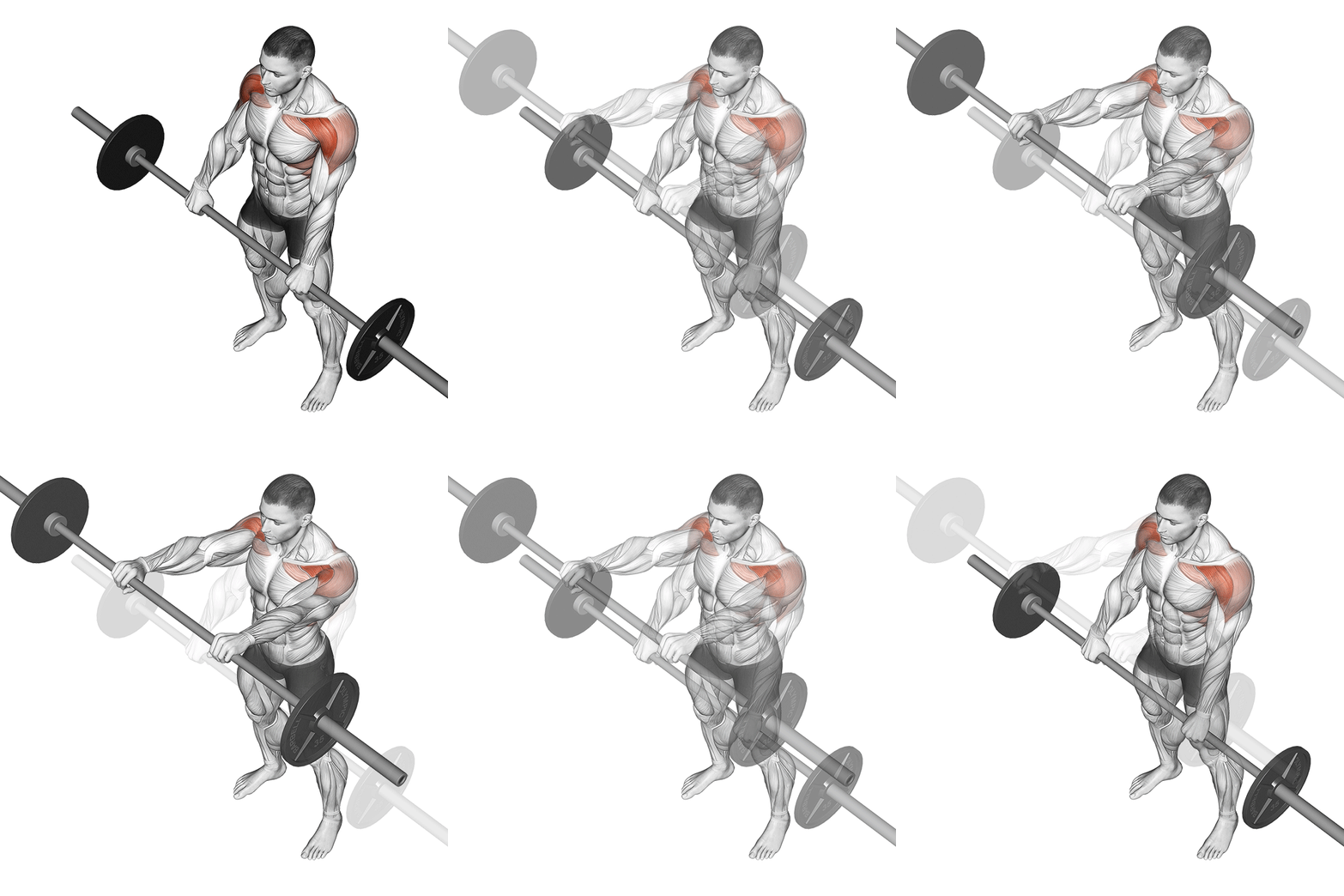
The plate front raise is a shoulder isolation exercise: you hold a single weight plate with both hands at 3 and 9 o'clock and raise it from your thighs to eye level with nearly straight arms. Compared with dumbbell front raises, the two-handed grip locks both arms onto one even path, so there's less wobble to manage and the movement is easy to learn on day one. The target is the anterior deltoid, with the upper chest assisting early in the arc. It's a sensible pick for beginners, for home lifters who only own plates, and as a light warm-up before pressing.
How to do the plate front raise
- 1
Grip at 3 and 9 o'clock
Stand hip-width, knees soft, and hold one plate by its sides with both hands, arms hanging in front of your thighs with a slight bend at the elbows.
- 2
Lock your trunk before lifting
Squeeze your glutes, tuck your ribs down and keep your weight mid-foot. The stiller your torso, the more the delts have to do the lifting.
- 3
Raise to eye level
Lift the plate in a wide arc until your arms sit between shoulder and eye height, exhaling on the way up. No swing from the hips.
- 4
Lower in three seconds
Control the descent until the plate is just short of your thighs, keeping tension in the delts, then flow into the next rep without a bounce.
Pro tip
Think of handing the plate to someone across a counter: reach long and slightly forward as you raise. The longer lever keeps the delts loaded and stops the upper traps from hijacking the rep.
Common mistakes
Rocking the hips.
A hip snap turns a delt isolation into a lower-back exercise. If you can't lift the plate without rocking, it's too heavy: drop 5 kg and own the tempo.
Choosing ego over leverage.
With straight arms, a plate at eye level sits at the end of a very long lever. A 10 kg plate is a serious load here; most lifters grow fine on 5-15 kg with clean reps.
Shrugging as you raise.
If your shoulders creep toward your ears, the upper traps are stealing work from the delts. Keep the shoulders pressed down and think long arms, low shoulders.
Leaning back past eye level.
Buying height by arching the lower back loads the spine, not the shoulder. Stop at eye level, or go overhead only with a light plate and your ribs held down.
Variations and progressions
Easier
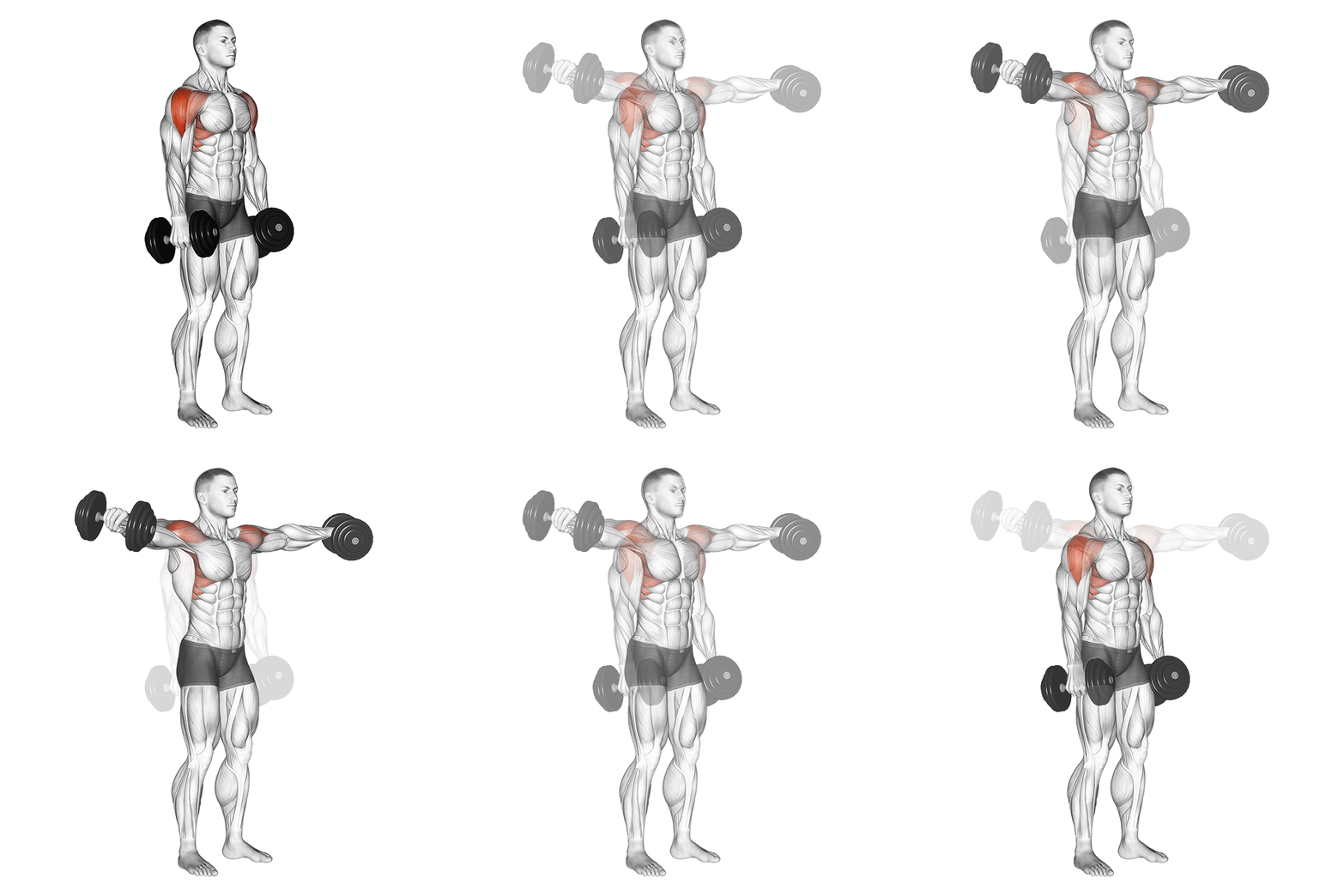
Alternating dumbbell front raise
One light dumbbell at a time halves the demand on your trunk and lets you build the pattern side by side before holding a single heavier implement.
Harder
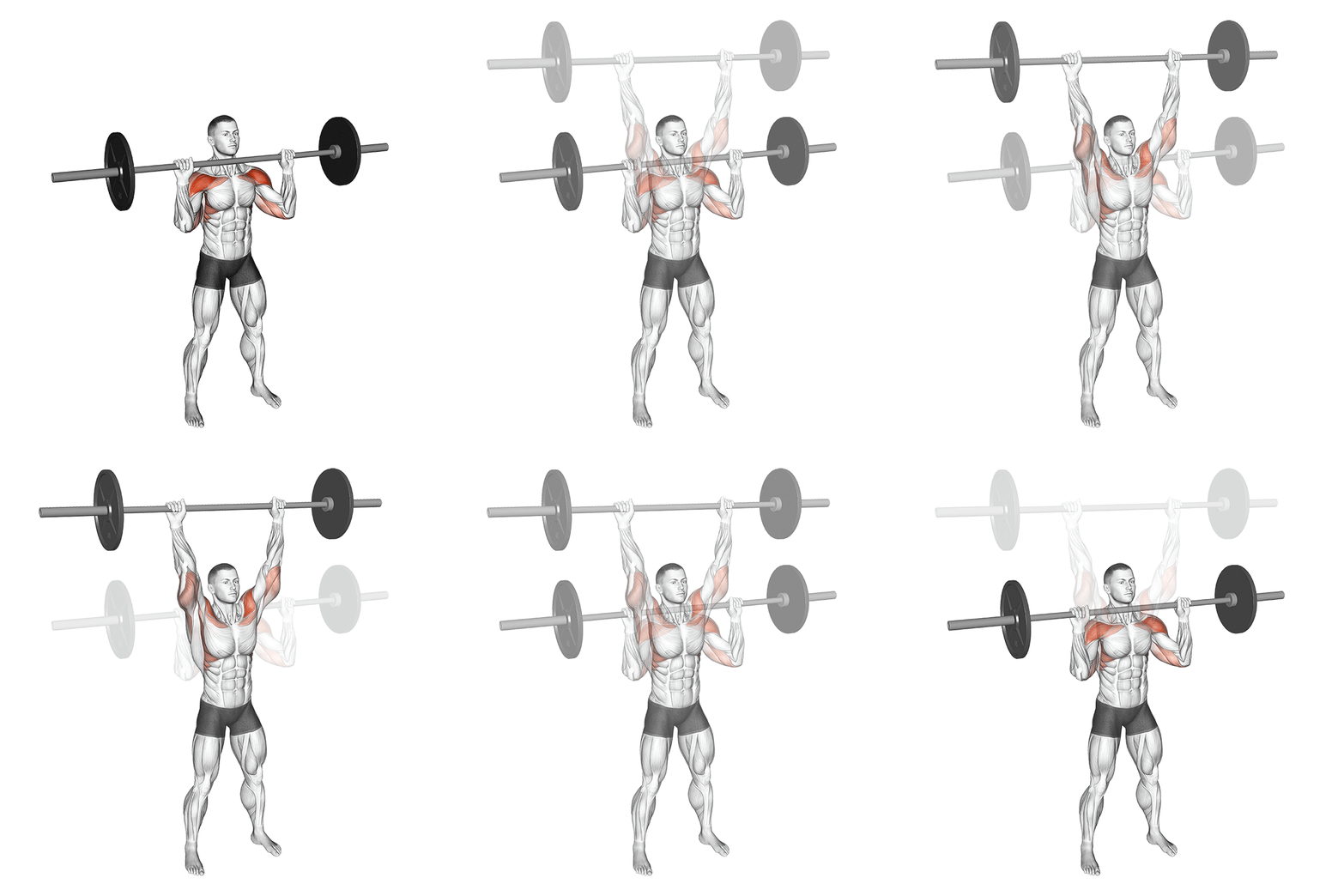
Plate raise to overhead
Continue the arc until the plate is directly over your head, pause one second, then lower under control. Far more time under tension from the same plate.
Alternative
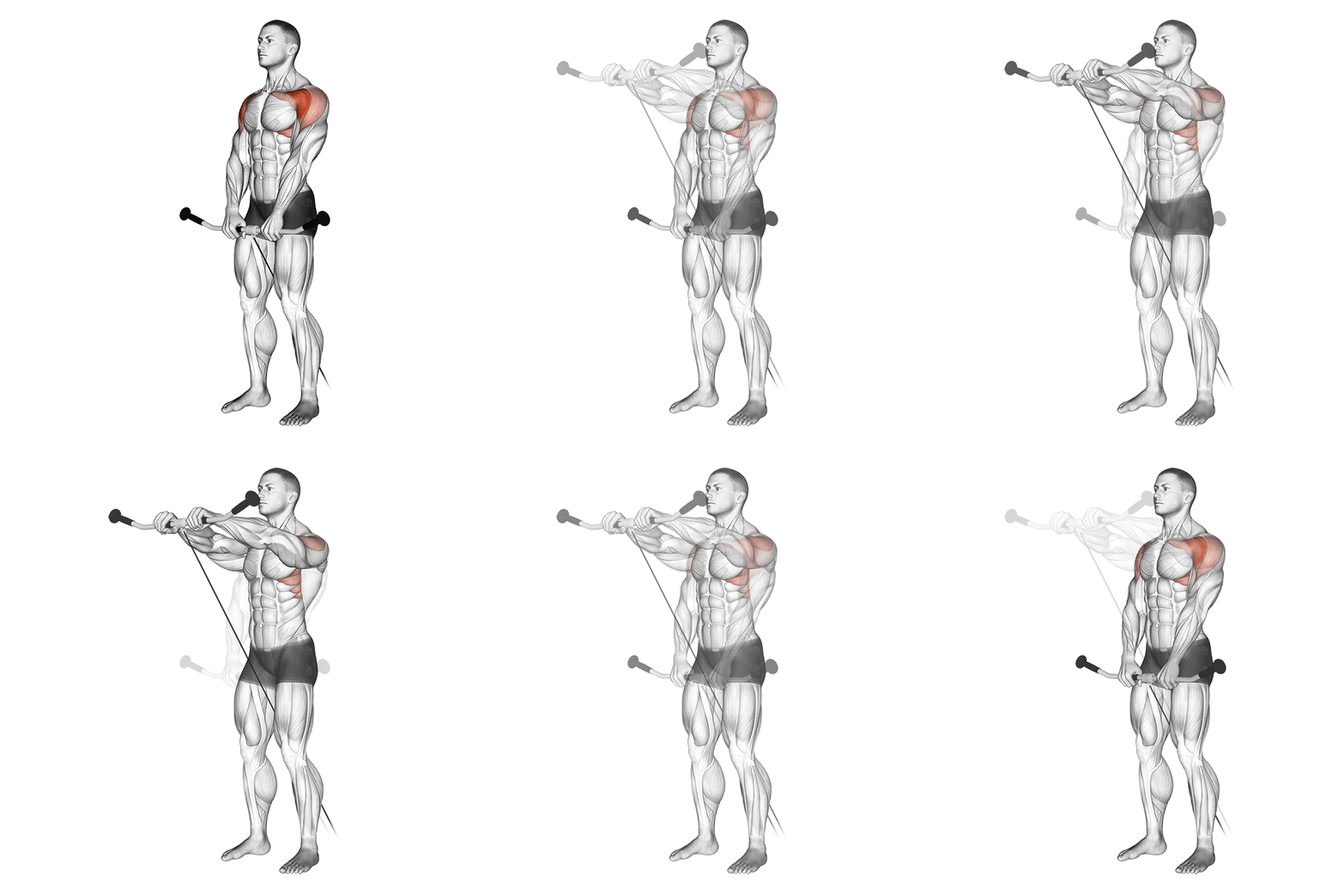
Cable front raise
A low pulley keeps resistance on the delt at the bottom of the arc, where a plate weighs almost nothing. The better match for strict hypertrophy work.
How to program it
Three protocols by goal. Pick one per cycle and aim for progression on load or distance.
| Goal | Sets × distance | Load | Rest |
|---|---|---|---|
| Hypertrophy | 3 × 10-15 | 5-15 kg plate | 60-90 s |
| Finisher | 2 × 15-20 | Light plate (2.5-5 kg) | 45-60 s |
| Pressing warm-up | 2 × 12-15 | Very light (1.25-5 kg) | 30-45 s |
Plate Front Raise FAQ
Are front raises worth it if I already bench and overhead press?
Usually not for size: pressing already hammers the front delts. Front raises earn their place when your pressing volume is low, when the front delts visibly lag, or as a warm-up that wakes the shoulder up before heavy work.
How high should I raise the plate?
Shoulder to eye level covers the productive range for the front delt. Going overhead adds work for the serratus and traps, but only do it with a light plate and a braced trunk, never by leaning back.
What plate should I start with?
Most beginners are well served by 5 kg; strong pressers might start at 10 kg. If you can't pause for one second at eye level, the plate is too heavy, whatever the number says.
Plate or dumbbells for front raises?
The plate's two-handed neutral grip is more stable and easier to keep strict, ideal for learning and warm-ups. Dumbbells allow finer load jumps and one-arm work. Many lifters warm up with the plate and build volume with dumbbells or a cable.