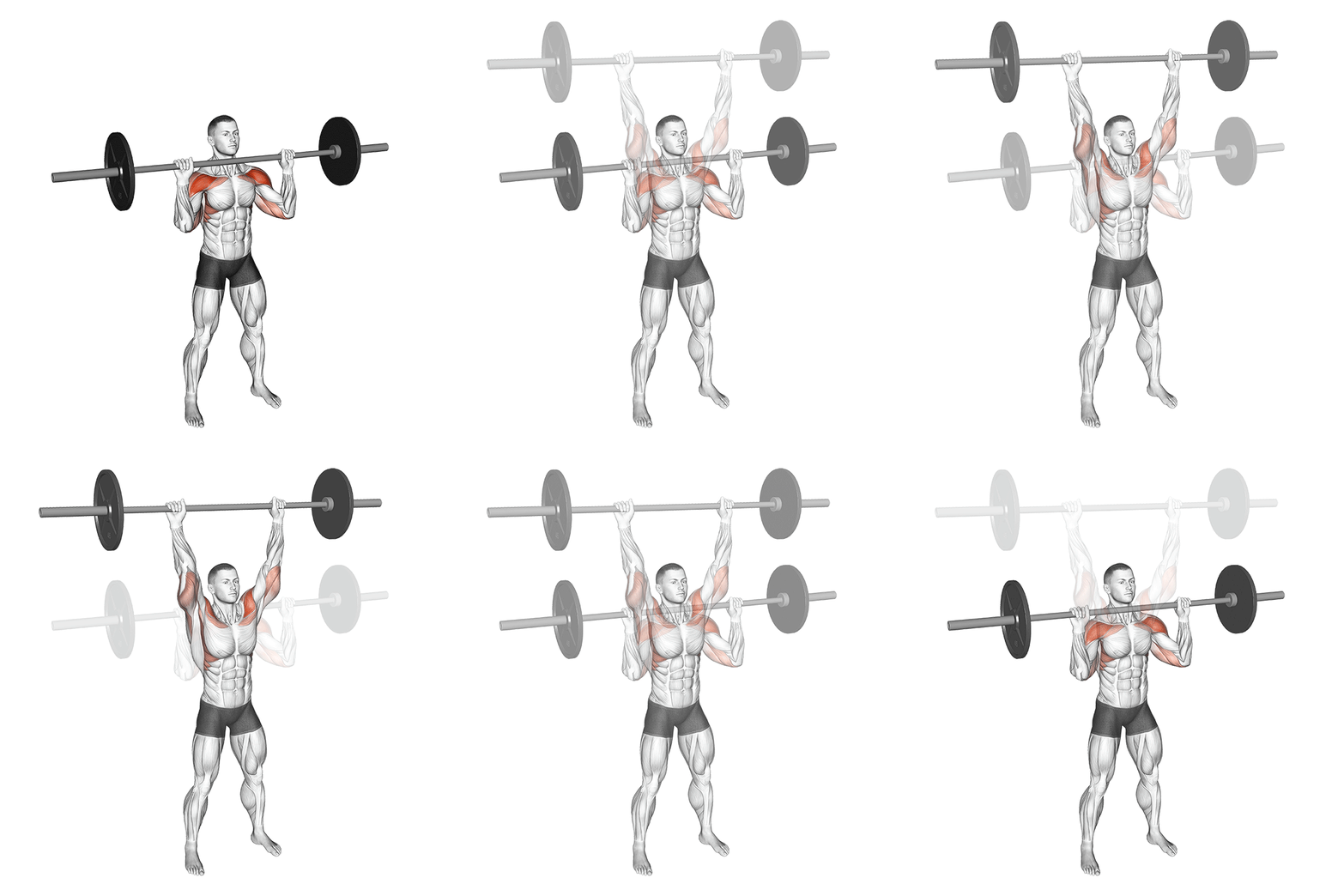
What is the overhead press?
The overhead press is a standing vertical press performed strict, no leg drive. You start with the bar racked on the front delts, brace hard, and press it straight overhead until your arms lock with the bar over the mid-foot. It loads the front and side delts, triceps, upper chest and serratus, while the entire trunk works to stabilise. It is one of the oldest tests of strength in barbell lifting, and the cleanest indicator of true upper-body power, no bench arch, no spotter, no momentum.
How to do the overhead press
- 1
Rack the bar on the front delts
Bar sits on the front delts, hands just outside the shoulders, elbows slightly in front of the bar. Wrists stacked under the bar, not bent back.
- 2
Brace from feet to abs
Stance hip-width, glutes squeezed, abs tight, ribs down. Take a big breath into your belly and lock the trunk before the bar moves.
- 3
Press up and pull head through
Press the bar straight up. Once it clears your forehead, push your head forward through your arms so the bar finishes over your mid-foot.
- 4
Lock out and lower under control
Elbows fully locked, shoulders shrugged into the bar, bar stacked over hips, knees and ankles. Lower under control to the front delts. Reset the brace.
Pro tip
The bar has to travel in a straight vertical line. Your face does the moving, not the bar. Tuck your chin to let the bar pass, then push your head through to finish the rep. That single cue fixes most failed presses.
Common mistakes
Pressing in front.
A bar that finishes in front of your face overloads the shoulders. Push the head through, bar over mid-foot.
Hyper-arched lower back.
Leaning back turns it into a standing incline bench. Squeeze glutes, ribs down, brace abs.
Bouncing with the knees.
If your knees dip, it's a push press, not a strict press. Lock the legs, drive only with the arms.
Bent wrists.
Wrists folded back leak force and risk injury. Stack the bar over the forearm, knuckles up.
Variations and progressions
Easier
Seated dumbbell press
Dumbbells with back support take the brace and stability out. Lets you push more load to the delts directly.
Harder
Push press
Add a small leg dip and drive to launch the bar overhead. Lets you handle 110-120% of your strict press, builds power.
No barbell?
Z press or landmine press
Z press (seated on the floor, legs out) destroys any compensation. Landmine press is a shoulder-friendly half-vertical option.
How to program it
Three protocols by goal. Pick one per cycle and aim for progression on load or distance.
| Goal | Sets × distance | Load | Rest |
|---|---|---|---|
| Strength | 5 × 5 | 80% 1RM | 2-3 min |
| Hypertrophy | 4 × 8-10 | 65-72% 1RM | 90 s |
| Peaking | 5 × 2 | 87-92% 1RM | 3-4 min |
Overhead Press FAQ
Why won't my overhead press grow?
Three usual suspects: not enough volume (most people press once a week and wonder), a weak upper back that can't stabilise heavy loads, and a lazy lockout. Press twice a week, hammer rows and face pulls, and finish every rep with the head pushed through. Small jumps of 1 kg per session beat big jumps that stall.
Strict press or push press?
Both serve different goals. Strict press builds pure shoulder and triceps strength, exposes weakness, builds the core. Push press lets you load 10-20% more, builds explosive power and overhead lockout strength. A program with both, strict for low-rep strength, push for heavier overload, beats either alone.
My shoulders hurt when I press, what's wrong?
Usually a mobility or stability issue, not a strength one. Check thoracic-spine extension (tight upper back forces the shoulder to overcompensate), scapular control (shrug into the bar at lockout), and rotator-cuff balance (face pulls, external rotations). If pain is sharp or localised in the front of the joint, see a physio before adding load.