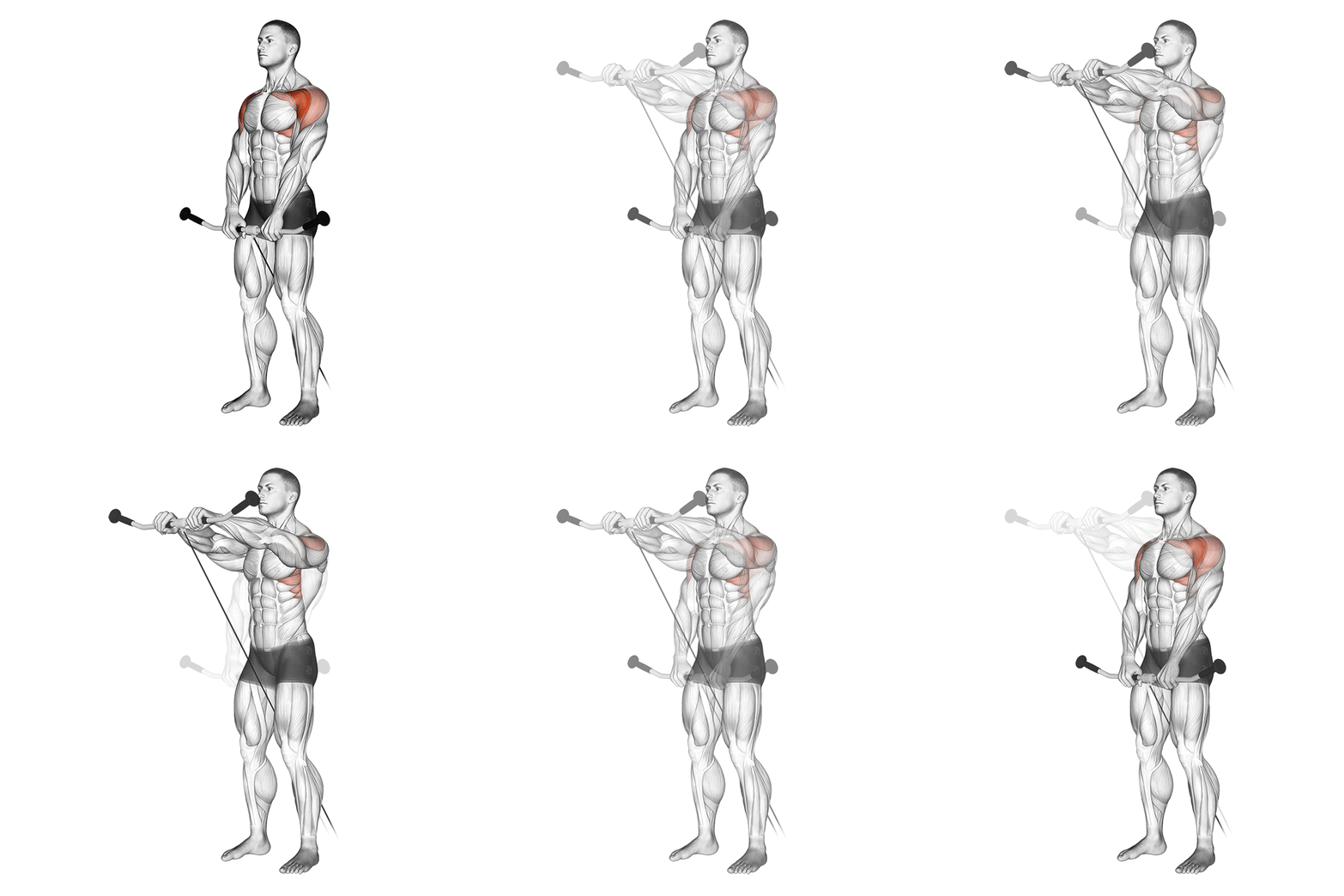
What is the cable front raise?
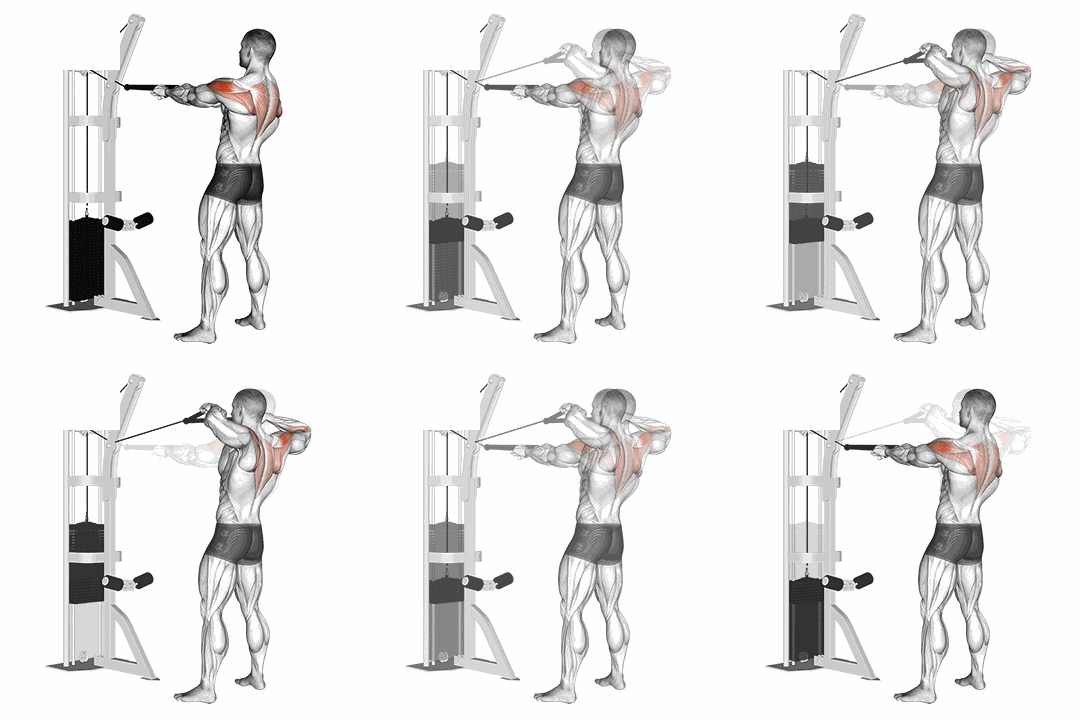
The cable front raise is an isolation exercise for the anterior deltoid. Standing with your back to a low pulley, the cable running between your legs, you raise the handle out in front of you to shoulder height with a soft elbow, then lower it slowly. Because the cable pulls down and behind you, the delt is loaded from the first degree of movement, where a dumbbell still weighs nothing useful. Front delts already work in every press you do, so treat this as targeted volume: when a lagging front delt needs direct work, when pressing is restricted, or as a strict finisher at the end of a shoulder session.
How to do the cable front raise
- 1
Turn your back to the stack
Set the pulley at its lowest point, grab a single handle and face away from the machine, cable running between your legs. The handle starts against your thigh, arm long, elbow soft.
- 2
Lock your posture before the first rep
Stagger your stance slightly, brace your trunk and set the working shoulder blade down and back. That blade position must survive the whole set.
- 3
Raise to shoulder height, no shrug
Exhale and sweep the handle forward and up to shoulder height with the elbow slightly bent. If your shoulder creeps up toward your ear on the way, the trap has taken over: reset.
- 4
Fight the cable down
Lower in 2-3 s back to the thigh. The cable will try to snap your arm down and back; resisting it is half the exercise. Finish the reps, then switch arms.
Pro tip
Rest your free hand on the trap of the working side. The second you feel it bunch up under your fingers, the rep count stops being honest: lower the stack one pin and keep the delt doing delt work.
Common mistakes
Swinging the handle up with your hips.
A little lean-back and hip pop can double the stack you move while the delt does half the work. Brace, stay vertical, and let the reps get slower instead of uglier.
Shrugging as you raise.
When the shoulder rides up, the upper trap steals the rep and the neck stiffens for nothing. Set the blade down before each rep: raise the arm, not the shoulder girdle.
Treating it like a heavy lift.
The front delt is a small muscle with one job here. Heavy pins mostly recruit traps, hips and ego. It's a 10-20 rep exercise; load it accordingly.
Letting the cable win the descent.
Dropping the handle back to the thigh throws away the half of the rep where constant tension pays best, the very reason you picked a cable. Take 2-3 s down, every rep.
Variations and progressions
Easier
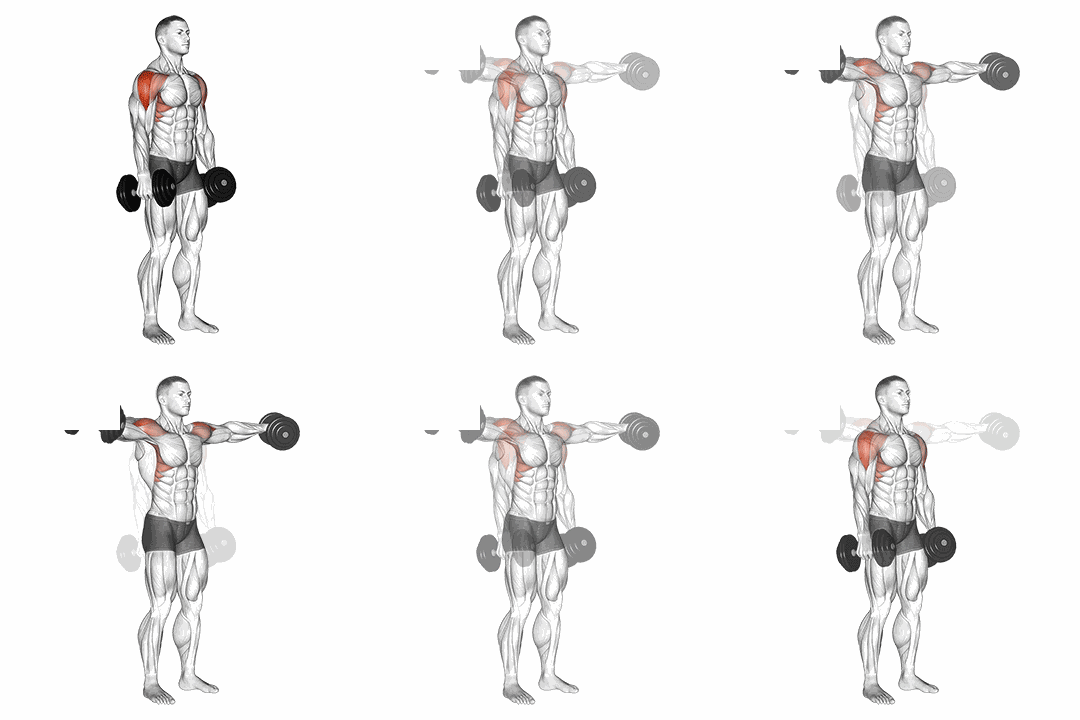
Alternating dumbbell front raise
One arm works while the other rests, with simple dumbbells and no pulley setup. The easiest way to learn the strict pattern.
Harder
Paused cable front raise
Hold two full seconds at shoulder height, then take three down. Same stack, entirely different exercise.
No cable?
Plate front raise
Hold a plate with both hands and raise it to eye level. The two-handed grip keeps the movement symmetrical and the load honest.
How to program it
Three protocols by goal. Pick one per cycle and aim for progression on load or distance.
| Goal | Sets × distance | Load | Rest |
|---|---|---|---|
| Hypertrophy | 3 × 12-15 per arm | RPE 8 | 60-90 s |
| Strict technique | 3 × 10 per arm, 2 s pause at the top | Light | 60 s |
| Shoulder finisher | 2 × 20 per arm | Very light, to RPE 9-10 | 45-60 s |
Cable Front Raise FAQ
Do I need front raises if I already press?
For most lifters, not as a staple: bench and overhead pressing already hammer the anterior delt, and more direct work is often redundant. They earn a spot when pressing volume is low or restricted, when the front delt visibly lags, or in a block where you want shoulder volume without loading the joints heavily.
Cable or dumbbell for front raises?
The cable loads the delt evenly from bottom to top, while a dumbbell is almost weightless at the thigh and heaviest at shoulder height. If strict, full-range tension is the goal, the cable wins; dumbbells remain a perfectly good option when the pulley is taken, just expect the bottom half of each rep to cost less.
How high should I raise the handle?
Shoulder height is enough: that's where the front delt has done its main job. Slightly above is fine if nothing shrugs. Go much higher and the traps and serratus take over to rotate the shoulder blade, which turns your isolation move into something else entirely.