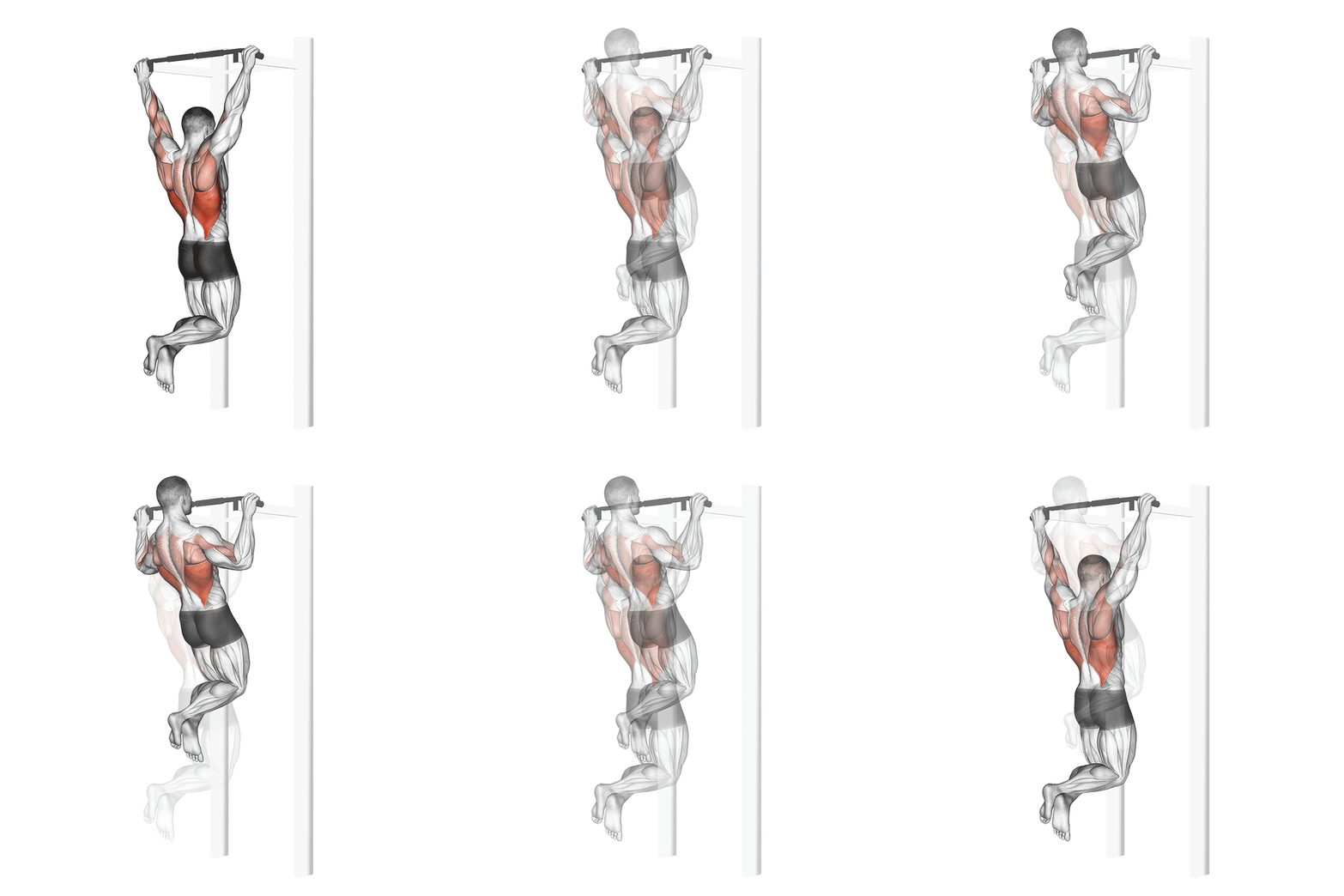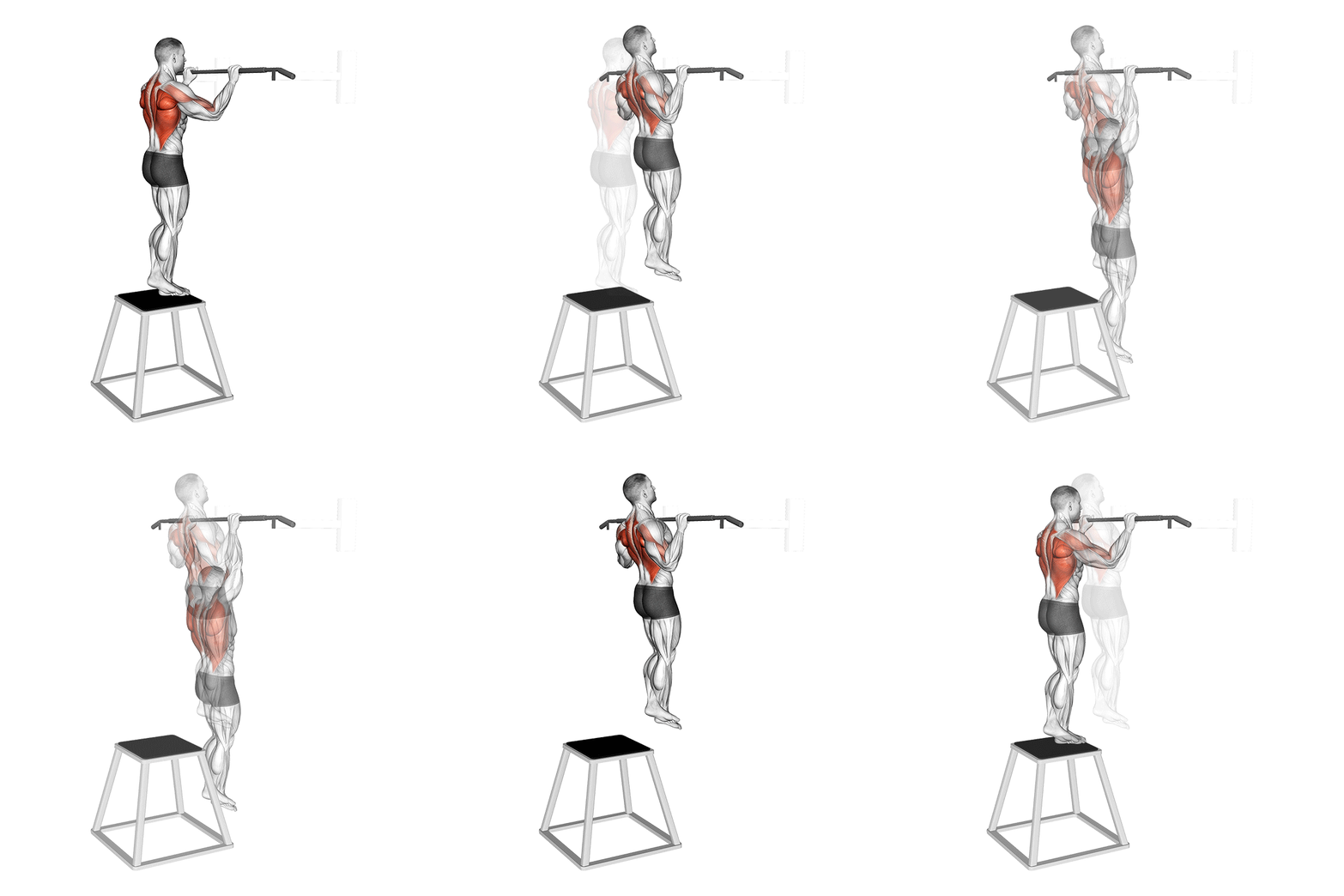
What is the negative pull-up?
A negative pull-up is the lowering half of a pull-up done on its own: you start at the top, chin over the bar, and brake against gravity for several seconds on the way down. Muscles produce more force lowering a load than lifting it, so you can train the exact muscles of a strict pull-up before you can complete a single rep. That makes negatives the standard bridge between rows and your first pull-up, and more specific than a band because nothing changes your body position. They suit beginners chasing rep number one and anyone rebuilding after a layoff; all you need is a bar and a box to reach it.
How to do the negative pull-up
- 1
Start at the top, not the bottom
Set a box under the bar and step or jump up so you begin with your chin clearly over the bar, hands just outside shoulder width, palms facing away.
- 2
Lock the top for a beat
Before anything moves, hold the top for one second: chest up toward the bar, shoulder blades pulled down, elbows squeezed toward your ribs, legs quiet.
- 3
Lower on a slow count
Take 3 to 5 seconds to reach straight arms, at the same speed from top to bottom. The lower half is where you will want to let go; that is exactly where to fight.
- 4
Finish the hang, then reset
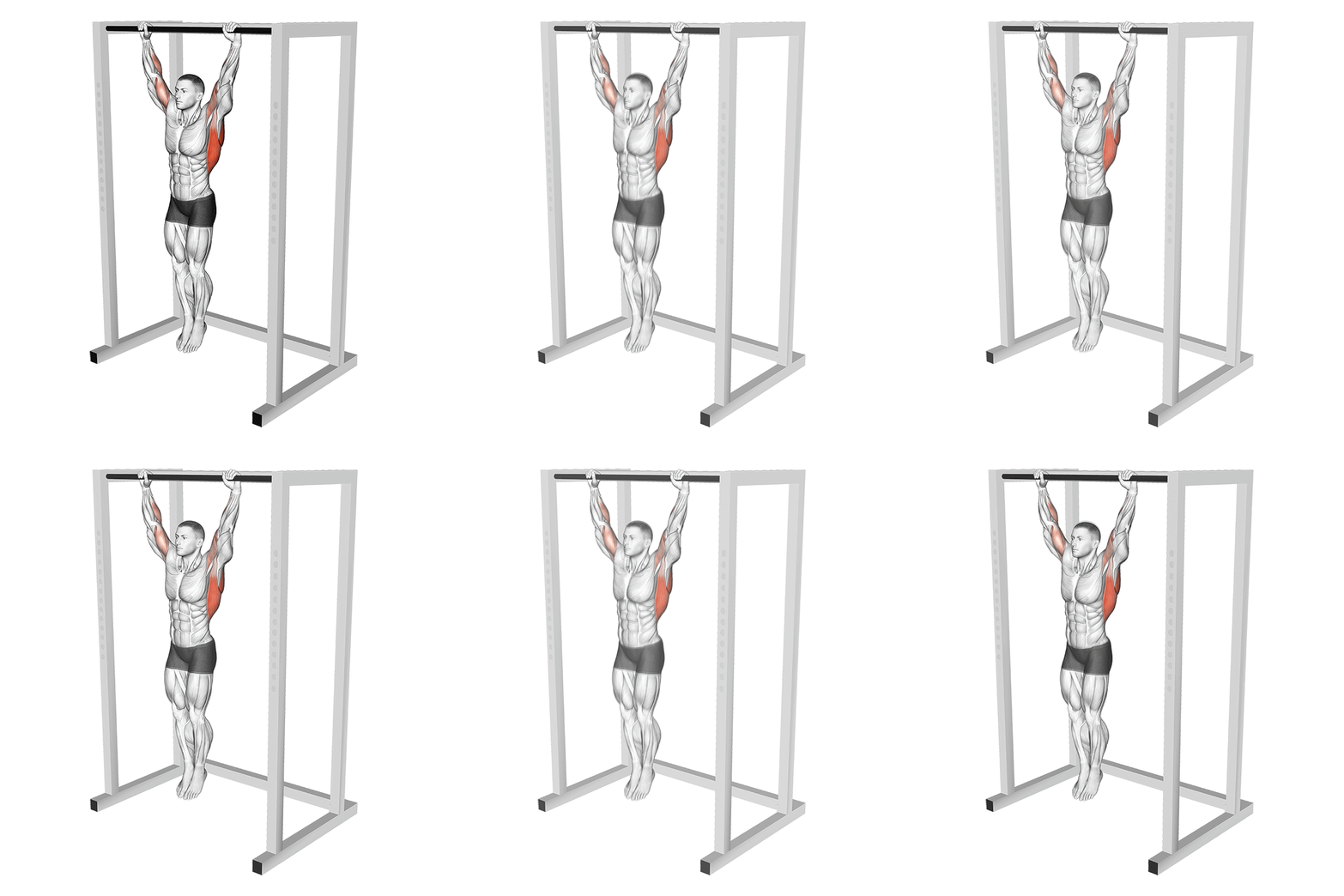
Arrive in a full dead hang with straight elbows, hold it briefly, then step back onto the box for the next rep. Never bounce out of the bottom to climb back up.
Pro tip
Break the descent into three checkpoints: chin over the bar, elbows at 90 degrees, dead hang. Park a full second at each. Most people spend all their braking power at the top and free-fall through the bottom half, which is precisely the range where their first pull-up will fail.
Common mistakes
Free-falling the last third.
A slow top followed by a drop trains nothing where you are weakest. Judge every rep on the final seconds before the dead hang; if you cannot brake them, do fewer reps or keep a toe lightly on the box.
Doing ten on day one.
Eccentric work creates far more soreness than regular reps, and a big first session can wreck your arms for a week. Cap it at 5 or 6 quality lowers per workout until the soreness stops showing up.
Starting from a half-top.
Jumping to a position where the chin barely grazes the bar and the elbows are already opening skips the strongest part of the rep. Use a taller box and begin from a true top: chin over, chest close to the bar.
Bouncing out of the bottom.
Swinging or kipping to get back up turns a strength drill into a shoulder gamble. The box exists so that every single rep starts fresh from the top; use it every time.
Variations and progressions
Easier
Toe-assisted negative
Keep one toe on the box the whole way down and push just enough to keep the descent at 3 seconds. Your arms still do most of the braking; the leg only tops up what is missing.
Harder
Ten-second negative with pauses
Stretch the descent to 8-10 seconds with a dead stop at the top, at 90 degrees and just above the hang. Two or three of these are worth a whole set of fast lowers.
Alternative
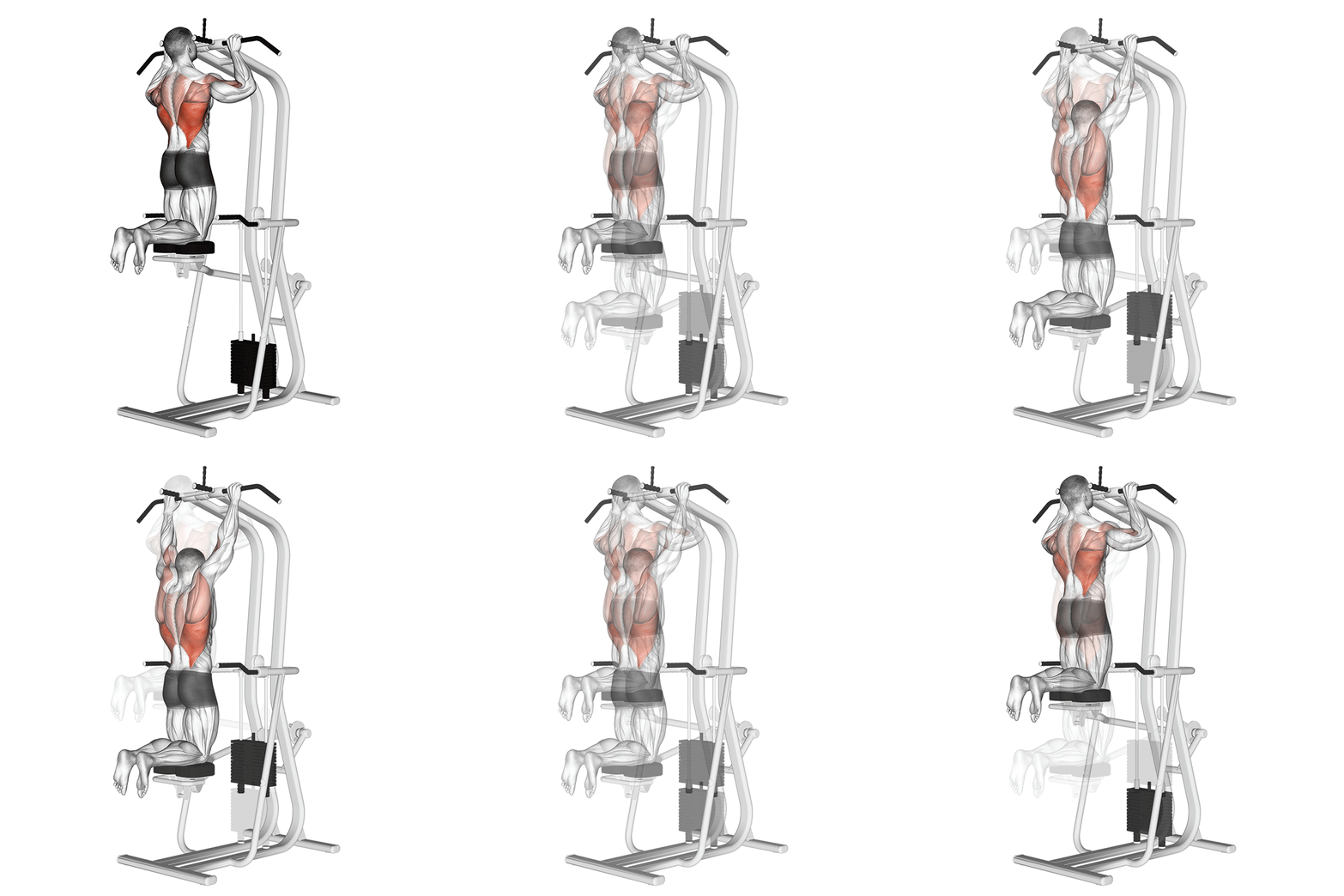
Band-assisted pull-up
A band under the feet lets you train the way up as well as the way down. It helps most at the bottom where you are weakest, so pair it with negatives rather than replacing them.
How to program it
Three protocols by goal. Pick one per cycle and aim for progression on load or distance.
| Goal | Sets × distance | Load | Rest |
|---|---|---|---|
| First strict pull-up | 4 × 2-3 lowers | Bodyweight, 4-5 s per descent | 2-3 min |
| Eccentric strength | 3 × 4-5 lowers | Bodyweight, 3 s with a pause at 90 degrees | 2 min |
| Finisher after rows | 2 × max quality lowers | Stop once you can no longer brake the bottom half | 90 s |
Negative Pull-Up FAQ
How long until negative pull-ups give me a full pull-up?
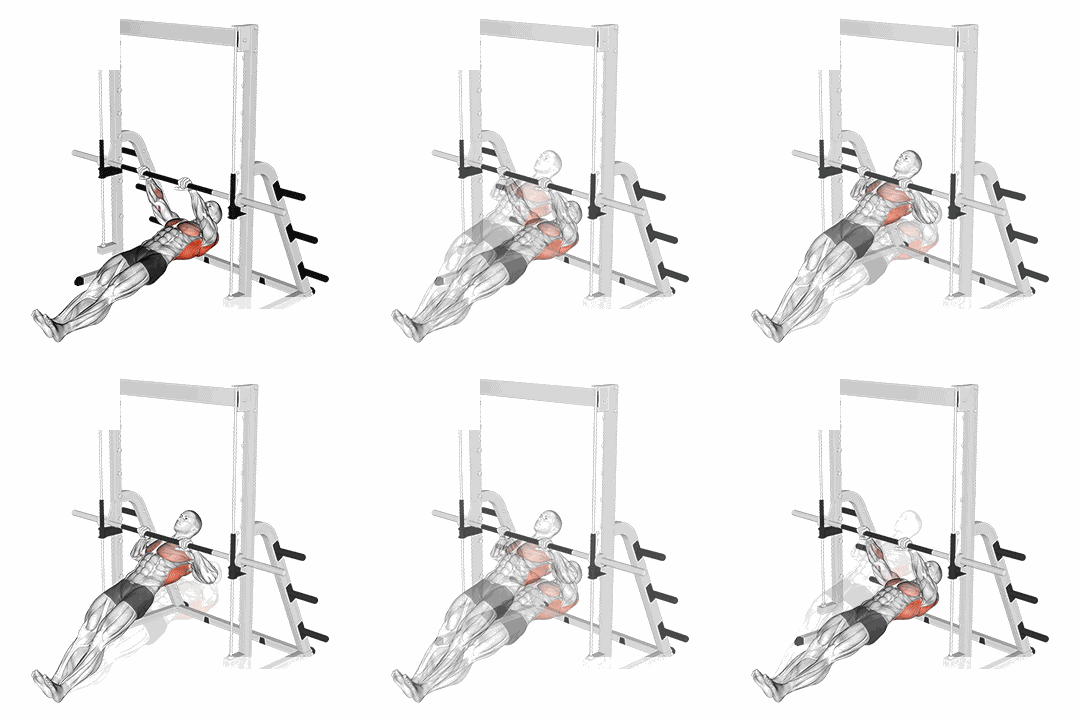
For someone who can already hang for 30 seconds and row their bodyweight horizontally, the first strict rep usually lands within one to two months of two or three short sessions a week. The timeline stretches with higher bodyweight and shrinks if you pair negatives with inverted rows, dead hangs and band work. Test a real attempt every week or two; the day a 5-second lower feels easy top to bottom, the rep is close.
How slow should I lower on a negative pull-up?
Aim for 3 to 5 seconds at an even speed. Slower than about 8 seconds buys little extra strength and a lot of extra soreness, and most people fake long counts by stalling at the top then dropping. A consistent 4-second descent through the whole range beats a 10-second top followed by a fall every single time.
Why am I so sore after negatives?
Lengthening a muscle under load causes more micro-damage than shortening it, so eccentric-only work is the sorest training there is. It is normal and it fades fast: after two or three exposures the same session barely registers, a well-documented adaptation called the repeated bout effect. Start with low volume, keep the frequency steady, and the soreness problem solves itself within a couple of weeks.
Negatives or band-assisted pull-ups: which is better?
They fix different gaps, so use both. Negatives overload the muscles at full bodyweight in the exact pull-up position, but never teach the way up. Bands rehearse the full movement, but help most at the bottom and least at the chin, the opposite of where beginners fail. A simple week: one day of slow negatives, one day of band reps, strict attempts when fresh.