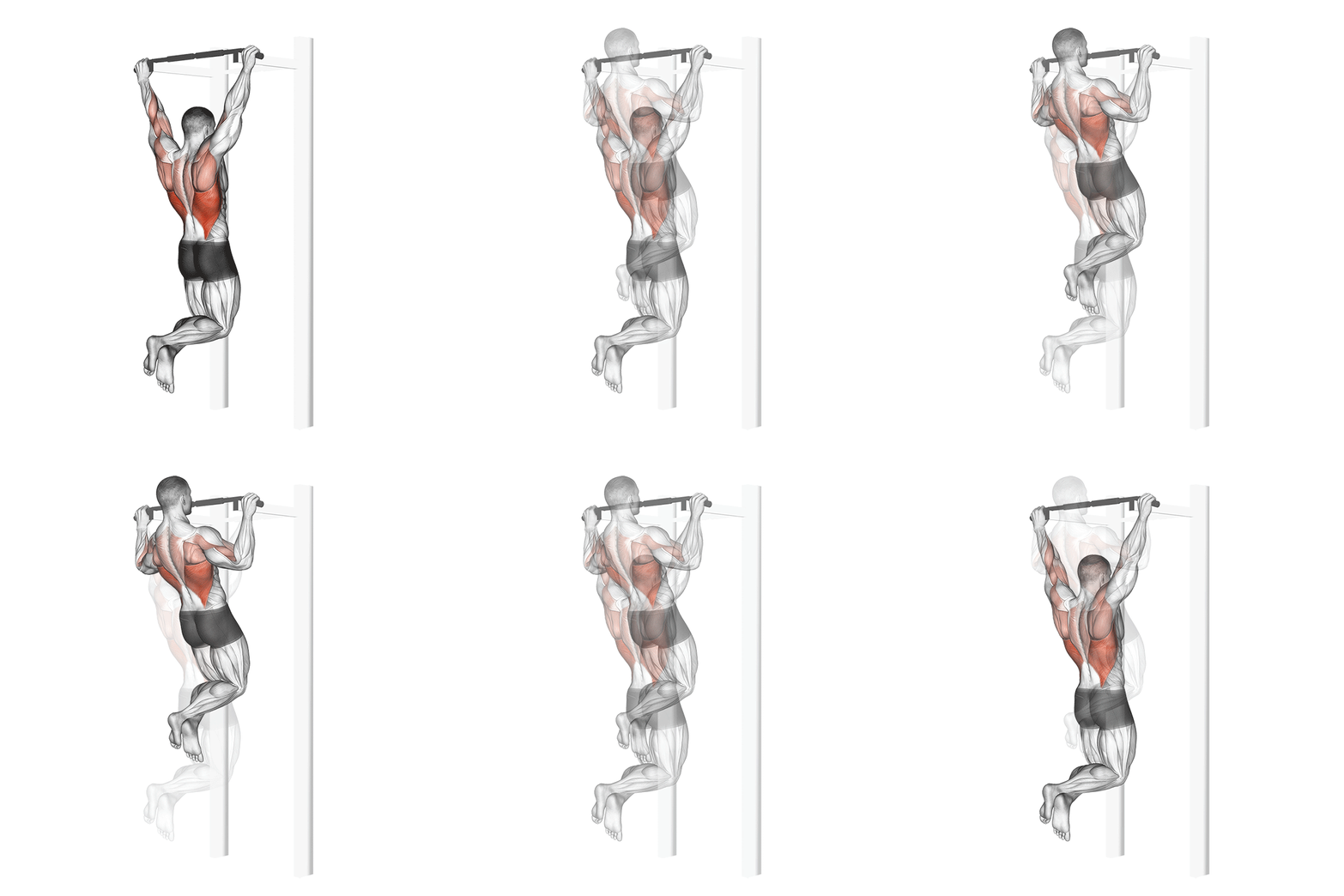
What is the pull-up?
The pull-up is a closed-chain vertical pull. You hang from a fixed bar with hands roughly shoulder-width and palms facing away, then pull your body up until your chin clears the bar. It loads the lats, mid-back, rear delts and biceps, with the core fighting to keep the body from swinging. It scales beautifully: bodyweight reps for capacity, weighted pull-ups for raw strength, slow eccentrics for muscle. If you can do ten clean pull-ups, your upper-back is in fighting shape.
How to do the pull-up
- 1
Set the grip
Jump up and grip the bar slightly wider than shoulder-width, palms facing away (pronated). Wrap your thumbs around the bar. Full hang to start.
- 2
Engage from the dead hang
Before pulling, depress your shoulder blades. Think of pulling them down into your back pockets. This protects the shoulders and pre-loads the lats.
- 3
Pull elbows down and back
Drive the elbows toward your hips, not the bar toward your hands. Keep your chest up and core tight, no kipping or leg swing.
- 4
Clear the bar and lower with control
Chin clears the top of the bar. Lower under control to a full hang. Cutting the eccentric short halves the gains.
Pro tip
If you can't do a clean pull-up yet, train negatives. Jump to the top, then lower as slowly as you can, aim for 5 seconds. Three sets of 3-5 negatives twice a week builds the first rep faster than band-assisted work.
Common mistakes
Half reps from a bent hang.
Starting with bent elbows skips the hardest part. Full hang every rep, full chin clear every rep.
Kipping unintentionally.
Swinging the legs to launch yourself isn't a strict pull-up. Keep ankles crossed and core locked.
Shrugging into the ears.
Shrugging up disengages the lats and stresses the neck. Pull shoulders down before the elbows move.
Dropping out of the hang.
Free-falling between reps trashes the shoulders. Lower under control, every rep.
Variations and progressions
Easier
Band-assisted or negatives
Loop a band under the foot or knee, or train slow negatives only. Both build the first strict rep.
Harder
Weighted pull-up
Hang a dipping belt with a plate or kettlebell from your waist. The fastest path to a 20+ rep bodyweight pull-up.
No bar?
Inverted row or lat pulldown
Inverted rows on a bar or rings hit the same muscles horizontally. Cable lat pulldowns let you scale the load precisely.
How to program it
Three protocols by goal. Pick one per cycle and aim for progression on load or distance.
| Goal | Sets × distance | Load | Rest |
|---|---|---|---|
| Strength (weighted) | 5 × 3-5 | +10-25 kg | 3 min |
| Hypertrophy | 4 × 6-10 | Bodyweight or +5 kg | 2 min |
| Capacity | Greasing the groove: 5-8 reps × 6-10 sets across the day | Bodyweight | Hours apart |
Pull-Up FAQ
Pull-up or chin-up, which should I do?
Both. Chin-up (palms toward you) recruits more biceps and is usually 2-3 reps stronger. Pull-up (palms away) loads the lats harder and translates better to climbing or rope work. Rotate them within a training block: chin-ups for biceps growth, pull-ups for lat width and back strength. Don't pick one and abandon the other.
How do I go from 5 to 10 strict pull-ups?
Add weight, not reps. Strap on 5 kg and train sets of 3-5 twice a week for 4-6 weeks. The added load drives strength gains, then your bodyweight reps explode. Volume work alone at bodyweight tends to plateau around 8 reps. Weighted pull-ups break through that ceiling.
Should I do pull-ups every day?
Only with low intensity. Daily heavy weighted pull-ups will fry your elbows and shoulders inside two weeks. Greasing the groove (multiple easy sets of 3-5 reps spread across the day) is a great way to build capacity without recovery cost. Save heavy strength work for two dedicated sessions per week.