What is the machine pullover?
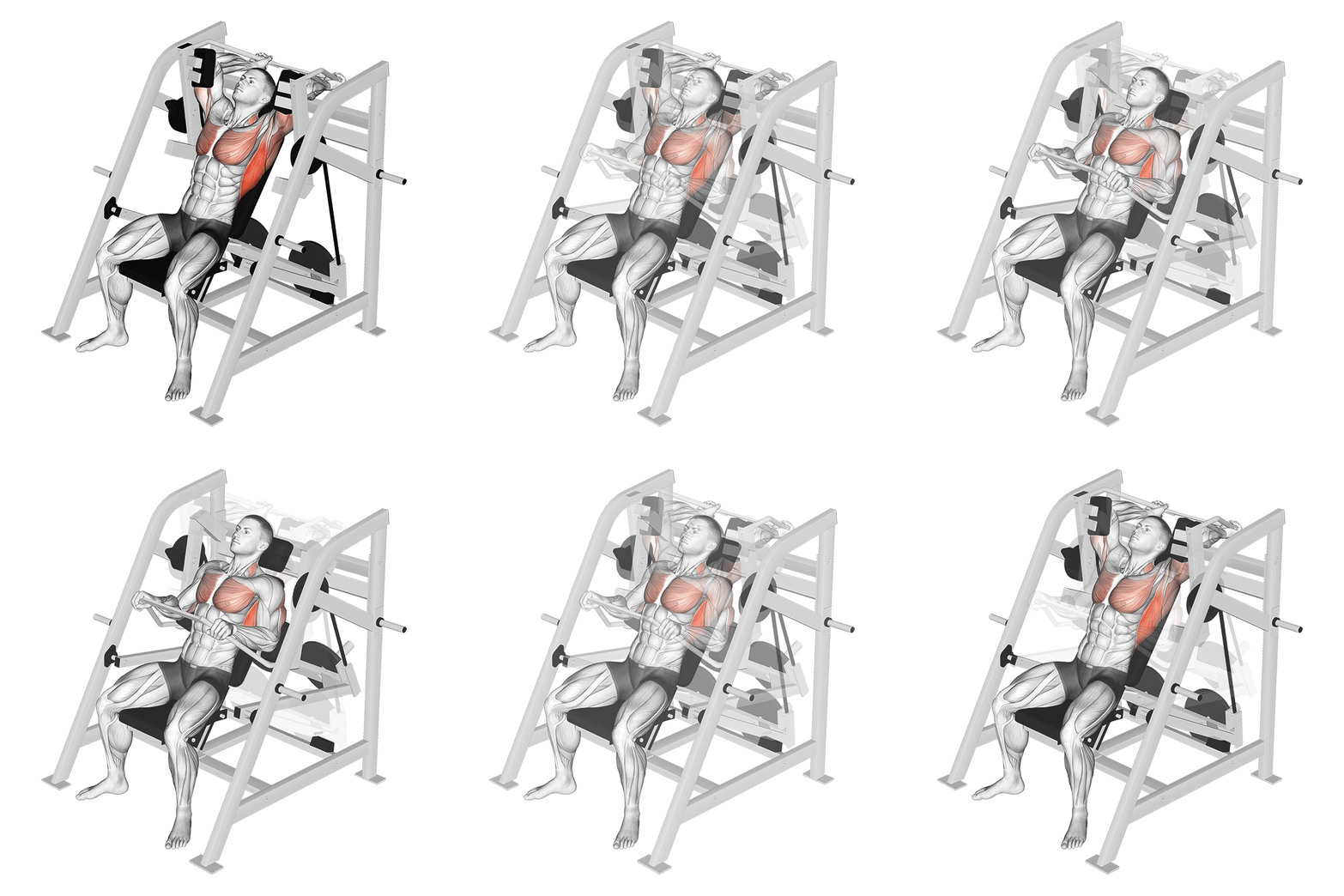
The machine pullover is the closest thing to a lat isolation that exists: seated, upper arms on pads, you sweep a bar in a huge arc from overhead down to your hips. Because your elbows drive the pads and your hands just rest on the bar, the biceps that limit every pulldown and row are out of the equation; your lats do the work alone through their longest possible range. The cam keeps resistance constant from the deep overhead stretch to the squeeze at the bottom, something no dumbbell can do. If your gym owns one of these machines, it has no equal for learning what working lats feel like.
How to do the machine pullover
- 1
Align your shoulders with the pivot
Set the seat height so the centre of your shoulder joint lines up with the machine's pivot point, then strap the seatbelt tight if the machine has one. A misaligned axis makes the arc fight your shoulders.
- 2
Load your elbows onto the pads
Press the foot assist, most pullover machines have one, to swing the pads within reach. Place your upper arms on them and let your fingers rest lightly on the bar.
- 3
Drive the arc down with your elbows
Exhale and sweep your elbows from overhead down until the bar reaches your hips, tucking the ribs slightly at the end. Think elbows to pockets; the hands do nothing.
- 4
Return slowly into the stretch
Resist for 2-3 s as the pads travel back overhead, until you feel a deep stretch down the sides of your back. Stop before the stack touches and sweep the next arc.
Pro tip
Train it with open palms for a session: fingers unhooked, just resting on the bar. If the lats suddenly light up, your grip had been doing far more pulling than you thought.
Common mistakes
Pulling with the hands.
Squeezing and pulling the bar recruits the arms the machine was designed to bypass. The elbows press the pads; your hands could hang loose and nothing should change.
Seat set by habit, not by axis.
A seat two holes off puts your shoulder ahead of or behind the pivot, and the overhead stretch starts pinching instead of pulling. Check the alignment every session; someone else trained there since.
Arching through the stretch.
Letting the ribs flare and the lower back arch as the pads go overhead fakes extra range your lats never see. Keep your back on the pad and let the shoulders, not the spine, create the arc.
Letting the machine win the way up.
Relaxing on the return lets the stack yank your arms overhead at speed, right into the most stretched, most vulnerable position. The eccentric is half the stimulus: 2-3 s, every rep.
Variations and progressions
Easier
Half-range machine pullover
Start the arc at forehead height instead of the full overhead stretch while your shoulder mobility catches up. Add a few degrees of range every week until you own it all.
Harder
Paused machine pullover
Hold 2 s at the hips with the ribs tucked down, then take 3 s back to the stretch. Same weight, twice the time under tension and none of the bounce.
No machine?
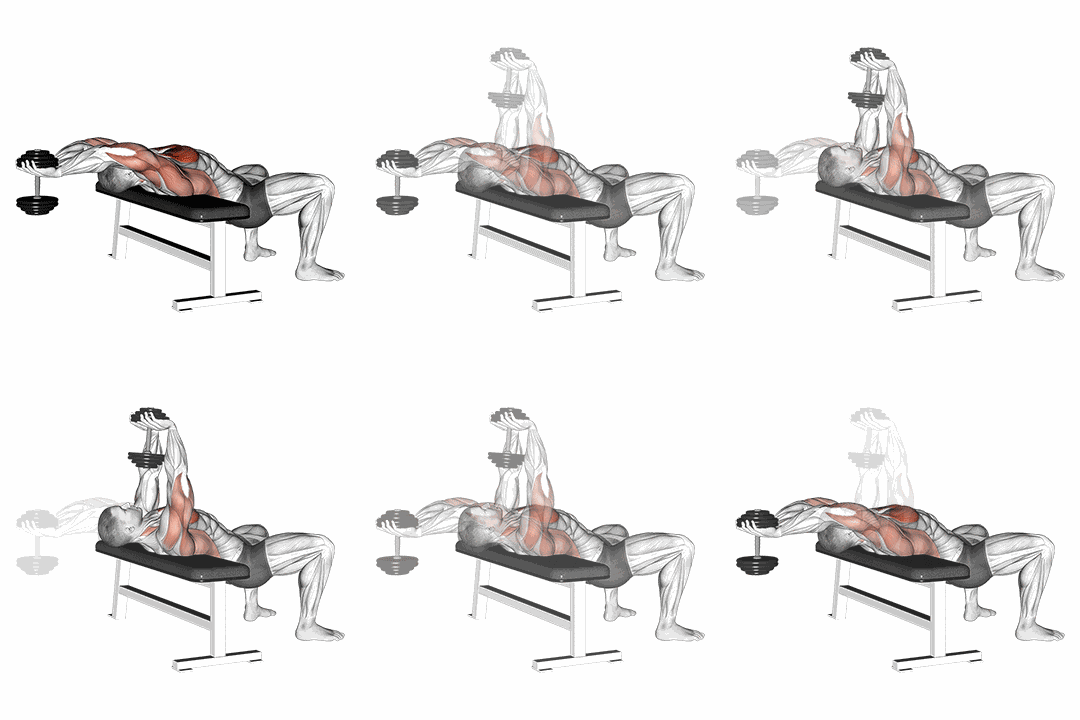
Dumbbell pullover
Lie across a bench with one dumbbell and sweep the same arc. The tension peaks in the stretch and fades at the top, the opposite of the cam, which is exactly why the two pair well.
How to program it
Three protocols by goal. Pick one per cycle and aim for progression on load or distance.
| Goal | Sets × distance | Load | Rest |
|---|---|---|---|
| Hypertrophy | 3-4 × 10-12 | RPE 8 | 90 s |
| Pre-exhaust before pull-ups | 3 × 12-15, straight into your pull work | Moderate, RPE 7-8 | 60 s |
| Stretch emphasis | 3 × 8-10, 3 s eccentric | Lighter, RPE 7 | 90 s |
Machine Pullover FAQ
Machine pullover or dumbbell pullover?
The machine, when you can get one. A dumbbell loads the stretched position hard and then almost vanishes as your arms reach vertical, while the cam keeps resistance even from stretch to squeeze. The machine also pins your elbows to pads, removing the arm pull a dumbbell quietly invites. The dumbbell version earns its place in home gyms and as a stretch-focused change of pace; the machine is the better lat builder of the two.
Is the pullover a back or a chest exercise?
On this machine, back. Shoulder extension, driving the upper arm from overhead down to the ribs, is the lats' signature job, with the teres major and the long head of the triceps helping. The chest joins in versions where the hands bear the load and the elbows drift wide, which is why the dumbbell pullover keeps its decades-old identity debate. Elbow pads settle the question here: push through them and it stays a lat movement.
Why do I feel machine pullovers in my triceps?
Because one of the three triceps heads, the long head, crosses the shoulder joint and works as a shoulder extensor, exactly the motion this machine trains. Some ache there is anatomy, not error. It becomes a problem only when the triceps fatigue before the lats, usually a sign you are extending your elbows against the bar. Lighten the grip, think about moving the pads with your elbows, and the balance tips back to the lats.