What is the dumbbell pullover?
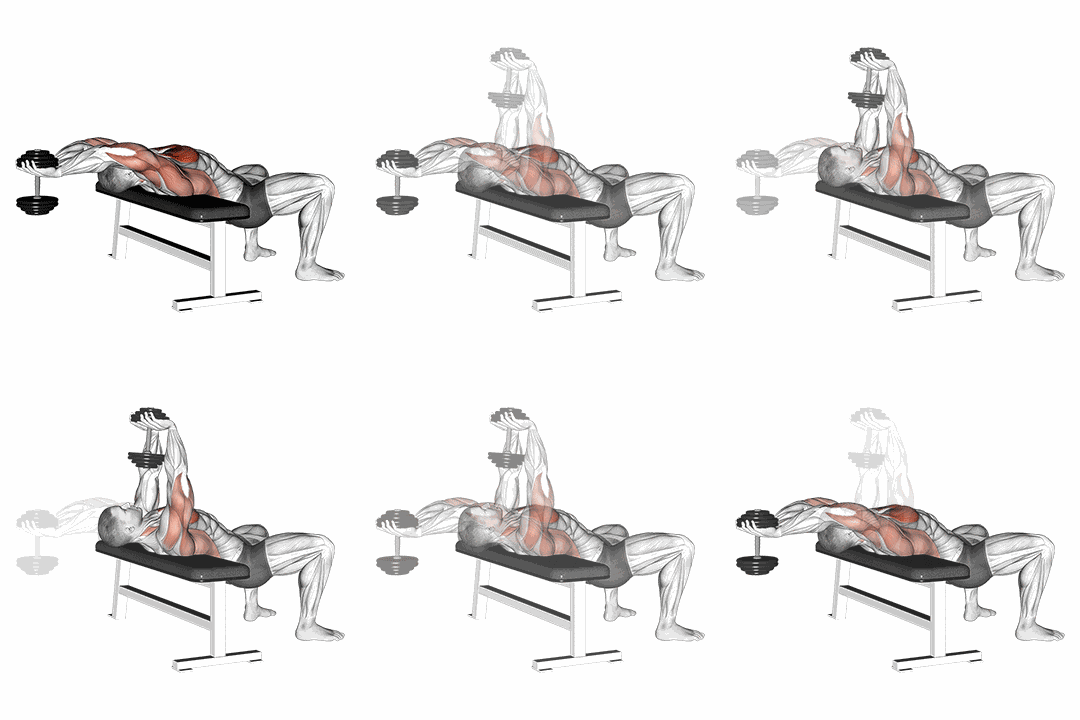
The dumbbell pullover is a single-joint move done lying across a flat bench, holding one dumbbell with both hands over the chest. You lower the weight back behind the head in a long arc until you feel a deep stretch under the armpits, then pull it back over the chest. Depending on elbow position, it biases the lats (elbows straighter) or the chest (elbows more bent). Either way it loads the muscle in a deep stretch, which research links to faster hypertrophy.
How to do the dumbbell pullover
- 1
Set the bench position
Lie across a flat bench, only upper back in contact, feet planted, hips slightly below shoulders.
- 2
Grip the dumbbell
Hold one DB vertically with both palms pressed against the underside of the top plate ("diamond" grip).
- 3
Lower in a long arc
With elbows slightly bent and locked, lower the DB back behind the head until you feel a deep stretch in the lats and chest.
- 4
Pull back overhead
Pull the DB back to over the chest by squeezing the lats. Don't bend the elbows to cheat the load up.
Pro tip
Set the elbow angle and never change it. The whole job of the pullover is to load the lats in a stretch position. If your elbow keeps bending, you turn it into a triceps move and lose the whole point.
Common mistakes
Bending the elbows.
If the elbows close at the bottom, the triceps take over and the lats lose the stretch. Lock the elbow angle.
Going too heavy.
Heavy DBs force the lumbar to arch and the shoulders to compensate. Stay in the 12-15 rep zone with clean form.
Lifting the hips at the bottom.
If the hips shoot up as the DB goes overhead, you reduced the stretch on the lats. Keep hips just below shoulder level.
Going past comfort.
Forcing the DB low to chase range can pinch the shoulder. Stop where the stretch is deep but the joint stays calm.
Variations and progressions
Easier
Pullover on a flat bench (long axis)
Lie along the bench instead of across it. More stable, easier for beginners to learn the elbow angle.
Harder
Cable pullover (straight-arm pulldown)
Standing pullover at a high cable. Constant tension from top to bottom, brutal lat finisher.
No bench?
Floor pullover
Lie on the floor, range is shorter but the move still loads the lats in stretch. Good home alternative.
How to program it
Three protocols by goal. Pick one per cycle and aim for progression on load or distance.
| Goal | Sets × distance | Load | Rest |
|---|---|---|---|
| Technique | 3 × 12 | 10-14 kg DB | 60 s |
| Hypertrophy | 4 × 10-12 | RPE 8 | 75 s |
| Stretch-mediated finisher | 3 × 15 + 3 s eccentric | RPE 9 | 90 s |
Dumbbell Pullover FAQ
Pullover for back or for chest?
Both, depending on elbow angle and torso position. Elbows almost straight, ribs down, chest tall biases the lats. Elbows more bent, ribs flared, slight arch biases the chest. Most modern coaching uses it as a lat builder because the chest already has presses and flies covered.
Will it expand the rib cage?
That is an old bodybuilding myth from the 1950s. The rib cage shape is set by bone, not by stretching exercises in adults. What the pullover really does is build the lats, serratus and pecs, which makes the upper body look broader. The effect is muscular, not skeletal.
Is it safe for the shoulder?
Yes if the load is moderate and the range is honest. The shoulder ends in deep flexion, which can pinch in athletes with poor overhead mobility. Build up the range over 4 to 6 sessions, stop where the stretch is real but the joint is calm, and the move stays safe.