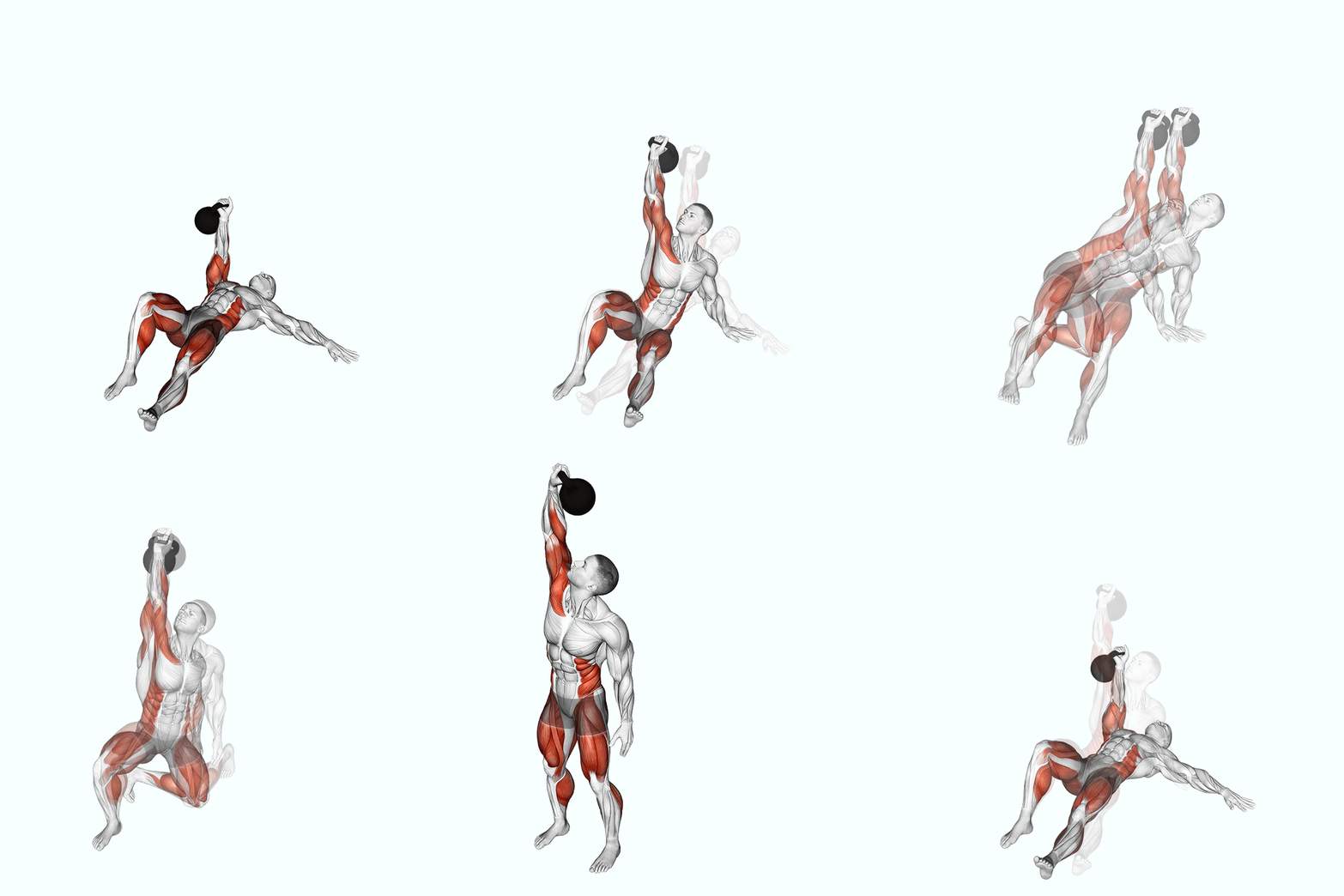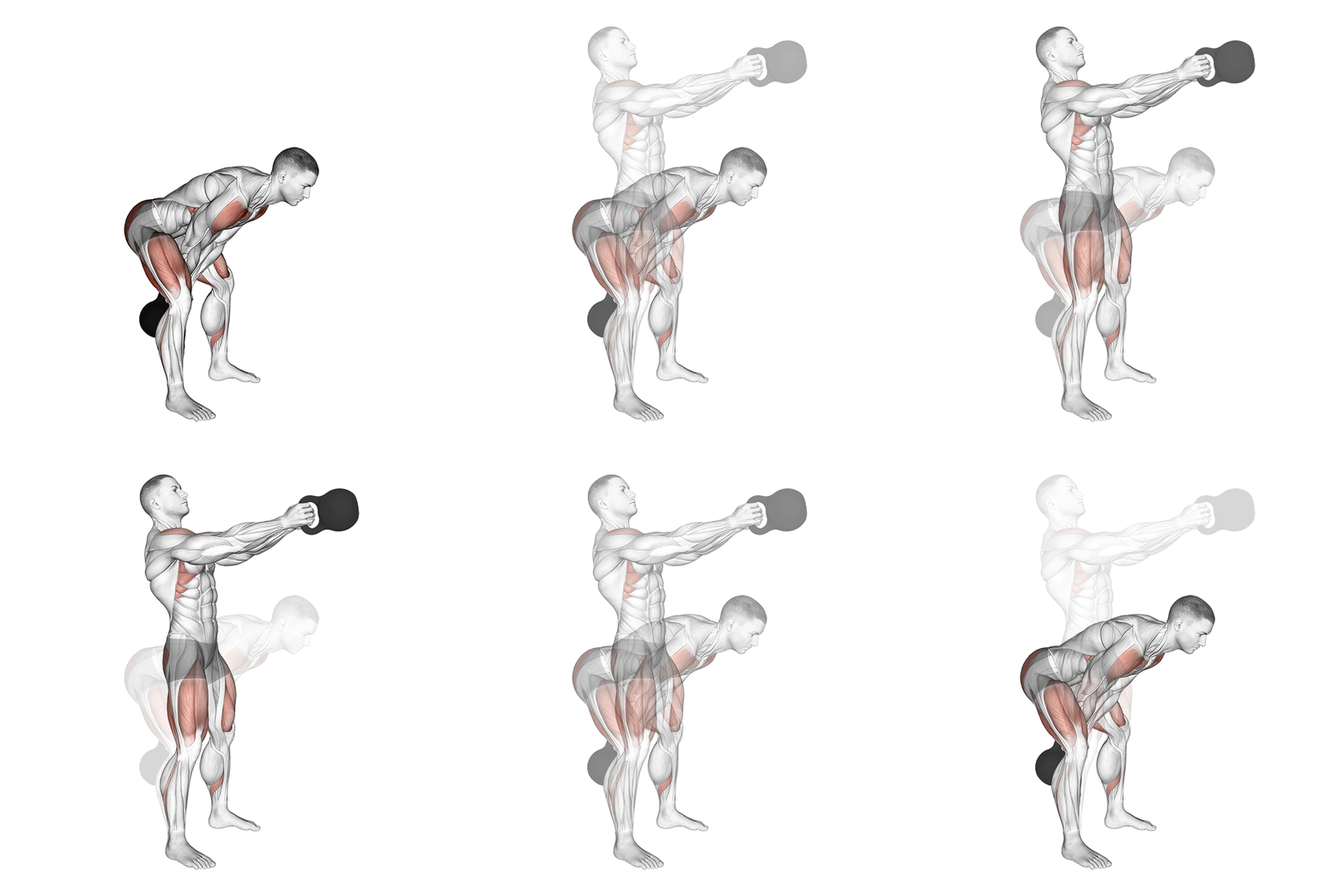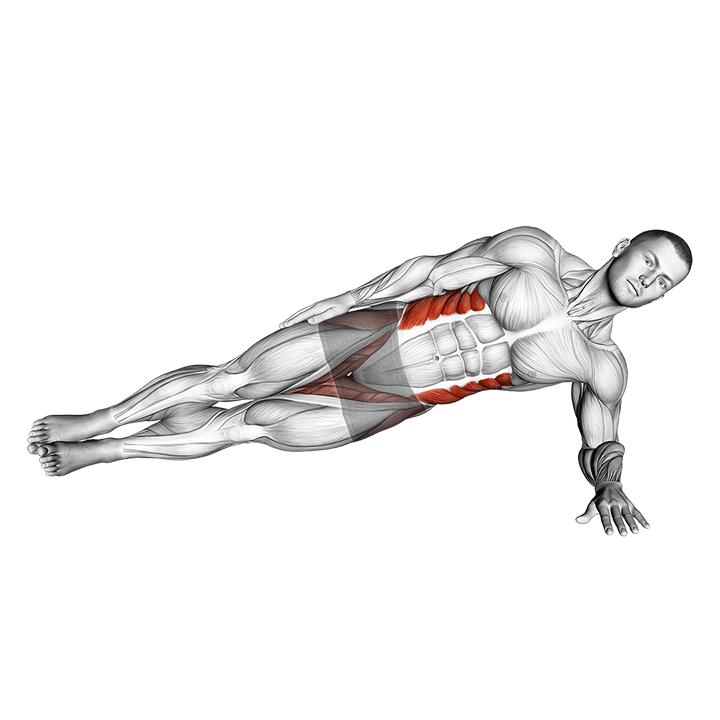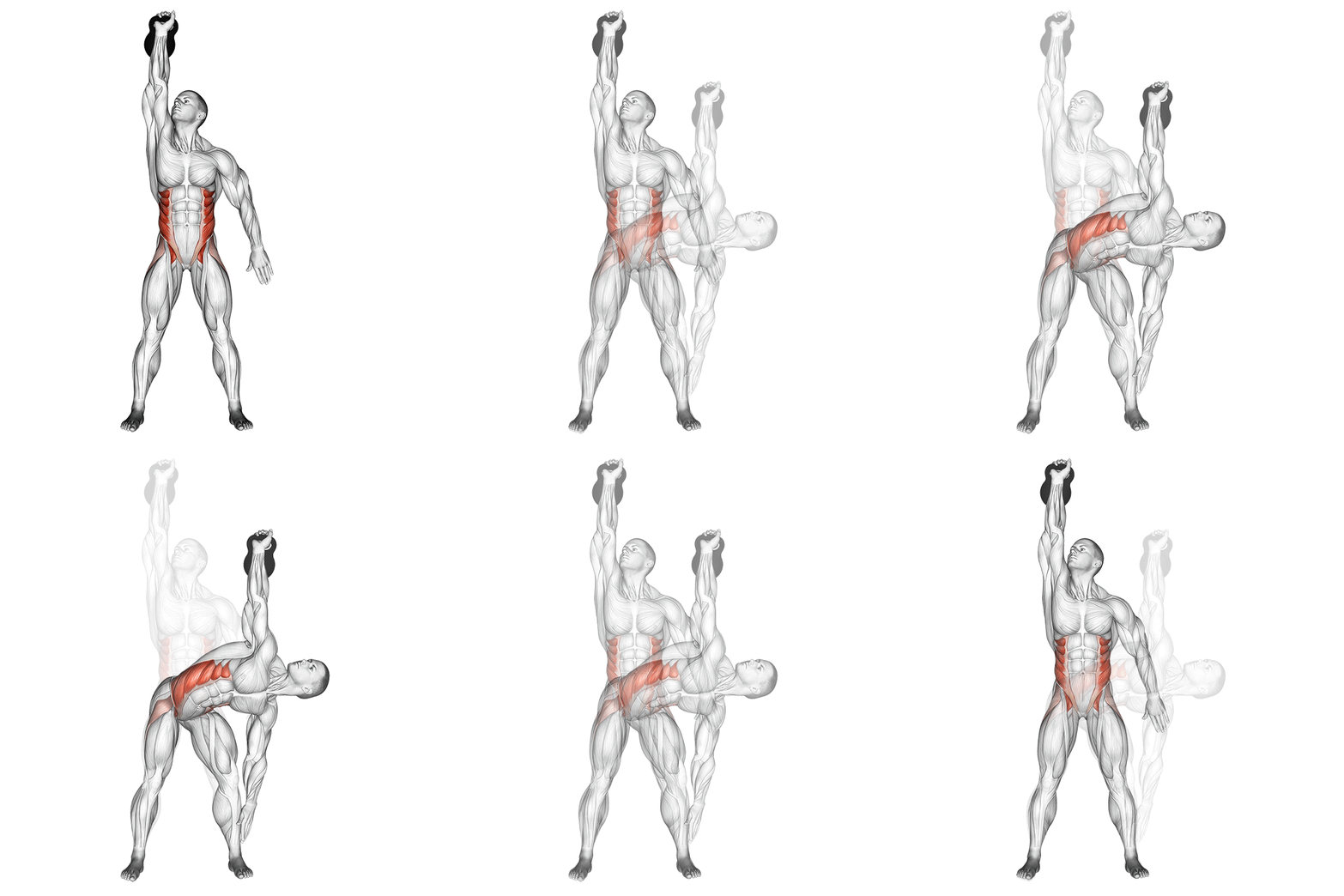
What is the kettlebell windmill?
The kettlebell windmill is old-school loaded mobility: one bell locked out overhead, feet turned about 45° away from it, and a slow hinge that sends your free hand down the inside of the front leg while your eyes stay on the bell. The loaded-side hip pushes back and out; both arms stay straight. It trains the obliques and glutes hard, stretches the hamstrings, and teaches the shoulder to stabilise a weight overhead through a huge range. Choose it over the Turkish get-up when you want to drill just the overhead hinge without the floor sequence, and over side planks when you want lateral core strength you can actually load and progress.
How to do the kettlebell windmill
- 1
Press the bell up and set your feet
Clean and press the kettlebell overhead with your right hand, elbow locked, shoulder packed down. Turn both feet about 45° to the left, heels in line. Your eyes find the bell and stay there.
- 2
Push the hip, start the hinge
Shift your weight into the right leg and push the right hip out to the side. Keep the loaded arm vertical, like it's bolted to the ceiling, and start folding at the hip, not the waist.
- 3
Slide down the front leg
Hinge down over 3-4 s, your free hand tracing the inside of the left leg to the shin or the floor. The right leg stays straight and loaded, the left knee can soften a touch. Chest rotates up toward the bell.
- 4
Stand up along the same line
Drive the right hip back under you and pull your torso upright with the oblique, exhaling on the way up. Finish tall, both feet flat, bell still locked out. All reps on one side, then switch.
Pro tip
Grease the pattern with no weight first: fist overhead, eyes up, slow hinge. The windmill punishes people who load a range they don't own yet. Earn the floor touch empty, then add iron one bell size at a time.
Common mistakes
Bending the loaded arm.
A soft elbow turns a stable overhead lockout into a balancing act and dumps the bell forward. Lock the elbow and screw the shoulder into its socket before you move a centimetre.
Squatting instead of hinging.
If both knees bend and the hips drop, the obliques and hamstrings stop working and the rep becomes a wobbly squat. Push the loaded-side hip out and keep that leg straight; depth comes from the hinge.
Losing sight of the bell.
Look at the floor and the overhead arm drifts without you noticing, right up until the bell does. Eyes on the bell every centimetre, down and up.
Chasing the floor too soon.
Touching the floor with a rounded, twisted spine is how windmills get a bad name. Stop at the shin until your hamstrings grant the extra range with a long back.
Variations and progressions
Easier
Low windmill
Bell in the bottom hand, empty fist locked overhead. Same hinge, same eyes-up rotation, but the balance demand drops while you groove the pattern.
Harder
Double windmill
One bell locked overhead, a second hanging in the bottom hand. The low bell pulls you deeper into the hinge and doubles the oblique work at the same top weight.
No kettlebell?
Dumbbell windmill
A dumbbell works, it just sits less kindly: a kettlebell rests its mass behind the wrist, a dumbbell balances across the palm. Grip hard and go one size lighter.
How to program it
Three protocols by goal. Pick one per cycle and aim for progression on load or distance.
| Goal | Sets × distance | Load | Rest |
|---|---|---|---|
| Mobility / skill | 3 × 5 per side | Light bell, 3-4 s down | 60-90 s |
| Core strength | 4 × 3-5 per side | Moderate, RPE 7 | 2 min |
| Overhead warm-up | 2 × 3 per side | Very light bell | 30-45 s |
Kettlebell Windmill FAQ
Which leg stays straight in the windmill?
The one under the bell. Your weight shifts into the loaded-side hip and that leg stays straight, so its hamstring and your obliques take the stretch; the front knee can soften slightly. If both legs lock dead straight you will tip over, and if both bend the move collapses into a squat.
Windmill or Turkish get-up first?
The get-up covers more positions and is usually taught first. The windmill isolates its hardest slice, the overhead hinge, and lets you practise it with far more reps per session. If your get-up stalls exactly where you fold under the bell, a block of windmills is the targeted fix.
Is the windmill safe for the lower back?
Done as a hip hinge with a long spine and a bell you control, yes: it trains side-bend and rotation under load, exactly what a resilient trunk needs. It turns risky when you round over to chase the floor or jump bell sizes. Progress range first, then load, and keep every rep slow.