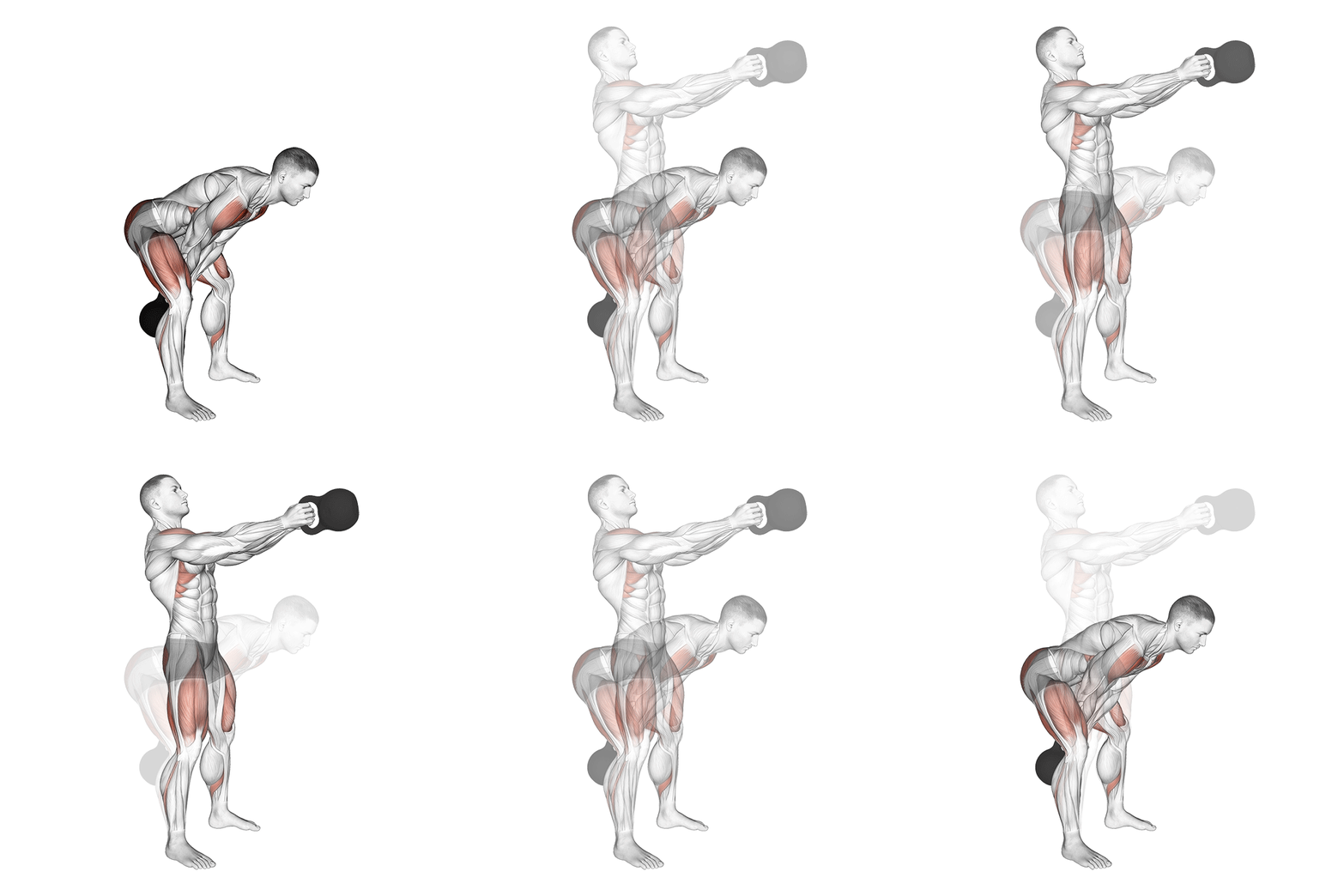
What is the kettlebell swing?
The kettlebell swing is a hip-driven ballistic, not a squat with arms. You hinge at the hips, hike the bell back between the legs, then snap the hips forward so the bell floats up under its own momentum. The Russian standard finishes at chest height, the American version at full overhead. Russian swings are safer for most lifters, scale to higher volume and load the hinge pattern hardest. They build posterior-chain power, grip endurance and cardio in a single rep, and they're the highest-value bell movement for runners, lifters and Hyrox athletes alike.
How to do the kettlebell swing
- 1
Set the hike
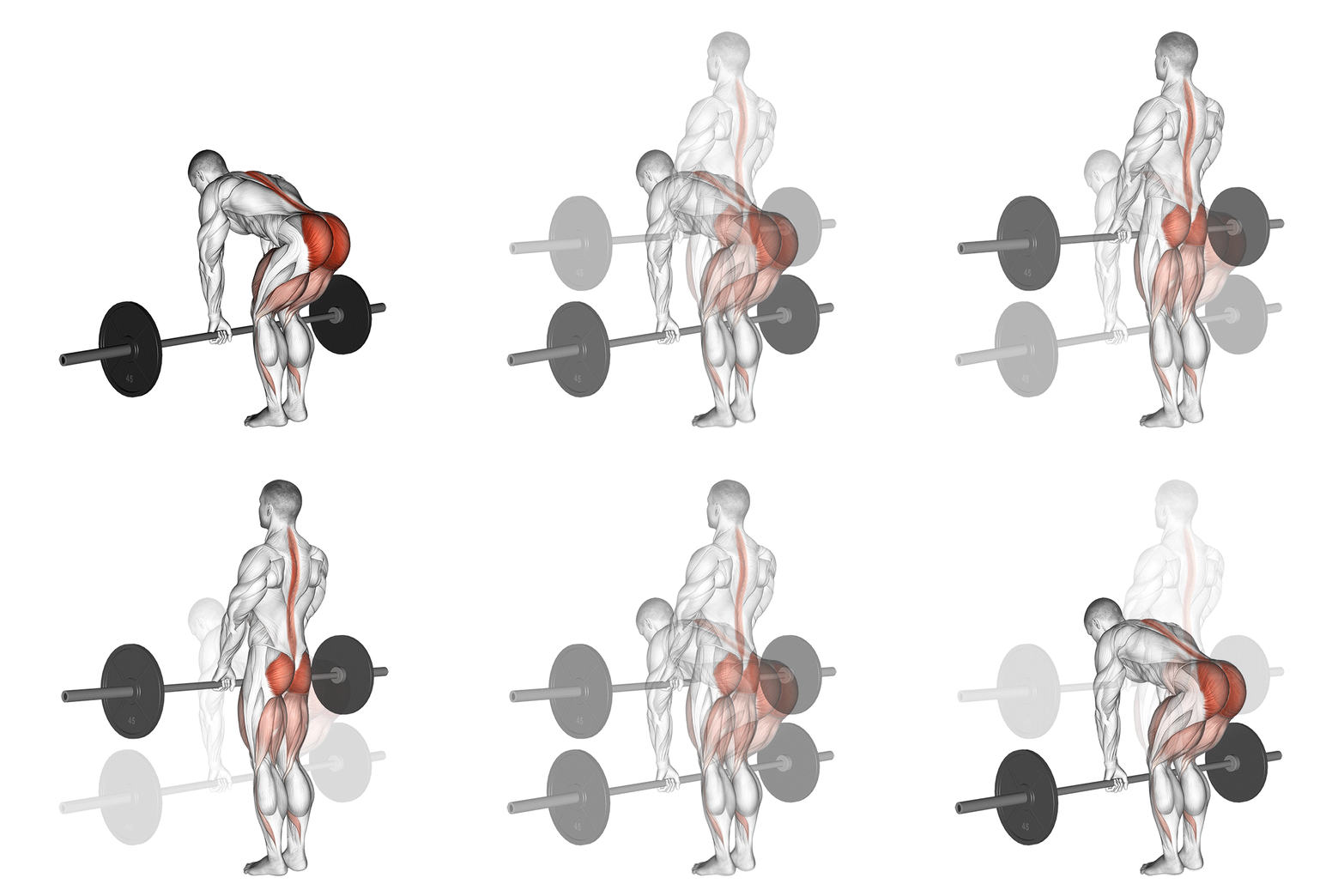
Bell on the floor a forearm's length in front. Hinge back, hike it between the legs hard, like a rugby pass behind you.
- 2
Snap the hips
As the bell starts forward, fire glutes and abs hard to fully extend the hips. The bell floats up because you hipped it, not because you lifted it.
- 3
Tall and tight at the top
At full extension, ribs down, glutes squeezed, quads locked. The bell hits roughly chest height and is weightless for a moment.
- 4
Catch with the hinge
Let the bell fall, wait until it passes the hips, then hinge back. The arms are a rope, the hips are the engine.
Pro tip
If your lower back is sore after a swing session, you squatted instead of hinged. Film yourself from the side: knees should barely move, hips should travel far back.
Common mistakes
Squatting the swing.
Bending the knees deeply instead of hinging turns the swing into a front raise. Hips back, knees soft, not deep.
Lifting with the arms.
Trying to raise the bell with the shoulders bleeds power and burns out the upper back. Let the hip snap do the work.
Hyperextending at the top.
Throwing the ribs up at lockout shifts load to the lumbar spine. Stack ribs over hips, glutes hard.
Going too heavy too soon.
A 32 kg bell with a broken pattern teaches the broken pattern. Master 16-24 kg first, then progress.
Variations and progressions
Easier
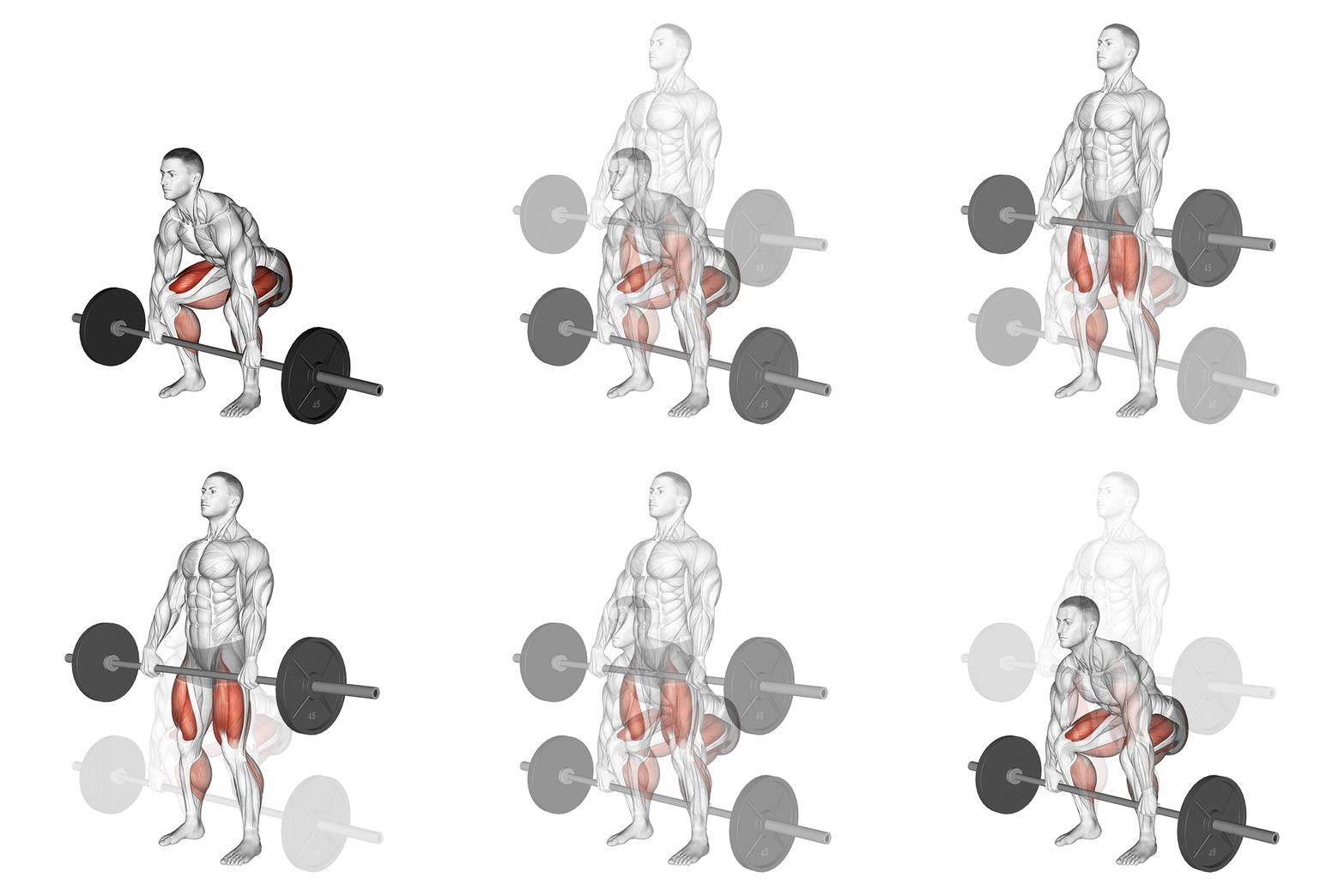
Kettlebell deadlift
Slow controlled hinge to pick up a heavy bell from the floor. Same pattern, no ballistic stress. Master before swinging.
Harder
Single-arm swing
Same swing with one hand. Adds rotational core demand and asymmetric grip. Heavy single-arm swings are an elite work-capacity tool.
No kettlebell?
Dumbbell or banded swing
A heavy dumbbell held by one end works, though the swing path is slightly off. Banded swings build the hip snap with no impact.
How to program it
Three protocols by goal. Pick one per cycle and aim for progression on load or distance.
| Goal | Sets × distance | Load | Rest |
|---|---|---|---|
| Power and hinge skill | 10 × 10 reps | 24-32 kg M / 16-20 kg F | 30-45 s |
| Work-capacity finisher | 10 min EMOM, 15 reps | Moderate (20-24 kg) | Remainder of minute |
| Posterior-chain hypertrophy | 5 × 20 reps | Heavy (28-32 kg+) | 90 s |
Kettlebell Swing FAQ
Russian or American swing?
Russian for almost everyone. The American overhead version adds shoulder mobility demand and forces the lower back into extension at lockout, which is why CrossFit has gradually moved away from it. Russian swings load the hip drive hardest and scale to higher volume safely. Save the American version for athletes with proven overhead mobility and a specific reason to chase it.
How heavy should my swing bell be?
Pavel's standard for trained men is 32 kg, for trained women 24 kg, but that's a destination, not a starting line. Begin where you can do clean sets of 20 with no form breakdown. Most beginners start 12-16 kg, intermediates 20-24 kg. The bell should feel hard to control at the bottom, not impossible to extend.
Can swings replace deadlifts?
Partly, not fully. Swings train the explosive hinge brilliantly but cap out around 32-48 kg of load. Heavy deadlifts develop maximal hinge strength, lumbar bracing under load and grip in a way swings can't. The right answer is both: deadlifts heavy and slow once or twice a week, swings light and fast 2-4 times a week.