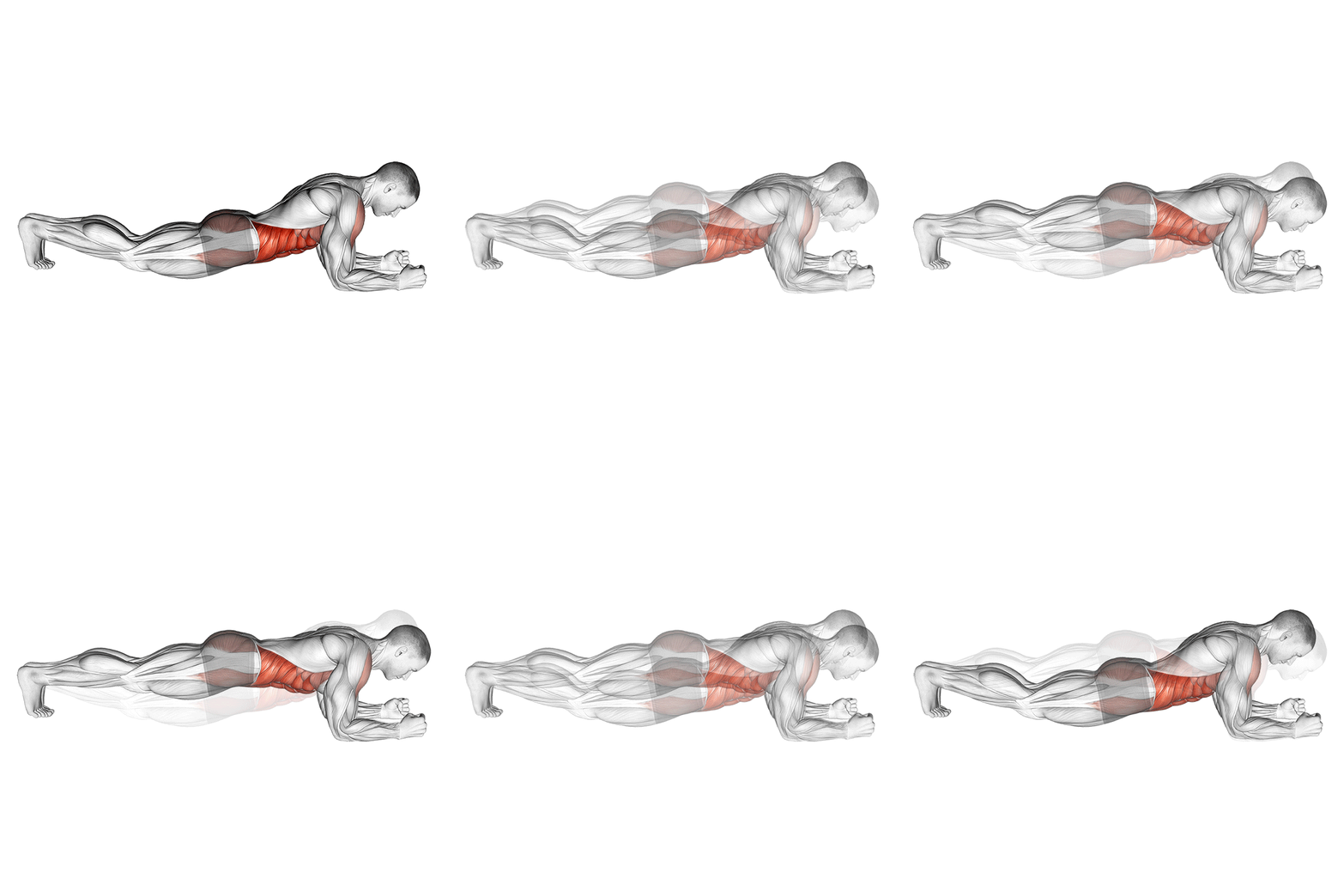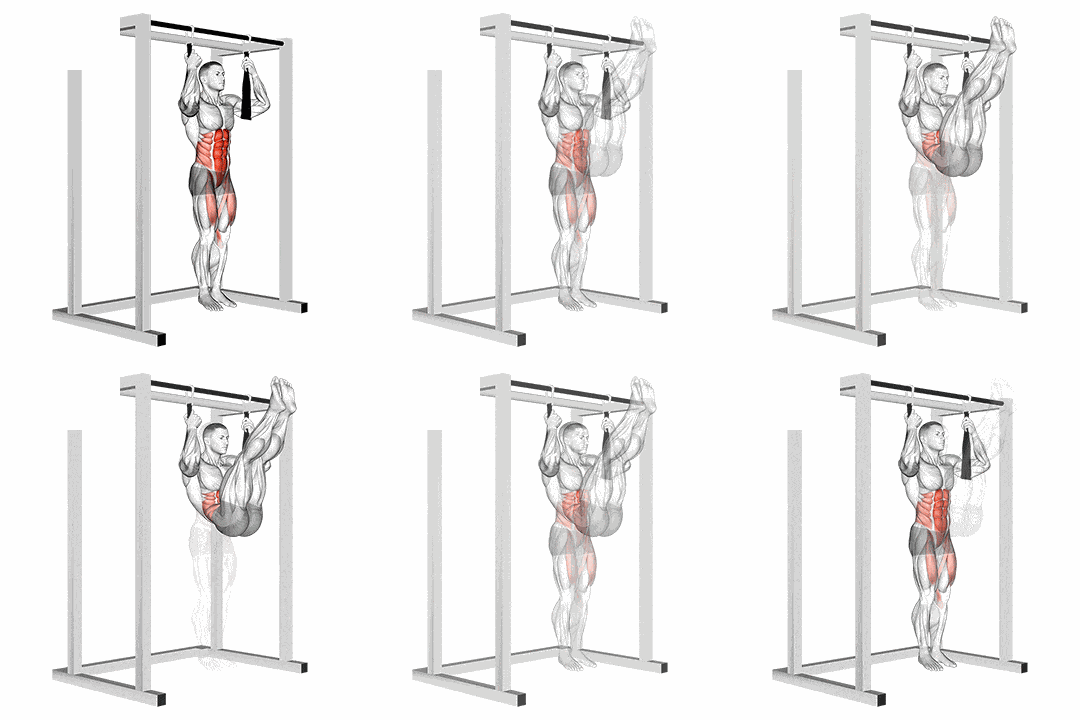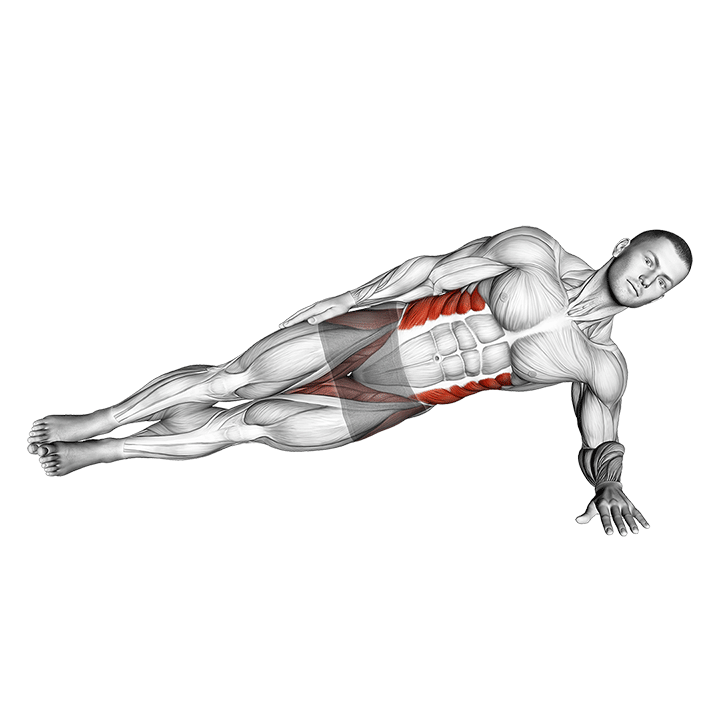
What is the side plank?
Side plank holds train the quadratus lumborum, obliques, and glute medius to resist lateral flexion of the spine. McGill's research identifies it as the safest, highest-yield core exercise for lower-back health. You hold a straight line from ankles to shoulders, propped on one forearm, hips pressed up and slightly forward. The goal isn't a five-minute hold, it's clean repeated 30-second holds. If you have a one-side weakness, side planks will reveal and fix it faster than any other move.
How to do the side plank
- 1
Set the elbow under the shoulder
Forearm flat on the floor, elbow directly under the shoulder joint. Misalign this and you torque the rotator cuff.
- 2
Stack the feet
Top foot on the bottom foot, both edges of the feet pressed into the floor. Easier variation: stagger with the top foot in front.
- 3
Press the hips up and forward
Don't just lift the hips: drive them slightly toward the front to engage the obliques fully. Body in one clean line.
- 4
Breathe and hold
Slow nasal breaths, ribs over hips. If the hips drop, end the set: quality over time-under-tension.
Pro tip
Three sets of 30 seconds per side, never to failure. McGill's rule: short holds with perfect alignment beat long sloppy holds every time.
Common mistakes
Hips sagging.
Defeats the whole purpose. End the set when hips drop, don't push through.
Elbow forward of shoulder.
Torques the shoulder joint. Elbow stacked directly under the shoulder.
Rotating the chest down.
Loses the lateral plane. Keep the top shoulder stacked over the bottom one.
Going too long.
Past 45 seconds, form decays in most people. Stop at 30, do another set, accumulate quality.
Variations and progressions
Easier
Knees down
Bend the bottom knee, support on knee and elbow. Cuts the lever in half, great for entry-level rehab.
Harder
Side plank with top-leg raise
Hold the plank, raise the top leg to 45 degrees, hold. Crushes the glute medius and obliques together.
Shoulder issues?
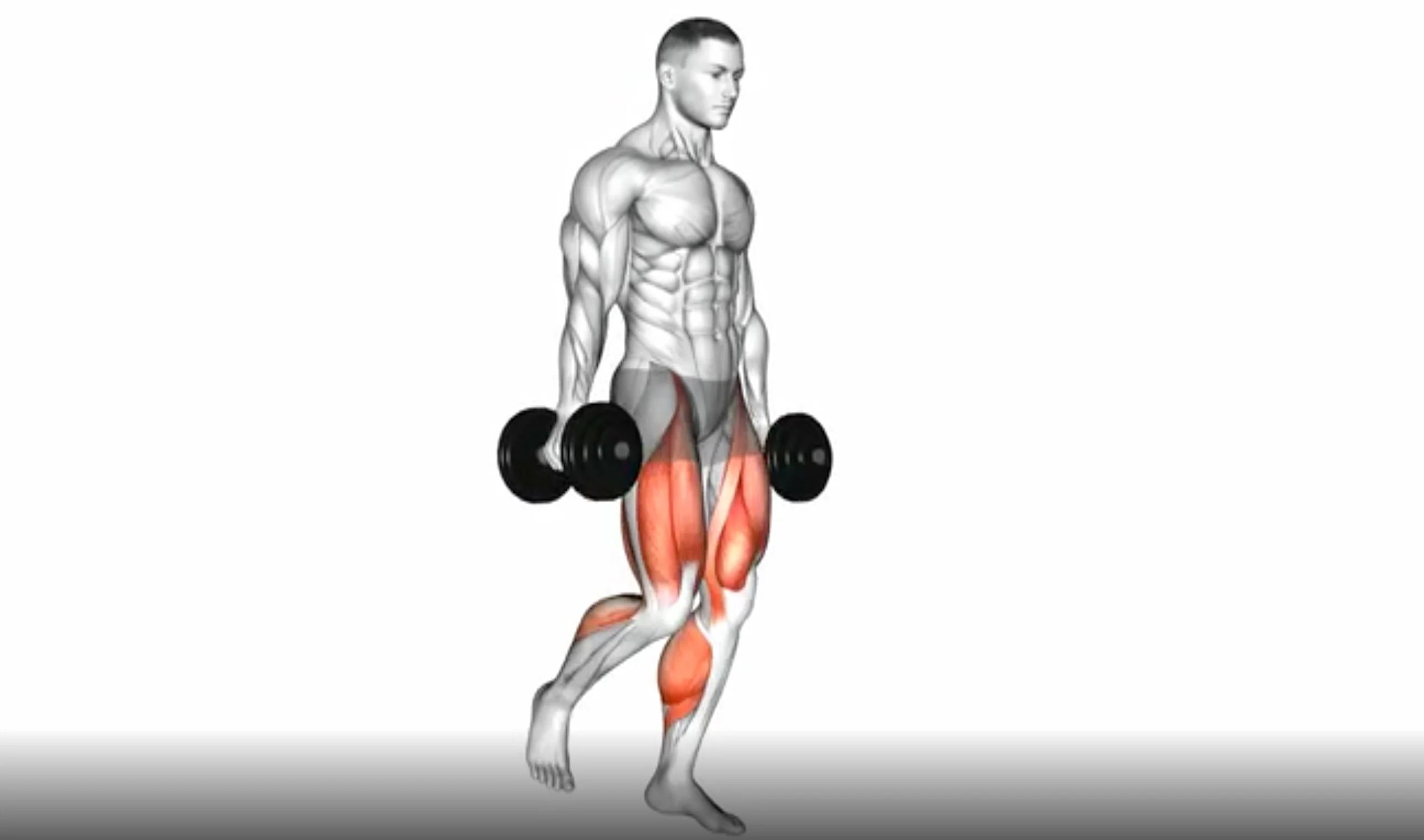
Suitcase carry
Heavy dumbbell in one hand, walk 30 m. Same anti-lateral-flexion demand on the core, no load on the shoulder.
How to program it
Three protocols by goal. Pick one per cycle and aim for progression on load or distance.
| Goal | Sets × distance | Load | Rest |
|---|---|---|---|
| Lower-back rehab | 3 × 10s/side | Bodyweight | 30s |
| Core stability | 3 × 30s/side | Bodyweight | 60s |
| Advanced strength | 3 × 20s/side | Weighted vest or top-leg raise | 60s |
Side Plank FAQ
Why does Stuart McGill rank side plank above other core moves?
Because it loads the lateral core without flexing the lumbar spine. Crunches and sit-ups repeatedly bend the discs, a known injury pattern. The side plank delivers high muscle activation in the quadratus lumborum and obliques with the spine in neutral, the safest combination for long-term back health.
Is one side weaker than the other normal?
Yes, almost everyone has a 10 to 30 percent imbalance. Train both sides equally and start each set with the weak side first. Most asymmetries close within four to six weeks of consistent work, and so do the nagging lower-back pains tied to them.
How long should I hold a side plank?
30 seconds maximum per set, three sets per side. Beyond that, form degrades and you train compensation patterns. Build by adding sets, not by extending hold time. Once 3 × 30 s is easy, add a top-leg raise or wear a weighted vest instead of going longer.