What is the turkish get-up?
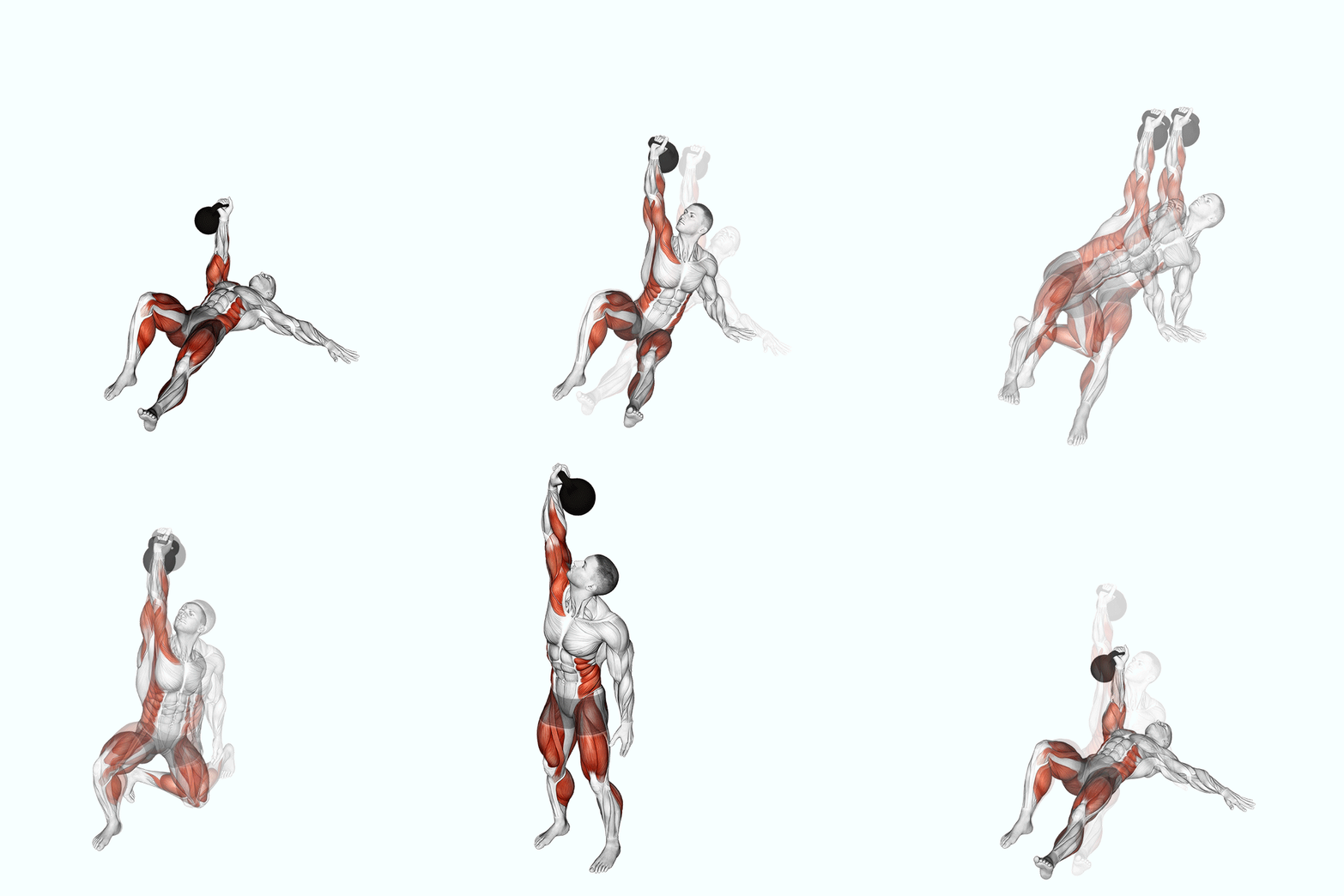
The Turkish get-up is a kettlebell flow performed lying on the floor, holding the bell overhead in one straight arm, then standing up through a specific sequence of positions: roll to elbow, to hand, to bridge, to half-kneeling, to standing. Then reverse the entire flow back down. It builds shoulder stability, hip mobility, thoracic rotation, single-leg strength and coordination simultaneously. It is the closest thing in the gym to a single-rep total-body assessment.
How to do the turkish get-up
- 1
Setup: cradle and press
Lie on your back, kettlebell next to your right shoulder. Roll to your side, cradle the bell with both hands, roll back centre, then press it overhead with the right arm. Right knee bent, foot flat. Left arm at 45 degrees on the floor.
- 2
Roll to elbow, then hand
Drive the right heel into the floor and roll up onto the left elbow, eyes on the bell. Then press up onto the left hand, sweeping shoulder away from ear.
- 3
Bridge to lunge
Lift the hips high (bridge), sweep the straight left leg back under you into a half-kneeling lunge. Find balance, eyes still on the bell.
- 4
Stand and reverse
Window through the back hip, look forward, stand up by driving through the front heel. Then carefully reverse every step back down to lying.
Pro tip
Eyes on the bell from step one until you stand. The instant you lose sight of the weight, your stability and timing collapse. Treat the get-up as a moving meditation.
Common mistakes
Rushing the flow.
Every transition deserves its own moment. A full get-up should take 20 to 40 seconds, not 10. Slow is honest.
Bent overhead arm.
A soft elbow means the shoulder is doing isometric work it cannot sustain. Lock the elbow, packed shoulder, the whole way.
Losing eye contact with the bell.
Looking down or away kills stability and is how shoulders get dumped. Eyes lock on until standing.
Going too heavy.
A heavy get-up done badly is just risky. Master the empty-shoe and 8-12 kg flows for weeks before adding load.
Variations and progressions
Easier
Shoe get-up
Balance an empty shoe on your fist instead of a bell. If it falls, your alignment was off. Pure skill drill.
Harder
Bottoms-up get-up
Hold the kettlebell bottoms-up (handle down, weight up). Forces perfect alignment and crushes grip.
Skill substitute
Half get-up
Stop at the half-kneeling position. Drill the bottom half until the transition is automatic.
How to program it
Three protocols by goal. Pick one per cycle and aim for progression on load or distance.
| Goal | Sets × distance | Load | Rest |
|---|---|---|---|
| Skill / movement quality | 5 × 1 per side | 8-12 kg KB | 60 s |
| Strength | 5 × 1 per side | 20-32 kg KB | 2 min |
| Conditioning ladder | EMOM 10 min, 1 per side per min | 12-16 kg KB | Built into EMOM |
Turkish Get-Up FAQ
What weight should I start with?
Spend the first 2 to 4 weeks with a shoe on your fist, no weight at all. Then move to 8 kg for women, 12 kg for men. Heavy is earned after the pattern is automatic, which for most people is 8 to 12 weeks of consistent practice, not faster.
Why does my shoulder hurt during get-ups?
Usually one of three things: elbow bending, scapula not packed, or weight too heavy for current control. Drop the bell, drill the shoe version, focus on scapular position and locked elbow, then reload. If pain persists, get a movement screen; you may have an underlying mobility issue.
Is the get-up worth the time it takes?
Yes if shoulder stability, mobility and unilateral coordination matter to you (athletes, lifters, ageing population). Less so if your only goal is hypertrophy or max strength, where heavier basic lifts have higher return per minute. Treat it as a movement quality session 2 to 3 times a week, not a hypertrophy tool.