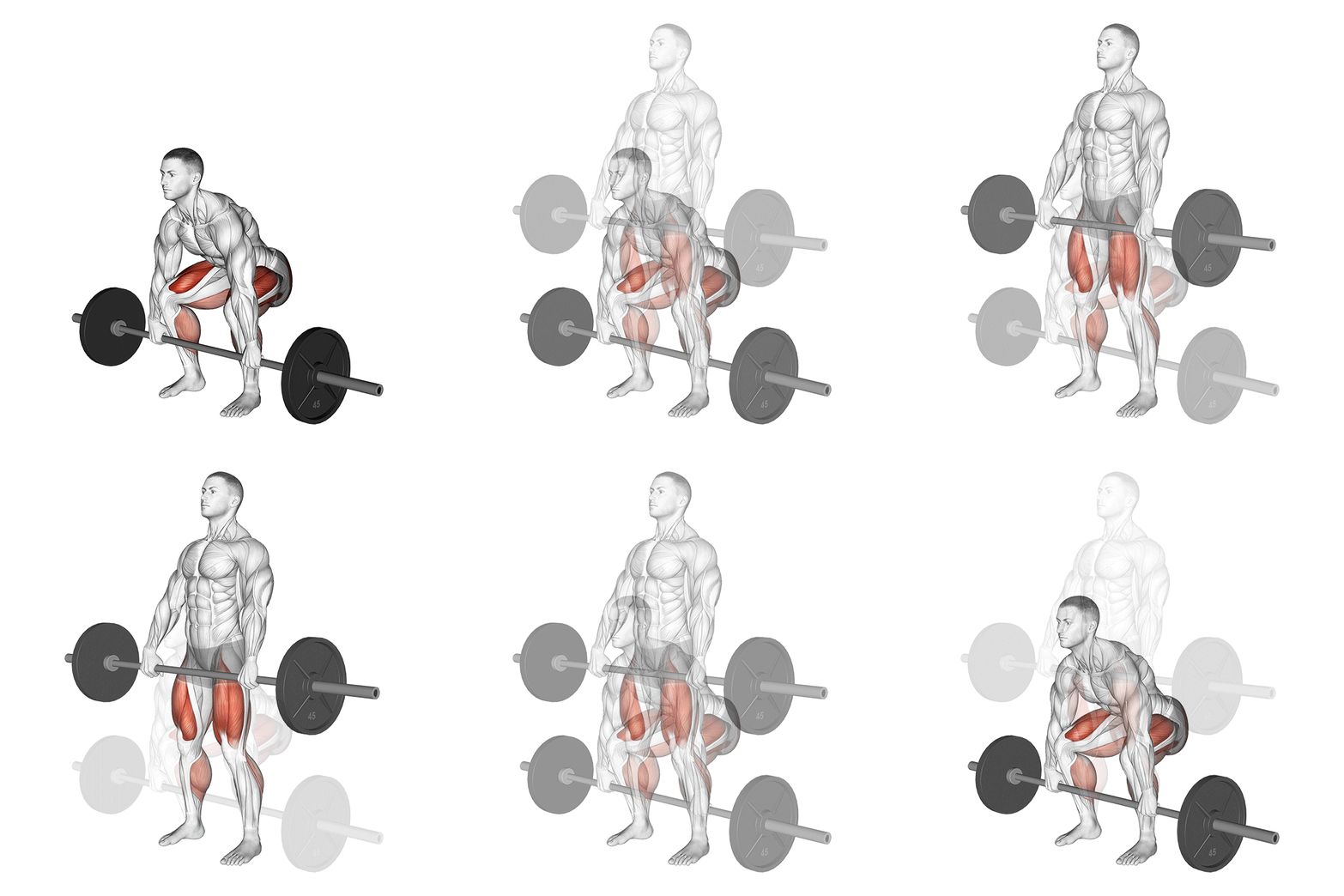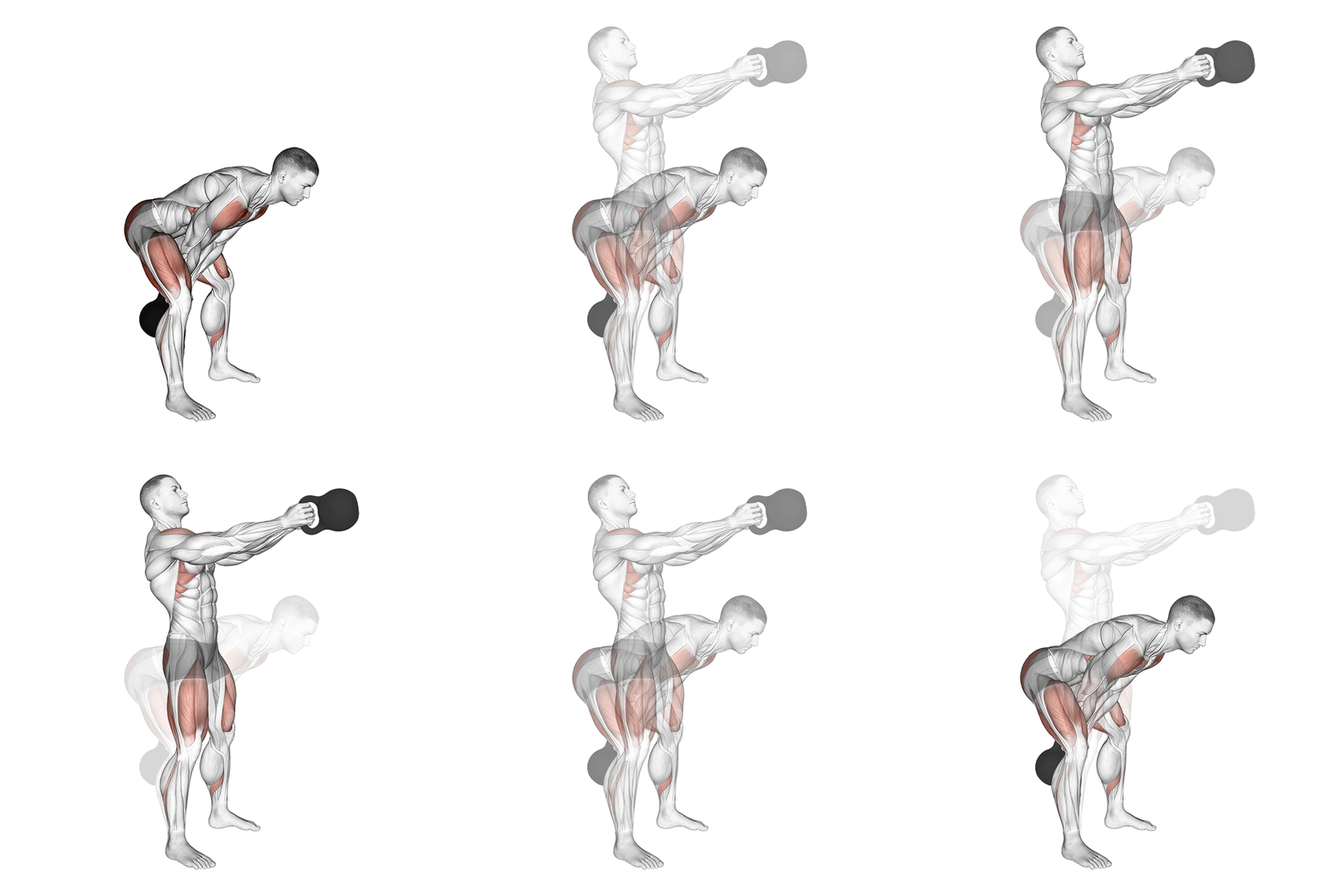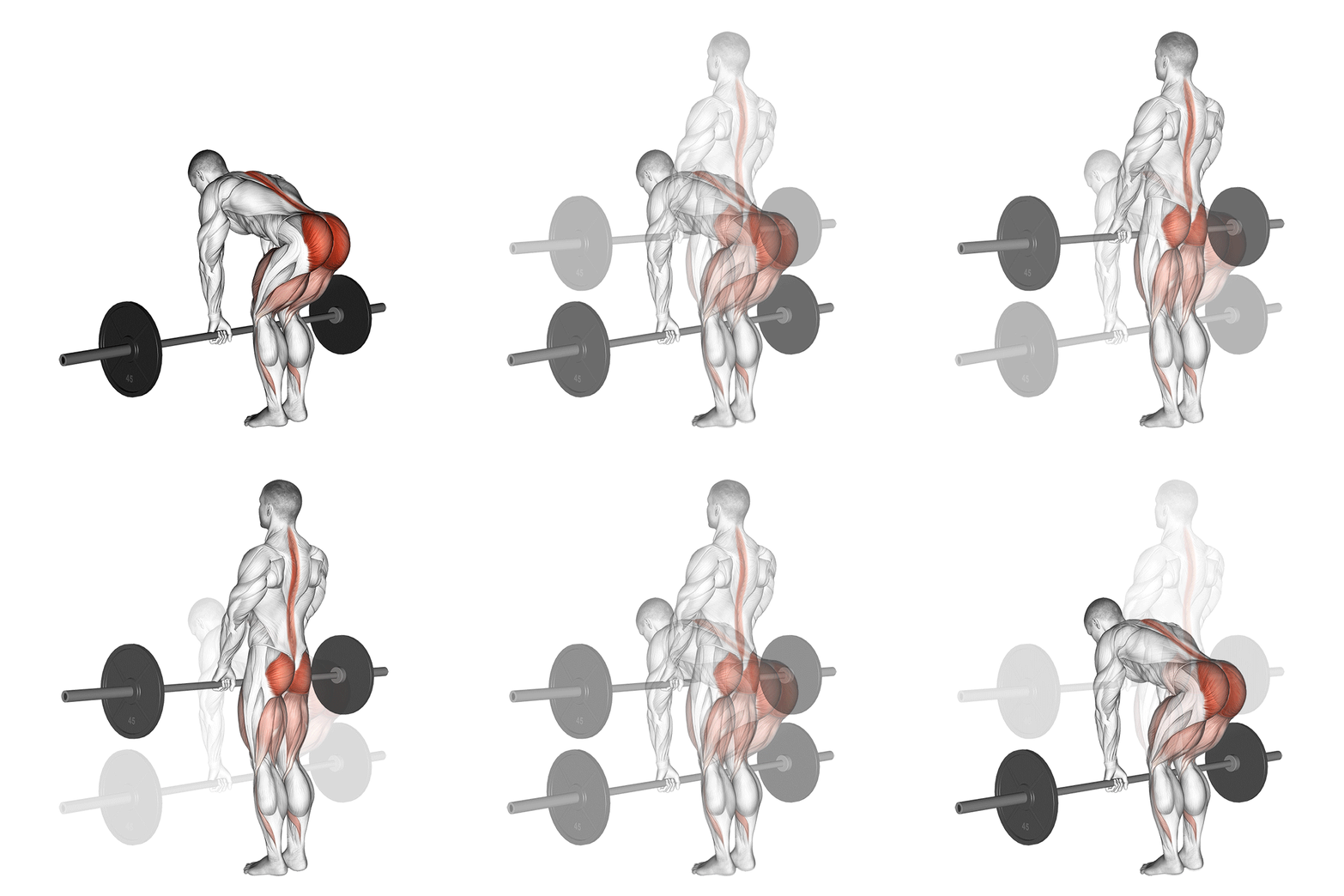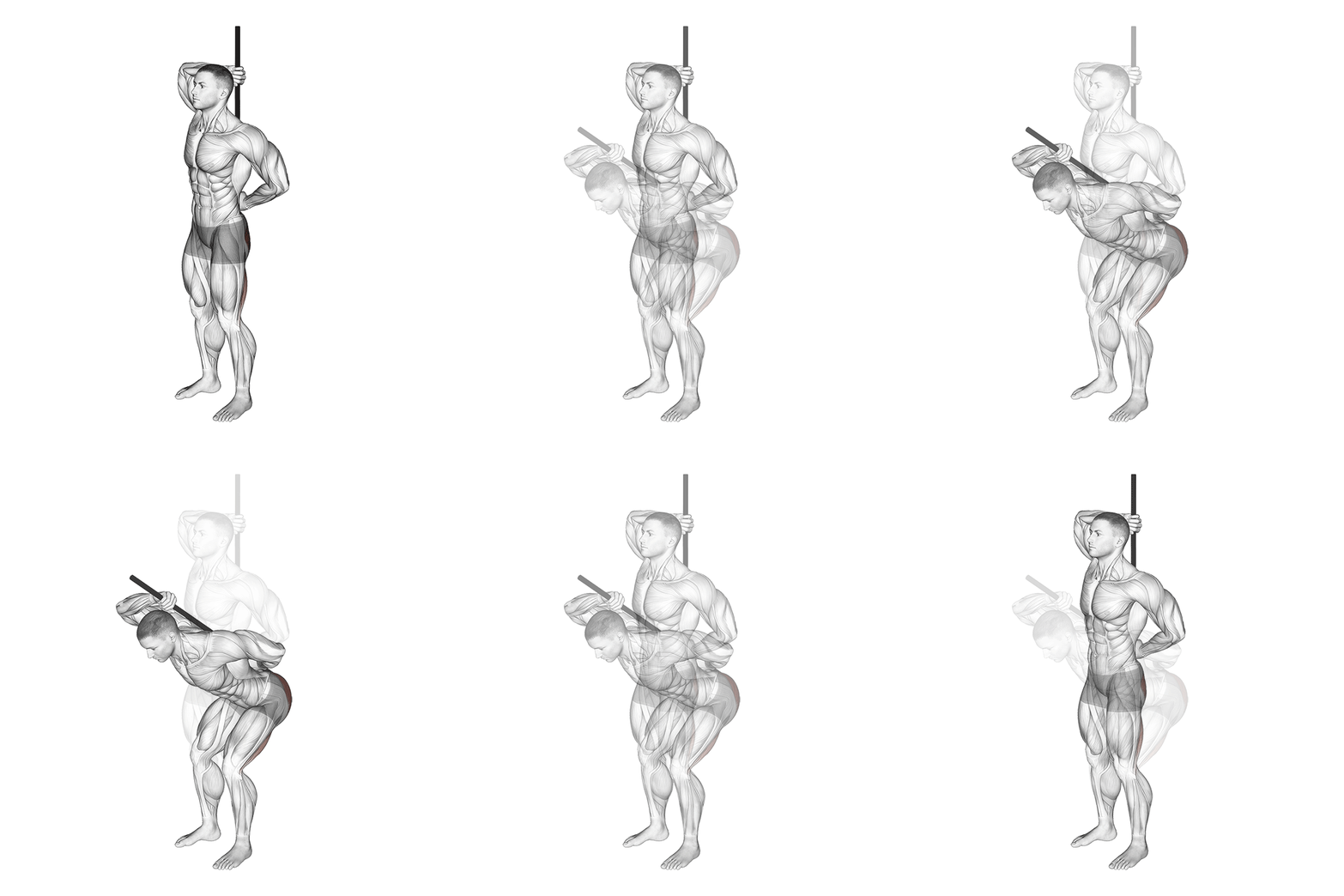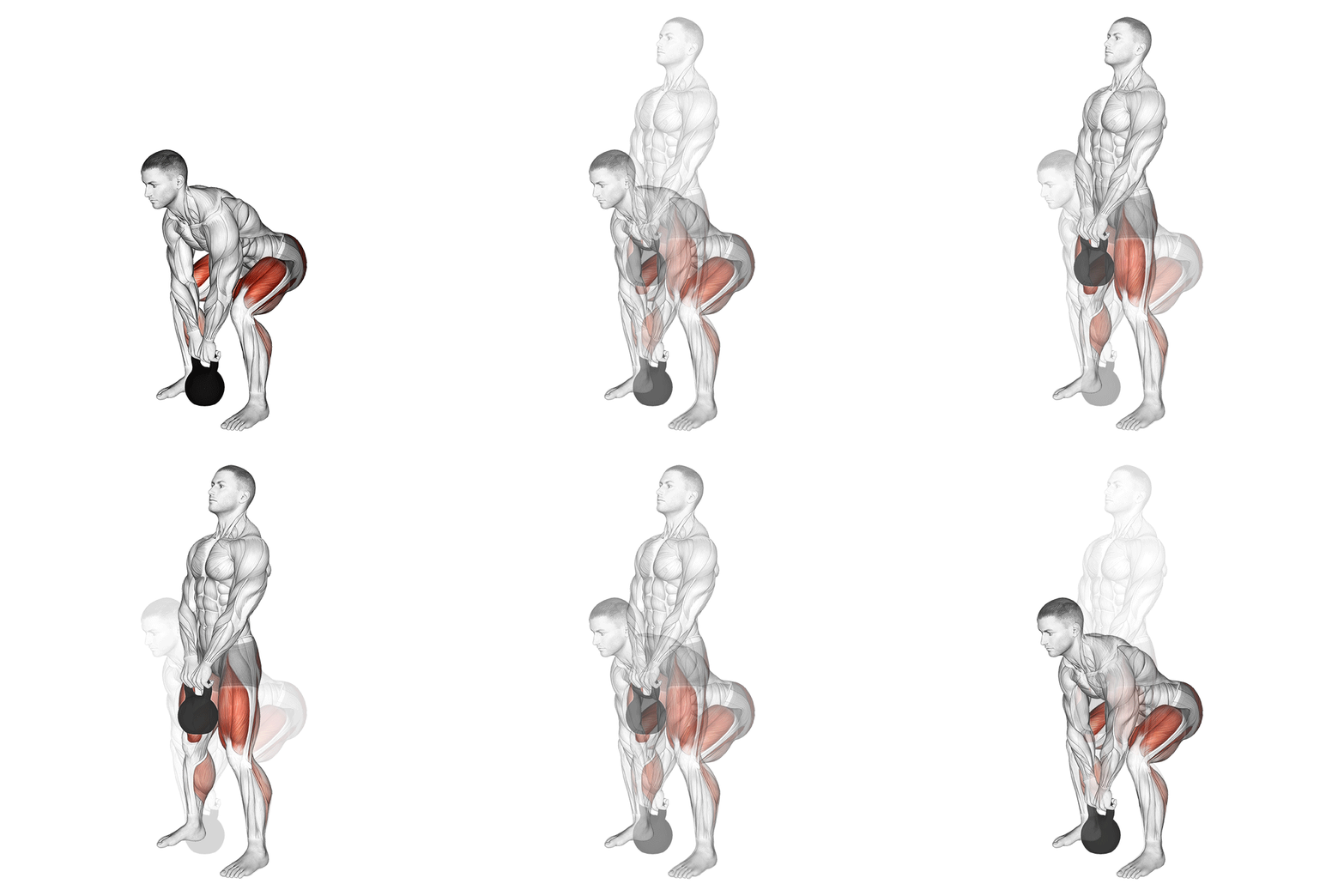
What is the kettlebell deadlift?
The kettlebell deadlift is a hip hinge with the load parked between your feet. You push your hips back, grab the handle with both hands and stand tall by driving the floor away. Two details make it friendlier than a barbell pull: the handle sits a little higher than a bar, and the weight is centred under you instead of in front of your shins, so your back stays more upright and nothing gets in the way of your knees. It trains the glutes, hamstrings, spinal erectors and grip, and it is the natural first stop before the kettlebell swing and the barbell deadlift: same hinge, far lower skill cost.
How to do the kettlebell deadlift
- 1
Frame the bell with your feet
Stand over the kettlebell, handle lined up with your ankle bones, feet hip-width apart, toes slightly out. Weight spread across the whole foot.
- 2
Hinge back and grip the handle
Push your hips back, knees soft, until both hands reach the handle. Shoulders stay over the bell, back flat, chest open. Big breath, brace.
- 3
Stand up by pushing the floor away
Drive through mid-foot, hips and shoulders rising together. Finish tall with glutes squeezed and arms long. No lean back at the top: straight is strong.
- 4
Hinge down along the same path
Hips go back first, the bell travels down your centre line and lands quietly between your ankles. Reset your breath and your back, then pull again, or go touch-and-go for conditioning.
Pro tip
Before every pull, crush the handle and try to snap it in half. That one cue switches on your lats, flattens your back and makes the bell feel lighter off the floor.
Common mistakes
Squatting the bell up.
Hips too low, knees shoved forward: the hinge becomes a bad squat and the glutes lose the job. Keep your shins near vertical and push the hips back until the hamstrings load up.
Rounding over the bell.
A slumped upper back puts the load on passive tissue instead of muscle. Proud chest, long spine; if you can't reach the handle flat-backed, set the bell on a low box.
Yanking the bell off the floor.
Jerking the slack out spikes the lower back. Pull the tension into your arms and lats first, then stand; the bell should leave the floor silently.
Overextending at the top.
Leaning back and pushing the hips past neutral pinches the lumbar spine and adds nothing. The rep ends when you stand tall, glutes tight, ribs stacked over hips.
Variations and progressions
Easier
Elevated kettlebell deadlift
Set the bell on a low box or step. The shorter range lets stiff hamstrings and new lifters hinge with a flat back from day one.
Harder
Single-leg kettlebell deadlift
Same hinge on one leg, bell in the opposite hand. Balance, hip stability and hamstring work per leg all jump, with a much lighter bell.
No kettlebell?
Dumbbell or barbell deadlift
Stand a dumbbell on its end between your feet for an identical setup. When your heaviest bell feels light for 10 clean reps, you've outgrown the tool: move to the barbell.
How to program it
Three protocols by goal. Pick one per cycle and aim for progression on load or distance.
| Goal | Sets × distance | Load | Rest |
|---|---|---|---|
| Learn the hinge | 3 × 8 | Light, 2 s down | 60-90 s |
| Strength | 4 × 6-8 | Heavy bell, RPE 8 | 2 min |
| Conditioning | 3 × 15-20 touch-and-go | Moderate, RPE 6-7 | 60 s |
Kettlebell Deadlift FAQ
What size kettlebell should I start with?
Heavier than you think. The hinge uses the strongest muscles you own, so the classic starting points are 12-16 kg for most women and 16-24 kg for most men. A bell that's too light gets squatted or curled; a meaningful load is what teaches the hips to take over.
Is the kettlebell deadlift enough, or do I need the barbell?
Depends on the goal. For movement quality, general fitness and high-rep engines, a heavy bell covers a lot. For maximal strength it runs out of road fast: bells stop around 48 kg while a barbell scales forever. Treat it as the gateway: own 10 crisp reps with a heavy bell and the barbell will feel familiar on day one.
What's the difference between the kettlebell deadlift and the swing?
Speed. The deadlift is a grind: slow, controlled, maximum tension. The swing is the same hinge performed ballistically, the bell floating off an explosive hip snap. Coaches teach the deadlift first because speed hides every fault the slow version exposes. Own the grind; a swing is just a deadlift with enough snap to make the bell float.