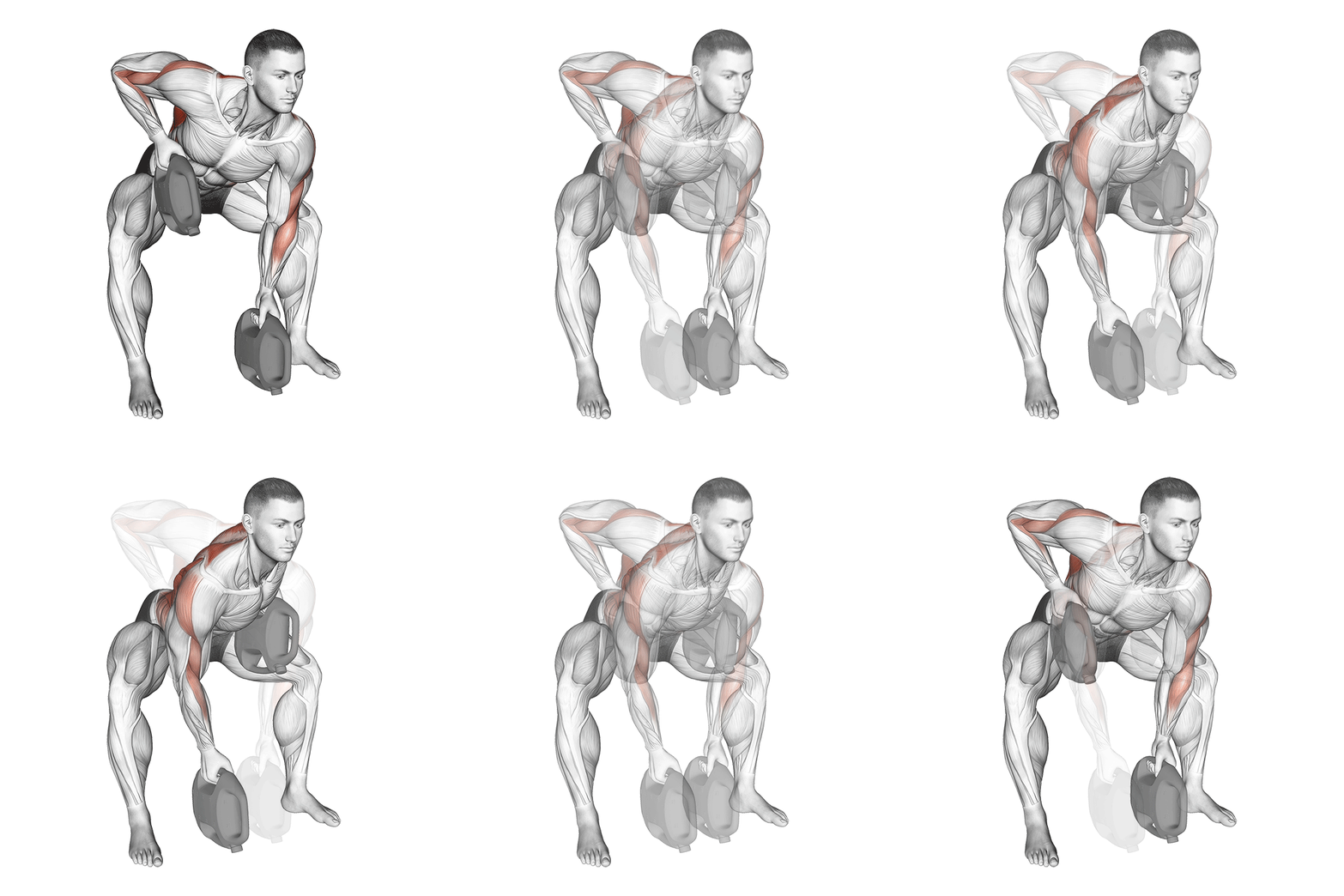
What is the gorilla row?
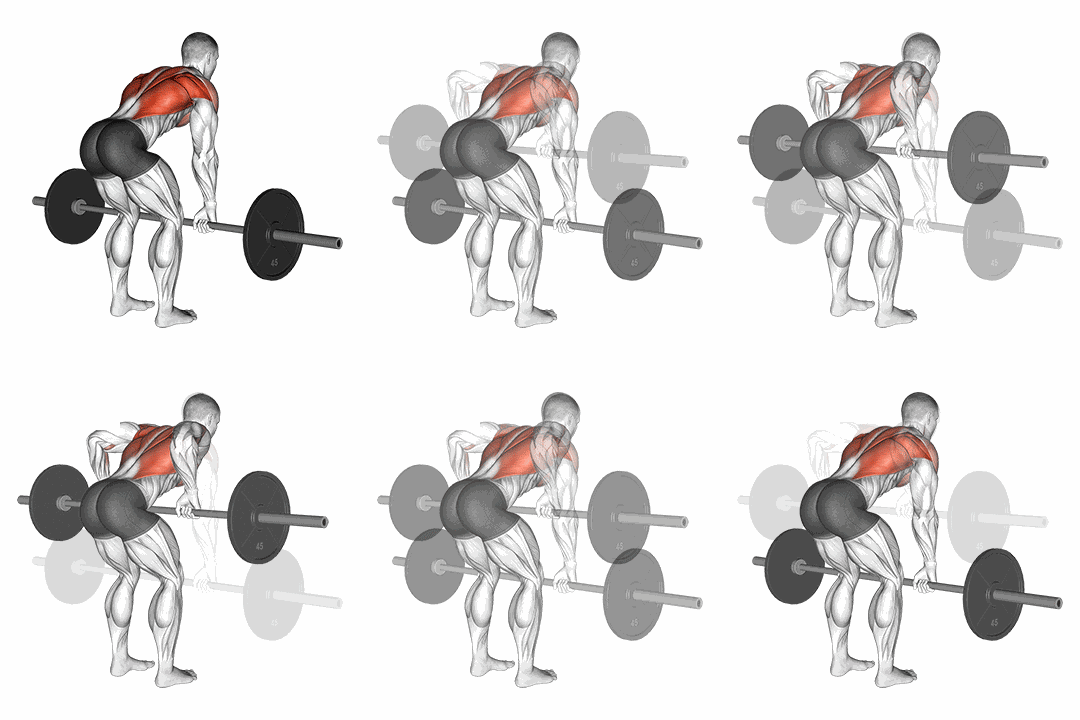
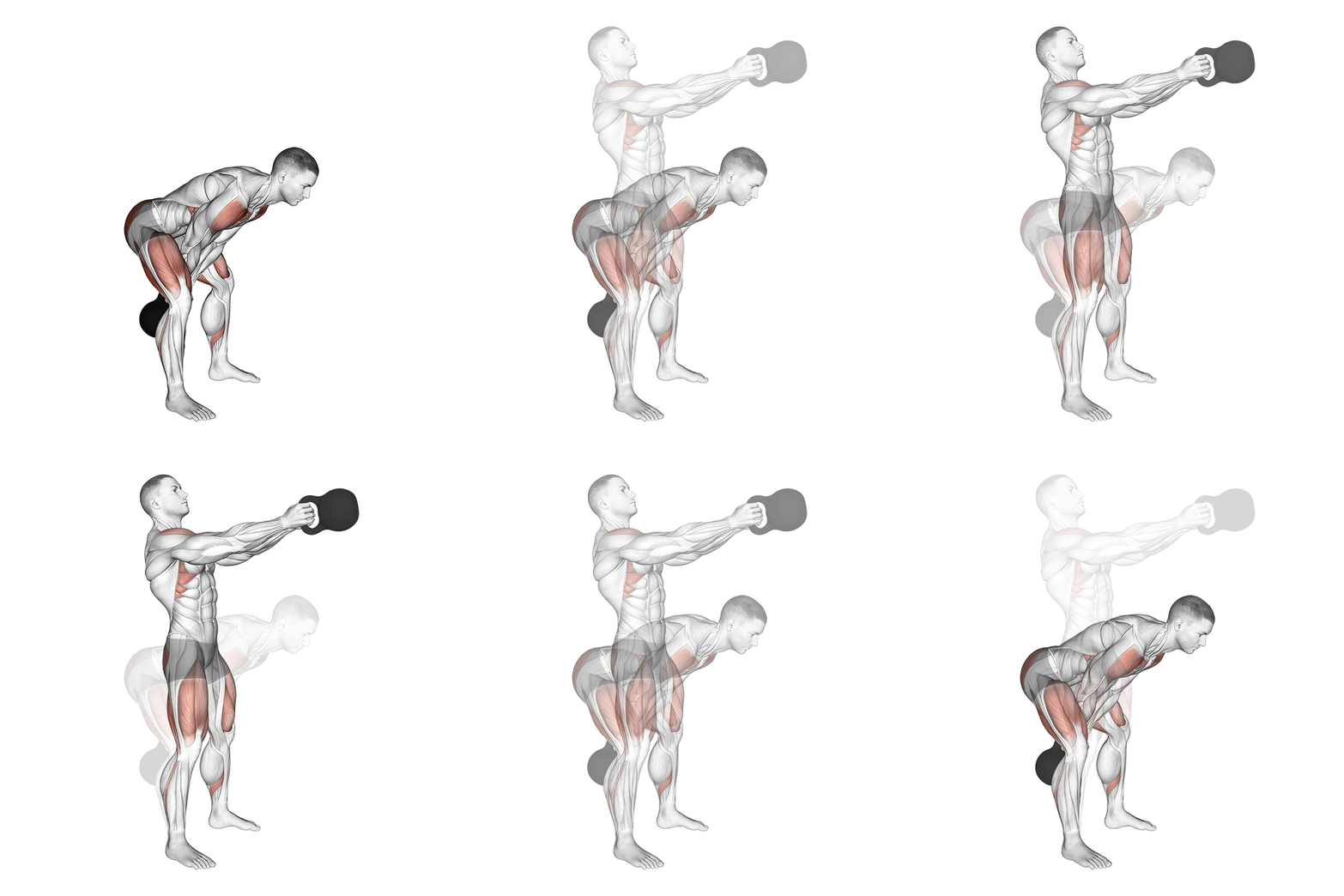
The gorilla row is an alternating bent-over row done from a wide stance with two kettlebells (or dumbbells) sitting between your feet. You hinge deep, grip both handles, and row one bell while the other hand stays planted on its handle, bracing you like a kickstand. That support makes the hinge sustainable for long sets and forces every rep to start strict from a dead stop on the floor. Compared with a classic barbell or dumbbell row, you get a deeper lat stretch from the low start, built-in anti-rotation work, and a movement that slots naturally into kettlebell circuits and conditioning sessions.
How to do the gorilla row
- 1
Set the bells and the stance
Park two kettlebells side by side between your feet, stance well outside shoulder width, toes slightly out. When you hinge down, the handles should sit directly under your chest, not out in front of it.
- 2
Hinge deep, back flat
Push the hips back and fold until your torso points down at the bells, hamstrings loaded, spine long from crown to tailbone. Grip both handles. This position is the exercise; the row just happens inside it.
- 3
Row one, press the other down
Drive one elbow back toward your hip until the bell reaches your ribs, while the free arm pushes its kettlebell into the floor. Squeeze, then set the bell down to a complete stop.
- 4
Alternate without twisting
Swap arms rep after rep, hips and shoulders staying square to the floor for the entire set. If your torso opens up to chase extra height, the range came from your spine, not your lats.
Pro tip
Push the resting kettlebell into the floor instead of just leaning on it. That active pressure fires the lat on the support side and turns your free arm into a true pillar, which is exactly what lets you row more weight here than in any unsupported bent-over row.
Common mistakes
Squatting the position.
Knees drifting forward and a tall torso turn the movement into a low curl. Send the hips back until the hamstrings pull tight and your chest faces the bells; that is the rowing angle you want.
Opening the shoulders to finish.
Rotating the torso lifts the bell higher, but the extra range comes from your spine twisting, not your lat pulling. Keep both shoulders pointed at the floor like headlights; a shorter square rep beats a long rotated one.
Bells parked too far forward.
Every centimetre the kettlebells sit in front of your base adds leverage against your lower back. Reset them deep between your feet, under your chest, before every set and after any rep where they wander.
Bouncing off the floor.
Tapping the floor and ripping the bell straight back up turns strict rows into momentum reps. Let the bell settle dead, re-grip, re-tension the back, then pull: the dead stop is the whole point of rowing from the floor.
Variations and progressions
Easier
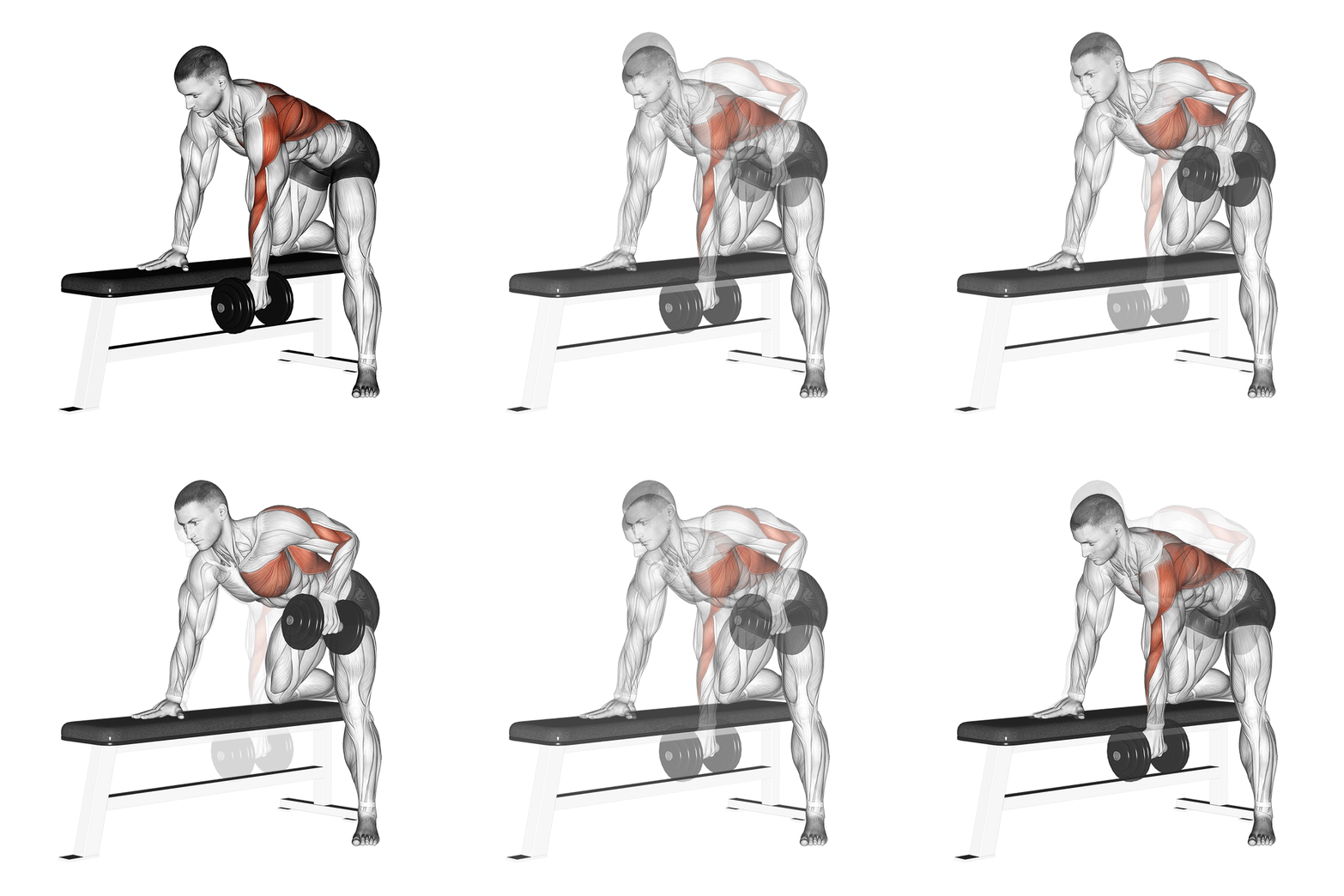
Bench-supported one-arm row
A hand on a bench carries the hinge for you, so you can pour everything into the pull. Build rowing strength here while your hinge endurance catches up.
Harder
Double kettlebell dead-stop row
Row both bells at the same time: no anchor arm, nothing holding you up but your own hinge. Every rep feels twice as heavy, and your lower back learns what the gorilla row was protecting it from.
Alternative
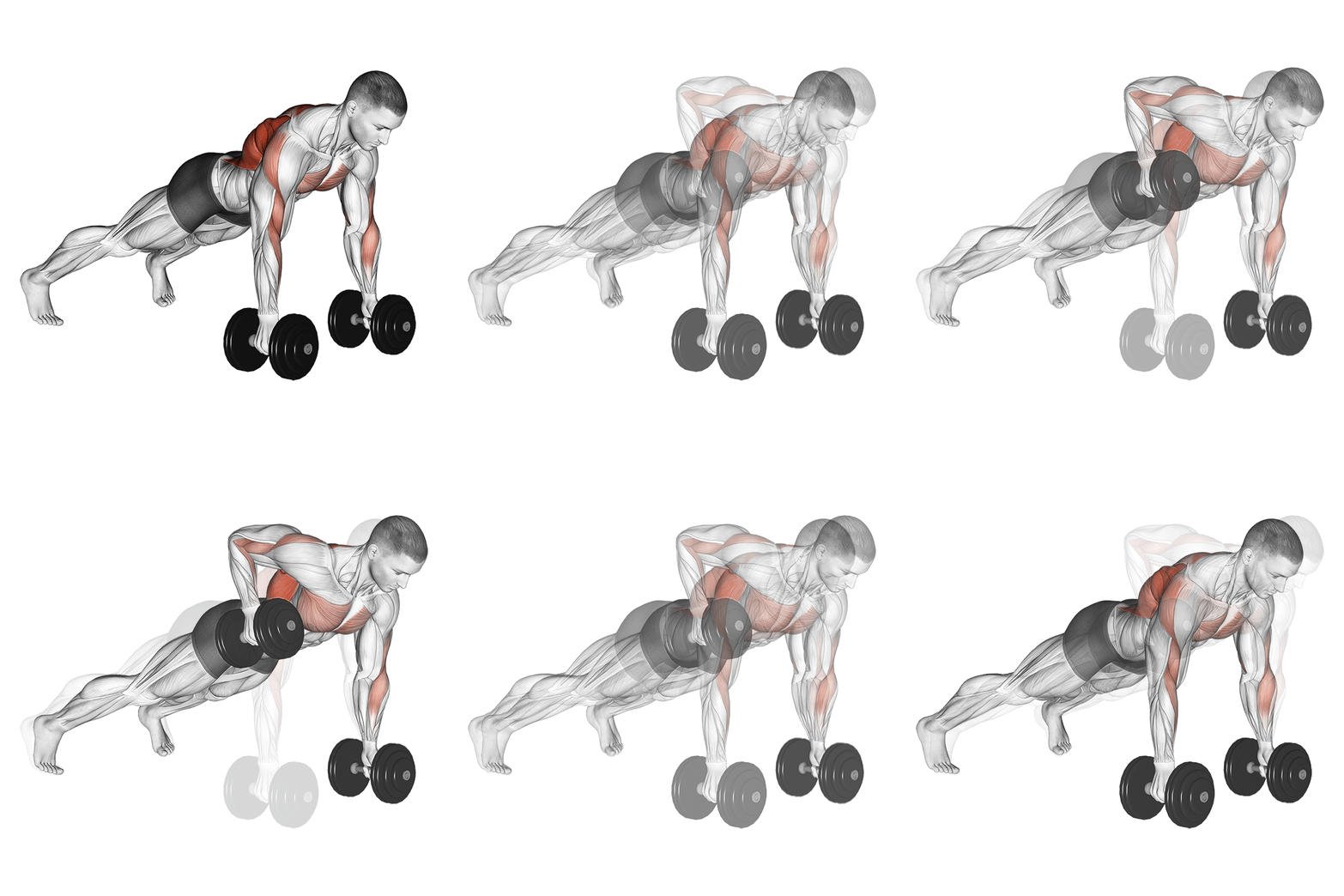
Renegade row
The other bench-free row: pull from a push-up plank instead of a hinge. You trade load for full-body anti-rotation tension and a brutal core stimulus.
How to program it
Three protocols by goal. Pick one per cycle and aim for progression on load or distance.
| Goal | Sets × distance | Load | Rest |
|---|---|---|---|
| Strength | 4 × 6-8 per side | Heavy bells, strict dead stop each rep | 2 min |
| Hypertrophy | 3-4 × 10-12 per side | Moderate, 1 s squeeze at the ribs | 90 s |
| Conditioning | EMOM 10 min: 6 + 6 reps | A bell you could row for 20 | Rest of the minute |
Gorilla Row FAQ
What muscles do gorilla rows work?
The lats, rhomboids and rear delts do the rowing, with the biceps and grip assisting. Underneath, glutes, hamstrings and spinal erectors hold the hinge isometrically, and the obliques resist rotation on every alternating pull. It is a back exercise, but one that taxes the whole posterior chain.
Kettlebells or dumbbells for gorilla rows?
Kettlebells, if you have the choice. The raised handle gives a higher, more comfortable starting grip, and the flat base keeps the bell still while you push on it. Dumbbells work fine, but they sit lower, which demands a deeper hinge, and they like to roll out from under your anchor hand.
Why do my hamstrings burn more than my back?
Because the hidden half of the exercise is an isometric hinge, and yours is not used to that much time under tension yet. That is a feature, not a fault: it is exactly the position strength that carries over to deadlifts and swings. If it cuts your sets short, use shorter sets or the bench-supported row while it catches up.
How heavy should gorilla rows be?
Heavier than most people guess: the anchor arm makes this one of the most stable rows in the gym. Once the pattern is clean, pick bells you can row strictly for about ten reps per side with square shoulders, and progress load before reps; the dead-stop start keeps heavy sets honest.