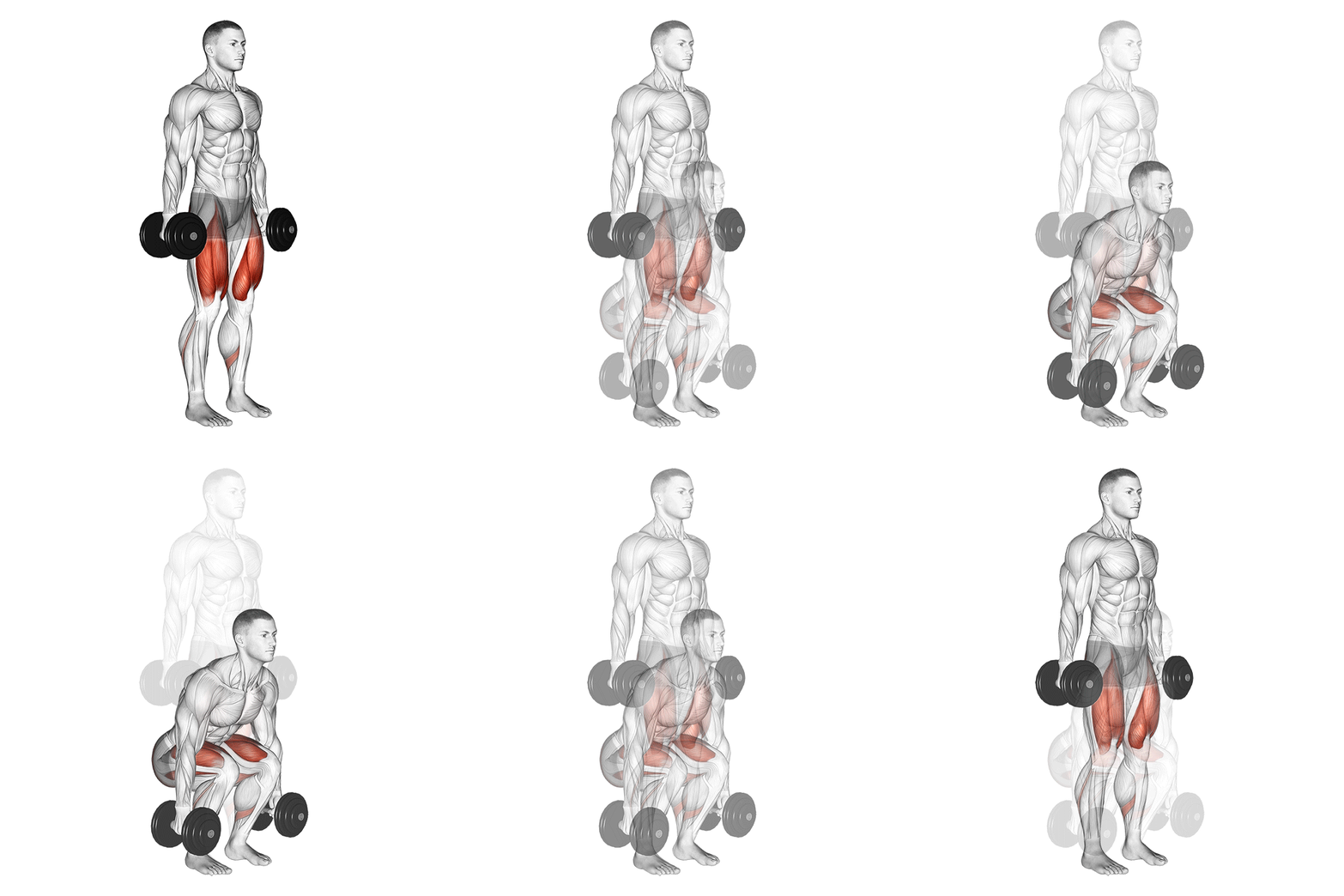
What is the dumbbell squat?
The dumbbell squat is a full squat with a dumbbell hanging at arm's length in each hand, palms facing your thighs. With the load hanging low by your sides instead of riding on your spine, there is no rack to find, no bar path to manage and far less to learn: you brace, sit down and stand up. That makes it the natural bridge between bodyweight squats and the barbell, and a staple of home gyms and hotel gyms. The catch is the ceiling: as the bells get heavy, your grip and traps tire before your legs, which is the sign to move the load to your shoulders or to a bar.
How to do the dumbbell squat
- 1
Set your stance first, then lift
Feet shoulder width, toes turned out a touch, weight spread over the whole foot. Deadlift the dumbbells up from the floor with a flat back rather than bending over to grab them.
- 2
Let the bells hang plumb
Arms long and relaxed, palms facing in, shoulder blades pulled back and down so the weight cannot round your upper back. The dumbbells should hang like plumb lines beside your legs from the first rep to the last.
- 3
Sit between your heels
Big breath, ribs down, then push the hips back and down for 2-3 s until your thighs reach parallel or below. The bells slide straight down next to your calves; if they drift forward, your torso is tipping.
- 4
Stand up through the whole foot
Drive the floor apart, exhale on the way up and finish tall with glutes squeezed, without leaning back. Hips and chest rise at the same speed: if your hips win the race, the squat just became a back exercise.
Pro tip
Treat the dumbbells like farmers carry handles: crush the grip, pack the shoulders and keep the bells glued to your sides. The day your hands give out before your legs, do not shrink the squat: move the dumbbells to your shoulders, use straps, or graduate to a barbell.
Common mistakes
Bells swinging out front.
Dumbbells drifting ahead of your thighs drag your shoulders with them and hand the work to your lower back. Keep them brushing your legs the entire rep; the moment they float forward, sit more upright.
Half reps blamed on the legs.
Most cut-depth dumbbell squats are a grip problem, not a leg problem: the hands are cooking, so the set speeds up and rises. Chalk up, slow down, and hit full depth; if grip still quits first, change where the load sits.
Shrugging the weight up.
As the set gets hard, the traps try to help by shrugging the bells. All that does is burn your neck and shorten your posture: shoulders stay packed down, the legs alone move the load.
Toes carrying the squat.
With the load low and in your hands, it is easy to rock onto the balls of the feet without noticing. Reset your weight across heel and mid-foot at the top of every rep; the heels stay down from start to finish.
Variations and progressions
Easier
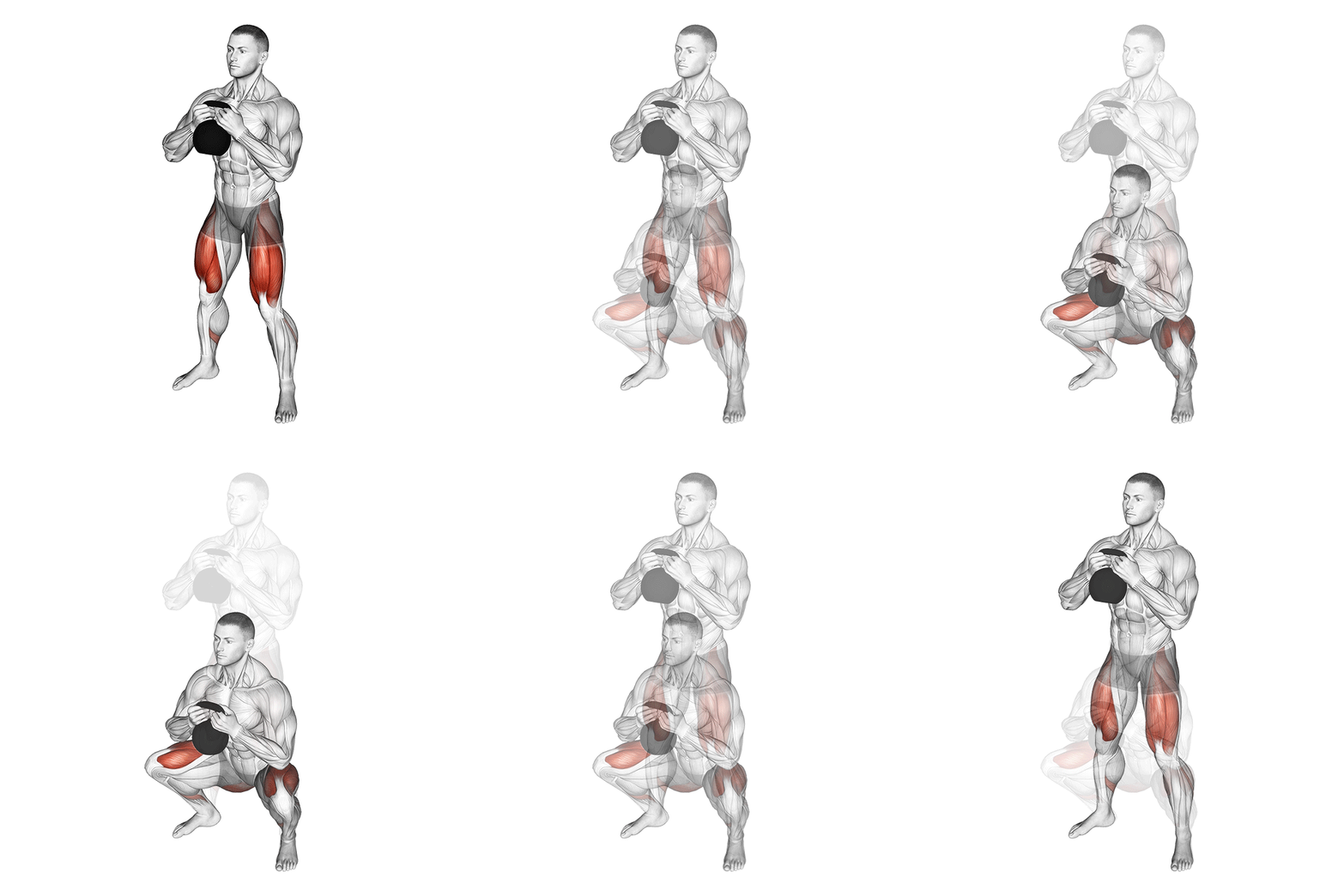
Goblet squat
One dumbbell held against the chest acts as a counterweight that makes depth and an upright torso almost automatic. The best place to learn the pattern before doubling the load.
Harder
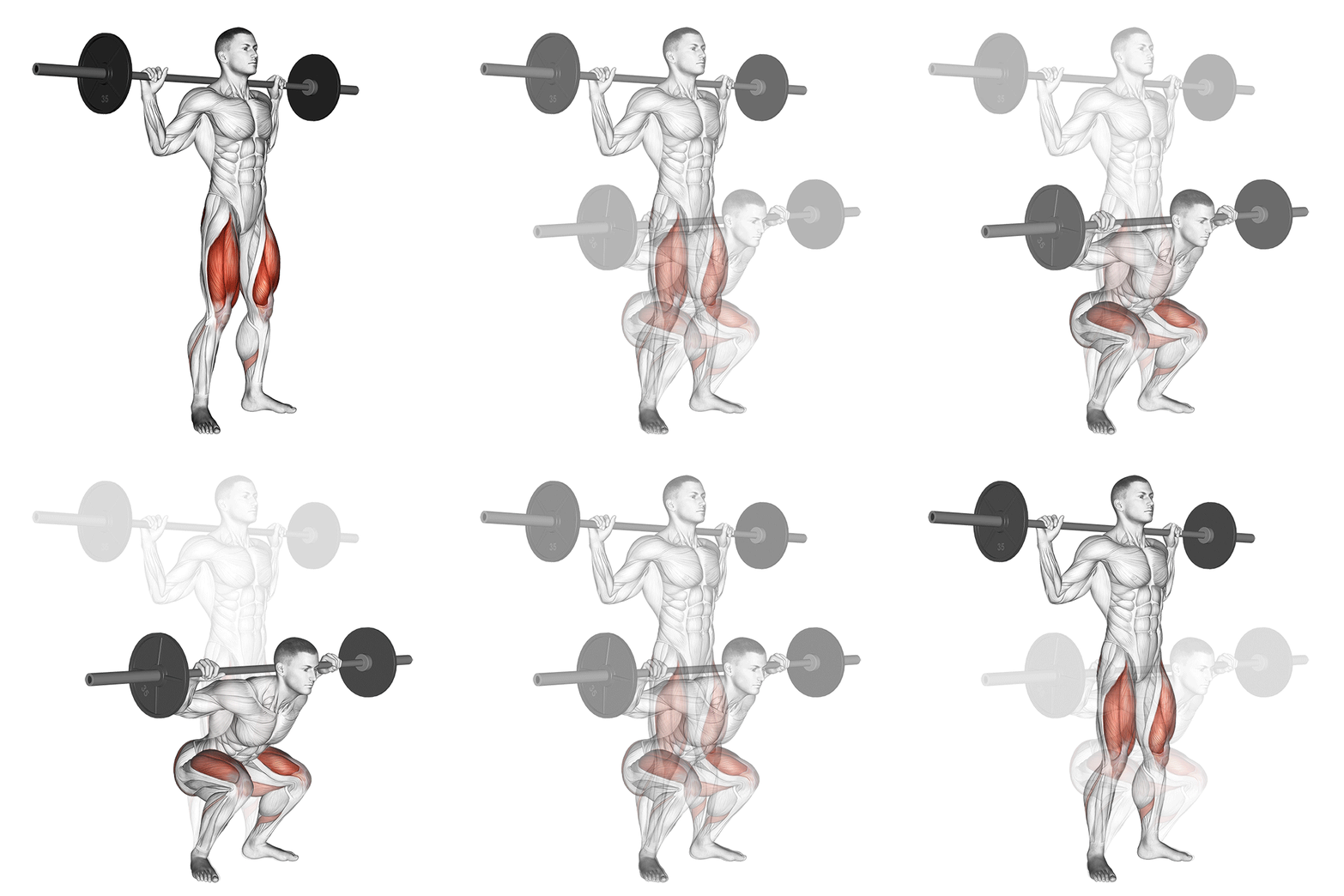
Barbell back squat
When the heaviest dumbbells in the rack stop being a challenge, the bar removes the grip ceiling entirely. Same pattern, loadable for years.
No dumbbells?
Double kettlebell front rack squat
Two kettlebells cleaned to the shoulders load the same squat from the front. The rack position hammers your core and upper back while the legs do the familiar work.
How to program it
Three protocols by goal. Pick one per cycle and aim for progression on load or distance.
| Goal | Sets × distance | Load | Rest |
|---|---|---|---|
| Strength | 4 × 6-8 | Heaviest bells you can hold, RPE 8 | 2 min |
| Hypertrophy | 3-4 × 10-12 | RPE 8 | 90 s |
| Hybrid circuits | 3 × 15-20 | Light, smooth tempo | 45-60 s |
Dumbbell Squat FAQ
Dumbbell squat or goblet squat?
The goblet squat is the teacher: one bell at the chest counterbalances you, so depth and posture come easily, but you are limited to a weight you can hold at your sternum. The dumbbell squat is the loader: two bells at your sides roughly double the available weight with no mobility tax. Learn on the goblet, then switch once a single dumbbell stops being challenging for sets of 10.
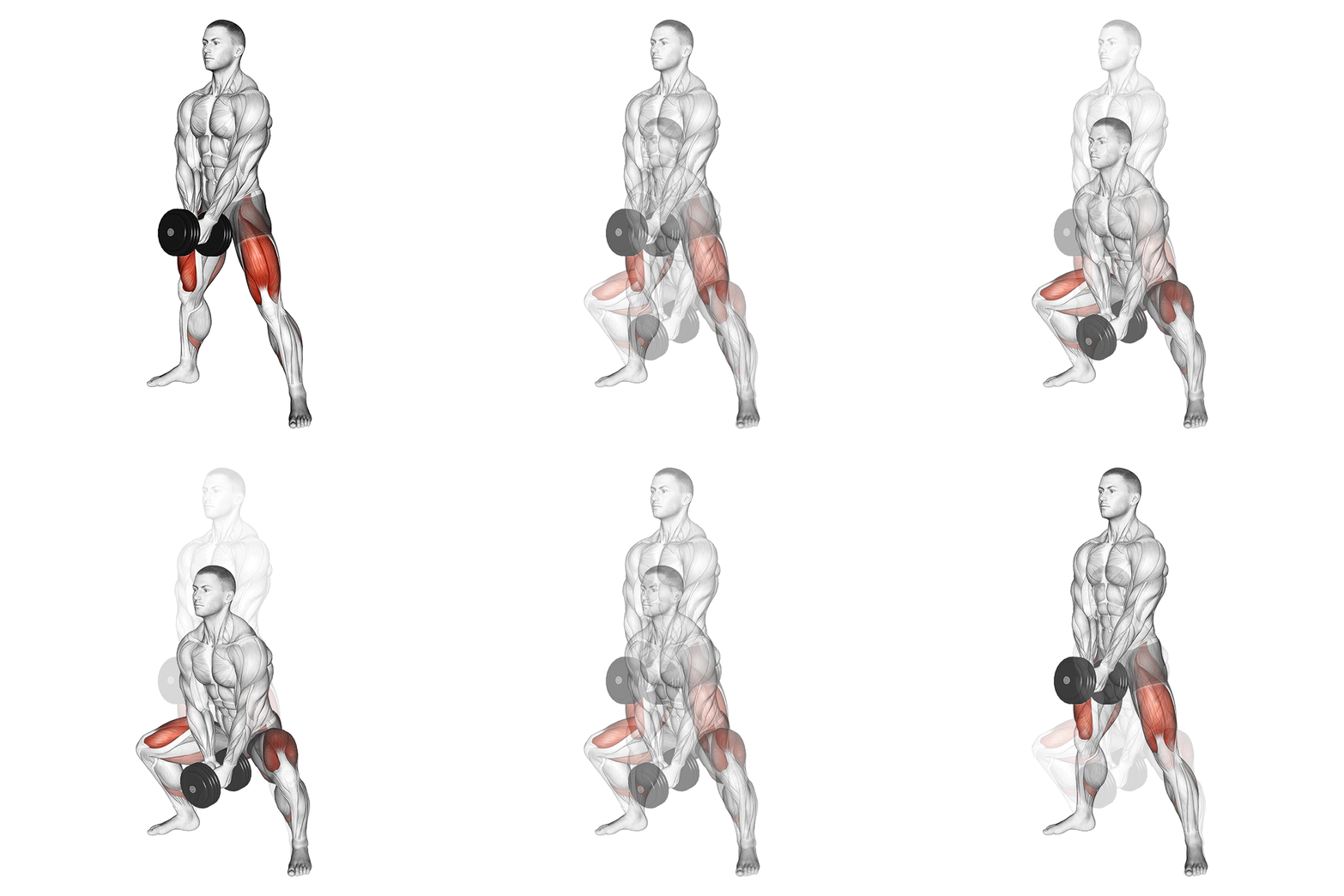
What's the difference with the dumbbell sumo squat?
Stance and target. The sumo version sets the feet wide with toes out, usually with one bell hanging between the legs, which shifts work toward the adductors and glutes. The standard dumbbell squat keeps a shoulder-width stance with a bell in each hand and stays quad-led, closer to a classic squat. Pick sumo to bias the inner thigh, standard to build the squat pattern itself.
How heavy should dumbbell squats be?
Heavier than most people try. Legs are strong: a pair of bells that feels serious in your hands is often warm-up material for your quads. Work up until 6-8 reps is genuinely hard while your heels stay down and your torso stays tall. When the rack tops out or grip fails before your legs every session, that is graduation day: shoulder the bells or move to a barbell.