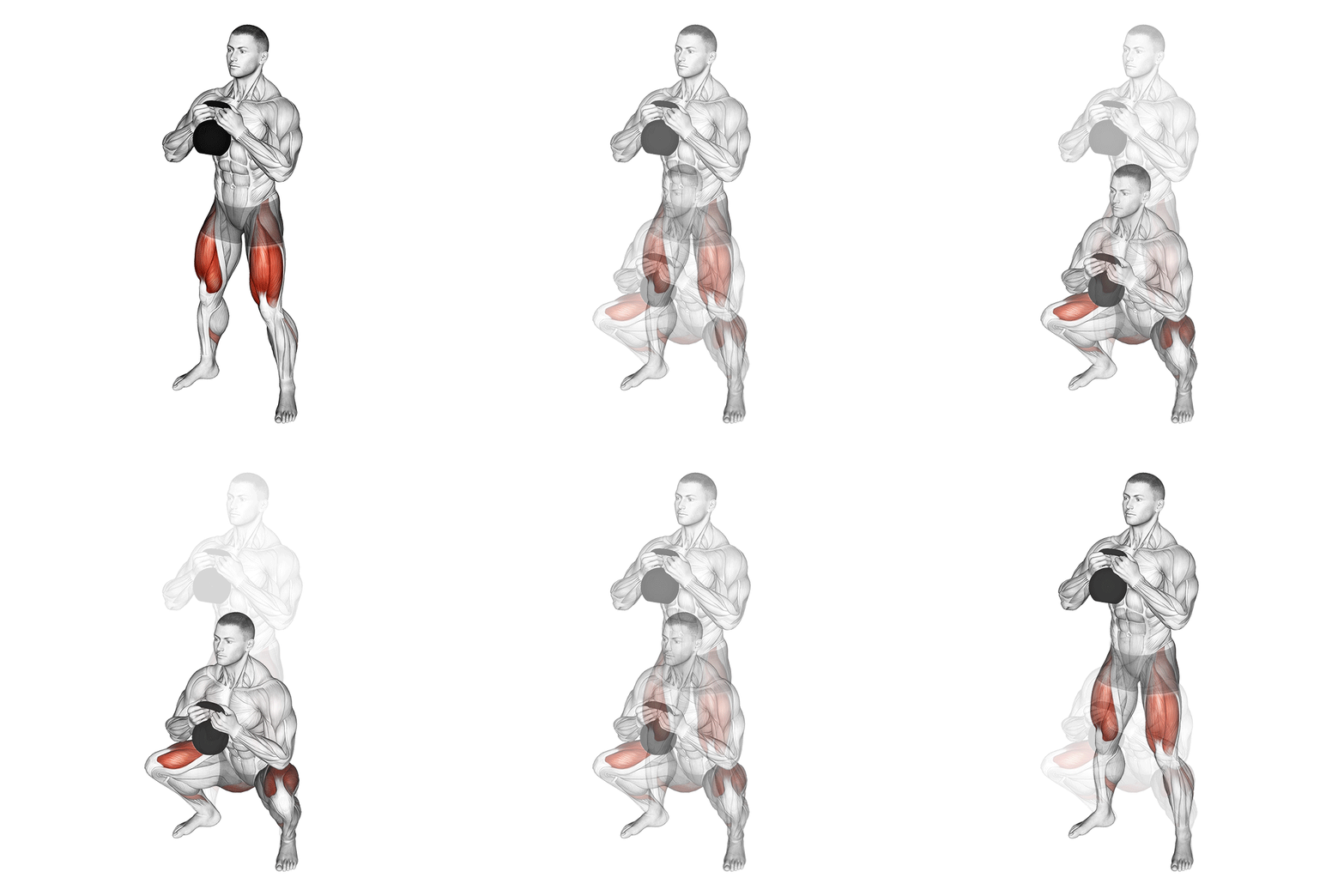
What is the goblet squat?
The goblet squat is a bilateral squat performed while holding a kettlebell or dumbbell at the chest, elbows tucked underneath. The front-loaded position acts as a counterweight that pulls your chest up and forces a more vertical torso, which is exactly the position most beginners struggle to find under a barbell. It teaches depth, bracing and posture all at once. For intermediate and advanced athletes, it shines as a high-rep finisher (sets of 15 to 30) or as a low-back-friendly squat option on running-heavy weeks. The load ceiling is modest (most people max out around 40 to 50 kg) but the pattern is gold.
How to do the goblet squat
- 1
Set the goblet position
Hold a kettlebell by the horns (or a dumbbell vertically) at chest height, elbows pointing down. Bell tight to the chest. Feet shoulder-width, toes slightly out.
- 2
Brace and descend
Take a belly breath, brace abs. Push hips back and knees out as you lower. Keep the chest tall; the bell stops you from collapsing forward.
- 3
Hit depth, elbows inside knees
Descend until elbows brush the inside of your knees. Hip crease should be below the top of the knee. Pause one second at the bottom if you want a stronger stimulus.
- 4
Drive up tall
Press the floor away and stand all the way tall. Squeeze glutes at the top, ribs down. Reset breath before the next rep.
Pro tip
Use the goblet squat as a 5-minute warm-up before every barbell squat session. Three sets of 8 with a moderate kettlebell wake up the hips, open the ankles and put you in the right squat shape before you load the bar.
Common mistakes
Elbows flaring out.
If the elbows drift out and away from the body, the bell pulls you forward. Keep elbows pointing straight down, kettlebell pinned to the chest.
Heels rising.
Means your ankles are tight or your stance is too narrow. Widen the stance, point toes out a little more, or place 2 cm plates under the heels.
Cutting depth on heavy sets.
The whole point of the goblet is full depth. If the load forces you to stop high, the load is wrong for this exercise; switch to a barbell instead.
Rounding the upper back.
The bell will pull you into a slouch if your upper back is weak. Pull shoulders back and down, keep chest up against the bell.
Variations and progressions
Easier
Box goblet squat
Squat to a box at parallel. Teaches depth and control without the demand of stopping yourself at the bottom. Great first step for beginners.
Harder
Tempo goblet squat (3-1-1)
Three-second descent, one-second pause at the bottom, one second to stand. Builds brutal time under tension with a manageable load.
No kettlebell?
Dumbbell goblet or front-loaded squat
Vertical dumbbell works the same way. Or hold two kettlebells at the front rack for a heavier alternative with the same squat pattern.
How to program it
Three protocols by goal. Pick one per cycle and aim for progression on load or distance.
| Goal | Sets × distance | Load | Rest |
|---|---|---|---|
| Technique / warm-up | 3 × 8 | Light KB (12-16 kg) | 60 s |
| Strength accessory | 4 × 6-8 | Heavy KB (24-32 kg) | 90 s |
| Capacity / finisher | 3 × 20 | Moderate KB (16-24 kg) | 60-90 s |
Goblet Squat FAQ
Goblet or barbell back squat?
Both, in different roles. Barbell back squat is your strength driver: heavy loads, low reps, primary lift. Goblet squat is the support tool: warm-up before the barbell, high-rep finisher after, or full replacement on weeks when the lower back is fried. Goblet doesn't replace the barbell at the top end, but it makes the barbell better.
How heavy can I go?
Most trained men cap around 40 to 48 kg before grip and upper-back posture fail; trained women around 24 to 32 kg. Above that, you're fighting to hold the bell rather than squatting. When the load becomes the limiter, switch to barbell front squats or double-kettlebell front-rack squats. Don't chase the goblet number; it's a means, not an end.
Can I goblet squat every day?
Yes, at low volume. Three sets of 8 with a moderate load is a tonic dose: it greases the squat pattern, opens the hips and ankles, and barely accumulates fatigue. It's one of the best daily movement practices for anyone who sits a lot during the day. Save the heavy or high-rep work for two or three times a week to allow recovery.