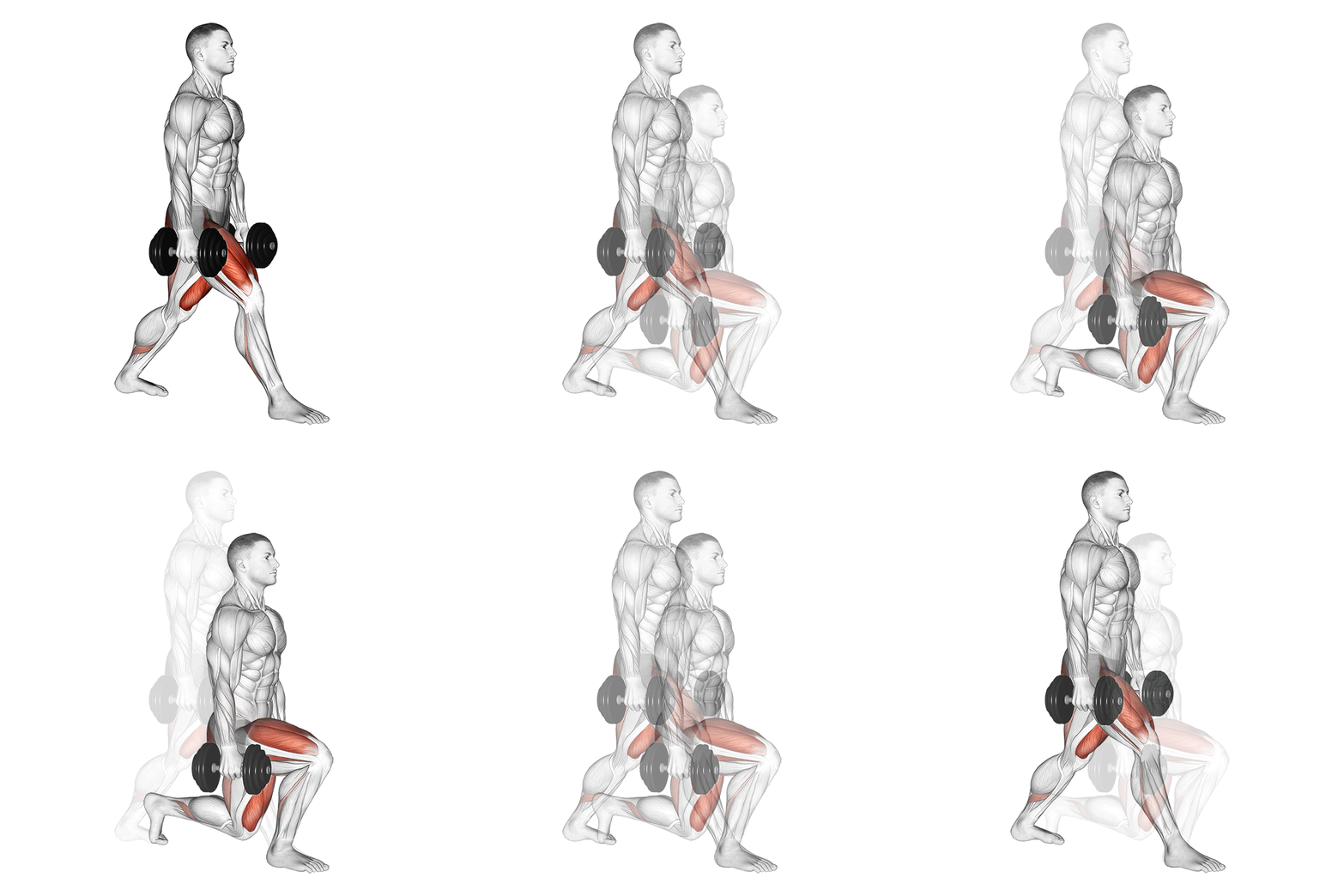
What is the dumbbell split squat?
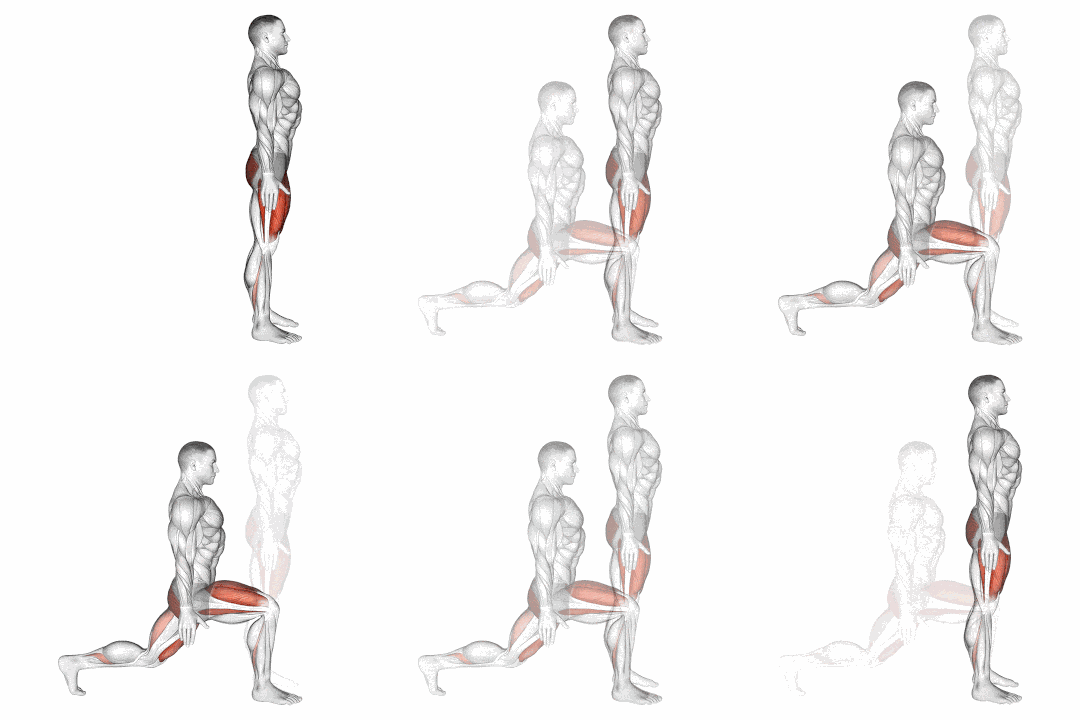
The dumbbell split squat is the stationary member of the lunge family: you set a staggered stance, one foot forward and one behind, then keep both feet planted for the entire set while the rear knee drops toward the floor. Dumbbells hanging at your sides load the pattern without a rack. Because nothing moves except your hips, balance demands stay low and you can pour everything into the front leg. It is the standard entry point to single-leg training: own it before Bulgarian split squats or walking lunges, and use it to expose the left-right strength gaps that bilateral squats hide.
How to do the dumbbell split squat
- 1
Measure your stance
Drop into a half-kneel: front shin vertical, rear knee under the hip. That is your stance length. Keep the feet on two hip-width tracks, not on one tightrope line.
- 2
Pick up the dumbbells, stack tall
Dumbbells at your sides, shoulders over hips, ribs down. Put about 70% of your weight into the front foot; the back foot rests on its toes like a kickstand.
- 3
Drop the rear knee straight down
Lower for 2-3 s until the rear knee hovers just above the floor. The front heel stays glued down and the front knee tracks over the toes, not inward.
- 4
Drive through the front foot
Push the floor away through the front mid-foot and heel, exhale on the way up, and stand without springing off the back toes. All reps on one side, then switch.
Pro tip
Think elevator, not escalator: your hips travel straight down between your feet, not forward over the front knee. If the front heel starts lifting, your stance is too short, lengthen it before you blame your ankles.
Common mistakes
Stance too short.
The knee shoots past the toes, the heel lifts and the knee grinds every rep. Reset with the half-kneel test: vertical front shin, rear knee under the hip.
Pushing off the back leg.
If the rear calf is pumping, the front leg is getting half reps. The back leg is a kickstand: balance only, zero propulsion.
Tightrope feet.
Both feet on one line turns every rep into a wobble contest. Keep them on separate hip-width tracks so the glutes can stabilize and the load can go up.
Torso collapsing forward.
A slight constant lean is fine; folding a little more each rep to lever the weight up is not. Lock your torso angle on rep one and keep it to the last rep.
Variations and progressions
Easier
Bodyweight split squat with support
Hold a rack upright with one hand. Groove the straight-down hip path and full depth before you ever pick up a dumbbell.
Harder
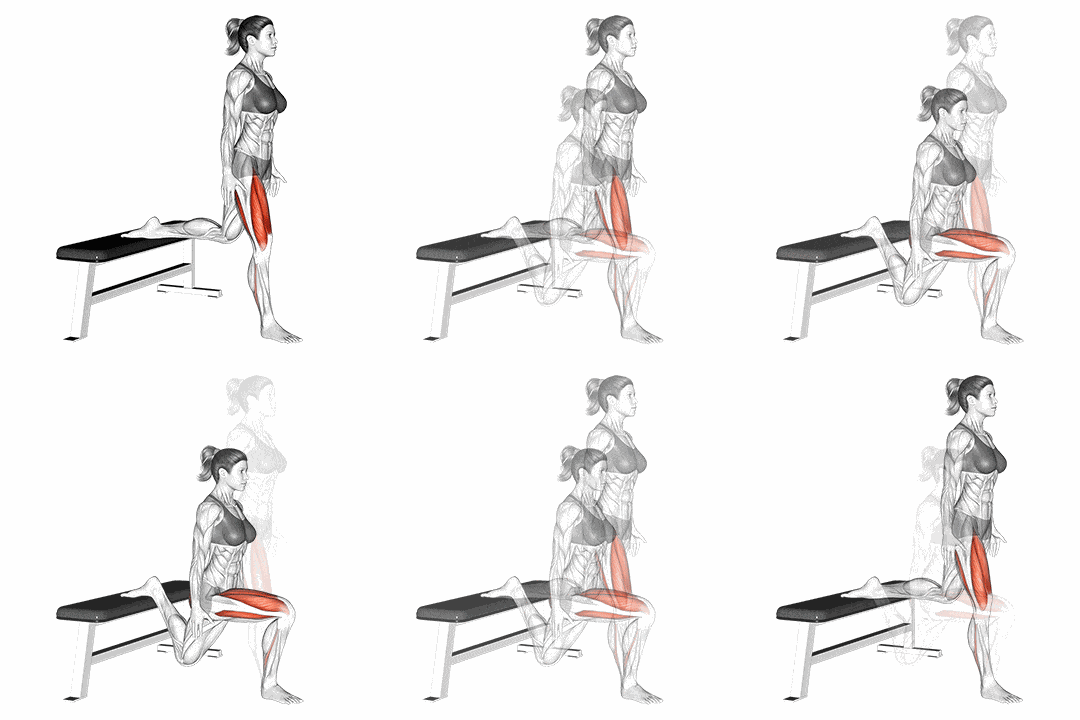
Bulgarian split squat
Elevate the rear foot on a bench: more load shifts to the front leg and the hip flexors get stretched under load.
No dumbbells?
Tempo split squat
Bodyweight, 4 s down, 2 s pause with the knee hovering. The clock replaces the kilos surprisingly well.
How to program it
Three protocols by goal. Pick one per cycle and aim for progression on load or distance.
| Goal | Sets × distance | Load | Rest |
|---|---|---|---|
| Strength | 4 × 6-8 per leg | Heavy dumbbells, RPE 8 | 2 min |
| Hypertrophy | 3 × 10-12 per leg | RPE 8 | 90 s |
| Fixing imbalances | 3 × 12 per leg | Light, weak leg first, match its reps | 60-90 s |
Dumbbell Split Squat FAQ
What's the difference between a split squat and a lunge?
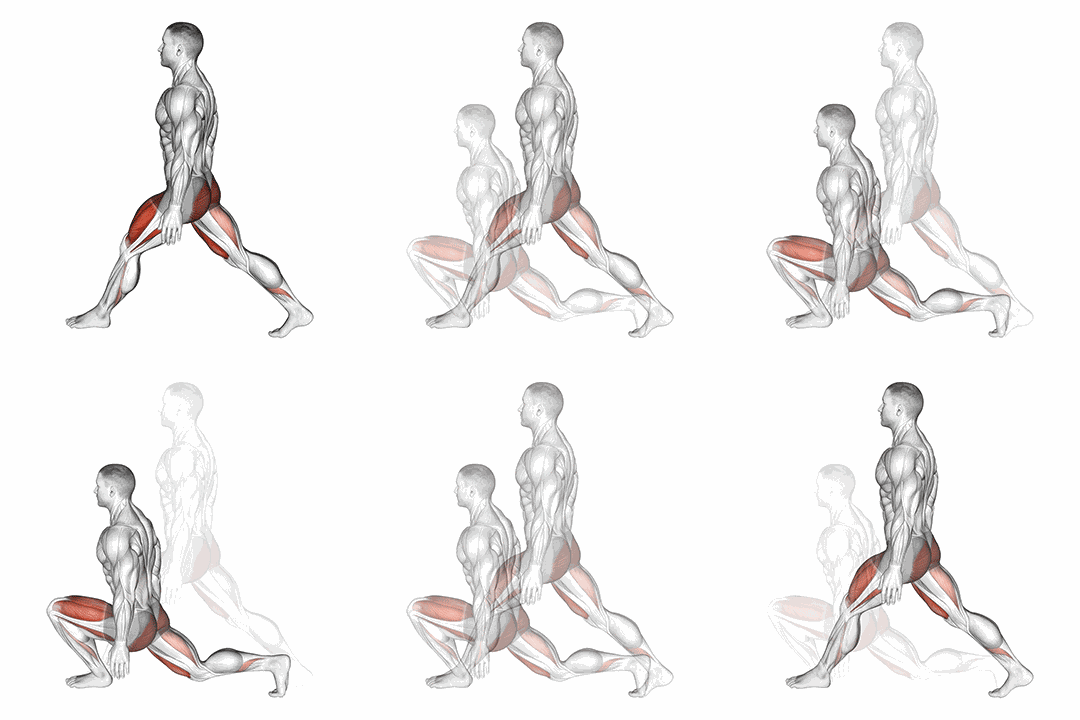
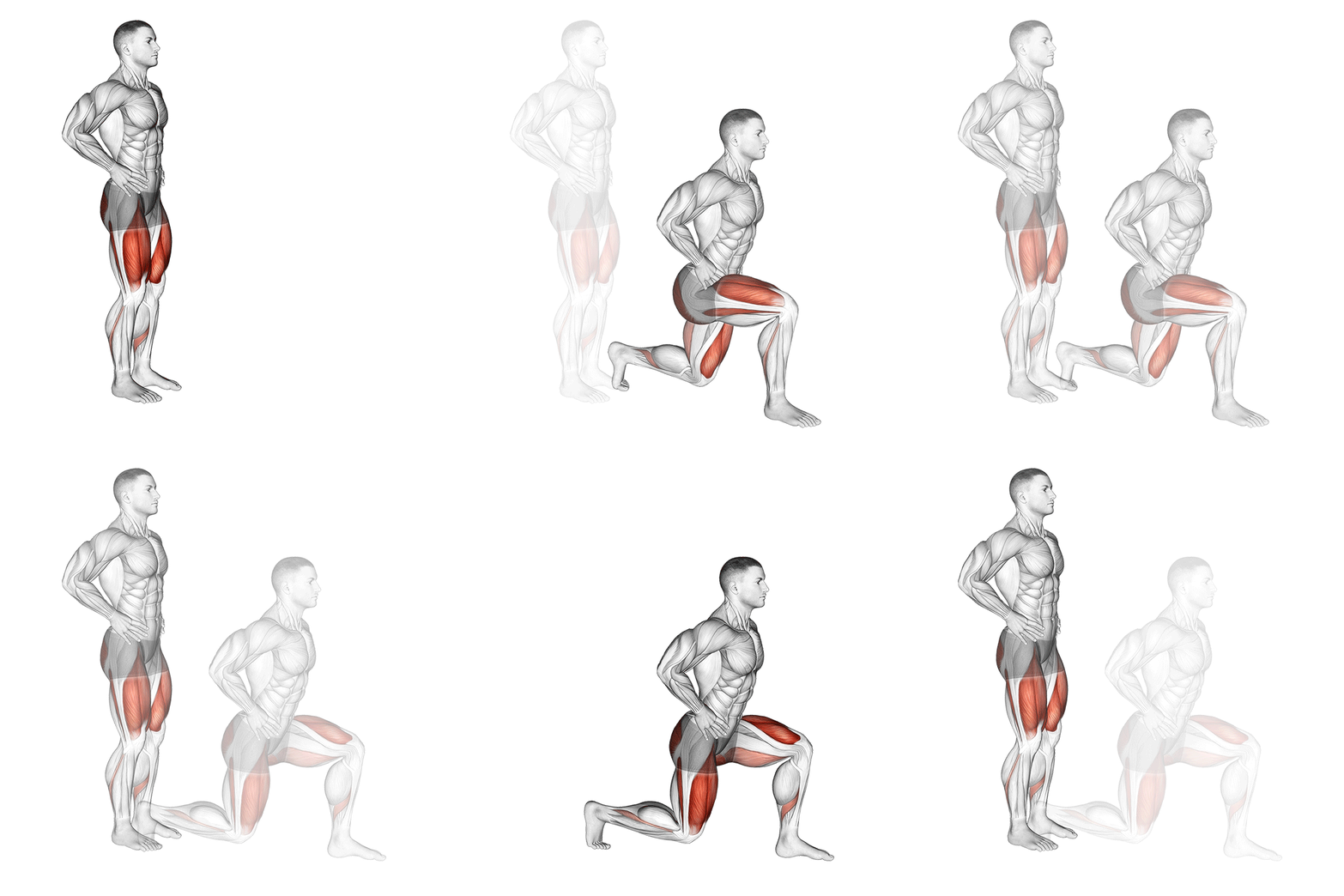
In a split squat the feet never move: you set the stance once and pump reps in place. In a lunge you step into position and push back out every rep, which adds deceleration, balance and coordination. That makes the split squat the better choice for loading one leg heavy with clean technique, and the lunge the better choice for athletic transfer once the pattern is solid.
Split squat or Bulgarian split squat?
Start flat. With the rear foot on the floor you carry some load on the back leg, which keeps balance easy and lets you learn the hip path. Elevating the rear foot shifts almost everything onto the front leg and stretches the rear hip flexors, more stimulus, but also more wobble and more soreness. Earn the Bulgarian by first hitting strict, full-depth sets of 10 per leg here.
Should my torso stay vertical or lean forward?
Both are correct, they just train different things. A vertical torso keeps the knee travelling forward and biases the quads; a slight hinge from the hips pushes the pelvis back and biases the glutes. Pick the bias that matches your goal, set the angle on the first rep, and do not let fatigue change it mid-set.