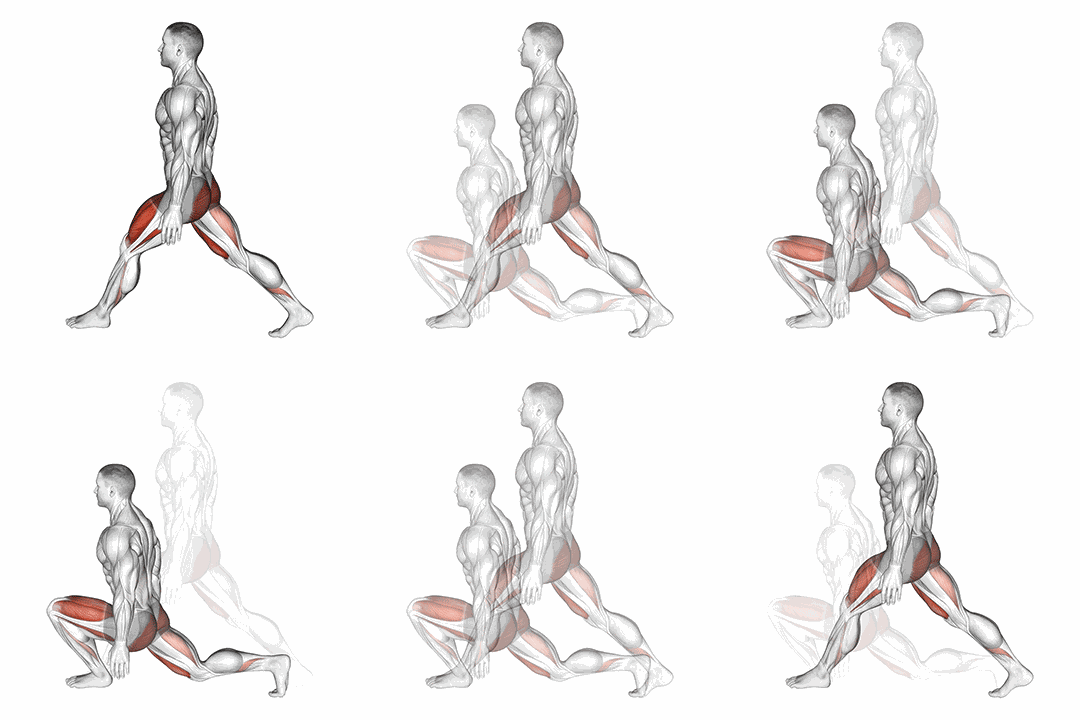
What is the atg split squat?
The ATG split squat ("ass to grass") is the signature movement of Ben Patrick's Knees Over Toes system. From a long split stance, you lower until the front hamstring rests on the calf, pushing the front knee far past the toes while the heel stays planted and the back leg reaches long behind you. That combination loads the quads, and the VMO in particular, through maximal knee flexion while stretching the rear hip flexor hard. Progressed patiently (elevation first, then the floor, then load), it builds knees that tolerate deep flexion, improves ankle and hip mobility, and transfers to squatting, sprinting and lunging.
How to do the atg split squat
- 1
Take a long stance
Set a split stance noticeably longer than a lunge, front foot flat, back leg stretched behind you with the toes tucked. Hold a pole, rings or a rack upright for balance while you learn.
- 2
Push the knee over the toes
Lower slowly and drive the front knee as far forward as it will go. The heel stays glued to the floor: the shin angle is the whole point of the exercise.
- 3
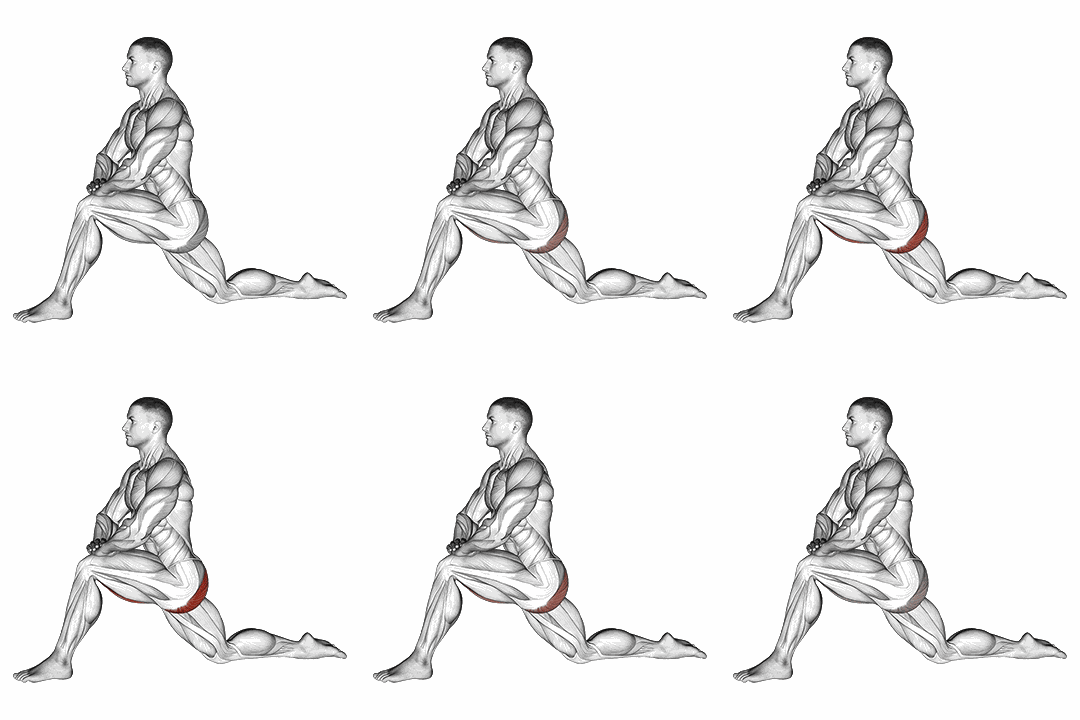
Touch hamstring to calf
In the bottom, the front hamstring rests on the calf, the torso stays fairly tall and the back knee hovers just off the floor. You should feel a strong stretch down the front of the rear hip.
- 4
Drive the floor away
Press through the whole front foot and stand back up along the same path, knee tracking over the toes without caving in. Full control in both directions, no bouncing out of the bottom.
Pro tip
Earn the floor. Start with the front foot elevated on a box or stacked plates, and lower the elevation week after week. A full, controlled range at bodyweight beats any dumbbell you could hold at half depth.
Common mistakes
Heel popping up.
If the heel lifts, the ankle has run out of dorsiflexion. Raise the front-foot elevation, keep the heel down, and the range will come.
Stopping halfway.
Without hamstring-to-calf contact it is just a regular split squat. Shrink the load or raise the elevation until the full range is yours on every rep.
Stance too short.
With the feet close together, the rear hip never opens and the knee does all the travelling. Lengthen the stance until the bottom clearly stretches the rear hip flexor.
Arching the lower back.
A big lumbar arch fakes the hip stretch. Keep the ribs down and the rear glute lightly squeezed so the stretch lands on the hip flexor, not the spine.
Variations and progressions
Easier
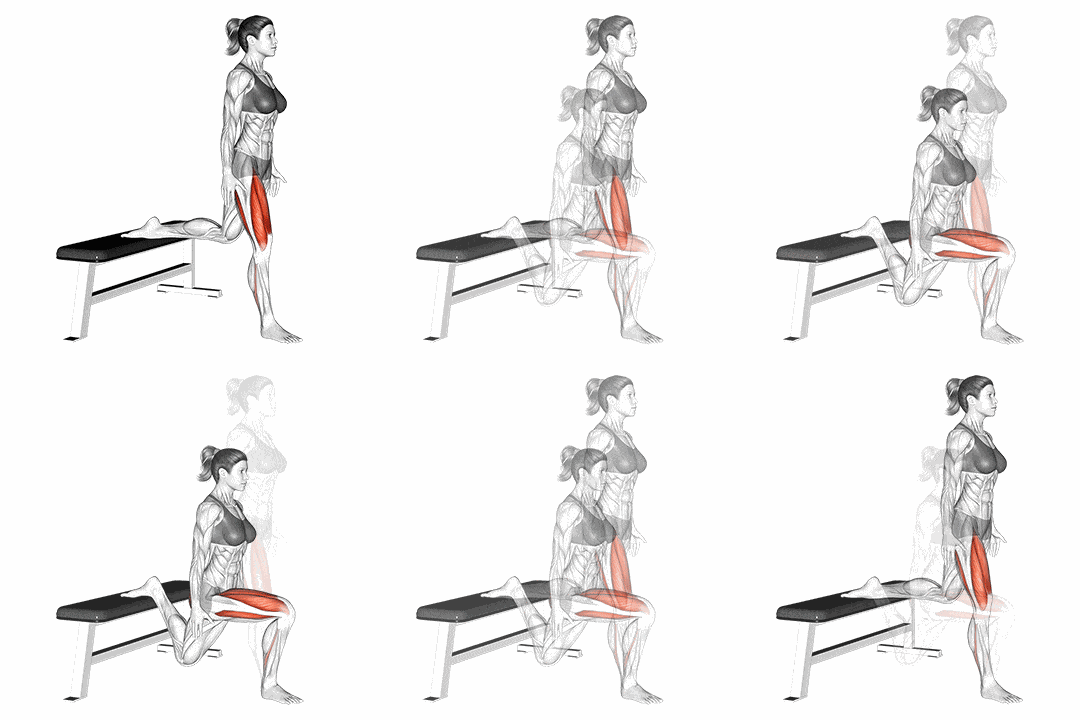
Elevated ATG split squat
Front foot on a box or 2-3 stacked plates. The elevation reduces the depth and ankle range needed; lower it gradually until you reach the floor.
Harder
Loaded ATG split squat
Dumbbells by your sides or a barbell on your back, only once the bodyweight version is clean. Load the range you own; never buy range with weight.
Knees not ready?
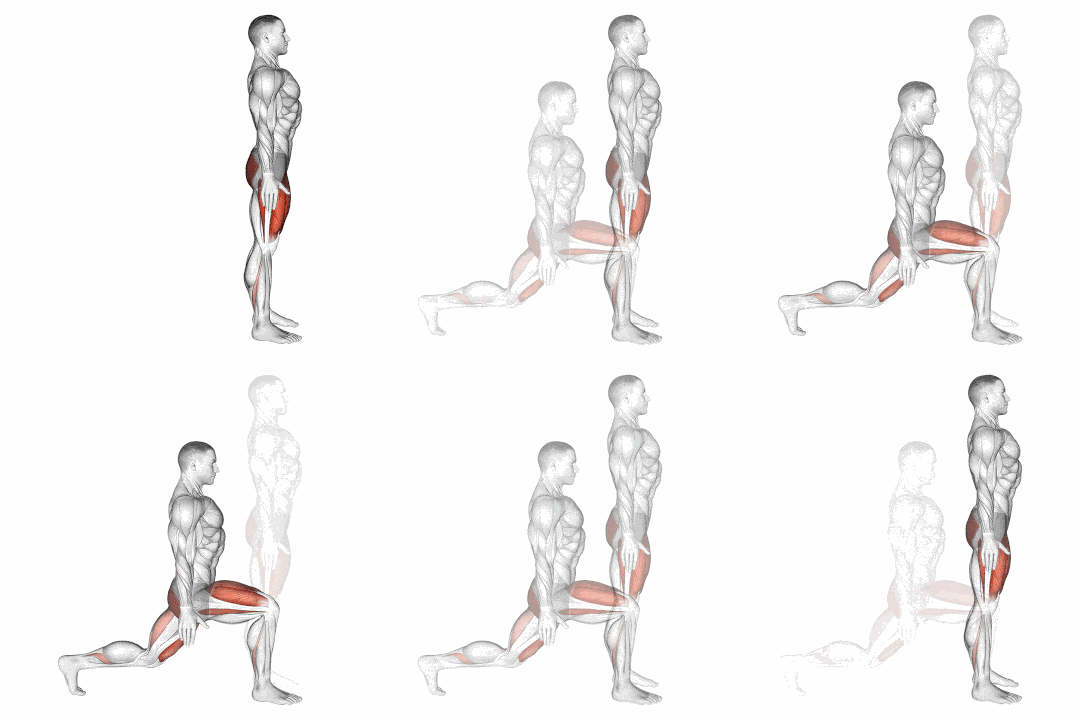
Reverse lunge
A vertical shin and a load shared between both legs make it far gentler on the knee. Build strength there while your ATG range develops.
How to program it
Three protocols by goal. Pick one per cycle and aim for progression on load or distance.
| Goal | Sets × distance | Load | Rest |
|---|---|---|---|
| Knee prehab | 3 × 8-10 per side, 3 s down | Bodyweight | 60-90 s |
| Strength | 4 × 5-8 per side | Dumbbells or barbell, RPE 8 | 2-3 min |
| Mobility work | 2 × 5 per side, 3 s pause at the bottom | Bodyweight | 60 s |
ATG Split Squat FAQ
Isn't letting the knee travel past the toes dangerous?
No. Your knees pass your toes every time you walk downstairs or stand up off the floor. Forward knee travel does raise the demand on the joint, which is exactly why it builds resilient knees when the load climbs gradually. Start elevated at bodyweight, progress slowly, and deep flexion becomes a strength instead of a fear.
ATG split squat or Bulgarian split squat?
Different tools. The Bulgarian is the loading exercise: rear foot elevated, big glute and quad stimulus, heavy dumbbells. The ATG version is the range exercise: maximal knee flexion, ankle mobility and a rear hip stretch. Most lifters benefit from both, the Bulgarian for size and strength, the ATG for knees that tolerate everything else.
How fast should I lower the elevation?
When you can do 3 × 8 per side, slow and pain-free, at a given height, drop it by roughly 5 cm. For most people that means a few weeks per step and one to three months from box height to the floor. Only then add dumbbells. Rushing the elevation down is the fastest way to turn a knee-building exercise into a knee irritant.