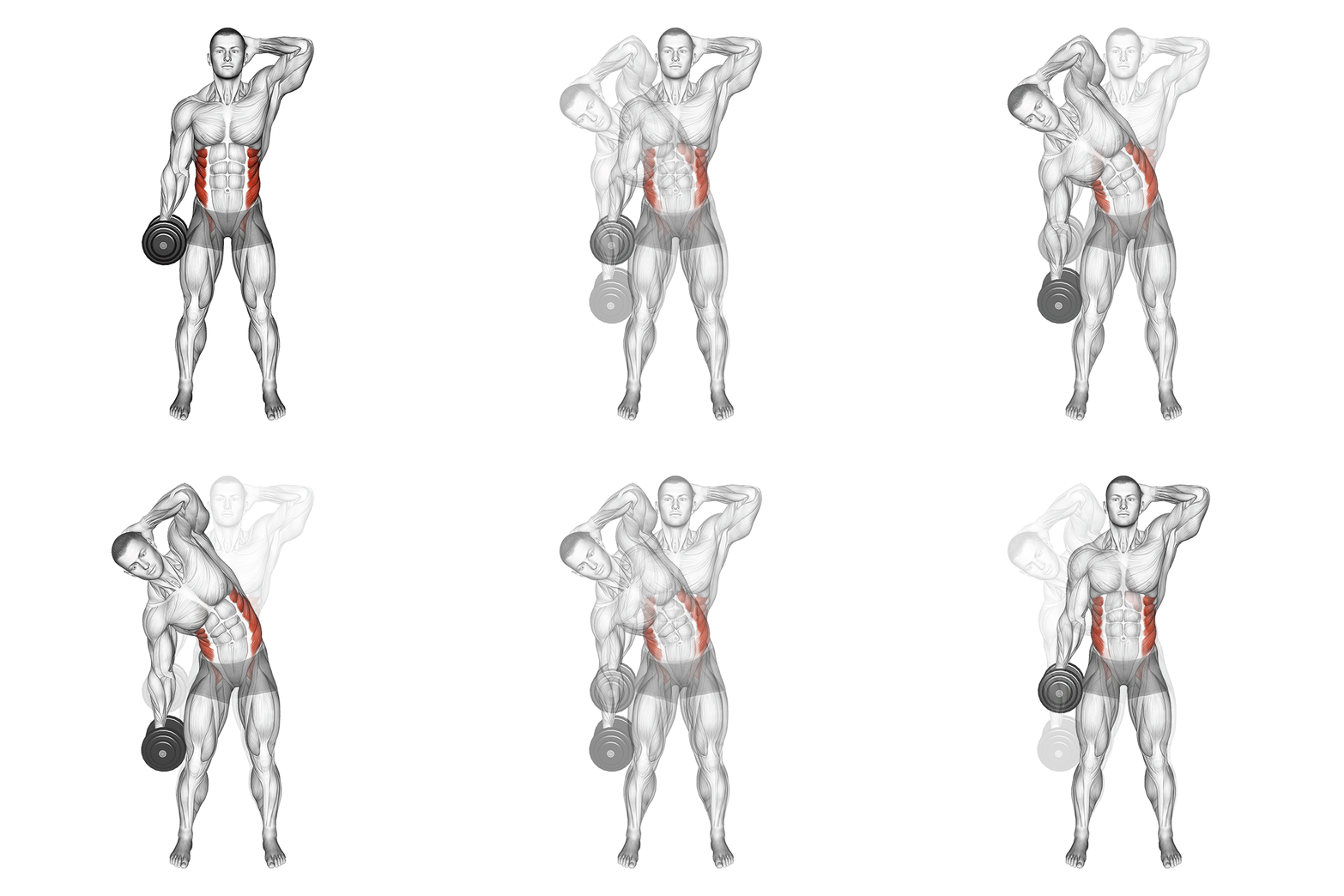
What is the dumbbell side bend?
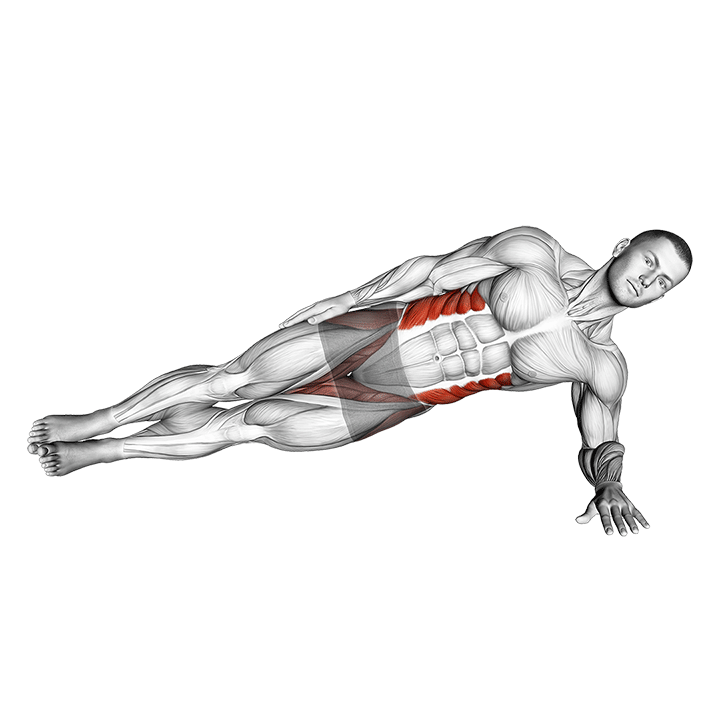
The dumbbell side bend is a standing lateral-flexion exercise: holding one dumbbell in one hand, you lean sideways toward it under control, then the obliques and quadratus lumborum on the far side pull you back upright and slightly beyond. The single-dumbbell detail is the whole exercise: the working muscles sit on the side opposite the load, and holding a dumbbell in each hand cancels most of the resistance. Compared with anti-lateral-flexion staples like the side plank or the suitcase carry, the side bend takes the same muscles through a moving range instead of a static hold. It suits lifters who want direct oblique work they can load and progress.
How to do the dumbbell side bend
- 1
One dumbbell, not two
Take a moderate dumbbell in one hand, arm hanging straight, and stand with feet hip width. Put the free hand on your hip or temple; the working muscles are on the side opposite the weight, so leave that side empty.
- 2
Freeze the lower body
Soften the knees, squeeze the glutes lightly and keep the hips level, pointing straight ahead. From here, everything that moves is above the waist; if the pelvis joins in, the obliques are being robbed.
- 3
Slide down the seam
Bend sideways over 2-3 seconds, the dumbbell tracing the outside seam of your shorts, until you feel a clear stretch along the opposite flank. No forward lean, no rotation: the shoulders stay stacked over the hips in one plane.
- 4
Pull past vertical
Let the far-side obliques drag you back upright, then keep going a few degrees toward the free side before lowering again. Finish all reps on one side, swap hands, and match the work exactly.
Pro tip
Picture yourself sliding between two panes of glass, one against your chest and one against your back. The instant the dumbbell drifts in front of your thigh, lateral flexion has turned into a blend of rotation and forward lean, and the lower back picks up the bill. If you cannot keep the panes intact, the dumbbell is too heavy.
Common mistakes
A dumbbell in each hand.
The second dumbbell acts as a counterbalance and cancels most of what the first one was loading; what remains is mostly a grip exercise. One weight, all the reps on one side, then switch hands.
The hip sneaking sideways.
Pushing the pelvis out to the side manufactures fake range while the spine barely flexes. Keep the hips frozen over your feet and accept the shorter, honest arc; it is the obliques’ arc, not the hip’s.
Huge dumbbell, ten degrees of movement.
Lateral flexion has a modest range to begin with; loading up and waving through a sliver of it leaves nothing for the muscles to adapt to. Choose a load that allows a full stretch and a finish past vertical on every rep.
Rocking side to side.
Turning the set into a metronome lets momentum carry the middle of each rep, exactly where the load should be working. Hold a 2 seconds down, 1 second up cadence and pause briefly at both ends.
Variations and progressions
Easier
Bodyweight side bend
Same pattern with the free arm reached overhead to lengthen the lever. It teaches the pure frontal-plane groove and doubles as a lateral-chain stretch; once 15 slow reps feel crisp, pick up the dumbbell.
Harder
Side bend on a 45-degree bench
Lie sideways on a back-extension bench, hips on the pad, torso hanging free, a plate hugged to your chest. The range roughly doubles and gravity loads the whole arc, which makes it one of the hardest direct oblique exercises available.
Alternative
Suitcase carry
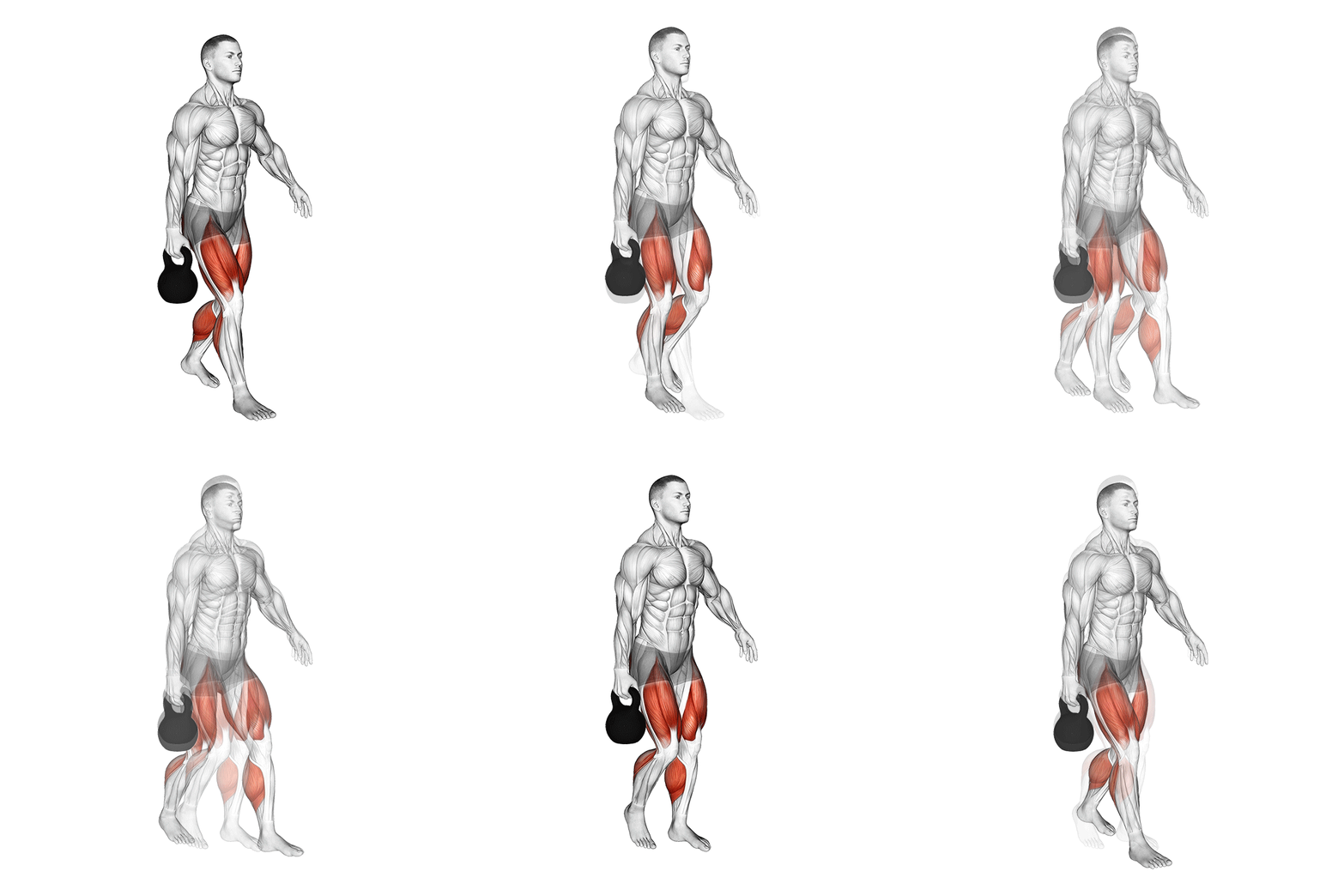
The same muscles with the opposite job: they resist bending instead of producing it while you walk with one heavy load. The better pick on days your spine wants stability work, or if loaded lateral flexion is not tolerated yet.
How to program it
Three protocols by goal. Pick one per cycle and aim for progression on load or distance.
| Goal | Sets × distance | Load | Rest |
|---|---|---|---|
| Hypertrophy | 3 × 12-15 per side | Moderate, RPE 8 | 60 s |
| Strength through range | 3 × 8-10 per side, 2 s down | Heavy but full range | 90 s |
| High-rep endurance | 2 × 20 per side | Light, continuous tempo | 45 s |
Dumbbell Side Bend FAQ
Will side bends slim my waist or burn love handles?
No. Fat loss happens through a calorie deficit and comes off the body in an order you do not get to choose; no exercise burns the fat sitting on top of the muscle it trains. Side bends strengthen and build the obliques underneath. If a leaner waist is the goal, the side bend is fine to keep, but the deficit does the slimming.
Will they make my waist thicker?
Only slowly, and only with serious progressive loading. Obliques grow like any muscle, but a few moderate sets per week will firm them long before they add visible width. If you are genuinely cautious about waist size, keep the loads moderate and lean on anti-lateral-flexion work like carries and side planks, which build stiffness with less direct growth stimulus.
Which side actually works during the rep?
The side opposite the dumbbell. On the way down it lengthens under control; on the way up it contracts to pull you upright. That is why the exercise is done one side at a time, and why holding the weight on the side you want to feel means you have it backwards. Dumbbell in the right hand trains the left obliques, then you swap.
Are weighted side bends bad for your back?
Loaded lateral flexion is a normal human movement, and a healthy spine adapts to it the way it adapts to squats or deadlifts: through gradual, controlled exposure. Problems come from jerky reps, extreme loads and rotation sneaking in. Start light, move slowly, keep the plane pure. If you have current low-back pain, begin with isometric options like the suitcase carry and add bending range later.