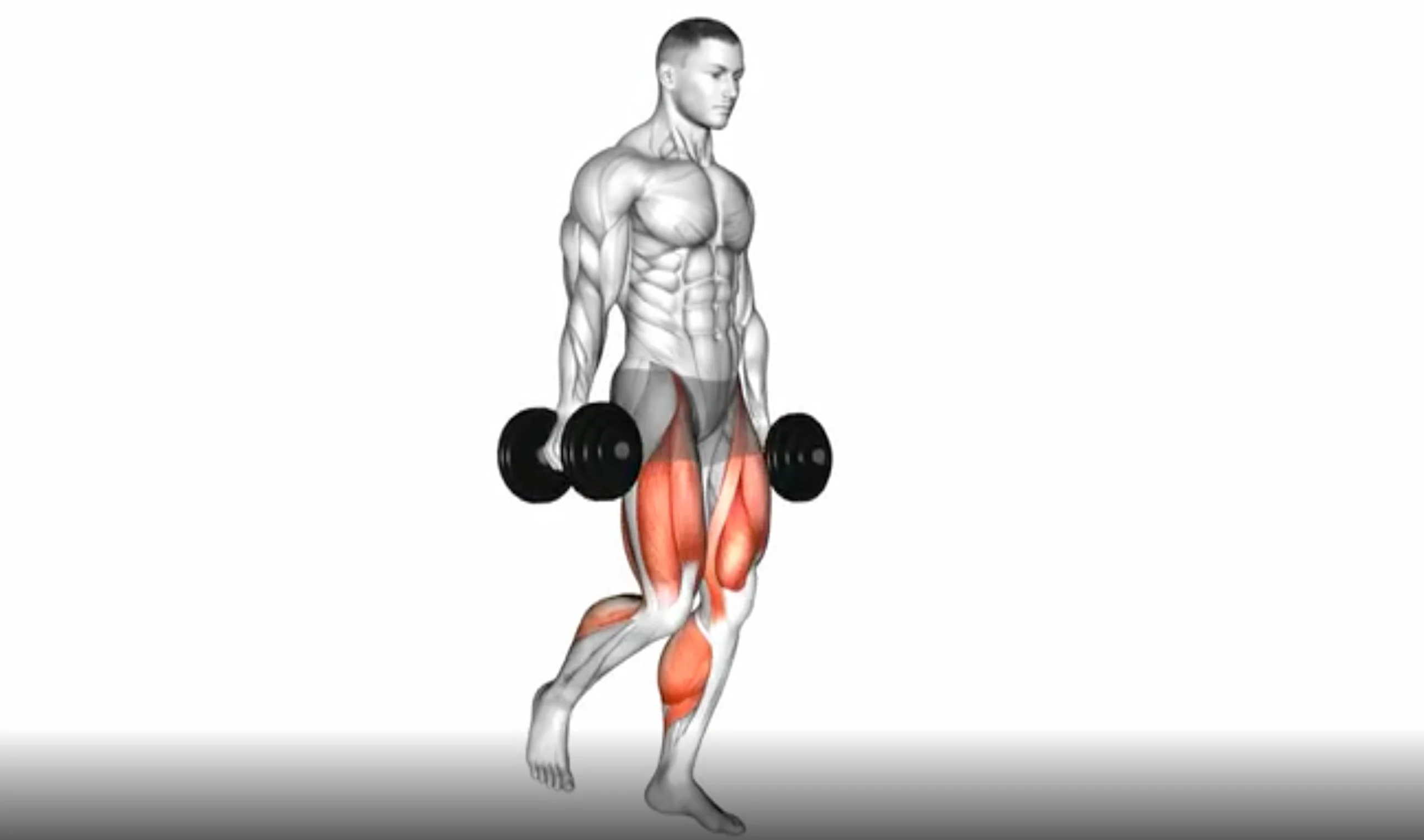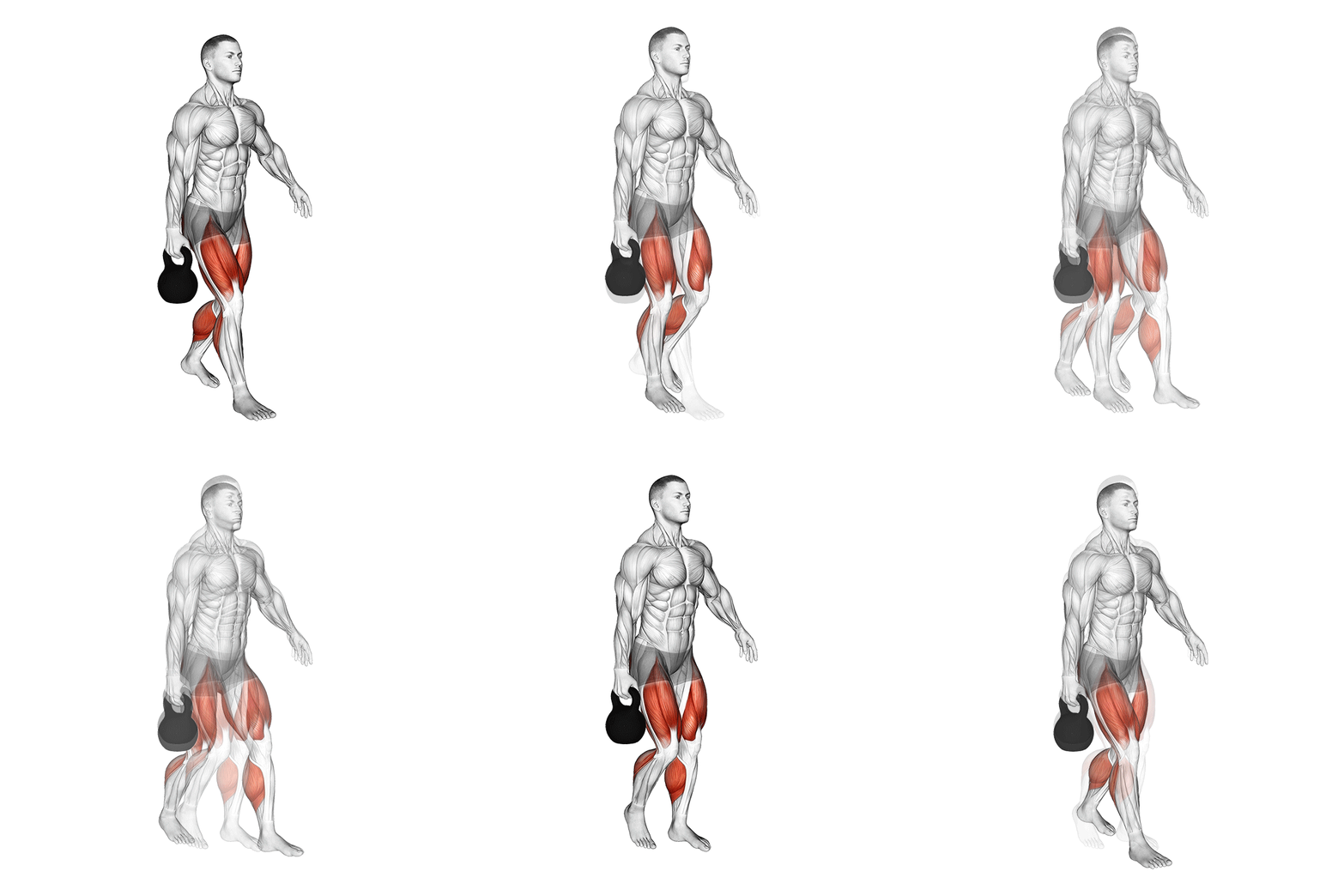
What is the suitcase carry?
The suitcase carry is a farmers carry with half the luggage: one heavy dumbbell, kettlebell or farmers handle in one hand, carried for distance while you walk perfectly upright. The load pulls you sideways on every step, so the obliques and quadratus lumborum on the opposite side fire the whole time to stop you tipping: anti-lateral-flexion core training with built-in honesty, because any lean is visible from across the gym. Grip, traps and the glute med of each stance leg all get paid too. For hybrid athletes it doubles as single-leg stability work that transfers straight to running posture.
How to do the suitcase carry
- 1
Deadlift it up, never fish for it
Stand beside the dumbbell or kettlebell, hinge down with a flat back, grip the centre of the handle and stand up tall. The pick-up and the put-down are reps too: give them the same flat back.
- 2
Stack your frame before the first step
Shoulders level and pulled back, ribs stacked over the pelvis, loaded shoulder packed down rather than sagging or shrugging. The free arm hangs quietly at your side instead of winging out as a counterweight.
- 3
Walk like the load isn't there
Short, even steps, eyes on the horizon, hips level with every stride. Breathe in short cycles behind a braced trunk; a held breath runs out long before 40 metres does.
- 4
Match the sides exactly
Cover your set distance, hinge to put the weight down, switch hands, and walk the same distance back. Equal metres per hand, every session: carries are where imbalances get fixed, not fed.
Pro tip
The pass-fail test: someone walking behind you should not be able to tell which hand holds the weight. Film one set from behind; the first frame where your shirt seam bends sideways or your belt line tilts is where the set really ended.
Common mistakes
Leaning away from the load.
Overcorrecting into a side-bend toward the free side feels safer but is just lateral flexion in the other direction. The target is plumb vertical: if you cannot find it, the implement is too heavy today.
Letting the shoulder climb to the ear.
A creeping shrug wastes the traps and pulls your whole posture off line. Pack the loaded shoulder back and down and think of the arm as a hook: the hand grips hard, everything above it stays long.
Carrying a weight you could stroll with.
If you can chat through 40 metres, the obliques never got the memo. The load should actively try to fold you sideways; add kilos before you add distance.
Racing the distance with long strides.
Speed and long steps hide the wobble this exercise exists to fix. Shorter steps, calmer pace: every footfall is a snapshot of single-leg control, and momentum is the enemy of all of them.
Variations and progressions
Easier
Farmers carry
A weight in each hand balances the pull, so posture and grip can develop before the anti-lean challenge arrives. The natural first chapter of carry training.
Harder
Single-arm overhead carry
Press the same load overhead and walk: the lever gets dramatically longer and shoulder stability joins the obliques on the payroll. Earn it with strict suitcase work first.
Alternative
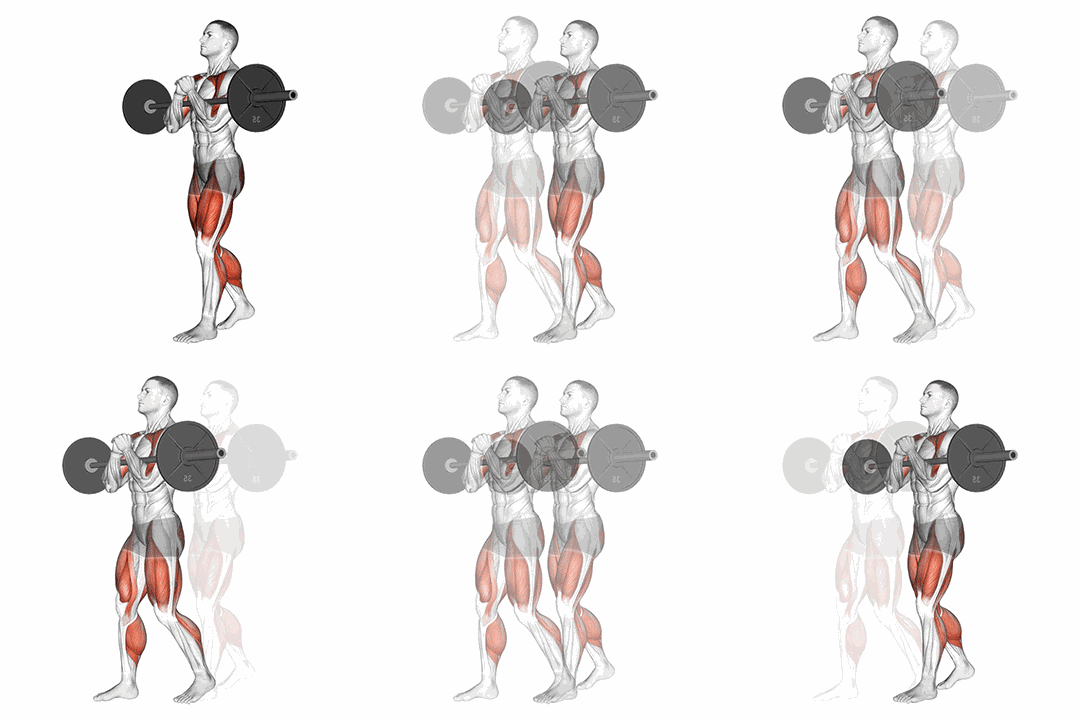
Zercher carry
A barbell cradled in the crooks of the elbows swaps the sideways fight for a front-loaded one: upper back and anti-extension bracing instead of obliques. Rotate the two across a training block.
How to program it
Three protocols by goal. Pick one per cycle and aim for progression on load or distance.
| Goal | Sets × distance | Load | Rest |
|---|---|---|---|
| Heavy carries | 4 × 20-30 m per side | Work toward half bodyweight in one hand | 90 s |
| Core endurance | 3 × 40-60 m per side | About a third of bodyweight | 60 s |
| Circuit finisher | 2-3 rounds of 30 m per side | Light to moderate | 45-60 s |
Suitcase Carry FAQ
Suitcase carry vs farmers carry: which should I do?
They answer different questions. The farmers carry, with a weight in each hand, lets you move the most total load: the bigger builder of grip, traps and raw work capacity. The suitcase carry halves the load and turns the walk into oblique training, because one side of your trunk must fight the pull the whole way. Most programs benefit from both: farmers for mass and capacity, suitcase for the midline.
How heavy should a suitcase carry be?
Start around a quarter of your bodyweight in one hand and let posture decide from there: the heaviest load you can carry 20-30 metres with level hips and shoulders is the right one. Half your bodyweight in one hand for a clean 20 metres is a strong benchmark worth training toward.
What muscles does the suitcase carry work?
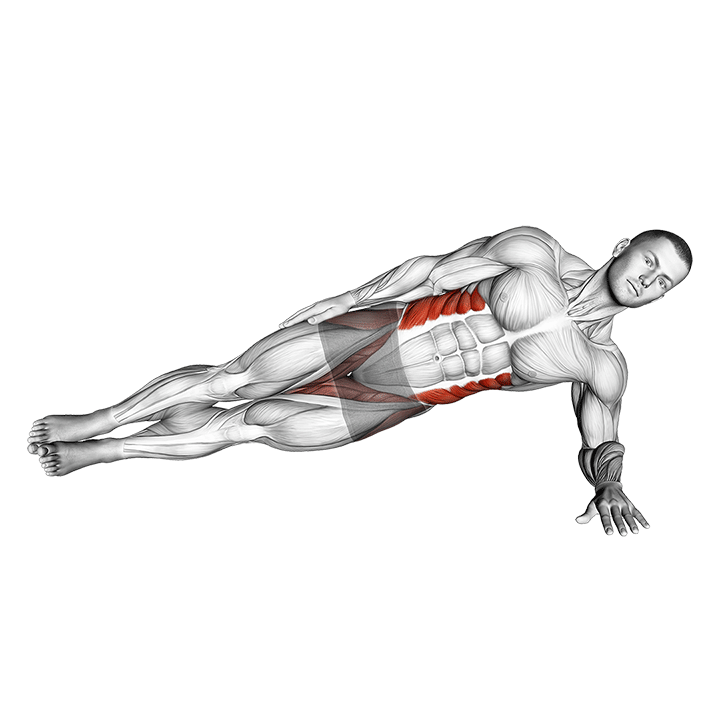
The stars are the obliques and the quadratus lumborum on the side opposite the weight, which resist lateral flexion for the entire walk. Around them: the forearms gripping the handle, the traps holding the shoulder in place, the glute med of each stance leg levelling the pelvis, and the spinal erectors keeping you tall. A whole-trunk exercise disguised as a walk.
How far or how long should I carry?
Work in sets of 20-60 metres per side, or 30-45 seconds if your gym floor is short: turn around rather than stop. The set ends when your posture breaks, not when your grip screams. Two to four quality sets per side, once or twice a week, moves the needle.