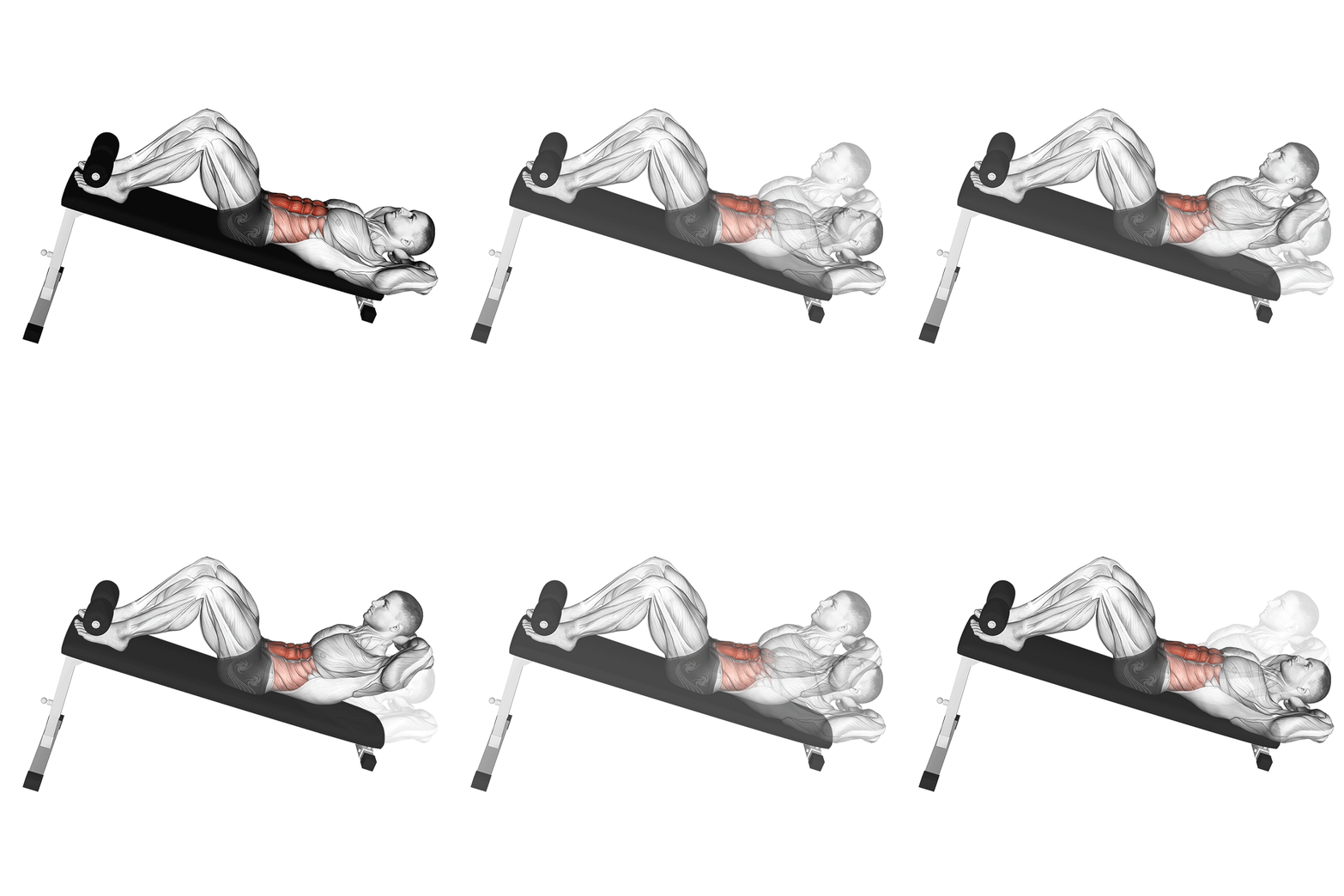
What is the decline crunch?
The decline crunch is a crunch performed head-down on a decline bench, feet or ankles hooked under the pads. The slope changes two things versus a floor crunch: your torso starts below your hips, so the abs fight gravity through a much longer arc, and your hands are free to hold a plate or dumbbell, which turns an endurance drill into a loadable strength exercise. It's still spinal flexion, not a sit-up: you curl the ribs toward the pelvis and stop well short of vertical, keeping the tension on the rectus abdominis instead of handing it to the hip flexors. Ideal for anyone who wants to train abs like any other muscle: weight, reps, progression.
How to do the decline crunch
- 1
Set a modest angle
Start with the bench at 15 to 30 degrees of decline. Hook your feet or ankles firmly under the pads, lie back, and either cross your hands on your chest or hold a plate there.
- 2
Curl, don't sit up
Tuck the chin slightly, exhale and peel the spine off the bench one segment at a time, dragging the ribs toward the pelvis. Think of rolling up, not launching up.
- 3
Stop short of vertical
Rise until the shoulder blades are well clear of the bench and the abs are fully shortened, roughly 30 to 45 degrees up. Going all the way to your knees just hands the work to the hip flexors.
- 4
Lower slower than you rose
Take two to three seconds down, uncoiling the spine onto the bench. Stop just before your upper back fully rests, keep the abs loaded, and start the next rep from there.
Pro tip
If you feel the set in your hip creases instead of your abs, don't push through: flatten the decline one notch and shorten the range. The bench angle is a progression tool like weight on a bar, and most people jump to a slope their abs haven't earned yet.
Common mistakes
Turning it into a sit-up.
Coming all the way up to your knees feels productive but moves the work to the hip flexors and gives the abs a rest at the top. Stop at half height with the abs fully squeezed.
Pulling on the neck.
Hands laced behind the head invite a neck yank on every hard rep. Keep the hands on the chest or hold the plate there; if your neck aches after a set, that's the cue.
Falling back down.
The decline makes the lowering phase the most valuable part, and dropping through it wastes half the exercise. Control two to three seconds down and never fully rest between reps.
Chasing a steep angle too soon.
A steeper bench with bouncing, yanking reps builds less than a moderate one with a strict curl. Progress the angle first, then add weight, and only when every rep stays smooth.
Variations and progressions
Easier
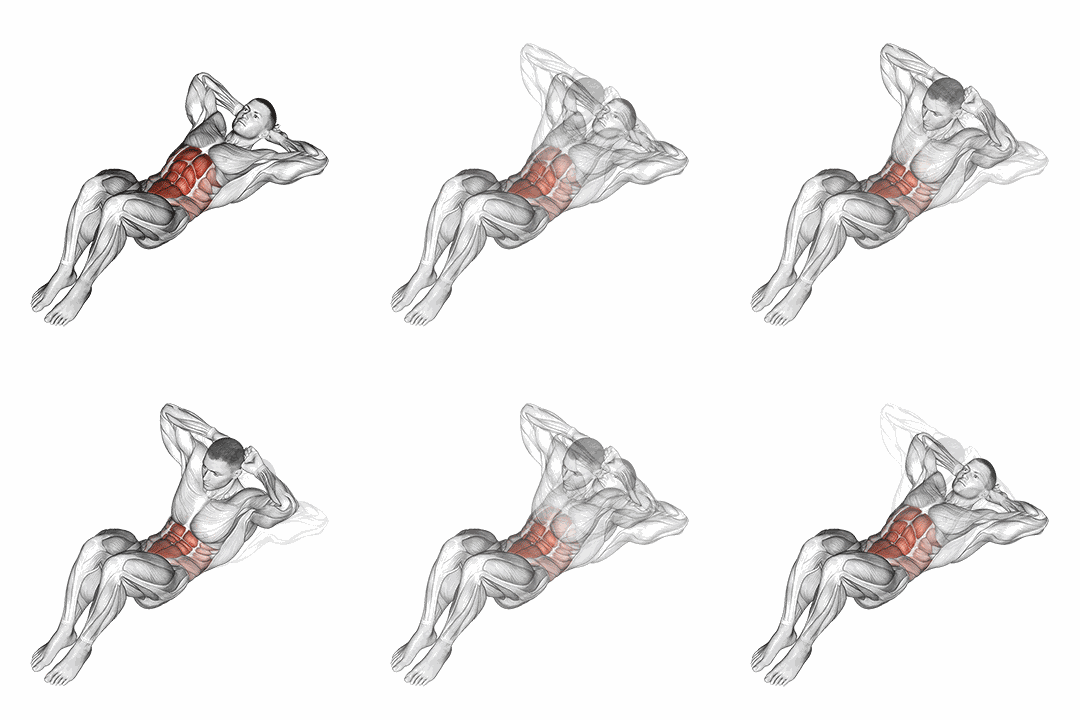
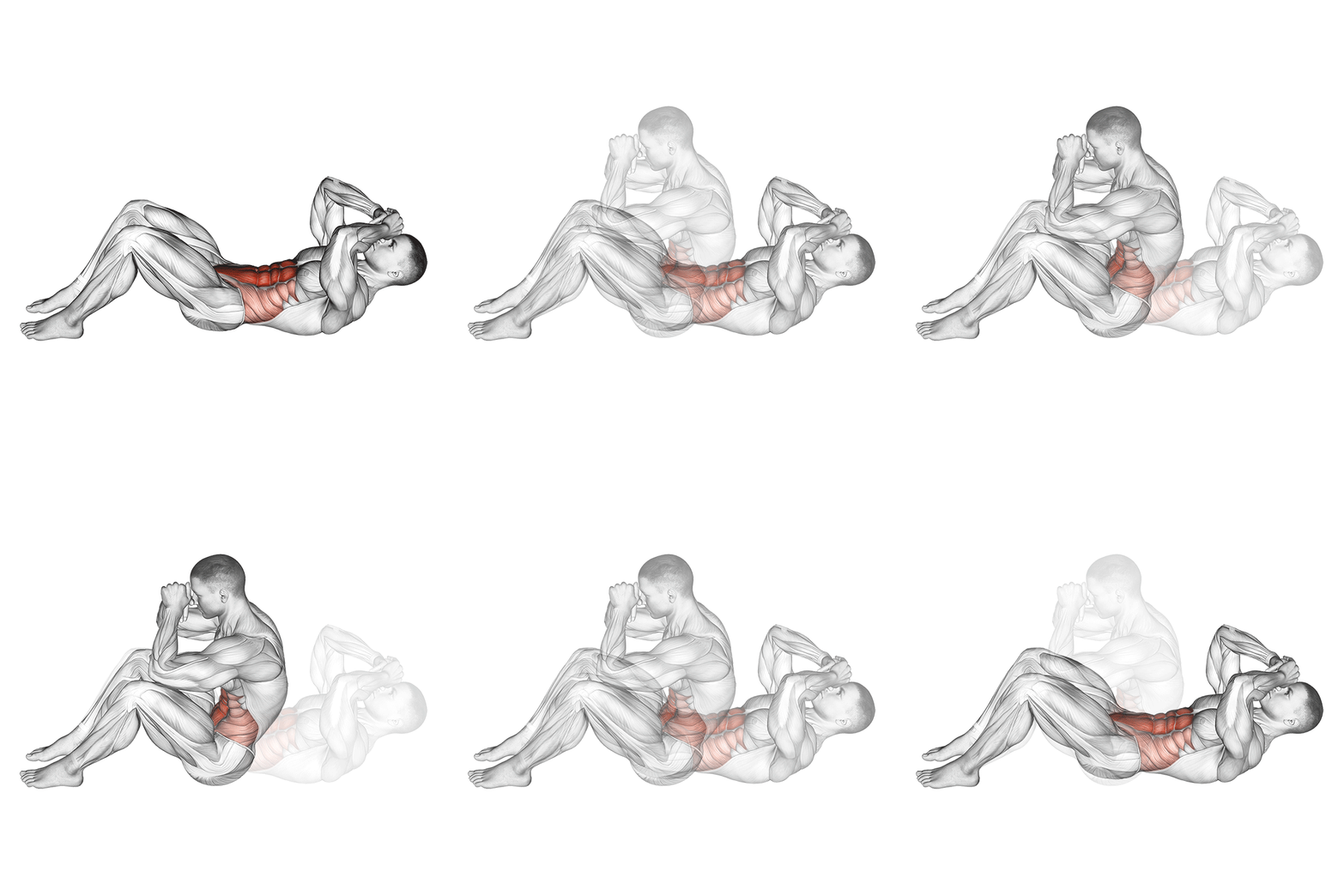
Floor crunch
The same curl without the slope: shorter range, less resistance, nothing to hook into. Master a strict floor crunch before buying the decline version's extra range.
Harder
Weighted decline crunch
Hold a plate on your chest, or for a bigger jump, at arm's length above you or behind your head. Same reps, longer moment arm; progress it like a bench press, a little at a time.
Alternative
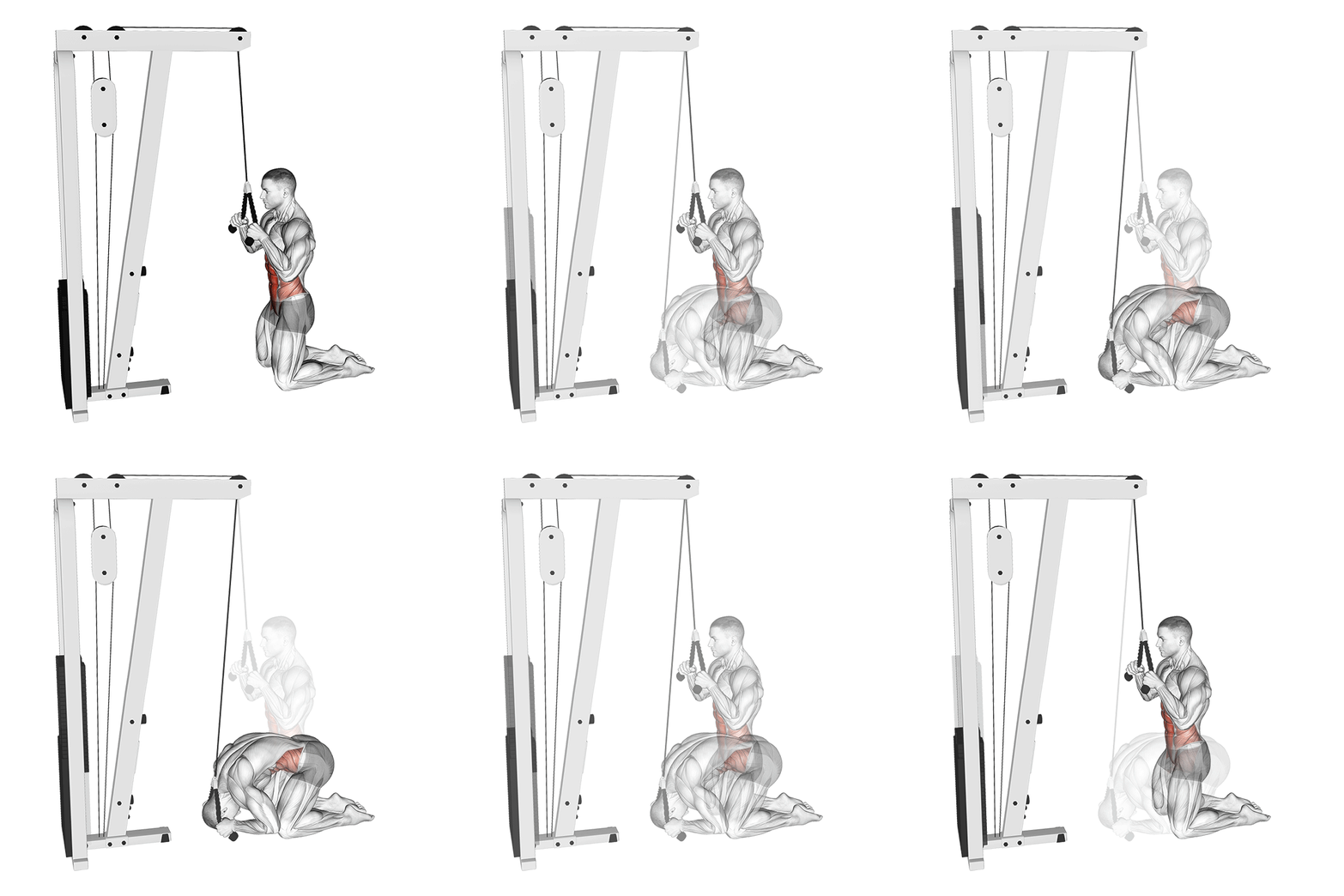
Kneeling cable crunch
The same spinal flexion against a cable stack: constant tension through the whole arc and fine load jumps on the pin. The better pick if decline benches are taken or hooking your feet bothers your knees.
How to program it
Three protocols by goal. Pick one per cycle and aim for progression on load or distance.
| Goal | Sets × distance | Load | Rest |
|---|---|---|---|
| Build the base | 3 × 12-15 | Bodyweight, strict tempo | 60 s |
| Strength / hypertrophy | 4 × 8-12 weighted | Plate of 5-20 kg on the chest | 90 s |
| Endurance finisher | 2 × 15-25 | Bodyweight | 45 s |
Decline Crunch FAQ
Decline crunch vs sit-up: which is better for abs?
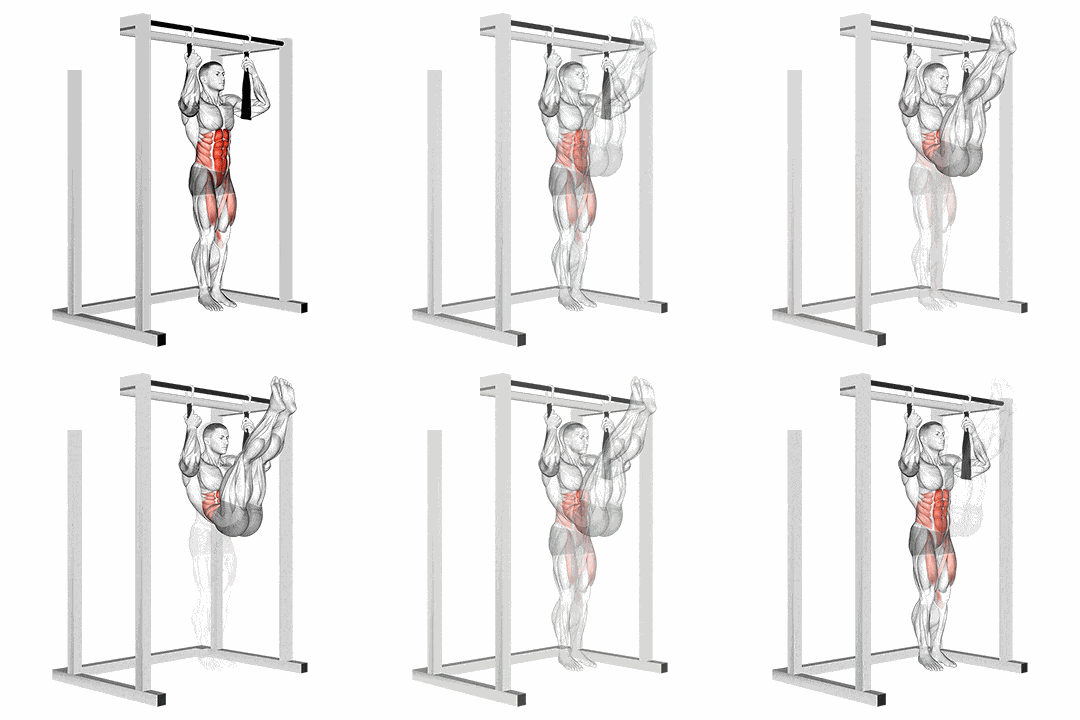
The crunch, if abs are the target. A sit-up continues past the curl into hip flexion, so a big share of the work goes to the hip flexors. The decline crunch stops where the abs stop shortening, then adds gravity and load exactly where the rectus abdominis works. Sit-ups aren't bad; they're just a different, more hip-flexor-heavy exercise.
What decline angle should I use?
Start around 15 to 20 degrees and treat the angle like weight: earn each increase with clean, controlled sets. Most adjustable benches go to 30 or 40 degrees, which is plenty; past that, the pressure in your head and the strain on your feet cost more than the extra resistance is worth. Add a plate instead of more slope.
Will decline crunches burn belly fat?
No exercise spot-reduces fat. Decline crunches build the muscle underneath; visible abs depend on body-fat level, which is set by diet and total training volume. The honest pitch: stronger, thicker abs that show earlier when the fat does come off, plus a trunk that braces better under squats and deadlifts.
When should I add weight?
Once you can do about 15 to 20 strict reps at your working angle with a controlled negative, the abs need load, not more reps. Start with a 5 kg plate hugged to the chest and progress in small jumps; abs recover fast and respond to the same overload rules as everything else.