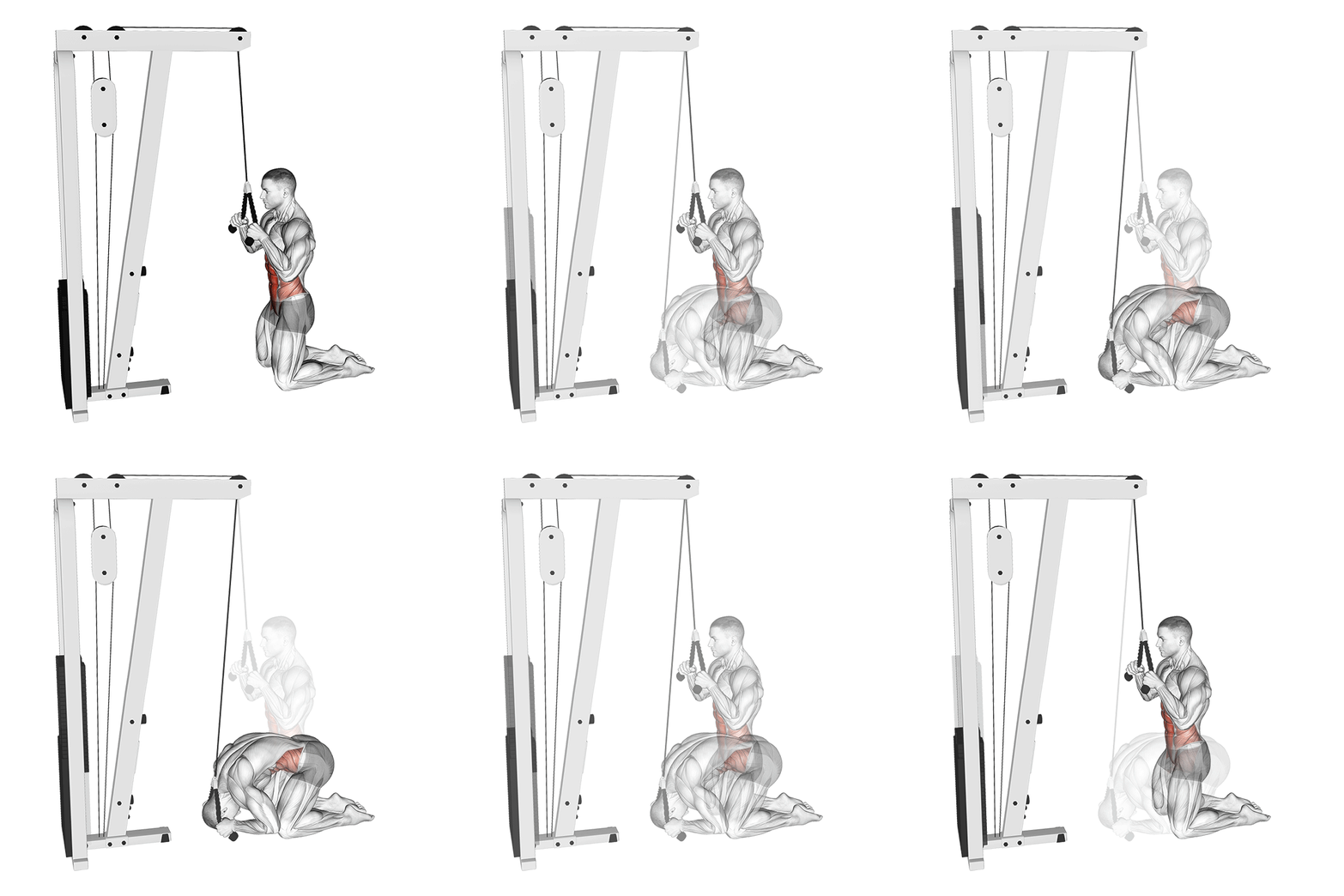
What is the kneeling cable crunch?
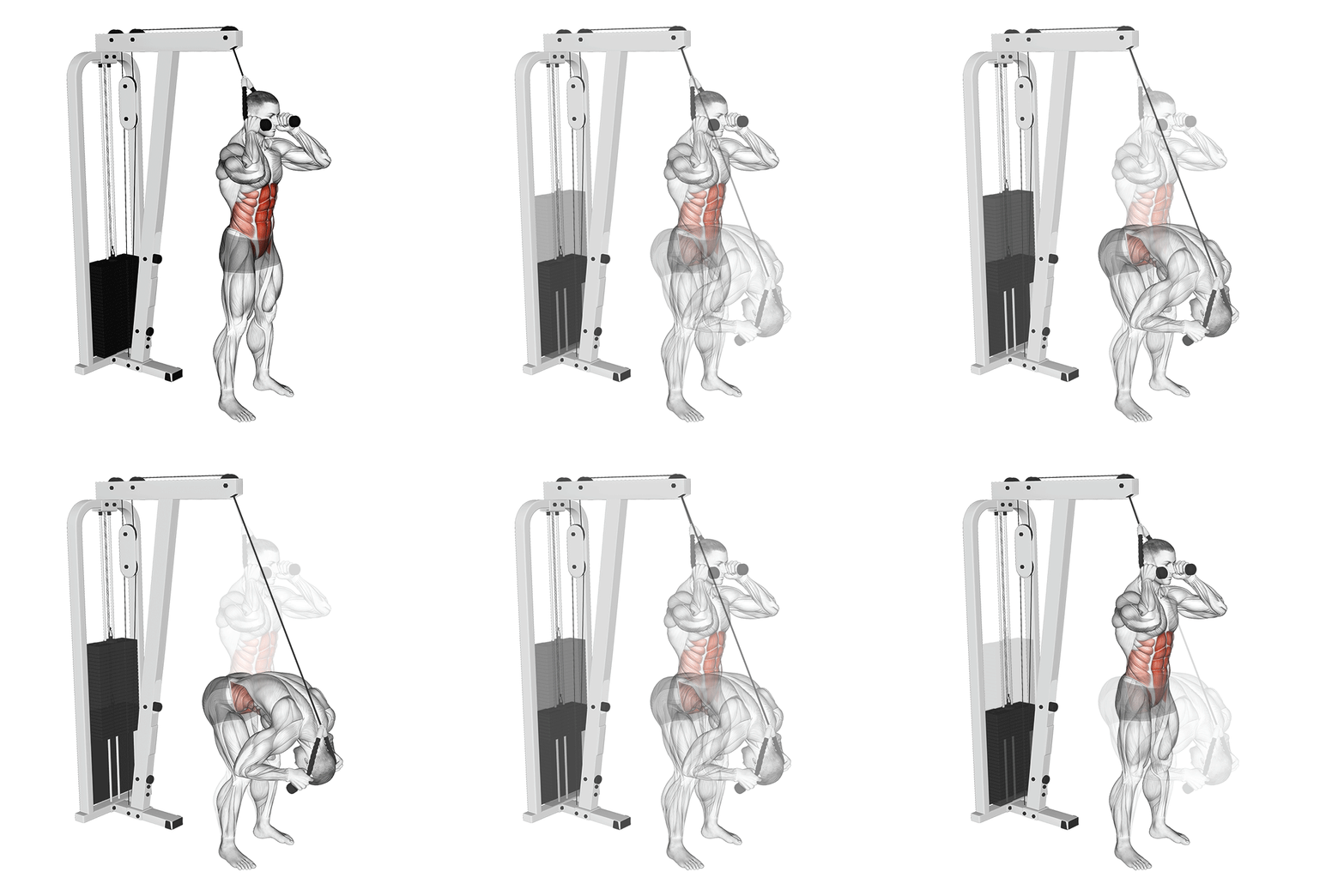
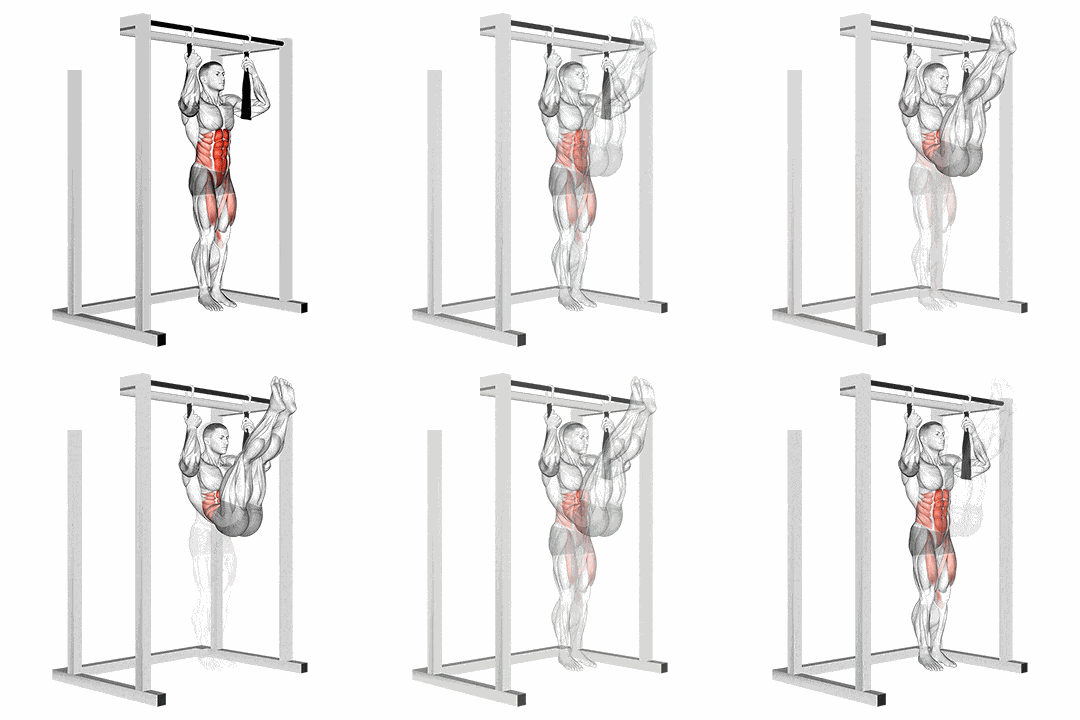
The kneeling cable crunch is a weighted trunk-flexion exercise. Facing a high pulley, you kneel holding a rope on either side of your head and curl your ribcage toward your pelvis against the stack, then uncurl under control. Floor crunches stop progressing once your bodyweight feels easy; here the pin keeps adding resistance, and the rectus abdominis grows like any other muscle under progressive overload. The whole skill is keeping your hips frozen so the movement is spine rounding, not sitting back onto your heels. Choose it over hanging leg raises when grip or shoulder fatigue is the limiter and you want to measure ab strength in kilos.
How to do the kneeling cable crunch
- 1
Kneel a step back from the pulley
Set a rope on the highest pulley. Kneel facing the machine about one step back, hips stacked over your knees, and hold the rope ends against your temples.
- 2
Freeze the hips
Set a slight forward lean from the hips, then lock them there for the whole set. Imagine your pelvis cast in concrete: if it moves, the rep doesn't count.
- 3
Curl ribs to pelvis
Exhale hard and round your spine, driving the elbows toward mid-thigh. The rope follows your head down; your hands never pull it. Squeeze the abs hard at maximum flexion.
- 4
Uncurl vertebra by vertebra
Resist back up over 2 s until your abs reach a light stretch, without letting the stack touch down. Inhale on the way up, then fold into the next rep.
Pro tip
Pick a spot on the floor between your knees and crunch your nose toward it. If your glutes drift back toward your heels instead, the hip flexors have hijacked the set: lighten the stack and start again.
Common mistakes
Sitting back onto the heels.
That's hip flexion: the load slides to the hip flexors and lats while your abs barely shorten. Hips stay stacked over the knees; only the spine moves.
Yanking the rope with the arms.
Pulling down turns it into a stiff-arm pulldown for the lats. Keep your hands anchored beside your head; the elbows just come along for the ride.
Stacking it too heavy.
Past a certain load the range shrinks to a nod of the head. Abs respond to full flexion and a hard squeeze: drop the pin until your ribs genuinely approach your pelvis.
Crunching on a full tank of air.
You can't fully flex a trunk full of air. Exhale hard into the bottom of every rep and feel the extra degrees of flexion appear.
Variations and progressions
Easier
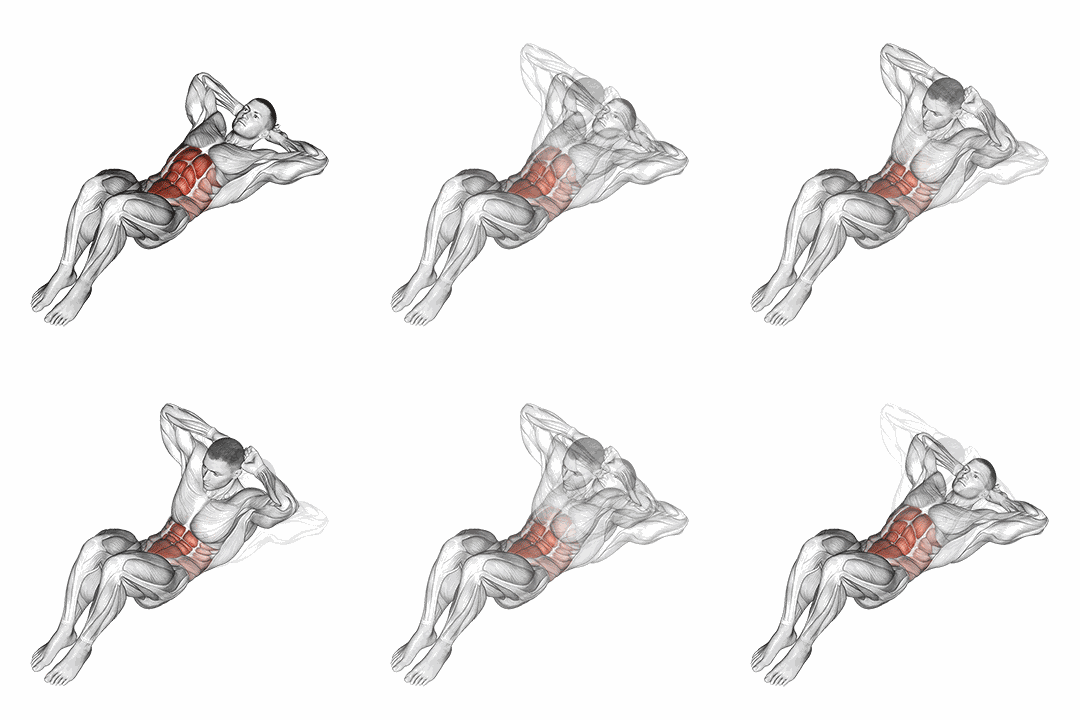
Floor crunch
Learn to peel your spine off the floor segment by segment with no load. Once 20 slow reps feel controlled, the cable version clicks instantly.
Harder
Standing cable crunch
Standing, you lose the kneeling base, so keeping the hips quiet takes far more control and the abs work through a longer arc.
No cable?
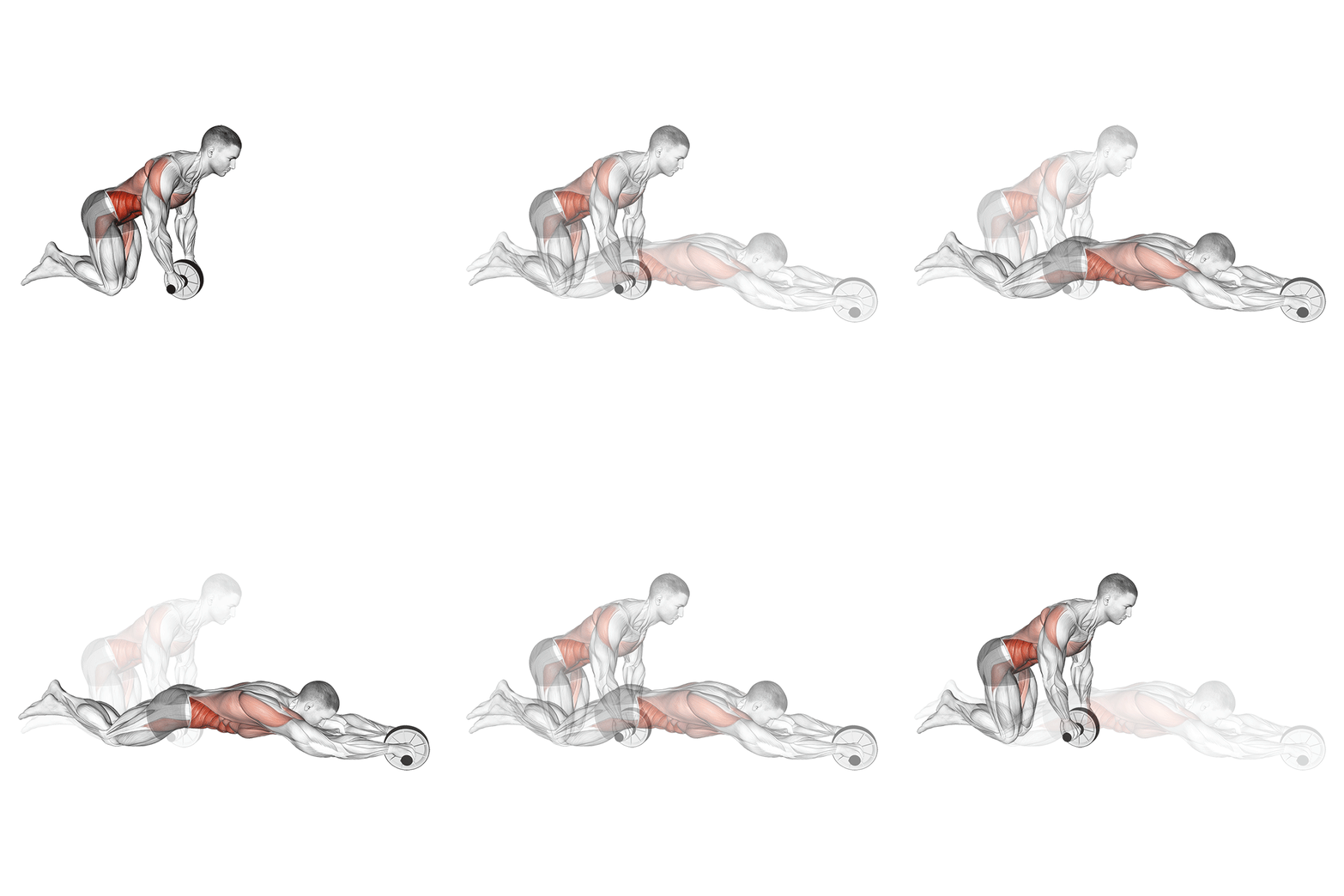
Band crunch or ab wheel
Anchor a band overhead and crunch against it, or flip the logic with an ab wheel, which loads the abs resisting extension instead of producing flexion.
How to program it
Three protocols by goal. Pick one per cycle and aim for progression on load or distance.
| Goal | Sets × distance | Load | Rest |
|---|---|---|---|
| Strength | 4 × 6-8 | Heavy, RPE 8-9 | 2 min |
| Hypertrophy | 4 × 10-12 | RPE 8, full flexion | 90 s |
| Endurance | 3 × 15-20 | Moderate, RPE 7 | 60 s |
Kneeling Cable Crunch FAQ
Will heavy cable crunches make my waist thicker?
They thicken the rectus abdominis, the bricks at the front, which is exactly what makes abs visible at a reasonable body fat. Waist circumference is driven far more by body fat and oblique mass than by the rectus. If a blocky waist worries you, go easy on heavy side-bend work, not on this.
Kneeling or standing cable crunch?
Kneeling first. The kneeling base makes it much easier to lock the hips and isolate spinal flexion, and you can load heavier with less fiddling. Move to standing when you want a longer arc and an extra stability challenge, not as a beginner default.
Is weighted spinal flexion safe for my back?
Flexing the spine is the rectus abdominis doing its job, and healthy backs tolerate loaded flexion well when the weight climbs gradually and the reps stay smooth. Big pin jumps and jerky reps are what cause trouble. If you have a disc history that flexion aggravates, clear it with your physio first.