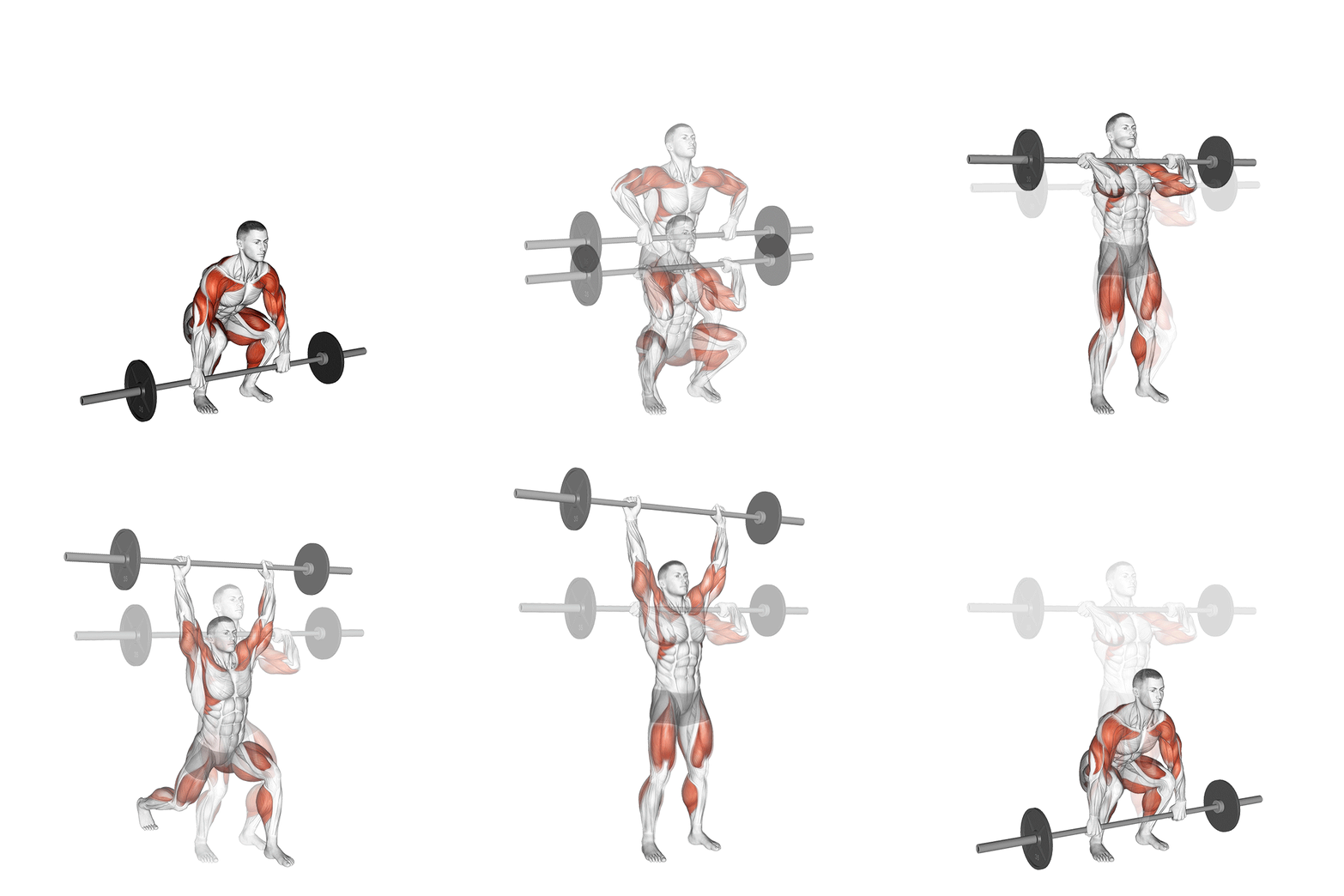
What is the clean and press?
The clean and press pairs two barbell lifts into one: you clean the bar from the floor to your shoulders, then press it strictly overhead, no dip under, no leg drive. That finish is what separates it from the clean and jerk: a jerk uses the legs to throw the bar up and drops under it, so it handles far more weight but demands far more technique. The press version trades load for simplicity and raw pressing strength, which is why it stayed a gym staple after the press left Olympic competition in 1972. It builds hips, traps, shoulders and a trunk that can brace twice in one rep.
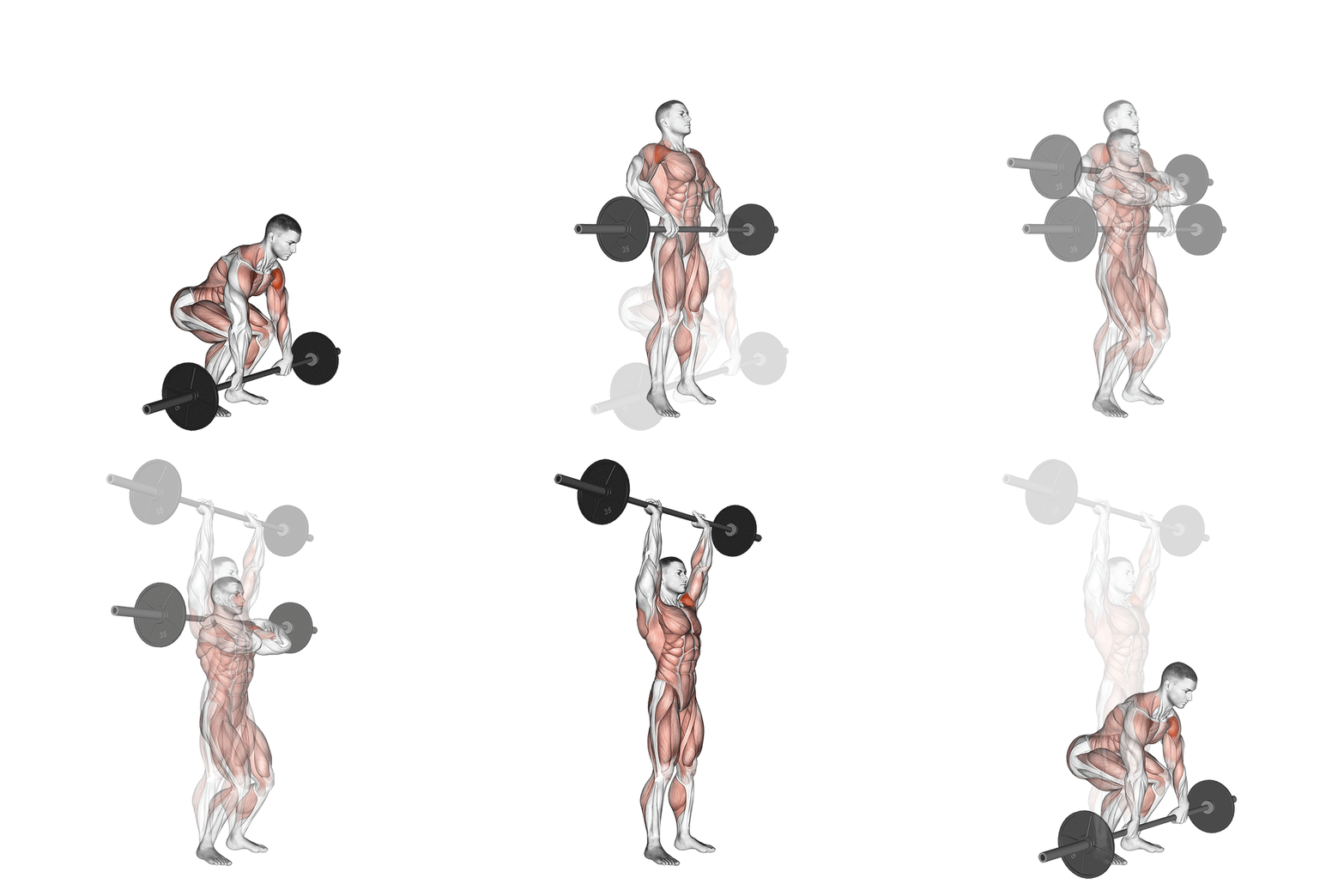
How to do the clean and press
- 1
Set up over the bar
Bar over the middle of your feet, grip just outside the knees, hips above the knees, shoulders over the bar, back flat. Pull the slack out of the bar before anything moves.
- 2
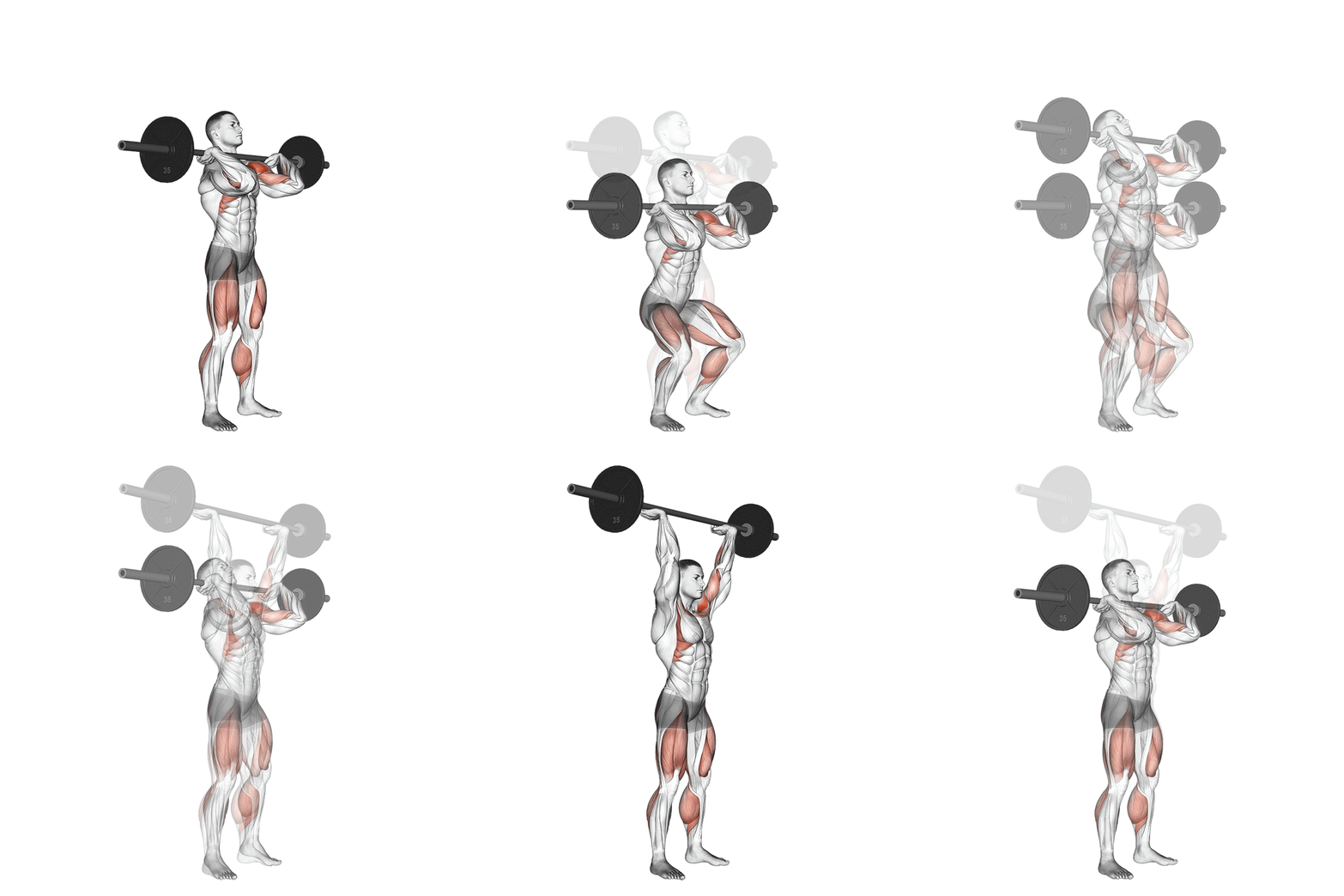
Clean it to your shoulders
Push the floor away, and once the bar passes the knees, extend the hips violently while keeping the bar close. Whip the elbows through and catch it on the front delts, standing tall.
- 3
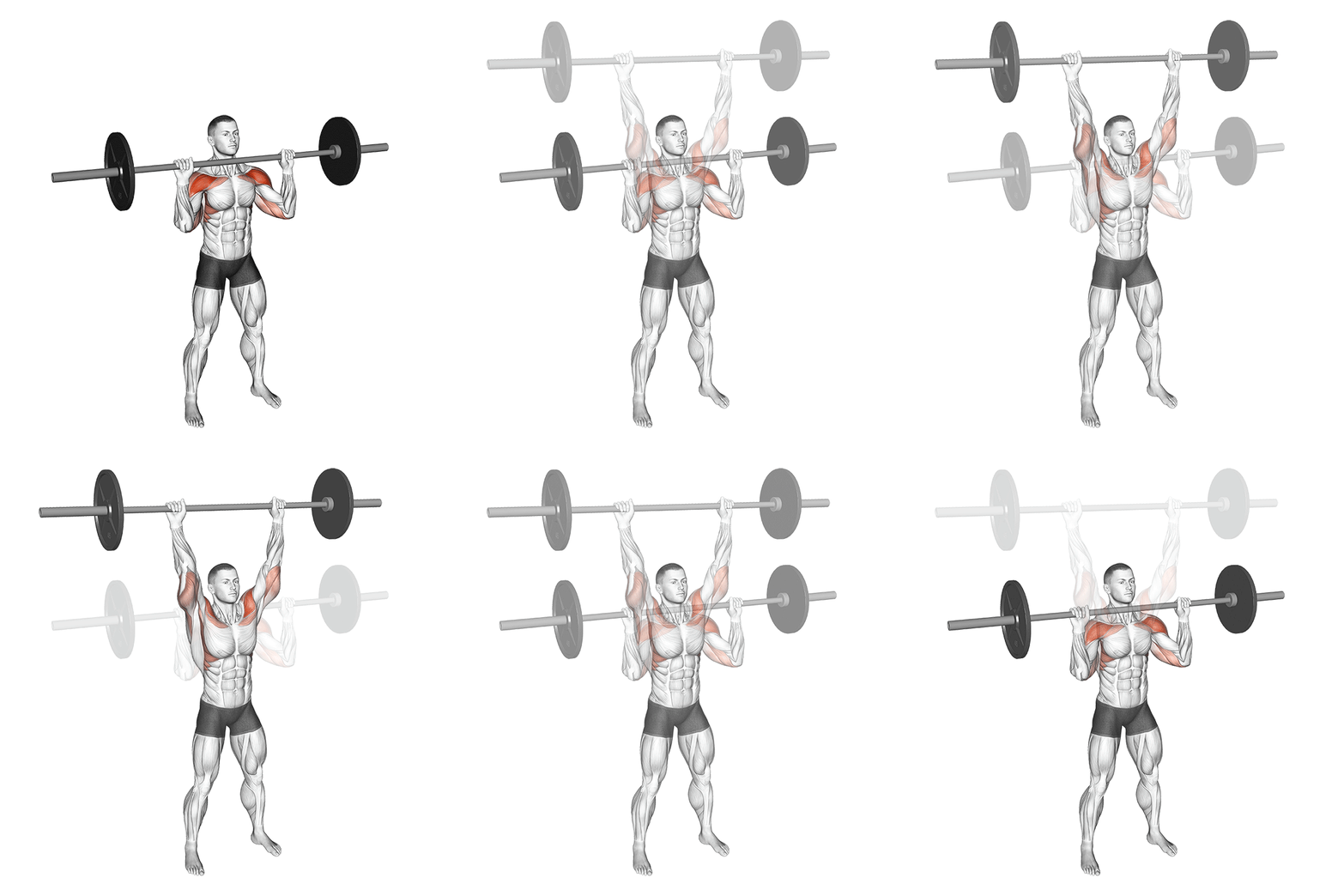
Press strictly overhead
Reset your breath, squeeze the glutes, pull the ribs down. Press the bar in a straight line past your face until the elbows lock out and the bar stacks over your mid-foot.
- 4
Lower and reset
Bring the bar back to the shoulders under control, then down to the thighs and the floor. Rebuild your setup before the next rep; a rushed reset ruins the next clean.
Pro tip
Treat every rep as two separate lifts with a checkpoint in between. Catch the clean, take one full breath in the rack position, re-set your grip and trunk, then press. Lifters who fire the press straight out of a wobbly catch leak kilos through a soft midline.
Common mistakes
Pulling the bar up with the arms.
A clean is a jump with a barbell: the hips make the speed, the arms only steer. If your elbows bend before your hips finish extending, lighten the bar and re-learn the snap.
Looping the press around the chin.
Pressing forward then back wastes force and tips you onto your toes. Pull the chin back, send the bar straight up, and push the head through once the bar clears your forehead.
Turning the press into a backbend.
Leaning back with flared ribs creates a fake incline press and loads the lower spine. Squeeze the glutes hard and keep the ribcage stacked over the pelvis for the whole press.
Letting leg drive sneak in.
A small, unnoticed knee dip turns your strict press into a push press and inflates your numbers. If you want to use the legs, call it a push press and log it as one.
Variations and progressions
Easier
Hang clean and press
Start with the bar at the thighs instead of the floor. You skip the trickiest part of the pull and can focus on the hip snap and a clean rack position.
Harder
Clean and jerk
Replace the press with a dip, a drive and a fast split under the bar. Much more weight overhead, and a genuine technical discipline of its own.
Alternative
Kettlebell clean and press
One bell, one side at a time. Gentler on cranky wrists and shoulders, and a natural fit for circuits and long conditioning sets.
How to program it
Three protocols by goal. Pick one per cycle and aim for progression on load or distance.
| Goal | Sets × distance | Load | Rest |
|---|---|---|---|
| Strength | 5 × 3 | Heavy, RPE 8 | 2-3 min |
| Power + muscle | 4 × 5 | RPE 7 | 2 min |
| Conditioning (EMOM) | EMOM 10 min: 3 reps | Light to moderate, RPE 6 | Rest of the minute |
Clean and Press FAQ
Clean and press or clean and jerk: which should I learn first?
The press version. It has fewer moving parts, builds the overhead strength and rack position the jerk needs anyway, and fails safely: the bar just stops moving. Move to the jerk when you chase maximal overhead loads or want to train the Olympic lifts properly.
Strict press or push press after the clean?
Both are legitimate. The strict press builds raw shoulder and triceps strength and keeps your numbers honest; the push press teaches leg-to-arm power transfer and handles noticeably more weight. Pick one per training block and log them as different lifts, because they are.
Should I clean the bar before every press rep?
Both protocols exist. Cleaning every rep is the classic clean and press: more full-body work, more conditioning, more practice of the pull. Cleaning once and pressing for reps turns it into a shoulder exercise with a hard start. For this lift as written, clean each rep.
How heavy should it be compared with my overhead press?
The press is almost always the limiter: most lifters can clean more than they can press strictly. Expect working weights at or slightly below your strict overhead press numbers, since each press comes after the cost of a clean. If the clean fails first, your technique needs work, not your strength.