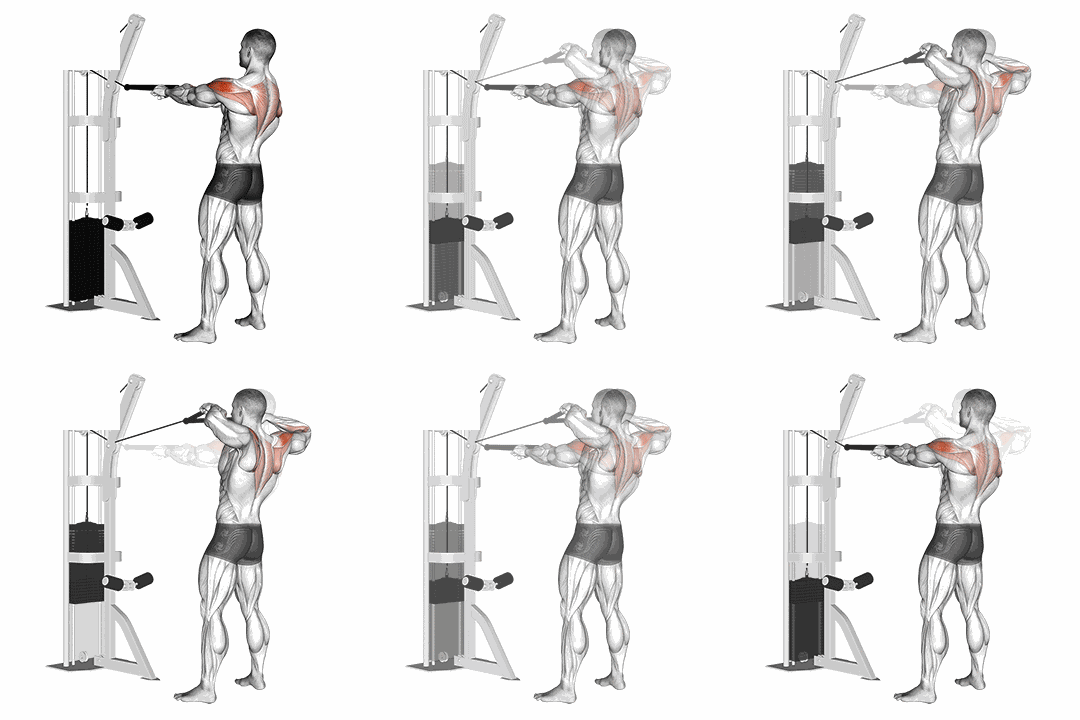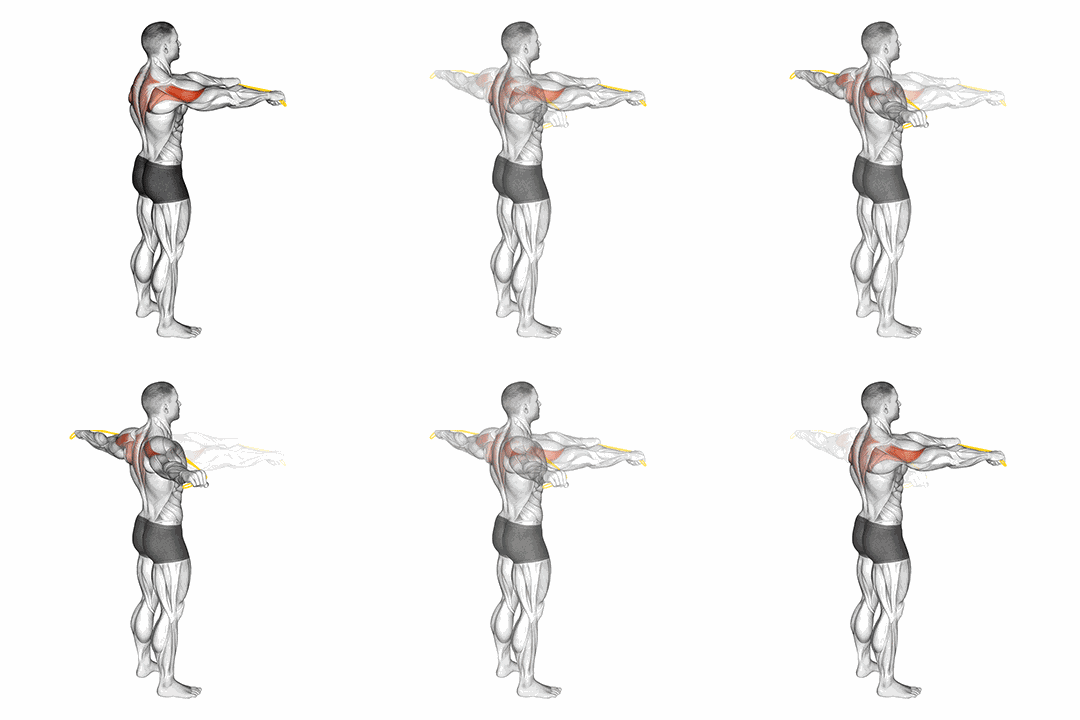
What is the cable y raise?
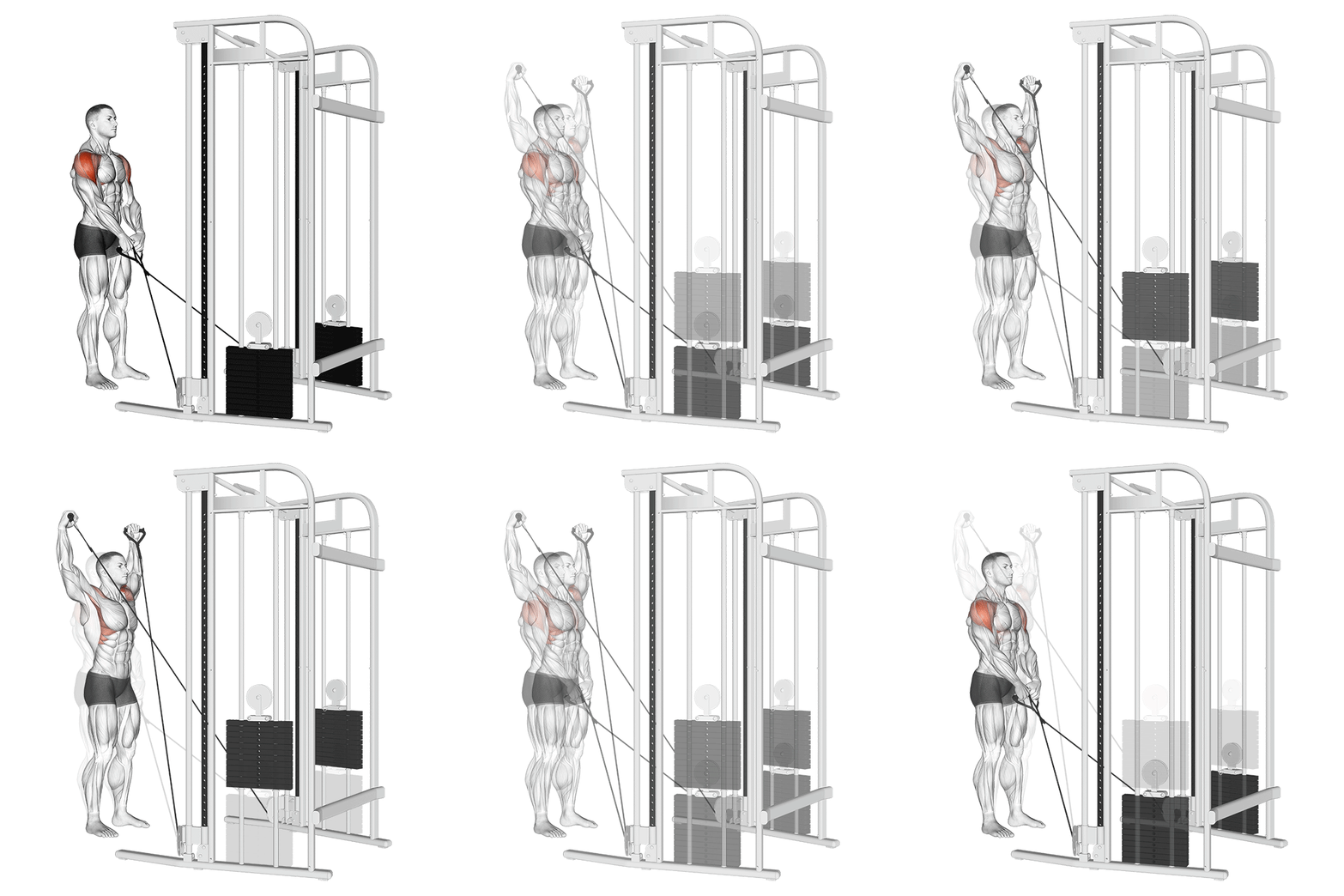
The cable Y raise is a shoulder and shoulder-blade exercise: standing between two low pulleys with the cables crossed, you sweep nearly straight arms up and out until they form a Y overhead. The star of the movement is the lower trapezius, which rotates the shoulder blade upward so your arm can travel overhead safely; the delts and serratus anterior work the whole way. Unlike a standing dumbbell Y raise, which only loads the top of the arc, cables resist from the very first centimetre. It belongs in the plan of anyone who presses overhead, swims, climbs, or sits rounded over a desk all day.
How to do the cable y raise
- 1
Cross the cables
Set both pulleys to the lowest position. Grab the right handle with your left hand and the left handle with your right, then step back until the cables are taut. Soft knees, slight forward lean from the hips.
- 2
Start long and low
Arms hang down and slightly across your body, elbows almost straight, shoulders pulled away from your ears. Brace your core before the first rep.
- 3
Sweep up into the Y
Raise both arms up and out until they form a Y around your head, thumbs to the ceiling, elbows nearly straight. Exhale on the way up and keep your ribs down.
- 4
Resist the way down
Lower over about three seconds along the same diagonal path, back to the crossed start. The stack should land silently; if it slams, you lost the second half of the rep.
Pro tip
At the top of every rep, reach for the two upper corners of the room without shrugging your neck. Those last few degrees of reach are where the lower traps finally do their job; cut them off and the exercise quietly becomes a front raise.
Common mistakes
Loading it like a lateral raise.
The Y raise lives at 2-7 kg per side. Anything heavier recruits momentum and upper traps, the two things you're here to avoid. Progress by adding reps and slowing the lowering, not by jumping plates.
Shrugging into your neck.
When the upper traps take over, the shoulder blade hikes instead of rotating. Keep your shoulders long, away from the ears, and lead the movement with your thumbs.
Stopping at shoulder height.
That's a front raise with extra steps. The lower-trap payoff lives above shoulder height, in the last third of the arc; shorten it and you've trained a different exercise.
Arching the lower back to finish.
Flaring the ribs fakes overhead range your shoulders don't have yet. Brace the trunk, keep the slight forward hinge, and let all the motion happen at the shoulder.
Variations and progressions
Easier
Incline prone Y raise
Chest down on an incline bench with tiny dumbbells, or no weight at all. The support removes every cheat and teaches the pattern before you add cables.
Harder
Single-arm Y raise with pause
One cable at a time with a two-second hold at the top. The pause exposes any shrug, and the offset load forces your trunk to resist side-bending.
Alternative
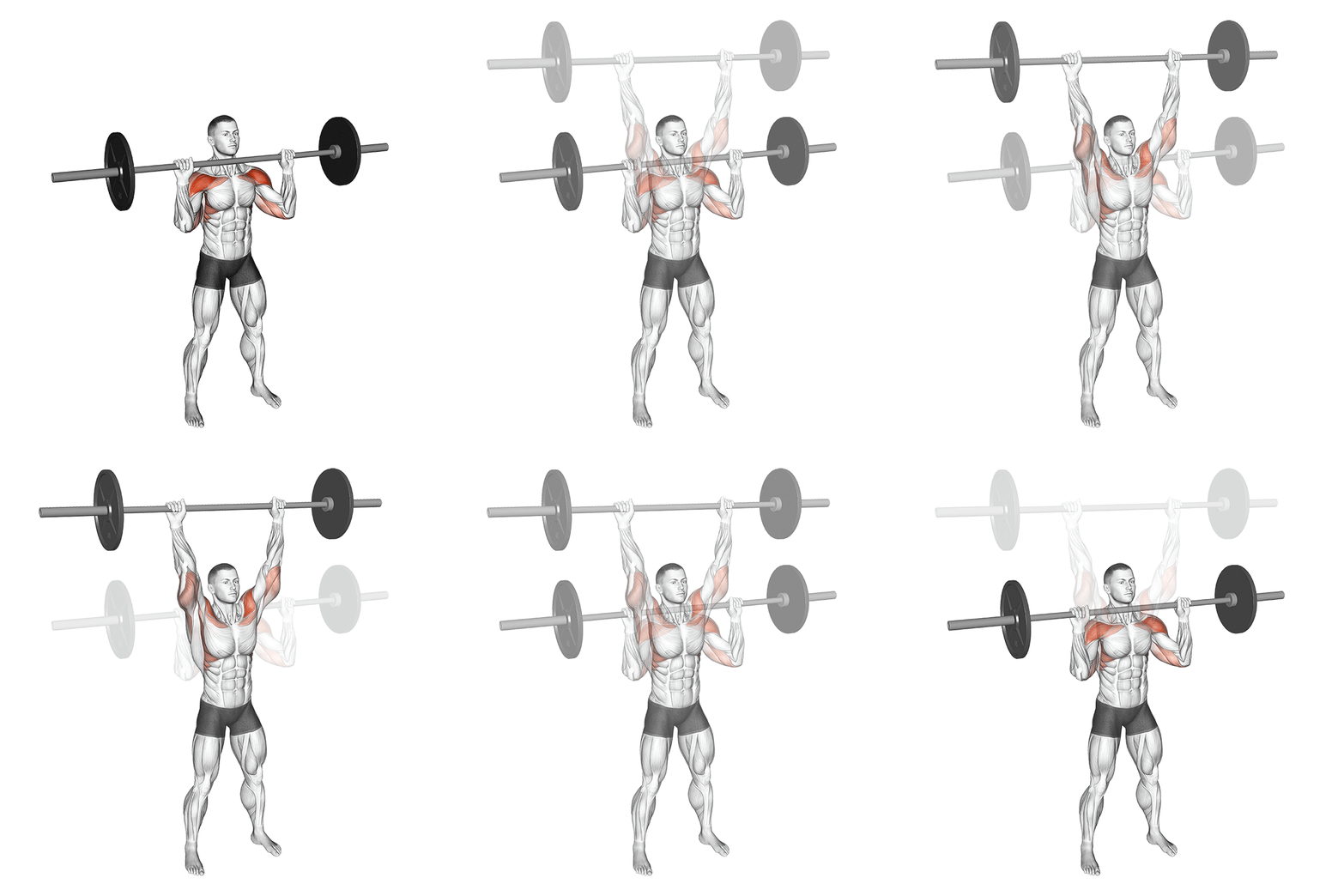
Overhead shrug
Shrugging a light bar held at arm's length overhead trains the same upward-rotation finish with more load, a natural next step for overhead pressers.
How to program it
Three protocols by goal. Pick one per cycle and aim for progression on load or distance.
| Goal | Sets × distance | Load | Rest |
|---|---|---|---|
| Hypertrophy (traps and delts) | 3 × 10-12, 3 s lowering | Light (4-7 kg per side) | 60-90 s |
| Shoulder health | 2-3 × 15 | Very light (2-5 kg per side) | 45-60 s |
| Pre-press activation | 2 × 10-12 | Very light | 30-45 s |
Cable Y Raise FAQ
What muscles does the cable Y raise work?
Primarily the lower trapezius, which upwardly rotates the shoulder blade, together with the delts through the whole arc and the serratus anterior assisting the rotation. It's one of the few standing exercises that bias the lower traps rather than the upper.
Why cross the cables?
Crossing lines the pull up with the diagonal path of each arm, so resistance stays smooth from the very bottom of the rep, and the handles travel without colliding. Uncrossed works too, but the start of each rep goes slack.
Cable or dumbbell Y raise?
Standing with dumbbells, gravity only loads the top of the arc, so the first half of each rep is nearly free. Cables resist the entire path, and the prone incline version with dumbbells is the middle ground. When you have pulleys, use the pulleys.
Can Y raises fix my shoulder pain when pressing overhead?
They strengthen the upward rotators that many painful shoulders lack, and plenty of lifters press more comfortably after a few weeks of them. But an exercise isn't a diagnosis: if pain is sharp or sticks around, get assessed before you keep loading.