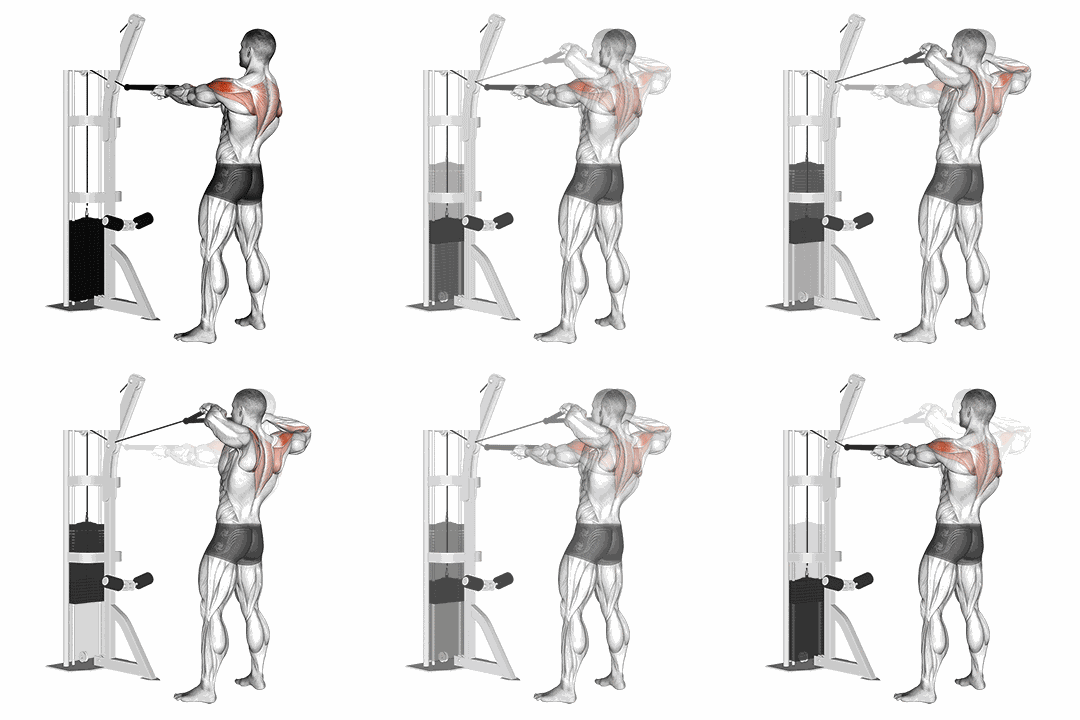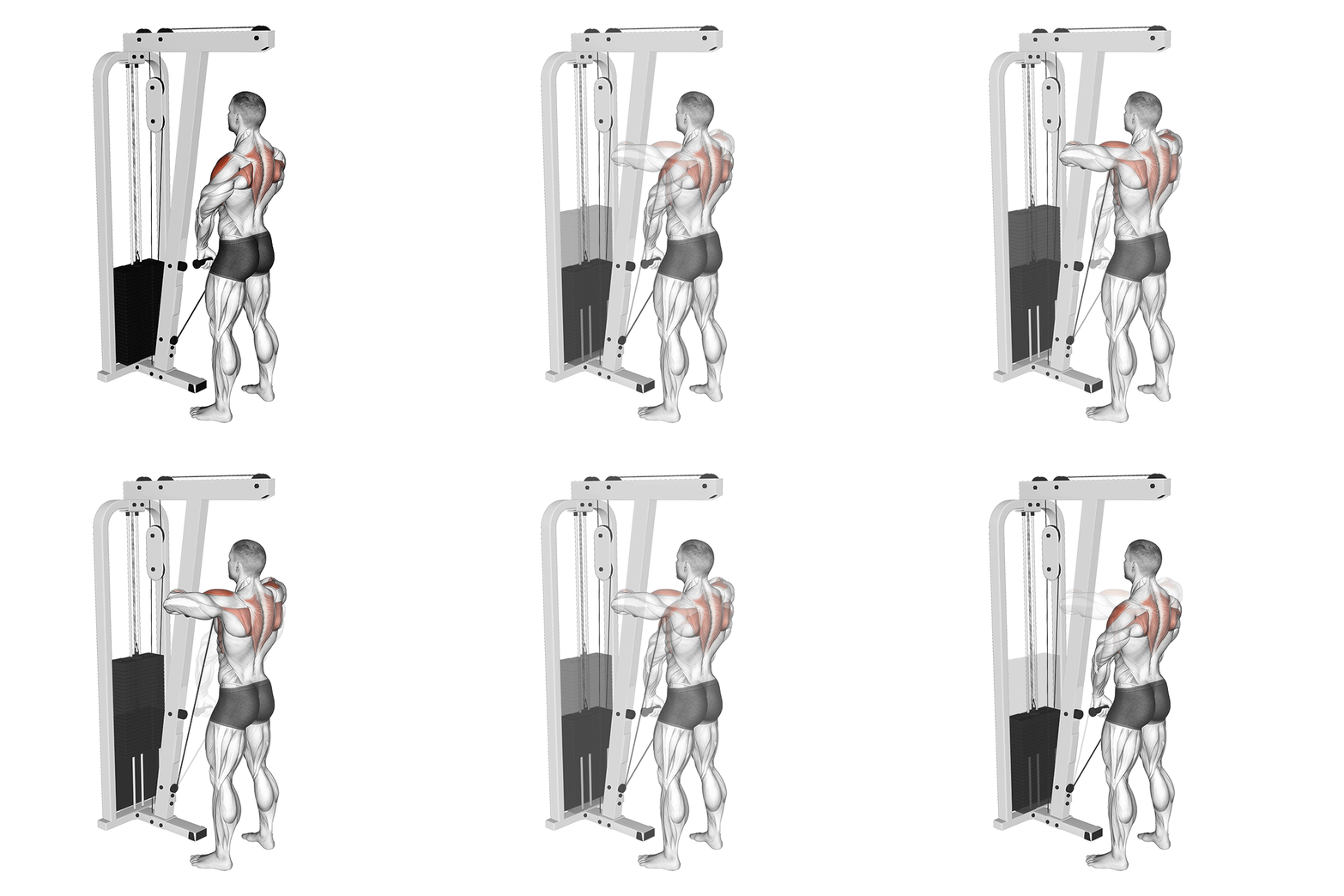
What is the cable upright row?
The cable upright row is the upright row rebuilt on a low pulley: you stand over the cable, grip a straight bar or rope, and pull your elbows up until your hands reach chest height. The cable changes two things. First, tension never disappears: unlike a barbell, the stack still loads your delts at the very bottom of each rep. Second, the loads stay honest: you work in a range where most lifters use half of their barbell weight. With a rope, your wrists can drift apart as you pull, which many shoulders prefer. A side delt and upper trap builder for high-rep, controlled work.
How to do the cable upright row
- 1
Set up the low pulley
Attach a straight bar or rope to the lowest setting, grip it shoulder-width overhand, and take one small step back. The cable should be taut before you start, plates already lifted off the stack.
- 2
Brace against the pull
Feet hip width, knees soft, ribs down. The cable drags you forward and down, so squeeze your glutes and lock your core before the first rep, not during it.
- 3
Pull your elbows up and out
Drive the elbows toward the ceiling, slightly out to the sides, until your hands reach chest height. Elbows stay above wrists the whole way and the attachment grazes your torso.
- 4
Lower without giving the tension back
Take 2-3 s to resist the cable back down until your arms are long. Stop just before the plates touch the stack, then start the next rep from that loaded bottom position.
Pro tip
Chase the clank: if you hear the stack touch down between reps, you just threw away the cable's whole selling point, tension at the bottom. A silent set is a perfect set.
Common mistakes
Pulling to the chin.
Above chest height the delts stop contributing and the shoulder gets pinched in internal rotation. Elbows level with the shoulders is the ceiling; your hands never need to see your face.
Loading it like the barbell version.
The cable rewards control, not tonnage. If you need leg drive or a backward lean to move the stack, drop pins until your elbows, not your spine, do the lifting.
Wrists above elbows.
When the hands overtake the elbows, the move becomes a curl in disguise and the delts switch off. Lead every centimetre with the elbows and let the hands hang from them.
Shrugging instead of rowing.
If the set starts with your shoulders climbing toward your ears, the traps hijack what the side delts should share. Keep the shoulders down through the first half of the pull and let the elbows travel first.
Variations and progressions
Easier
Rope upright row
Swap the straight bar for a rope: your hands drift apart and rotate freely as they rise, which takes the strain off the wrists and gives the shoulders room.
Harder
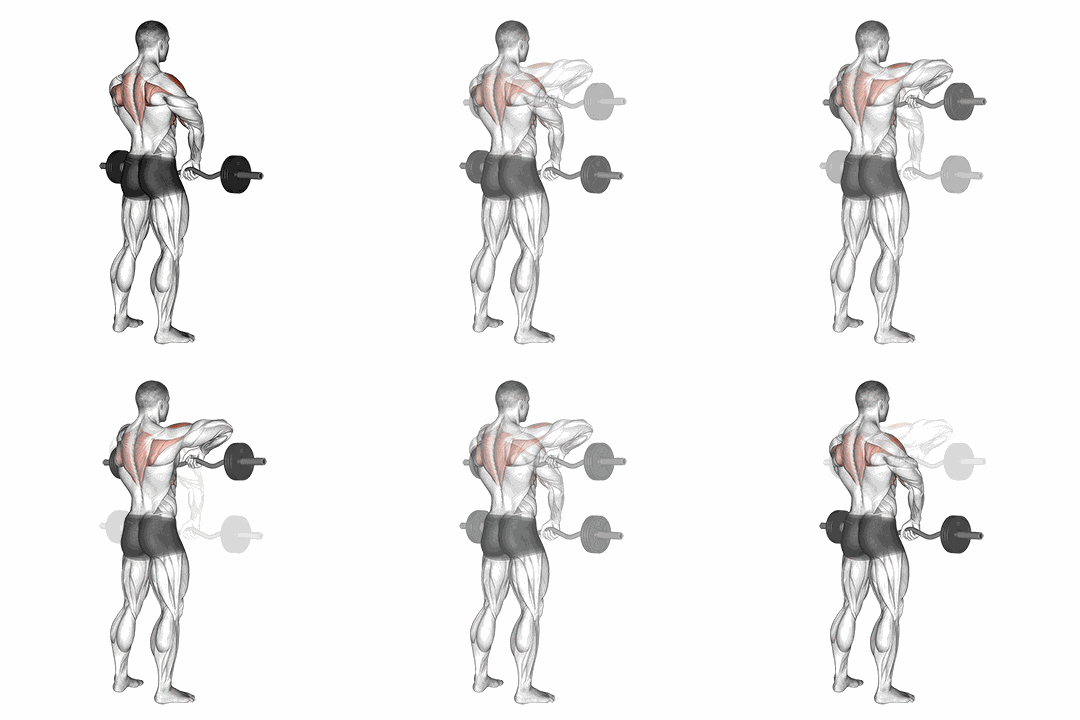
Barbell upright row
The free-weight version takes more load and demands more from your stabilizers, but gives your wrists and shoulders nowhere to hide. Earn it with pain-free cable sets first.
No cable?
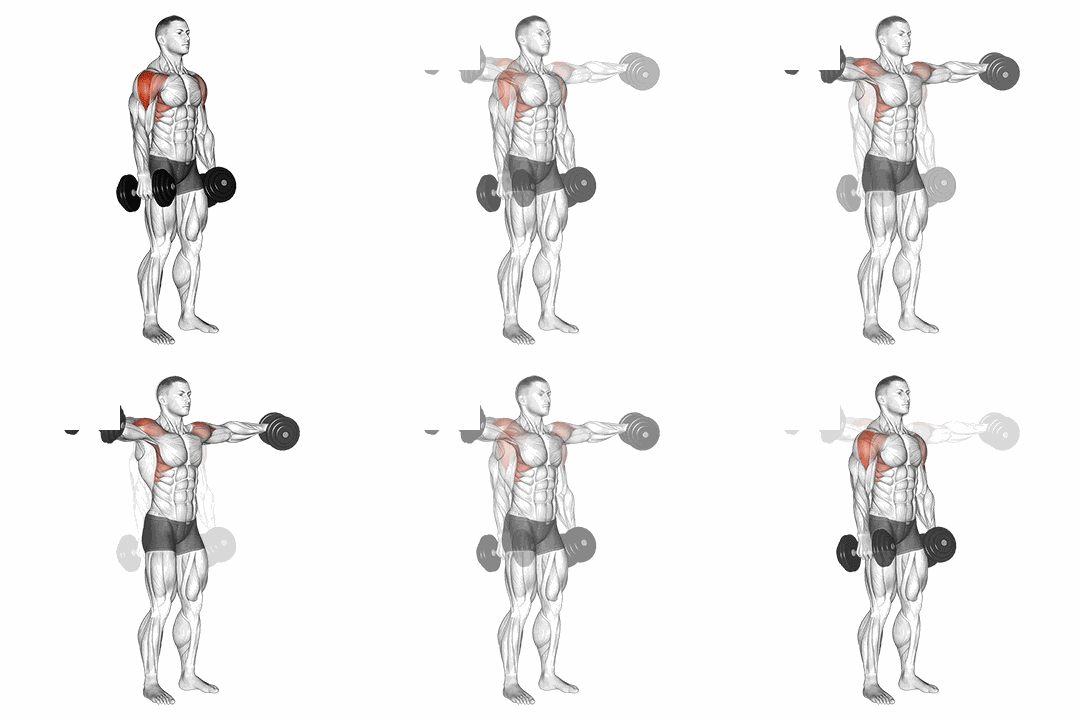
Dumbbell upright row
Two dumbbells give you the same elbow-led pattern with a hand path even freer than the rope's. Tension drops at the bottom, so compensate with a marked pause at the top.
How to program it
Three protocols by goal. Pick one per cycle and aim for progression on load or distance.
| Goal | Sets × distance | Load | Rest |
|---|---|---|---|
| Hypertrophy | 3-4 × 12-15 | Moderate, RPE 8 | 60-90 s |
| Pump finisher | 2 × 15-20 | Light, RPE 9 on the last set | 45 s |
| Learning the pattern | 3 × 10, 3 s lowering | Light, stack never touches down | 60 s |
Cable Upright Row FAQ
Cable or barbell upright row?
Different jobs. The barbell lets you load heavier and fits strength blocks, but it unloads the delts at the bottom and locks your wrists to one width. The cable keeps the delts under tension through the entire rep, smooths out the resistance, and runs best at higher reps with lighter weight. If upright rows have ever bothered your shoulders, start on the cable with a rope; if they feel great and you want load, the barbell is the progression.
Are upright rows bad for your shoulders?
Not inherently, but the classic version, a narrow grip pulled to the chin, puts the shoulder in internal rotation right where some people impinge. Three adjustments remove most of the risk: stop at chest height, take a grip wider than your shoulders or use a rope, and keep the load light enough that the movement stays smooth. If it still pinches after those changes, drop it and build your side delts with lateral raises instead.
Straight bar or rope attachment?
Default to the rope. Your hands start together and finish apart, your wrists stay neutral instead of bent back, and the shoulder takes less stress at the top of the pull. The straight bar fixes your grip width, which makes loading and progression easier to track, but transfers more strain to the wrists. Use the bar if it feels fine and you like measurable jumps; use the rope for everything else.