What is the lateral raise?
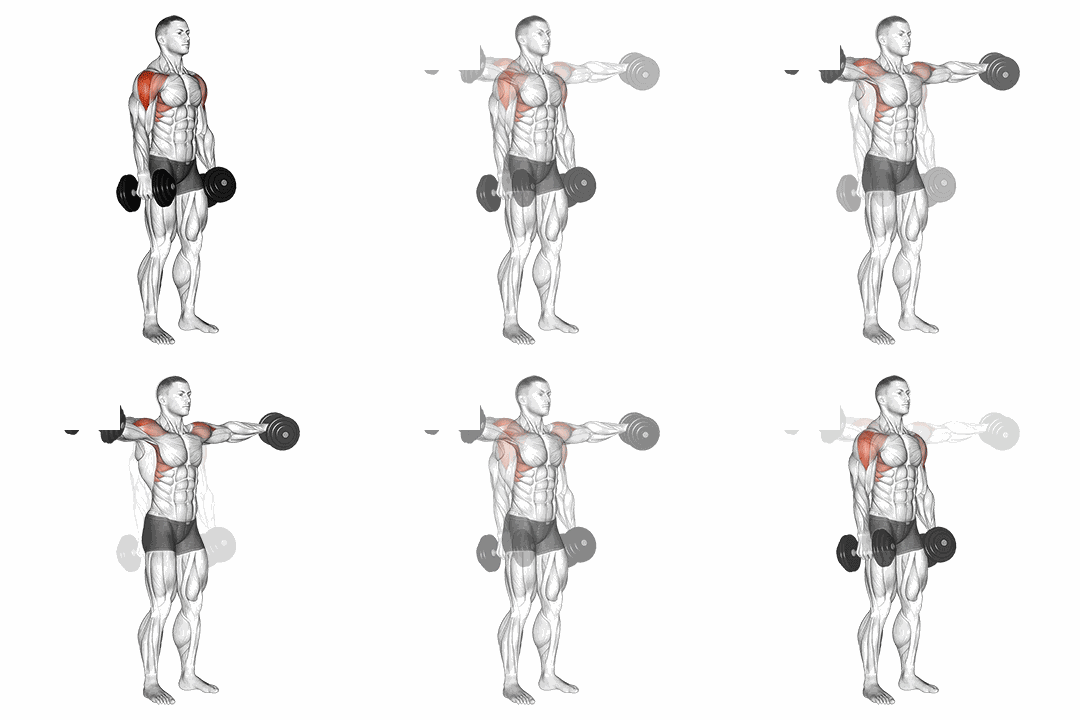
The lateral raise is an isolation move that targets the medial deltoid, the muscle that gives the shoulder its rounded cap. Holding a dumbbell in each hand, you lift the arms straight out to the sides until they reach shoulder height, then lower under control. It's a low-load, high-frequency lift built for hypertrophy. Pressing alone won't widen the shoulders, the side delt needs direct work. Done weekly with strict form, it transforms shoulder shape in months.
How to do the lateral raise
- 1
Set your stance and grip
Stand tall, feet hip-width, soft knees. Dumbbells at your sides, palms facing in. Brace your core and pin your shoulder blades down.
- 2
Lead with the elbows
Lift the dumbbells out to the sides with a slight bend in the elbows. Think pouring two pitchers of water, elbows higher than wrists at the top.
- 3
Stop at shoulder height
Raise until the arms are parallel to the floor. Going higher recruits the traps and shifts load off the medial delt.
- 4
Lower under control
Take 2-3 seconds to lower. The eccentric is where most of the growth happens. No swinging, no dropping.
Pro tip
Go lighter than your ego wants. Most people use 12 kg and swing, when 6 kg done strict would double the gains. Slow tempo, no momentum.
Common mistakes
Swinging the weights.
Using momentum bypasses the delts. Lighter load, strict tempo, the muscle works far harder.
Shrugging at the top.
If your traps fire up to the ears, you're going too heavy or too high. Keep shoulders pinned down.
Going above shoulder height.
Past parallel the load shifts to the upper traps. Stop at parallel and squeeze.
Locked-straight elbows.
Stress on the elbow joint, less on the delt. Keep a soft 10-15° bend through the whole rep.
Variations and progressions
Easier
Seated lateral raise
Sit on a bench to kill any leg drive. Forces strict form and isolates the side delt cleanly.
Harder
Cable lateral raise
Constant tension across the full range. Cables hit the bottom of the rep where dumbbells go light.
No dumbbells?
Banded lateral raise
Stand on a light band and raise the ends out to the sides. Same pattern, travel-friendly.
How to program it
Three protocols by goal. Pick one per cycle and aim for progression on load or distance.
| Goal | Sets × distance | Load | Rest |
|---|---|---|---|
| Hypertrophy | 4 × 12-15 | Light, strict tempo | 45-60 s |
| Volume / metabolic | 3 × 20-25 | Very light | 30-45 s |
| Strength bias | 5 × 8 | Moderate, full ROM | 75-90 s |
Lateral Raise FAQ
Why don't my side delts grow despite pressing?
Overhead pressing hits mostly the front delt. The side delt only fires hard when the arm moves directly out to the side. Without lateral raises in your week, that head stays small. Add 12-20 working sets per week and watch the cap show up.
How heavy should I go?
Light. The medial delt is a small muscle and most people overload it into swinging. Pick a weight where you can do 12 strict reps with a slow eccentric and zero body english. If you have to cheat, the load is wrong.
How often can I train lateral raises?
Up to 4-5 times a week. The medial delt is built for endurance and recovers fast. Spread 15-25 sets across multiple short doses rather than one brutal session. Frequency beats intensity for this muscle.