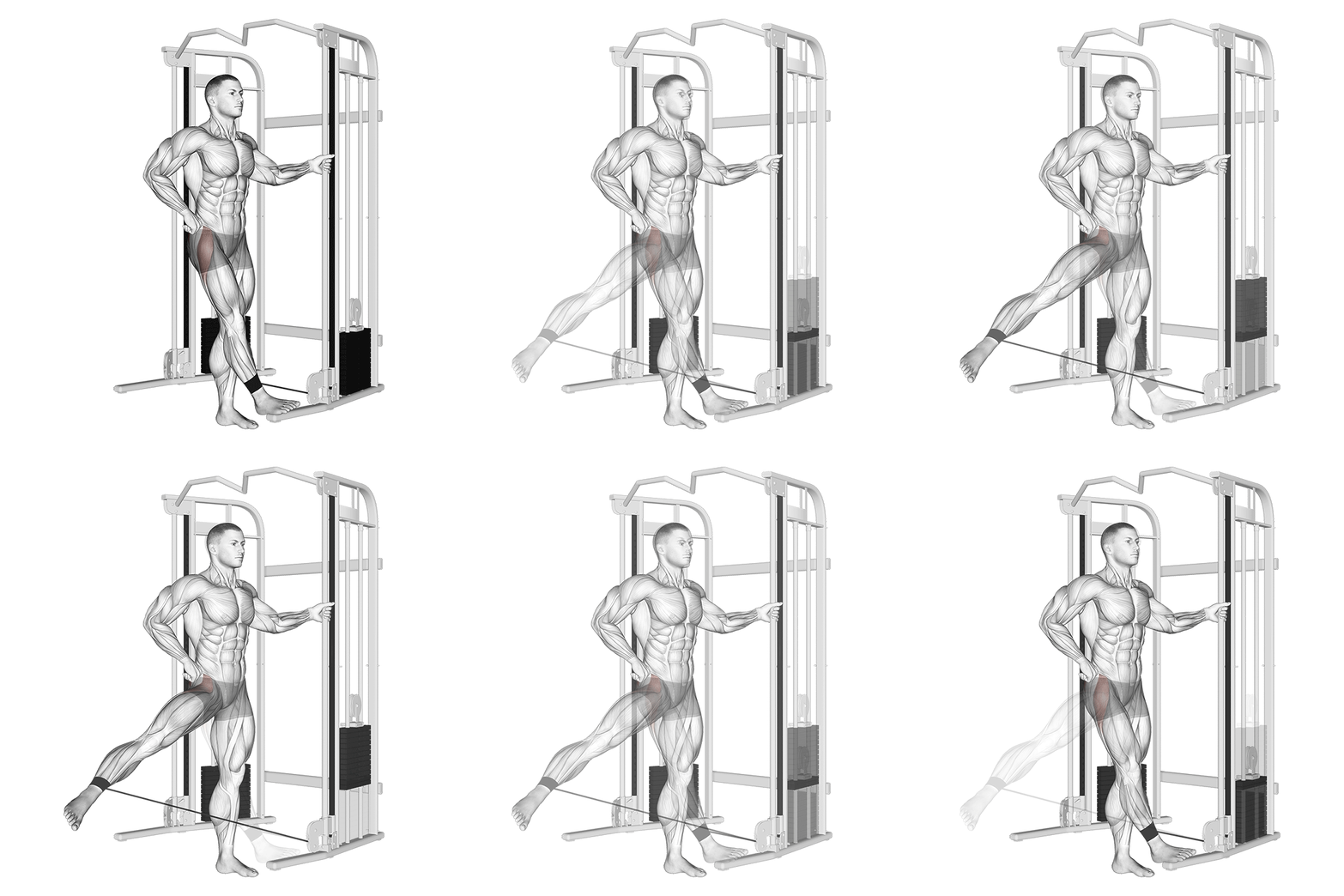
What is the cable hip abduction?
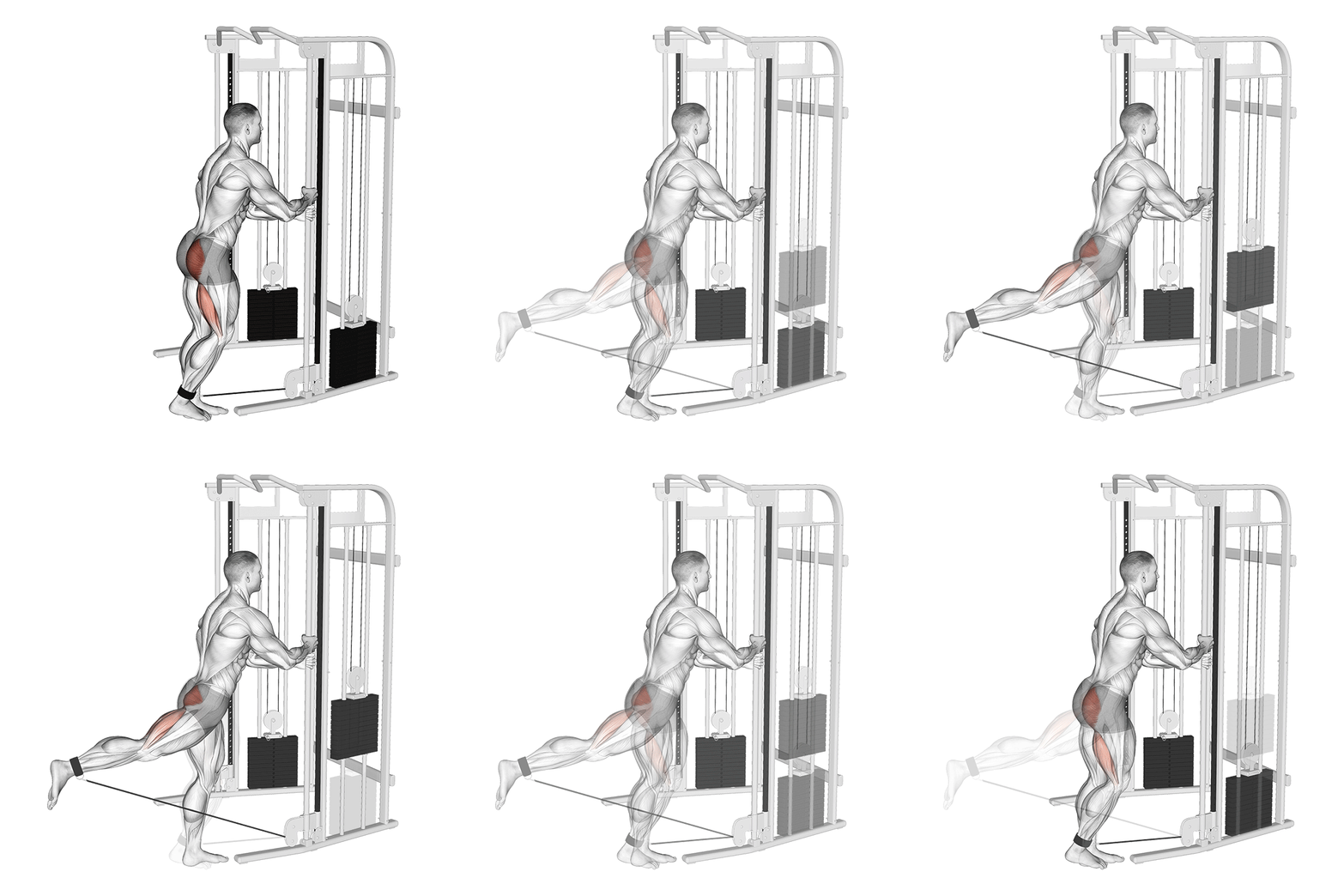
Cable hip abduction is a single-leg isolation drill: an ankle cuff clips to a low pulley, you stand side-on to the stack, and you sweep your outside leg straight out to the side against the cable. The target is the gluteus medius, assisted by the minimus and the TFL: the muscle on the side of your hip that stops the pelvis dropping when you stand on one leg. Unlike a band, the cable keeps tension constant through the whole arc and lets you progress in small, measurable jumps. It earns its place as prehab for runners, as knee-valgus correction work, and as direct upper-glute volume for physique goals.
How to do the cable hip abduction
- 1
Set the pulley and cuff
Drop the pulley to its lowest notch and strap the cuff around the ankle furthest from the stack. Stand side-on, about an arm's length away, with a hand on the frame for balance.
- 2
Stack tall before you move
Soft knee in the standing leg, pelvis level, ribs over hips. Let the cuffed leg hang slightly across your midline so there is tension on the cable before the first rep starts.
- 3
Sweep out, not up
Drive the leg straight out to the side, knee facing forward, until roughly 30-45 degrees. The useful range ends the instant your pelvis starts to hike or your torso leans: stop there.
- 4
Fight the cable home
Lower for 2-3 s, letting the leg travel just past your midline for a short stretch, without letting the stack touch down. Finish all the reps on one side, then turn around and match them.
Pro tip
Lead with your heel and keep the moving leg a hair behind your body line: abducting slightly back and out keeps the gluteus medius in charge. The moment your toes turn up toward the ceiling and the leg drifts forward, the TFL and hip flexors have quietly taken over the set.
Common mistakes
Leaning like a tower of Pisa.
Tipping the torso away from the working leg fakes extra range while the obliques and lower back do the lifting. Stand tall against the frame, accept the shorter arc, and let the hip do its own work.
Chasing height.
Past roughly 45 degrees the femur runs out of room and the pelvis has to tilt to go higher: nothing extra for the glute med, plenty for bad habits. Range stops where the pelvis moves, full stop.
Loading it like a leg press.
The glute med is a stabiliser, not a piston: overload it and the rep becomes a swing with a hip hike on top. Drop two or three plates on the pin and make every centimetre strict; the burn will tell you it worked.
Giving the cable a rest between reps.
Letting the stack settle at the bottom resets the muscle to zero every rep. Keep the plates hovering and the cable taut from first rep to last: constant tension is the whole argument for using a cable instead of a band.
Variations and progressions
Easier
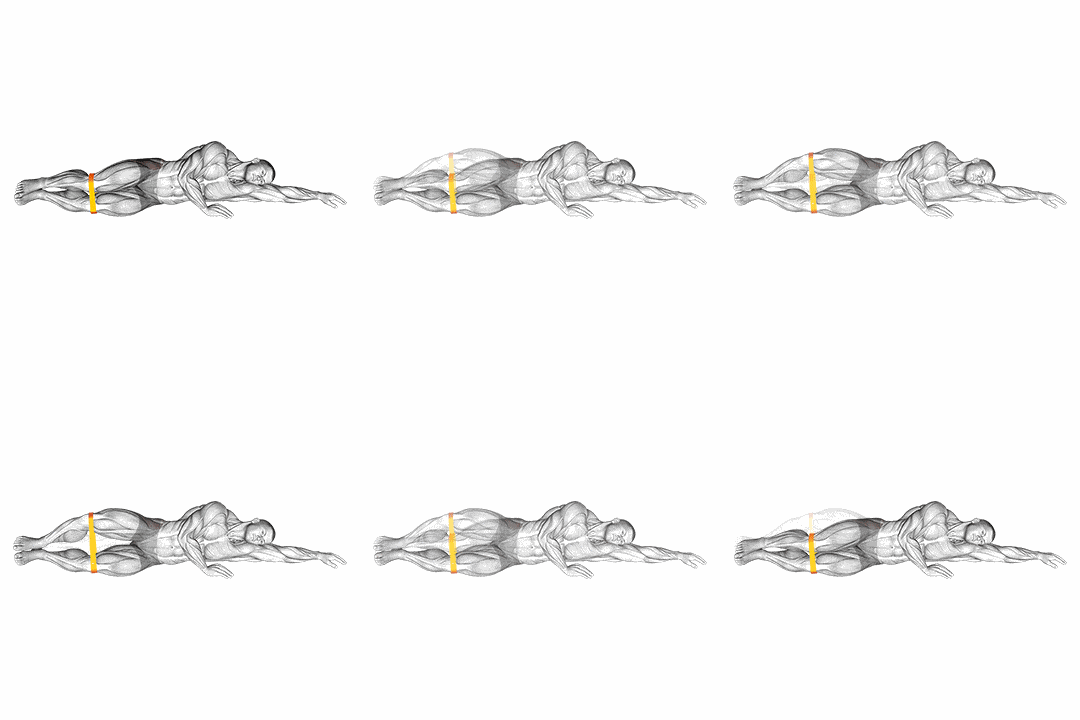
Banded clamshell
Side-lying, knees bent, band around the thighs: a short lever that teaches you to feel the glute med fire before you load it standing.
Harder
Side plank with leg raise
The bottom hip holds the plank isometrically while the top leg abducts against gravity: both glute meds working at once, no equipment needed.
Alternative
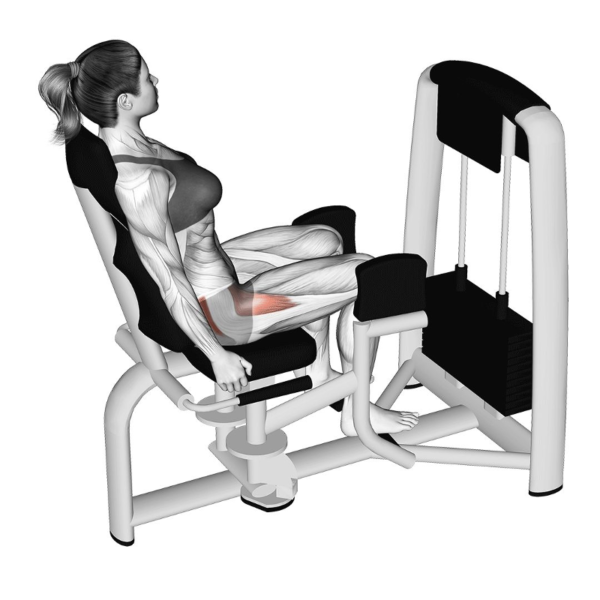
Seated hip abduction machine
Both hips against the pads, bigger loads, zero balance demand. Less specific to single-leg stance, but the easiest place to accumulate heavy abduction volume.
How to program it
Three protocols by goal. Pick one per cycle and aim for progression on load or distance.
| Goal | Sets × distance | Load | Rest |
|---|---|---|---|
| Activation | 2 × 12-15 per side | Light, before runs or squats | 30-45 s |
| Strength and growth | 3-4 × 10-12 per side | RPE 8, strict | 60-90 s |
| Stability endurance | 3 × 15-20 per side | Light, 3 s lowering | 45-60 s |
Cable Hip Abduction FAQ
Cable hip abduction or the seated machine?
Different jobs. The cable version is done standing on one leg, which is exactly how the glute med works in walking and running, and it trains the stance side as hard as the moving side. The machine allows more load with none of the balance demand. Use the cable for transfer and control, the machine for heavy volume, or both in the same week.
Will cable hip abductions grow my glutes?
They build the gluteus medius, the muscle just above and to the side of the main glute mass: the region lifters call the upper glute shelf. The size potential is real but modest compared with hip thrusts or squats, so treat abductions as a finisher and a stability investment, not the core of a glute program.
Why do I feel it in my hip flexor instead of my glute?
Because the leg is sweeping forward as it goes out, which hands the movement to the TFL and the hip flexors. Reset: stand taller, start the rep with the leg a touch behind you, lead with the heel, and shrink the range until the burn moves to the side of your hip.
How much weight should I use on cable hip abductions?
Less than your ego wants: for most people the working zone is a handful of plates on the stack. The glute med responds to strict, controlled reps inside its natural range, not to heavy swings. If you cannot pause for a second at the top with a level pelvis, the pin is too low.