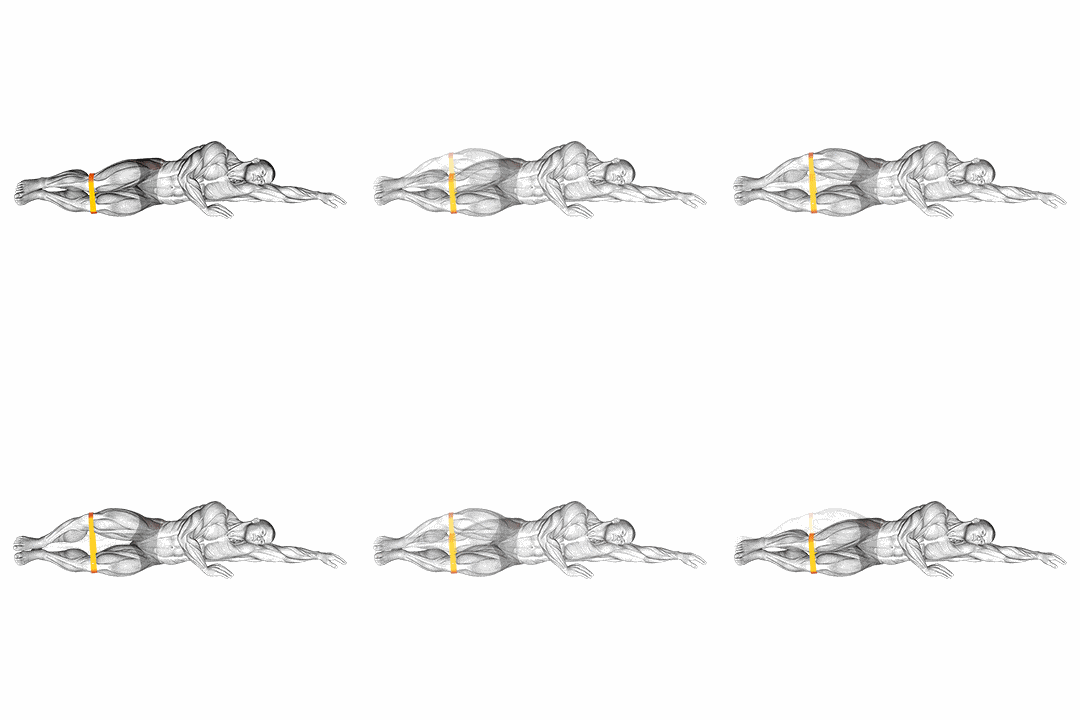
What is the clamshells?
The clamshell is a side-lying hip external rotation drill that targets the glute medius and deep hip rotators. You lie on your side, stack the hips, bend the knees to 90 degrees, keep the feet together and lift the top knee like a clam opening. EMG studies regularly place clamshells in the top five for glute medius activation. They are not a strength builder, they are a switch that turns lazy hips back on before squatting, running or sled work.
How to do the clamshells
- 1
Set side-lying position
Lie on your side, knees bent 90 degrees, feet stacked. Hips stacked exactly vertical, lower arm under the head as a pillow.
- 2
Lock the pelvis
Put the top hand on the upper hip. Job number one: that hip does not roll backward during the rep. If it rolls, you lose the glute.
- 3
Open the knee
Keep the feet glued together, lift the top knee as far as the hip stays fixed. Usually 30 to 45 degrees. Squeeze at the top.
- 4
Return slow
Lower the knee back over 2 seconds. The bottom of the rep is also a chance to feel the glute lengthen, don't crash down.
Pro tip
If you feel it in the side of the lower back instead of the side of the hip, you rolled the pelvis. Reset, shorten the range, keep the top hand on the hip and feel the glute fire from rep one.
Common mistakes
Pelvis rolling back.
If the top hip drops backward to make room for the knee, the lumbar takes over. Pin the hip with the hand and shorten the range.
Feet coming apart.
Letting the heels split changes the move from external rotation to abduction. Keep heels glued together.
Going too fast.
Bouncing reps recruit the TFL and miss the glute medius. Slow tempo, 2 seconds up, 2 seconds down.
Adding too much band.
If a heavy band forces the pelvis to roll, you lose the point of the drill. Start without a band, add light tension only when the form is locked.
Variations and progressions
Easier
Clamshell with reduced range
Lift the knee only 15 to 20 degrees but pause 2 seconds at the top. Easier on a tight hip, still recruits the glute.
Harder
Banded clamshell with hip lift
Mini band above the knees, hold a side bridge on the bottom forearm. Now the glute medius works under the side plank load.
Alternative
Standing band hip abduction
Loop a mini band above the knees and step sideways. Trains the same glute medius in a functional standing pattern.
How to program it
Three protocols by goal. Pick one per cycle and aim for progression on load or distance.
| Goal | Sets × distance | Load | Rest |
|---|---|---|---|
| Pre-squat activation | 2 × 15/side | Bodyweight | 30 s |
| Rehab / hip stability | 3 × 12/side daily | Bodyweight | 30 s |
| Glute medius burn-out | 3 × 20/side banded | Mini band | 45 s |
Clamshells FAQ
Are clamshells just for women?
No. The glute medius is a key hip stabiliser in any athlete who squats, runs, sprints or pushes a sled. Male endurance athletes and powerlifters with knee valgus on heavy squats benefit just as much. The drill is unisex, it just happens to be popular in glute-focused programmes that are often marketed to women.
Can clamshells alone build the glute?
No. They activate, they do not build mass. For hypertrophy you still need hip thrusts, Romanian deadlifts, squats and lunges loaded hard. Use clamshells as a 5-minute pre-activation, then train the heavy compounds. Two minutes of clamshells with no squatting after is not a glute programme.
How do I know my glute medius is firing?
Put two fingers on the muscle just above and behind the greater trochanter (the bump on the side of the hip). During the rep you should feel it tighten under the fingers. If you feel work in the lower back, the TFL at the front of the hip, or nothing at all, reset the position.