What is the forward band monster walk?
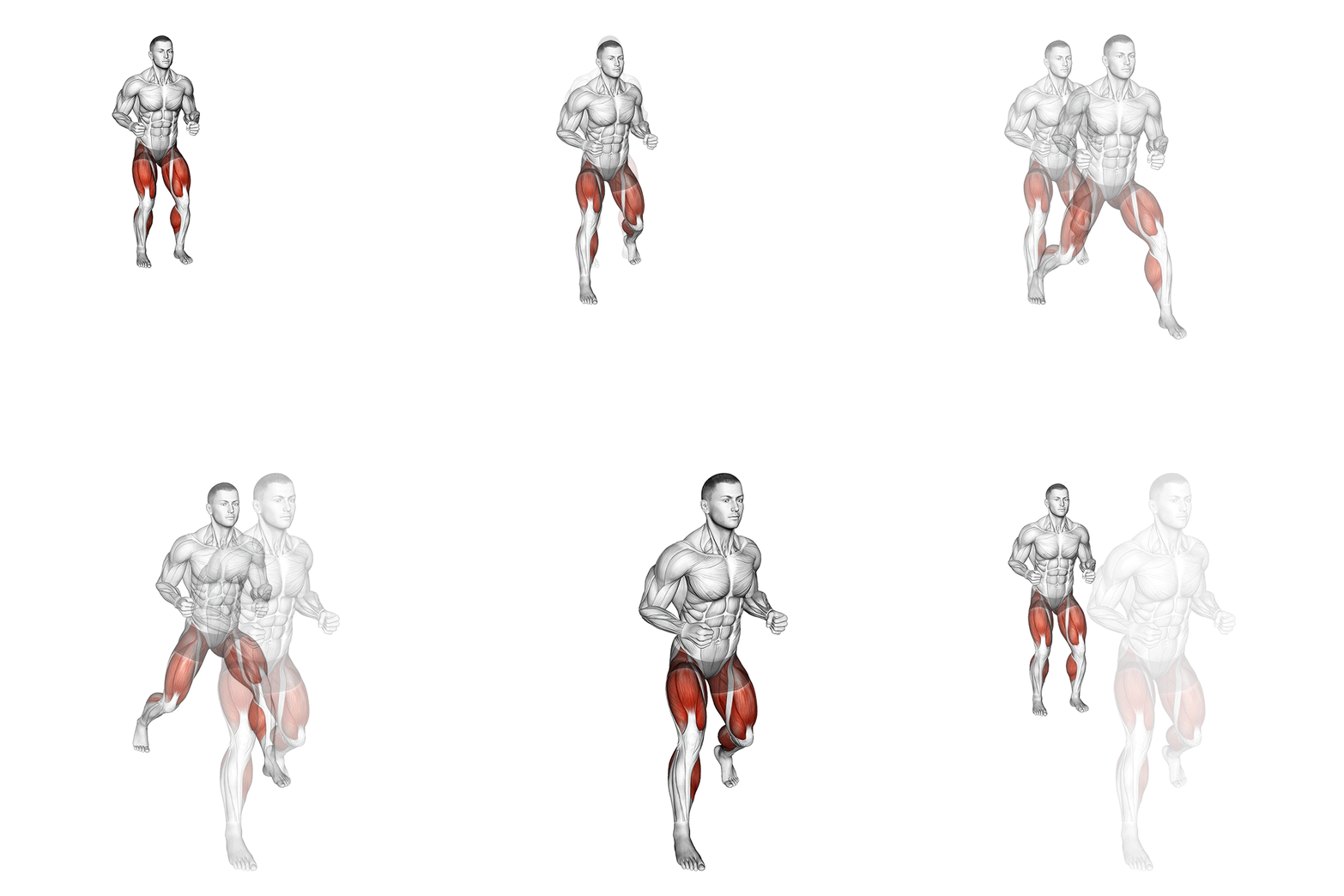
The forward monster walk is a banded gait drill: a mini band looped around your ankles or knees, a stance wider than your hips in a quarter squat, and deliberate steps forward and slightly out, fighting the band's pull the entire way. Unlike the lateral band walk, which is pure side-to-side abduction, the forward version loads the gluteus medius while the hips flex and extend the way they do in running, so the carryover to gait is more direct. Physios lean on it against knee valgus and runner's knee; lifters use it to wake the glutes before squats. The rule that makes it work: the band never, ever goes slack.
How to do the forward band monster walk
- 1
Loop the band and sink low
Band around both legs: above the knees to learn, around the ankles for more. Feet wider than your hips, toes forward, quarter squat, chest up, hands together in front.
- 2
Step forward and out
Take a slow diagonal step, forward and outward, knee pushed out over the toes. The step is short, about 30 cm; tension is the goal, not distance.
- 3
Bring the trail foot, keep the width
Step the back foot forward but land it still wider than hip width. If your feet ever come together, the band rests and the glutes get a holiday.
- 4
Stay low for the whole walk
Hold the same hip height for 10-15 m, no bobbing up between steps, shoulders level. Walk it back the same way to double the set.
Pro tip
Film yourself from the front once. The giveaway isn't the legs, it's the shoulders: if they rock side to side like a penguin, you're swinging your trunk to move the band instead of pushing from the hip. Slow down until the shoulders go still.
Common mistakes
Standing up between steps.
Every centimetre you rise unloads the glutes and turns the set into a stroll. Pick a hip height in the quarter squat and defend it to the last step.
Letting the band go slack.
A slack band means zero abduction work, which was the whole point. Keep the feet outside hip width at every moment of every step, landing included.
Toes turning out.
Ducking the feet out lets stronger muscles cheat the band sideways. Toes dead ahead: the knee push-out has to come from the hip, where you want the work.
Giant hurried steps.
Long, quick steps let momentum do what the gluteus medius should. Short steps, about 2 s each, with a brief hold once the foot lands.
Variations and progressions
Easier
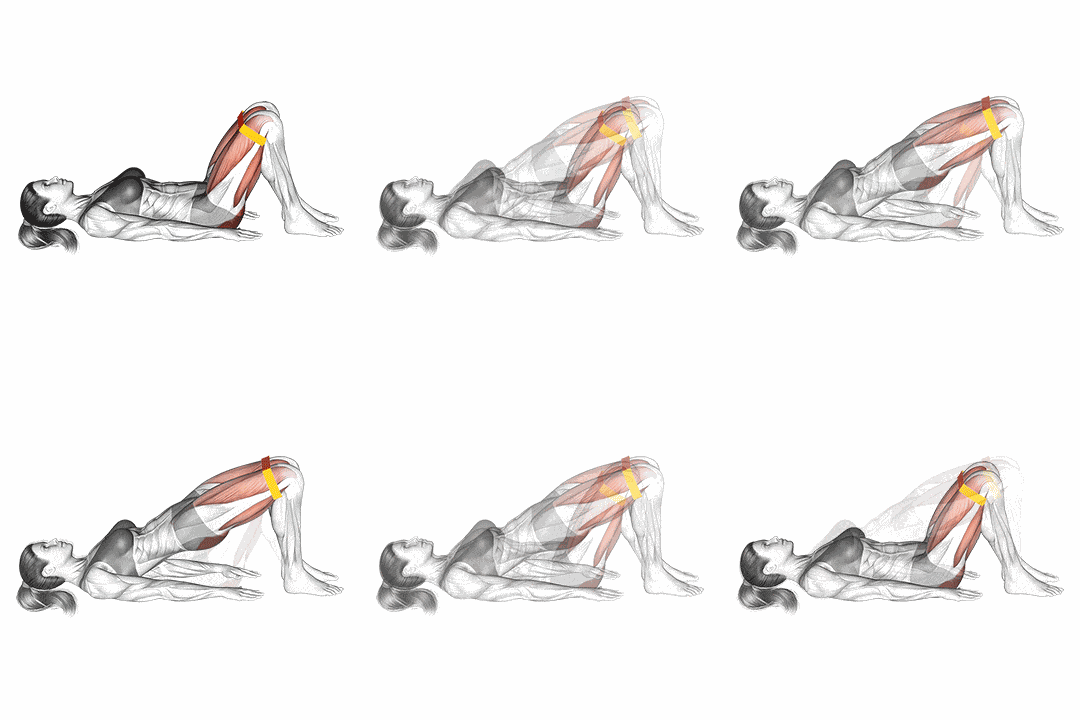
Band above the knees
Shortening the lever makes the same tension far easier to control. Start here if your knees cave or the ankle position makes you wobble.
Harder
Band under the forefeet
Loop the band around the front of both feet: the longest lever available. Every step now fights the band from the foot up, and the glute med gets no half reps.
No band?
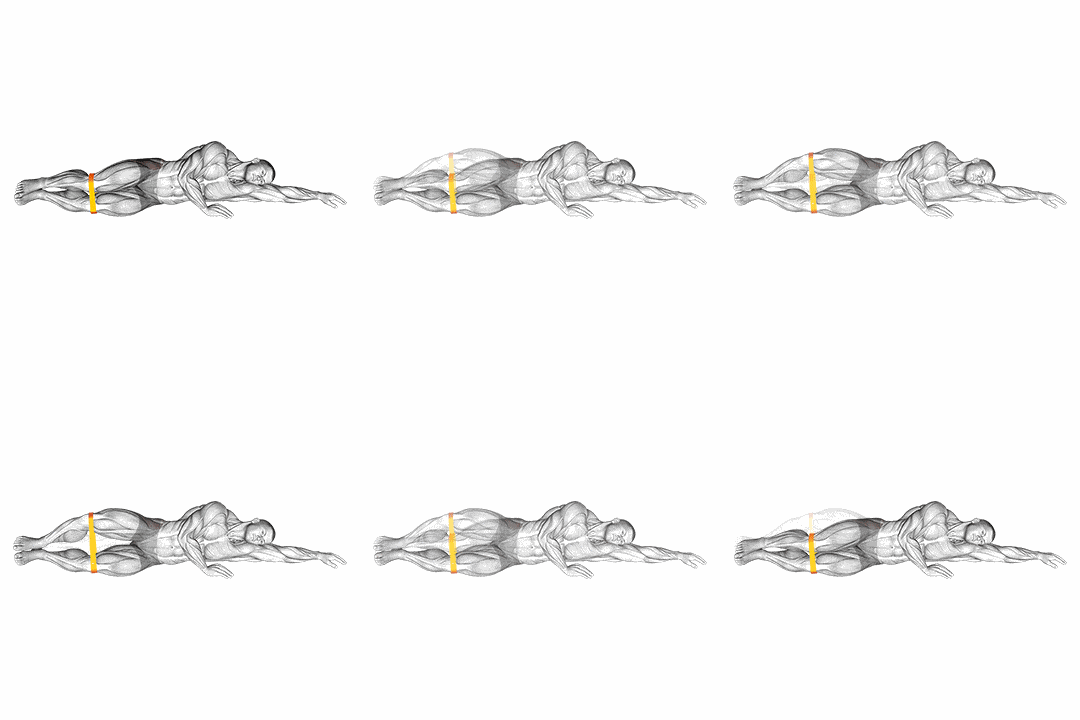
Clamshells and side-lying leg raises
On the floor, clamshells and side-lying leg raises isolate the same gluteus medius. Less specific to the stride, but they need nothing and travel anywhere.
How to program it
Three protocols by goal. Pick one per cycle and aim for progression on load or distance.
| Goal | Sets × distance | Load | Rest |
|---|---|---|---|
| Activation | 2 × 10 m | Light band | 30 s |
| Strength-endurance | 4 × 15-20 steps | Medium or heavy band | 60-90 s |
| Knee rehab volume | 2 × 20 steps, daily | Light band, slow tempo | 60 s |
Forward Band Monster Walk FAQ
Should the band go at the ankles or above the knees?
Above the knees is the learning position: a shorter lever, less torque, easier to keep the knees out. Moving the band to the ankles lengthens the lever on the gluteus medius and makes the same band much harder; around the forefeet is harder still. Progress the position before the band thickness, it's the cheaper jump.
Forward or sideways: which band walk is better?
They bias different jobs. The lateral walk is pure abduction, the biggest glute med burn per metre. The forward walk makes the glute med stabilise while the hip swings through flexion and extension, which is its actual job when you run. Runners and squatters get the most from the forward and backward versions; keep lateral walks for a simple isolated pump.
Can monster walks fix knee valgus?
They're one good tool, not the whole fix. Banded walks strengthen the hip abductors that resist the knee diving inward, and physios program them for exactly that. But valgus under a heavy squat also comes from foot position, ankle mobility and the squat pattern itself. Put monster walks in the warm-up, and fix the squat at loads you can control.