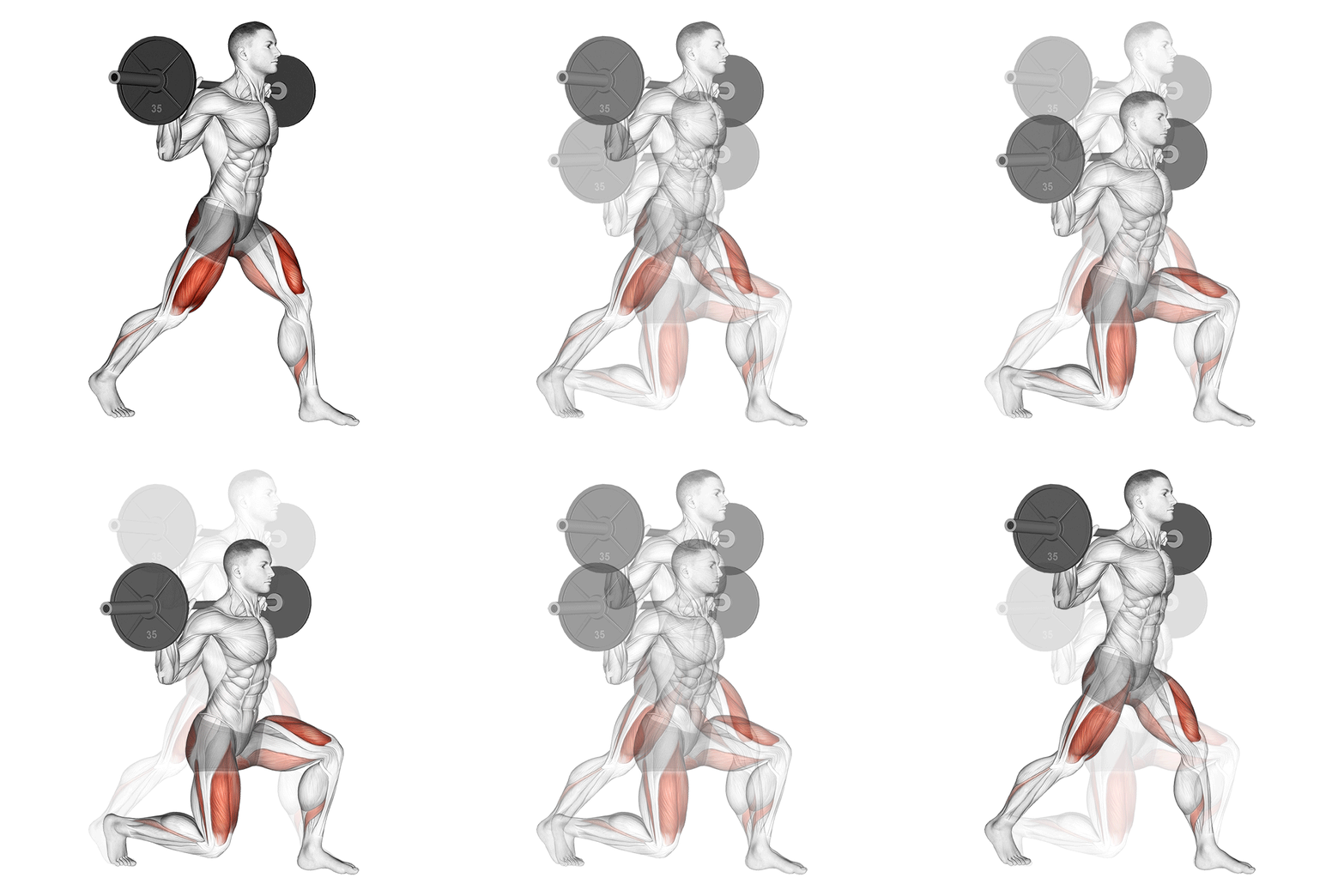
What is the barbell split squat?
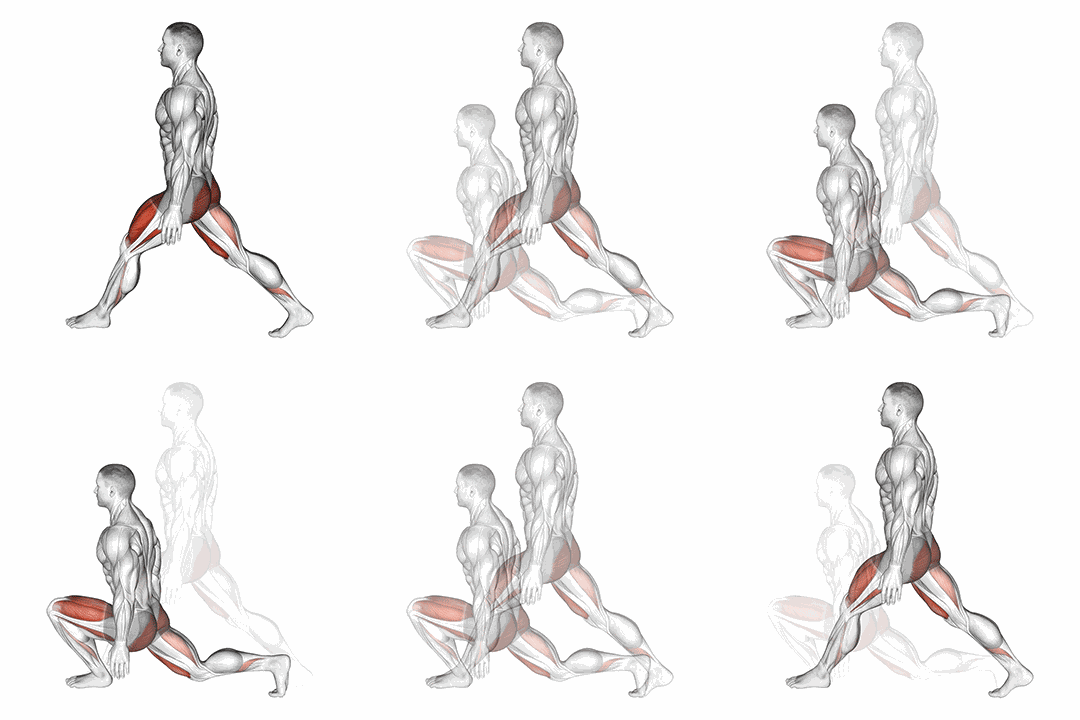
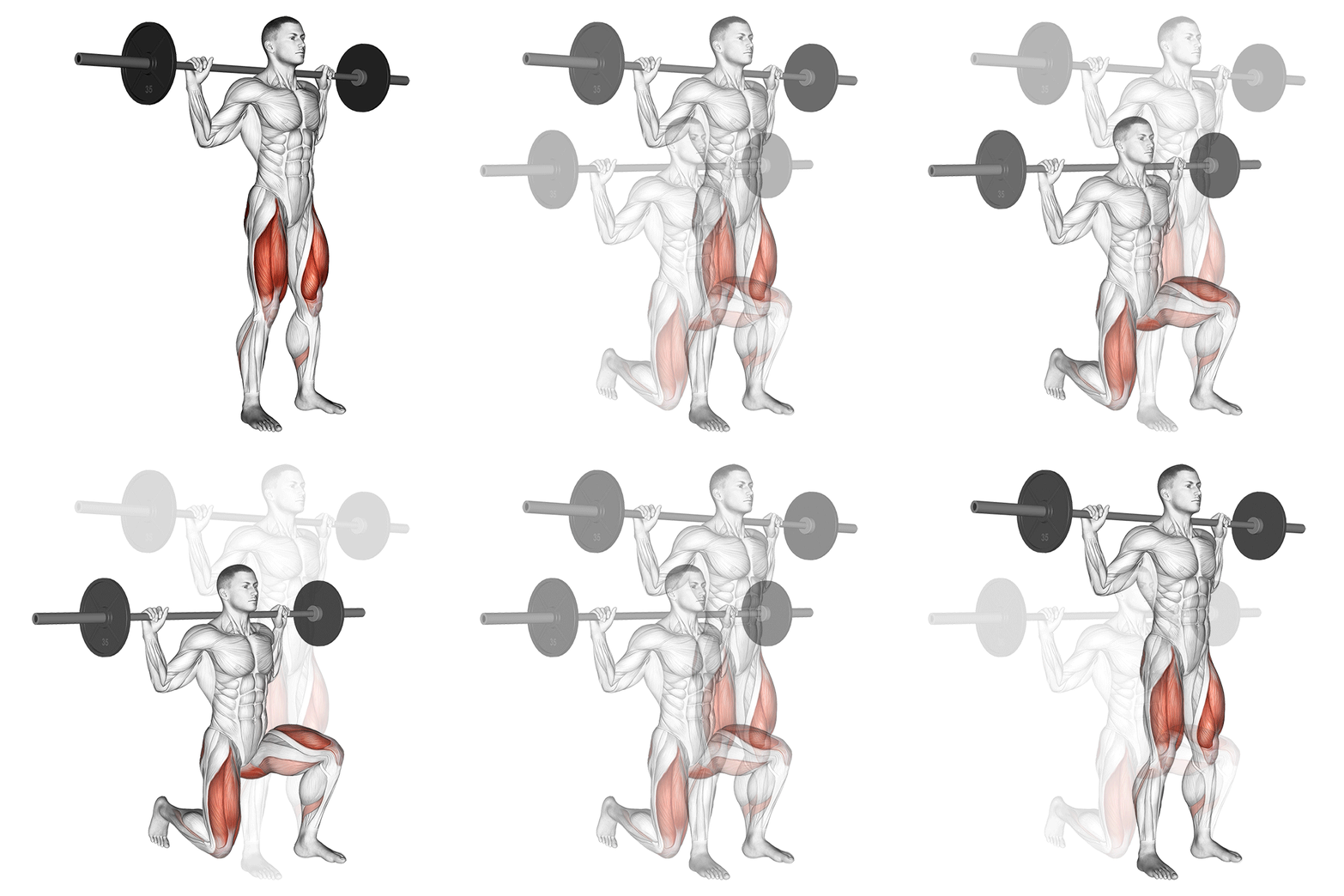
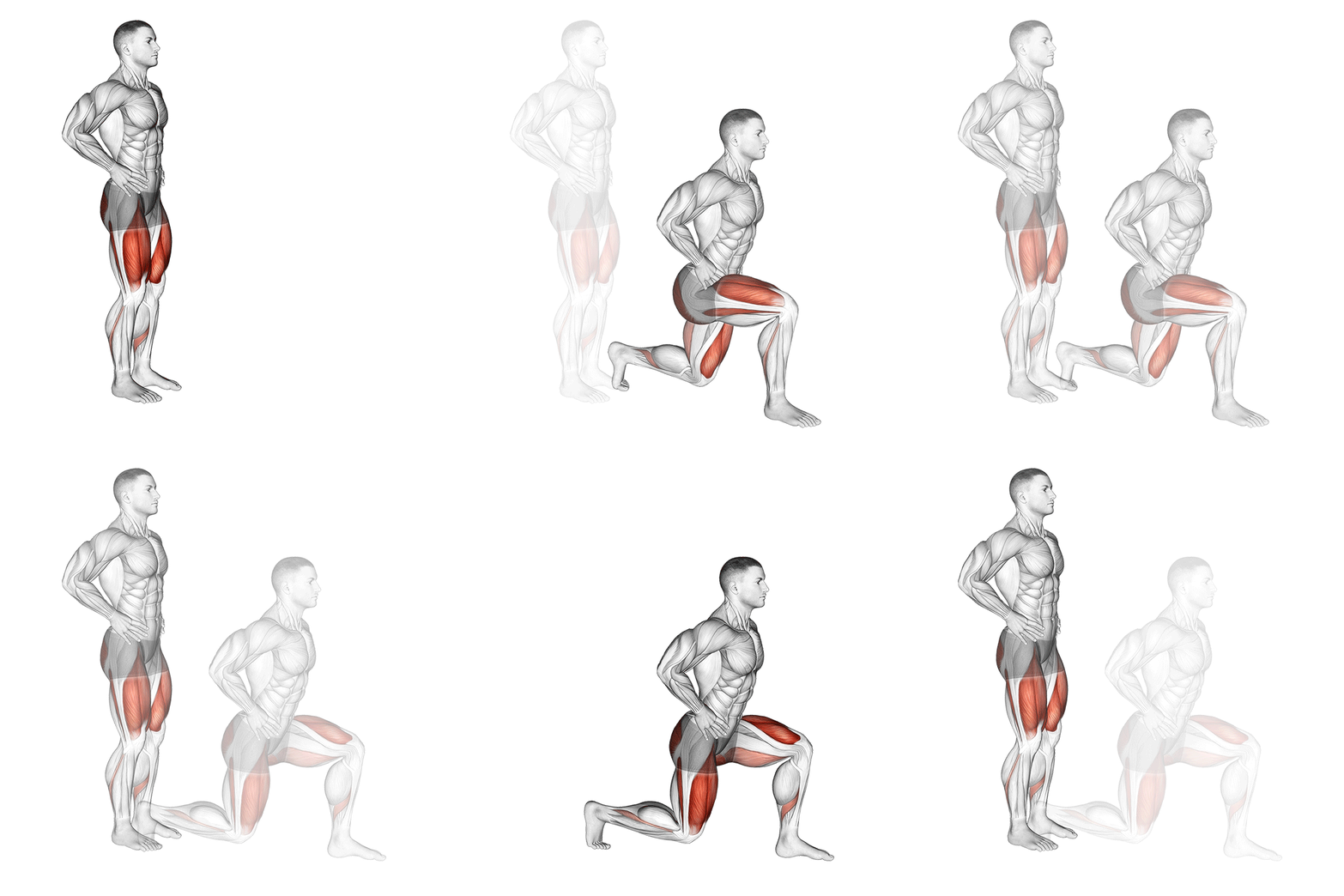
The barbell split squat takes the staggered-stance squat and racks the load across your upper back like a back squat: one foot forward, one back, both planted while the rear knee travels toward the floor. Moving the weight from your hands to a bar does two things at once: it removes the grip limit, so the front leg can finally be loaded to its real capacity, and it raises the balance demand, because a bar sitting high on your back amplifies every lateral wobble. It is the heavy-strength version of the split squat family, the one you adopt once dumbbells run out and before you commit to Bulgarians.
How to do the barbell split squat
- 1
Unrack like a back squat
Set the bar at squat height, pin it onto your upper traps with a hard grip and squeeze your shoulder blades together to build a shelf. Brace, stand it out of the hooks and take two controlled steps back.
- 2
Build the stance blind
Slide one foot forward and one back onto two hip-width tracks, long enough that the front shin stays vertical at the bottom. You cannot look down with a bar on your back, so rehearse this exact footwork with an empty bar until it is automatic.
- 3
Lower on one rail
Bend both knees and take 2-3 s to bring the rear knee down until it hovers a fist's height off the floor. Hips and shoulders stay square to the front; the bar should travel straight down, not drift toward the front-leg side.
- 4
Drive, finish, then switch carefully
Push hard through the front heel and mid-foot to stand, keeping the rear leg as a balance point only. Complete every rep on one side, then reset the stance with small deliberate steps, or re-rack between legs on heavy sets.
Pro tip
Pull the bar down into your traps like you are trying to bend it over your shoulders. A welded upper back turns your torso into one rigid block, and a rigid block is far easier to balance on one leg than a loose stack of parts.
Common mistakes
Hips opening toward the rear leg.
A staggered stance invites the pelvis to rotate, and the bar magnifies the twist into a visible tilt. Point both hip bones at the wall in front of you and keep the bar level like a scale.
Tapping the floor with the rear knee.
Bouncing the knee off the ground unloads the front leg at the hardest moment and will hurt under a bar. Stop a fist above the floor, hold the tension, then drive.
A new stance every set.
Three centimetres of stance drift changes the exercise and makes progress unreadable. Mark your front foot against a plate or a line on the floor and rebuild the identical setup every single set.
Loading it like a back squat.
The pattern looks familiar, so lifters slide on big plates and get folded. One leg plus a balance demand means starting far below your squat weights and earning every increase with clean, level reps.
Variations and progressions
Easier
Dumbbell split squat
The same stance with a dumbbell in each hand: the load hangs low, balance gets dramatically easier and you can drop the weights if a rep goes wrong.
Harder
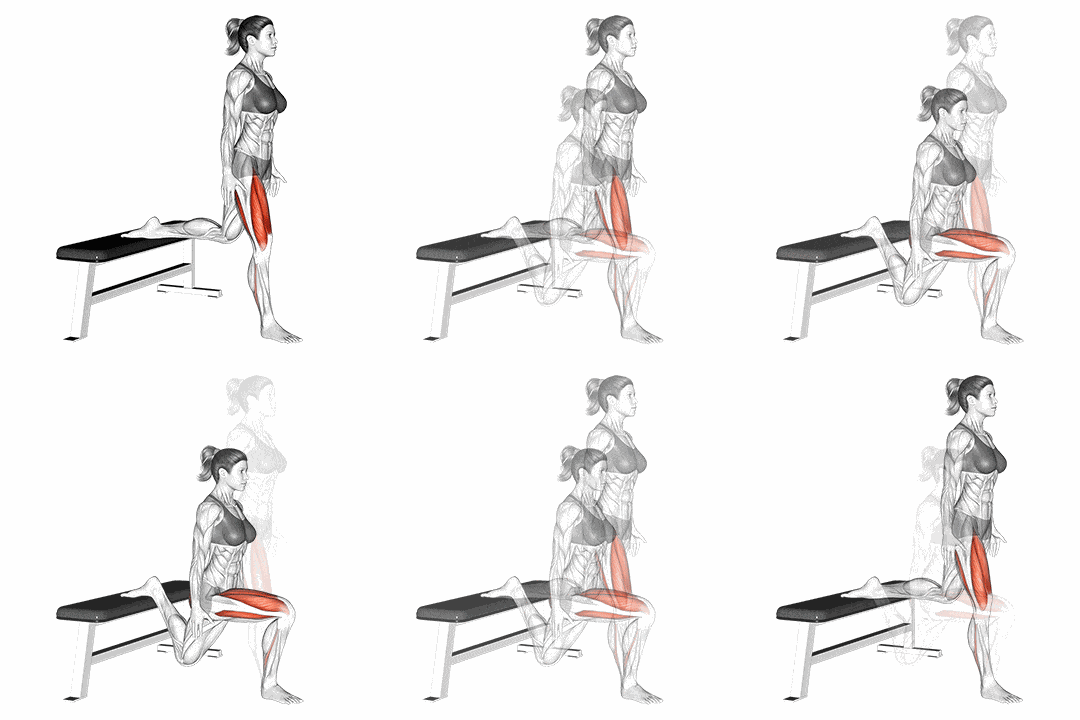
Barbell Bulgarian split squat
Elevate the rear foot on a bench with the bar still on your back. Nearly all the load lands on the front leg and the balance challenge doubles: reserved for lifters who own this version first.
No rack?
Front-rack split squat
Clean the bar from the floor onto your front delts and split squat from there. The front position caps the load but needs no rack and forces the torso to stay tall.
How to program it
Three protocols by goal. Pick one per cycle and aim for progression on load or distance.
| Goal | Sets × distance | Load | Rest |
|---|---|---|---|
| Strength | 4 × 5-6 per leg | Heavy, RPE 8, reps stay crisp | 2-3 min |
| Hypertrophy | 3 × 8-10 per leg | RPE 8 | 2 min |
| Lunge capacity | 3 × 12-15 per leg | Light to moderate, constant tempo | 60-90 s |
Barbell Split Squat FAQ
Barbell split squat or Bulgarian split squat?
They answer different questions. With the rear foot flat on the floor you keep a stable base, so the barbell version is the one for heavy, low-rep strength work on the front leg. Elevating the rear foot on a bench shifts almost everything onto the front leg and adds a hip flexor stretch, but the wobble caps how heavy you can go. Build your base of strength here, then use Bulgarians for brutal moderate-rep sets.
Barbell or dumbbells for split squats?
Dumbbells are self-limiting: grip and forearms often fail before the front leg, and the low-hanging load helps you balance. The bar fixes both problems and creates one: no grip limit, full loading for the leg, but the weight now sits high on your spine and punishes every wobble. Start with dumbbells, switch to the bar when your grip caps the sets, around the point where holding the bells is harder than the reps.
How heavy should I go compared to my back squat?
Leave the calculator alone and start humble: an empty bar to groove the stance, then small jumps. Balance, not leg strength, is the first limiter, so early sessions will feel absurdly light and still wobble. Treat a set as successful only when hips stay square and the bar stays level; add weight on those terms and you will be surprised how quickly respectable loads arrive without a single scary rep.