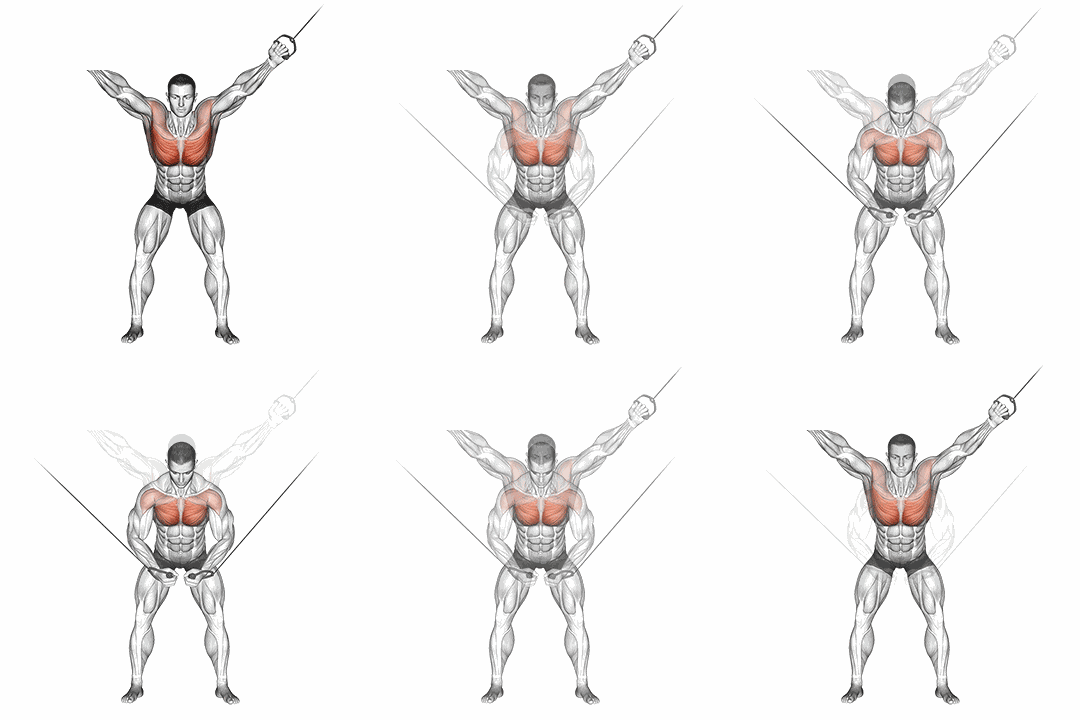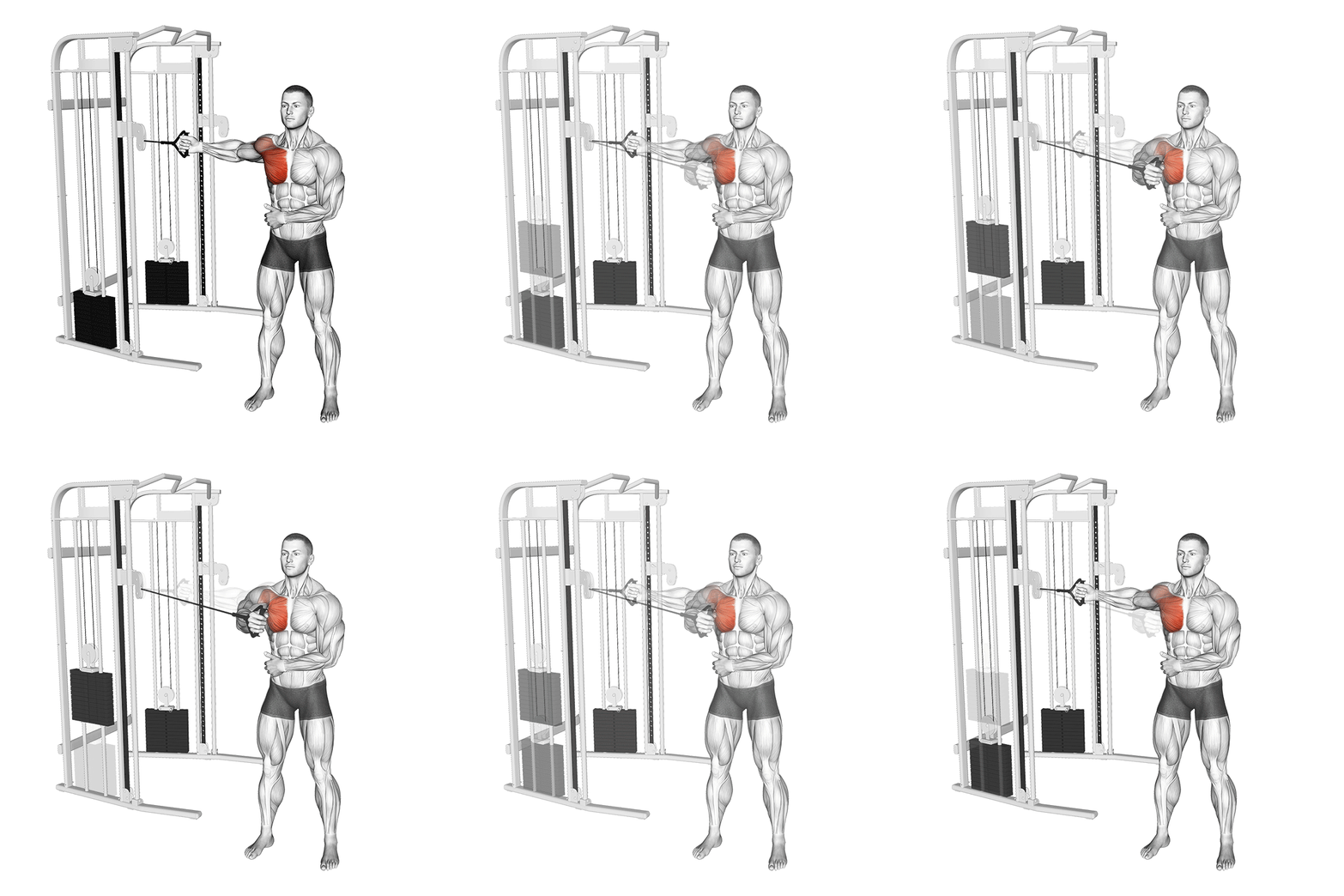
What is the one-arm cable fly?
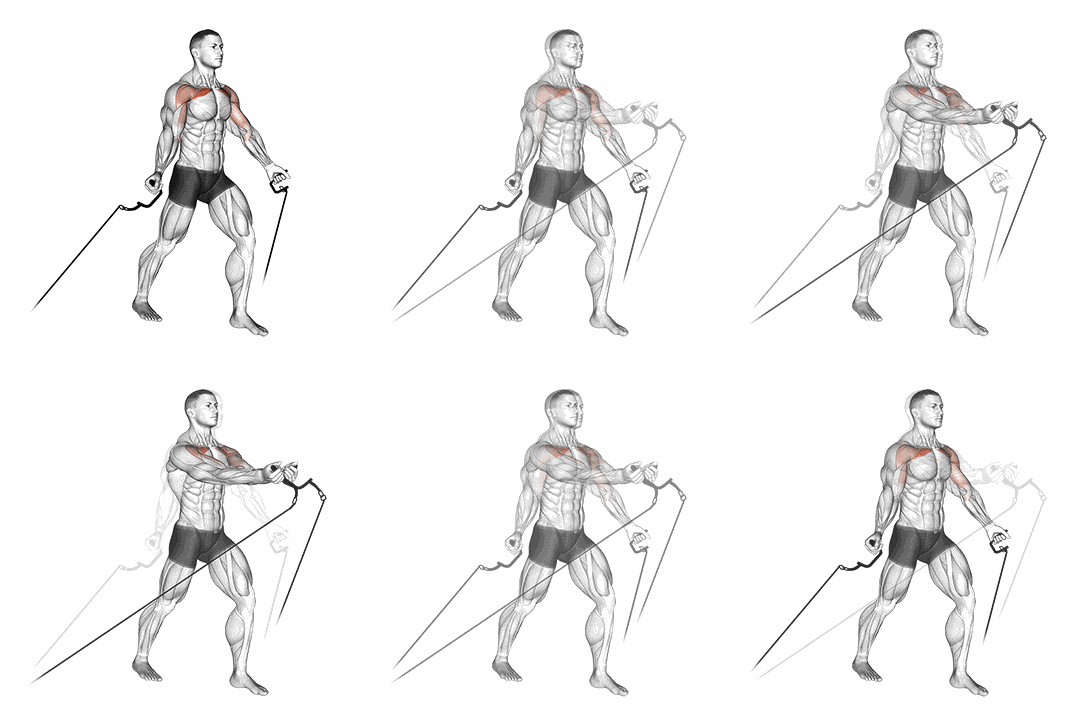
The one-arm cable fly is a chest isolation exercise performed standing side-on to a cable stack. With a single handle and a fixed, slight elbow bend, you sweep your arm across your body from a stretched position to your midline, then resist the cable on the way back. Because the cable pulls sideways, tension stays on the pec through the entire arc, including the squeeze where dumbbells go slack. It targets the pectoralis major with the front delt assisting, trains the core against rotation, and is the go-to tool for fixing a lagging side or building a stubborn chest after your pressing is done.
How to do the one-arm cable fly
- 1
Set the pulley at shoulder height
Clip a single D-handle, grab it and step away from the stack until the cable is taut. Stand side-on with a staggered stance, core braced, shoulder blade pulled back.
- 2
Open into the stretch
Let your arm open out to the side with a slight, fixed elbow bend until you feel a deep stretch across the pec. Keep the shoulder down, never let it roll forward.
- 3
Sweep to the midline
Drive the handle in a wide arc across your body toward your sternum, even slightly past the midline. Squeeze the pec hard for a full second at the end.
- 4
Resist the return
Take 2-3 seconds to let the arm travel back to the stretch. Block any twist in your torso: the cable wants to rotate you, your obliques say no.
Pro tip
Lock a 10-15° elbow bend and keep it identical from start to finish. If the angle changes during the rep, you are pressing, not flying, and your triceps are stealing work from your chest.
Common mistakes
Turning the fly into a press.
Bending and extending the elbow recruits the triceps and unloads the pec. The elbow angle is set once, then welded shut.
Letting the torso rotate.
If your shoulders turn with the arm, the pec's range shrinks and the core does the moving. Hips and chest stay square the whole set.
Shrugging into the shoulder.
A stack that is too heavy drags the trap and front delt into the movement. Drop the pin two plates and keep the shoulder low and back.
Cutting the stretch short.
The stretched half of the rep is where most of the growth stimulus lives. Let the arm open fully on every rep, under control.
Variations and progressions
Easier
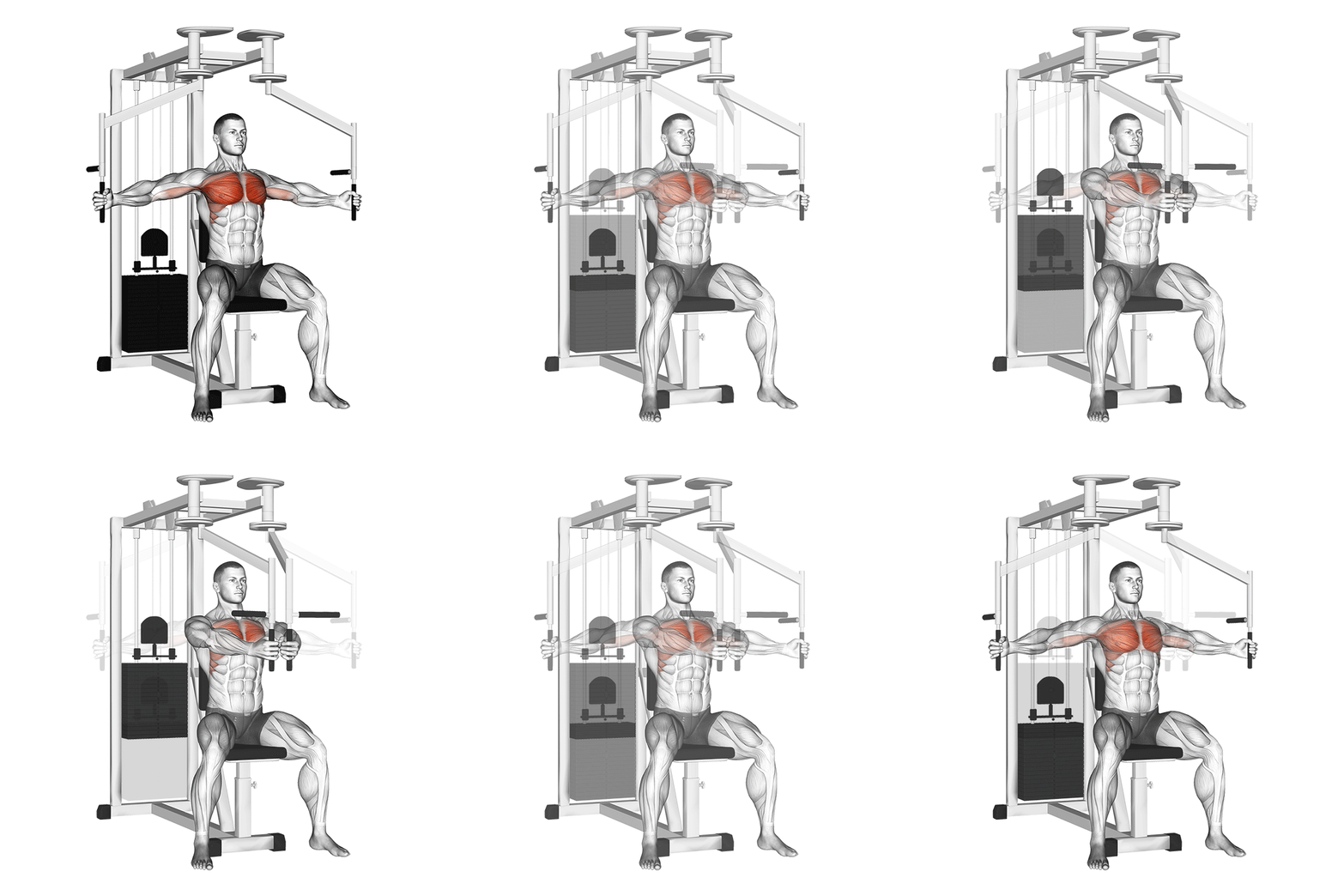
Machine chest fly
The guided path removes the balance and anti-rotation demands so you can focus purely on the squeeze. Ideal for learning what a pec contraction should feel like.
Harder
Paused fly past the midline
Cross your hand past your centerline and hold the peak contraction for 2 seconds every rep. Brutal pump, zero extra load needed.
No cable?
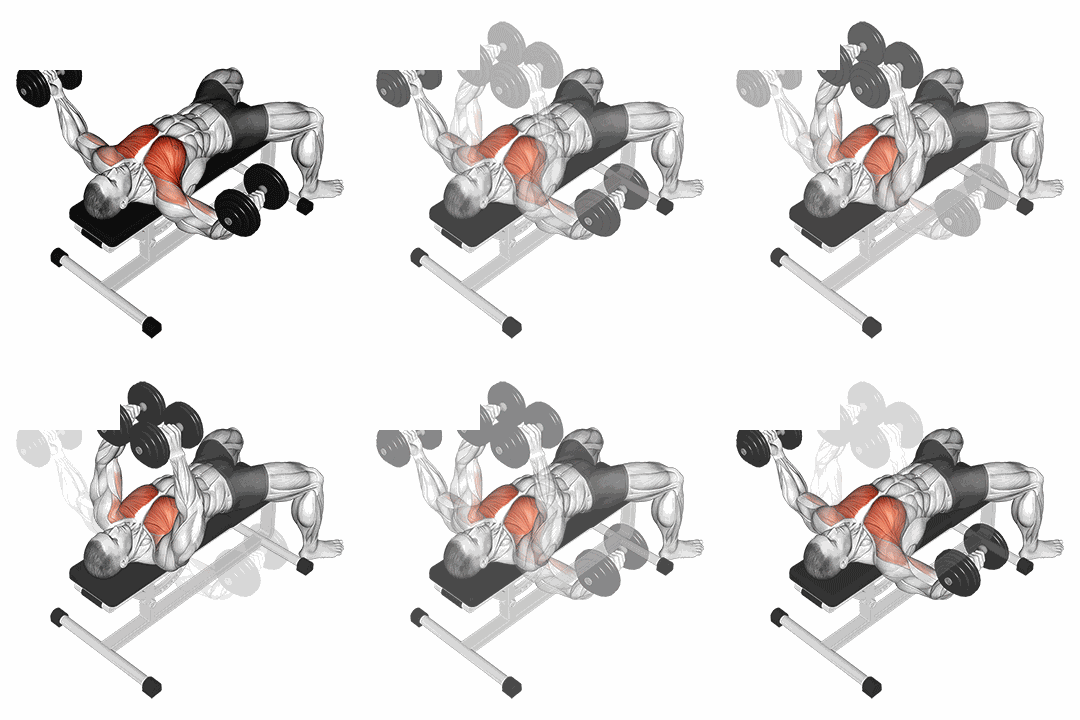
Band fly or dumbbell fly
Anchor a band to a post at shoulder height for a near-identical resistance curve. Dumbbell flys on a bench work too, just without tension at the top.
How to program it
Three protocols by goal. Pick one per cycle and aim for progression on load or distance.
| Goal | Sets × distance | Load | Rest |
|---|---|---|---|
| Hypertrophy | 3 × 10-12 per side | Moderate, RPE 8 | 60-90 s |
| Fixing an imbalance | 3 × 12-15, weak side first | Light to moderate, RPE 7 | 60 s |
| Finisher | 2 × 15-20 + drop set | Light, to near failure | 45 s |
One-Arm Cable Fly FAQ
What pulley height should I use?
Shoulder height hits the bulk of the pec and is the default. Set the pulley low and sweep upward to bias the upper chest; set it high and pull down toward your hip to bias the lower chest. The smartest approach is rotating heights across training blocks rather than guessing which fibres are lagging from one workout.
Why train one arm at a time instead of a cable crossover?
Three reasons. You can cross past the midline for extra range, impossible with two handles meeting in the middle. Each pec works alone, so a strong side can't quietly carry a weak one. And the offset load forces your core to resist rotation. The price is doubled set time, which is why it earns its place as an accessory, not a replacement.
Can cable flys replace the bench press?
No. Flys isolate the pec but cap out at light loads and build little pressing strength. Keep a heavy horizontal press as your base and use the one-arm fly after it, when the chest is pre-fatigued and 10-15 kg on the stack feels enormous. The combination beats either one alone, in both strength and size.